
How To Get Rid Of Japanese Beetles And Save Your Garden
During the summer gardening months, you may have noticed a few spots or bugs on your vegetable leaves or grapevine leaves. There’s a chance that you may have Japanese Beetles in your garden. If you don’t know how to get rid of Japanese beetles, you might lose most of your garden.

What are Japanese Beetles?
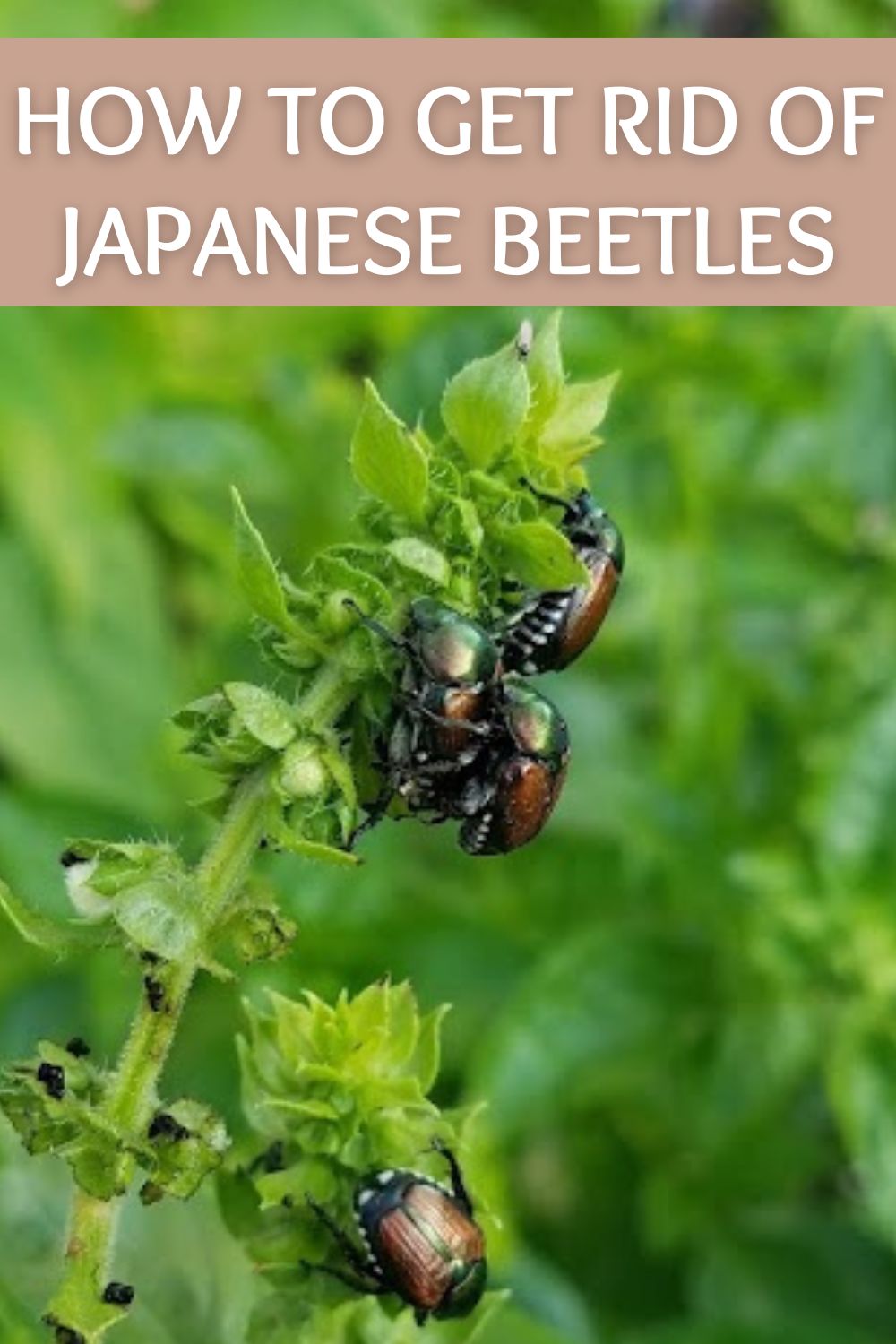
Japanese beetles are a common form of beetles that are often found on the leaves of vegetables, fruits, and flowers. They have a shiny body with brown wings and can be found in groups or on their own.
Known for laying eggs their entire adult life, they can lay eggs quickly and can produce anywhere from 40 plus eggs that will start out as grubs and feed off the base of your plants before growing and starting to eat at the tops. Rain doesn’t deter them and moist areas actually help in keeping their eggs and grubs from drying out.
What damage can Japanese Beetles do?

The short answer: A LOT! Throughout their life cycle, they focus on various areas of the plants. At a young age, they are in the soil and near the roots and base of the plants. As they grow, they will start to focus more on the leaves and the veins of the flowers and vegetables.
Not only can they kill off sections of your garden (and even your entire planted crops!), but they can also attack your grass, your flowers, and many other outdoor plants as well. If not detected and caught early, they have the capability to put a huge damper on the growth and survival of your outdoor plants.
What plants will Japanese Beetles eat?
It depends on the life stage of the beetles. In the grub stage, they eat grass and the roots of your vegetables. As adults, they love the fresh leaves of many plants, shrubs, and trees. Here are just a few:
- grape leaves
- roses
- basil
- fruit trees (cherry and peach trees are among their favorites)
- ripe fruit also attracts them
- Japanese maples
- and many, many more
Learn more about what Japanese beetles eat.
How to Get Rid of Japanese Beetles

There are many methods through which you can try to rid of the Japanese Beetles. While you can use pesticides that kill them instantly, I prefer natural and organic options.
1. Remove beetles by hand
If you notice them early enough, you may be able to pick them off your leaves and out of the soil before they really start to spread.

Better yet, get a plastic container with some water and a squirt of soap and go get them! Place the cup under the leaves when you see the bugs and tap the leave gently: they’ll fall right into your soapy water.
Good to know: Japanese beetles like to play dead when they perceive danger, so they’ll “drop dead” if you move their leaf or get too close. If you position your cup of soapy water right, they’ll fall right into it, and they die almost instantly.
2. Plant 4 o’clock flowers

The beetles can’t resist their leaves and it kills them. The flowers open up around 4 PM – 5 PM and they smell wonderful.
They close back up in the early morning.
The first year just a couple of Four O’Clocks killed about 90% by the end of summer. The rest died the next year and we didn’t see any more until we moved to a new place.



3. Create a natural homemade trap
Another homemade method for getting rid of Japanese beetles is to mix 1/3 gallons of warm water with a packet of yeast, 1/4 cup of sugar, a small piece of ripe banana, and a tablespoon of dish-washing liquid. Mix all of it in an empty milk jug you cleaned out, and hang it close to where Japanese beetles are attacking your garden.
If you want to see how this is made, take a look at the video below:
4. Try this natural homemade insecticide
Don’t use harmful chemicals when you can just make your own! Combine a teaspoon of dish-washing detergent and a cup of vegetable oil and mix together.
Once combined, add to a quart of water and spray on the beetles at varying intervals. Some say to use it over a 10-day period for best results.
Always spray early in the day if possible as that is also when they will be a lot more active!
More natural methods from our Facebook followers
- I mixed water with peppermint oil and sprayed it on the leaves they were eating. So far I don’t see any more beetles
- I treat my yard with milky spore and also ask to treat my neighbor’s yard and no cost to them. It won’t help with the adults this season. It will help next season.
- Kaolin clay works great, it irritates the beetle and they go away – but it doesn’t hurt your pollinators – sold under the name surround – I have used it for 2 years now
- Per quart, I use 2 tablespoons of pure vanilla extract and 1 teaspoon of cayenne. I add about 1/2 teaspoon of Dawn dish soap to make the mixture stick
- Beneficial nematodes…just spray the yard and they kill the grubs…no more moles or fleas either
- They are fantastic bait for fishing. You’ll catch stuff all day with them
- big birds, turkeys, and chickens just to name the common ones, love them
5. Plant plants that do not attract Japanese beetles
While Japanese Beetles aren’t finicky, there are certain plants that they do not seem to like as well. In your garden, they will stay away from cabbage and kale and if you are looking for a fruit tree that seems to be immune from them, plan ahead and plant a pear tree. You’ll save yourself a headache if you can just avoid certain plants altogether!
6. Use a store-bought beetle trap
If all else fails, you might want to try a beetle trap. Many argue that you’ll attract more beetles to your garden if you do this, and it may be true. But, you’ll help thin out the Japanese beetle population, and if you place it in a spot away from your garden, it WILL help keep your plants safer.

The moment that you notice Japanese Beetles in your garden or on your plants, it’s time to take action. Use the methods above to try a natural approach to see if you can rid of them on your own! The sooner that you can remove them, the better the chance that your garden and your plants will survive!
Have you ever had to deal with Japanese Beetles? What have you done to get rid of them?
Japanese Beetles FAQ
Can Japanese beetles kill a large tree?
If you catch them on the tree and remove them you’ll save the tree. But if enough beetles attack it, in just a few days they’ll eat all the leaves, making it almost impossible for the tree to survive.
Last year we had the biggest Japanese beetles invasion I’ve ever seen and it took down several trees at our local park: so sad!
When do Japanese beetles come out?
Depending on your area, they could arrive as soon as late May. In our area (zone 6b) they arrive in mid-June and stay for about a month.
When are Japanese beetles active?
They are most active in the morning and early afternoon, especially on warm, clear days.
Who eats Japanese beetles?
Many birds will eat Japanese beetles: blue jays, robins, starlings, sparrows, and woodpeckers among many others.




I pick them off by hand and feed them to my chickens!
Shop Vac.
They seem to like certain weeds, so I leave those up, and they eat them. On garbage pickup day, I pull those weeds which are nearly skeletal, with lots of beetles still on them, and poof! into the yard waste can they go.
We have had a terrible infestation this year. I have been picking them off and putting into soapy water to drown them. I go out early morning when they are most active and again in evening. Have been getting about 8-12 on each of our apple and cherry trees each time. Once they slow down a bit I want to spray Neem oil on the trees for the next round. They have a 10 life cycle, so the new adults should be arriving soon.
Ugh… that sounds awful. Next year plant some 4 o’clocks to help control future invasions.
Do you have a way to get rid of squash beetles?
I don’t have anything here on the blog. I’ll plan a post in the next week or two.
I hung small mesh bags filled with moth balls on my peach tree. I had read that the strong smell repels squirrels; they were nibbling all my peaches and tearing up the branches of the tree. The moth balls worked! For the first time in about 5 years, I was actually able to harvest my peaches. A wonderful side effect was that the moth balls also repelled the Japanese beetles from my neighboring plum tree. I will be doing this again next spring in both trees.
This is a little off topic, but I happened to plant mint under my tomatoes this year and I’ve had NO tomato worms. just a fluke?
Apparently Yellow Jackets love them. They’ve been busy with them in the garden.
My beans were under serious attack. I took the time to hand pick them from the poles beans with a rubber texture gloves and killed them. I had quite a pile of them but I also had an excellent harvest of pole beans. Go get em!!!
Can u use strawberries instead of banana?? I really hate these suckers, and it seems like they come after me when I do go to spray them w stuff…the Beatles and the flies r enemy #1, last year it was wasp….also, just a suggestion, cause I was really hoping u would just show that ur method works, maybe by showing the milk jug a few days later, just because there is SO many diff ways to get rid of certain bugs online, I just want the one that works!! Thanks for the suggestion of the bird house too, gonna def try that one out near my roses..
I dfon’t know if replacing with strawberries will work.Bananas are really sweet and that attracts them. you can always try and see if it works for you.
Thank You Thank You Thank You! Guess what I will be doing today. trying out some of these ideas I have been hand picking these bugs and keep getting more… Never saw these before. We got some new bushes this year and I think they came with them. I thought I was the only one. Little did I know..
I had a serious problem with Japanese beetles on roses. I mixed 1 Tablespoon of XXXX Hot sauce with 1-gallon water and a squirt of dish soap. Sprayed the roses. It kills the beetles and I never had them in my yard ever.
Japanese beetles are attracted to white. When making soap and water traps, use a white pail. I put maybe 3 inches of soap and water into a white pail and dump every other day. Usually have a more than one pail and keep them close to the plant they are going after. Took only a couple years to rid my roses of these pesky things this way. If rose chafers are your problem, try the same trap but put yellow duct tape around the pails. The chafers are attracted to yellow…
Will the bait with the yeast and banana also attract bees? I don’t want to trap them!
Bees are not really attracted to bananas, unless they are angry. So i think you are safe.
I’m going to try a different method, as I can’t pick off every day. I had time last weekend, and used a pail of water. Turned around, and poured it into my chickens’ water bucket. Squirmy treats for my girls. Gone in 60 seconds.
I hand pick them off and put in soapy water and do this every morning and evening. I call it my beetle patrol. They attack my wisteria and pole beans the most, and my roses and coneflowers. Definitely will plant 4 o’clocks next year.
Use BeetleGone or GrubGone it’s a specific isolated soil bacteria from a strain of Bacillus thuringiensis galleria, which only attacks Japanese beetles and other scarab beetles such as June bug. It is one of the few Bt strains that actually works on the adult form of the insect. Spray on the plant that the beetles are feeding on and it will stop the feeding immediately when it gets into the insects gut and paralyzes it.
Use GrubGone on your turf areas in Sept. when and where the grubs (larvae) feed, on the grass roots; to eliminate next year’s beetle crop. Unlike milky spore which takes 5 years to spread and build up, it will work immediately; but only lasts one season. So use both if you have large expanses of turf, or treat the whole neighborhood as a community project. It is available exclusively from: growitnaturally.com
Expect to pay about $60 for the smallest unit, but the dry powder will be viable for 3 years.
Also peonies attract and feed tiphia wasps which parsatize adult beetles.
This is actually the first I have heard of the Mirabalis (4 O’Clocks) connection and I have 60 years of organic horticulture experience.