
How To Care For Hydrangeas – The Ultimate Guide To Stunning Hydrangea Flowers
The large, showy globes of the hydrangea make it a popular shrub across the U.S. In addition to lush foliage and stunning flowers, this plant is also remarkably easy to care for. Want startling blue, hot pink, or deep purple blooms on your bush? Simply change the acidity of the soil! This article will not only teach you how to care for hydrangeas but also how to propagate them and even change the color of the flowers.
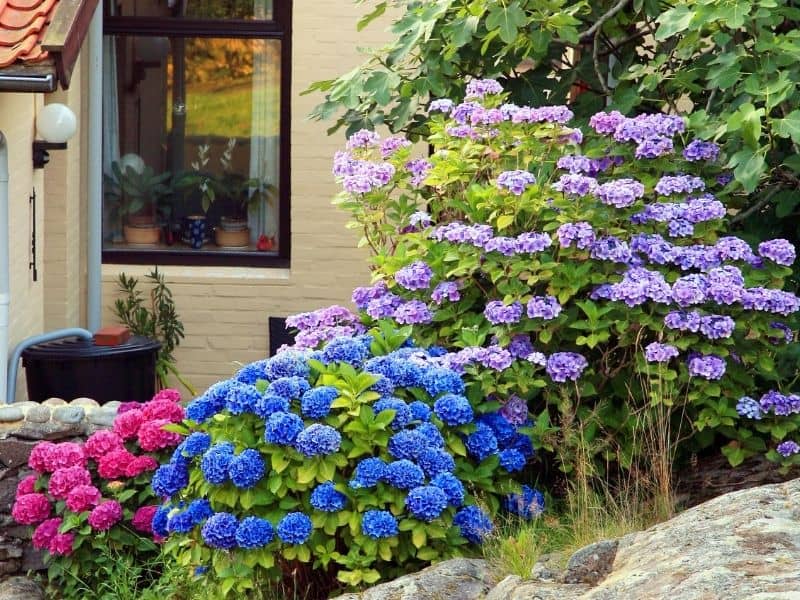
How to Care for Hydrangeas
Three of the most common species of hydrangeas include French hydrangea (Hydrangea macrophylla), panicle hydrangea (H. paniculata), and oakleaf hydrangea (H. quercifolia). Perhaps the most popular, French hydrangeas have either “mop heads” of round, dense flowers or more subtle and elegant lace caps.
While panicle hydrangeas keep their showy white flowers longer, their color cannot be changed. They are the most cold-hardy and grow quite large, to the point where they can be trained as a large tree.
Finally, the native oakleaf hydrangea has leaves reminiscent of, well, oak leaves and cones of white flowers that last for months.
With so many different types of hydrangeas, keep in mind that the specific care requirements for each may vary slightly. Oh, and let’s not forget the beautiful hydrangea trees you could shape yourself.
[sc name=”care-for-hydrangea-plants-and-bushes-quick-links-code-v1″]
Where to grow hydrangeas
Hydrangeas are happiest in partial shade and fertile, well-draining soil. Although they will tolerate full direct sun, try to place them in a location where they will at least receive some afternoon shade to protect them from extreme heat, which they do not like.
Tips on growing hydrangeas
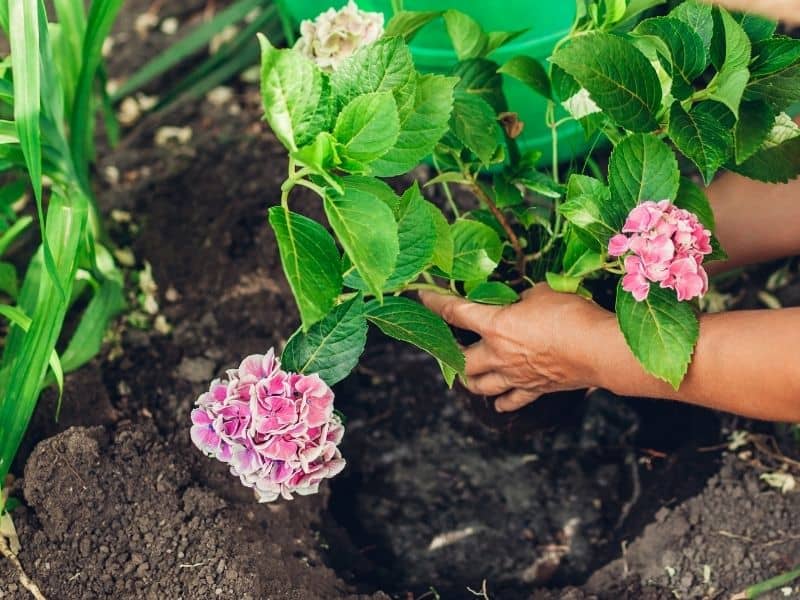
Keep the soil moist, but not wet. A deep watering at least once a week, especially during dry weather, is ideal, and adding a thick layer of mulch will help keep the soil moist.
Hydrangeas may also benefit from a boost of fertilizer once or twice a year, during the spring and summer growing period. Choose the fertilizer carefully, as it can change the pH of the soil and thus the color of the hydrangea blossoms, and avoid over-feeding.
If you would like to move your hydrangea, transplanting is quite easy. Prepare the new site first, then take care to dig up the whole root ball and immediately replant it.
For best results, transplanting should only be done during dormancy, in the fall or winter.
When should hydrangeas be pruned?
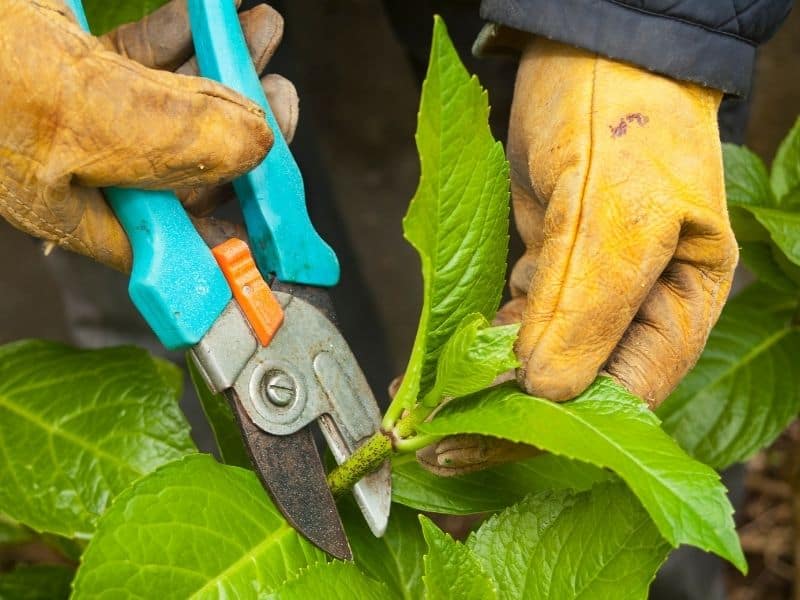
Typically, hydrangeas require very little pruning.
Not all of these shrubs should be pruned at the same time. The most important thing about cutting back hydrangeas is to know if your particular type of hydrangea blooms on new or old wood.
The hydrangeas blooming on old wood should only be pruned after flowering, while those blooming on new wood should be pruned late in the fall or before waking up in the spring.
There are three main reasons to prune a hydrangea:
- To remove dead branches and spent blooms. This should be done every year.
- To revitalize a plant five years old or older. Cut about a third of the older, living stems all the way to the ground.
- To trim a plant that has grown too large. Try to plant new hydrangeas only where they will have plenty of space.
Prune French and oakleaf hydrangeas in mid to late summer, after the main blooming period but before the plants produce new buds. July is usually a good time, as the buds tend to set between August and October.
Some people prefer to prune oakleaf hydrangeas in early spring so they can enjoy the dried flowers through the winter; if you choose this route, be careful to cut above the first set of healthy buds on each branch, or simply deadhead.
Panicle and smooth (H. arborescens) hydrangeas can be pruned in fall, winter, or early spring before they prepare to bloom in the spring.
How to change the color of hydrangeas
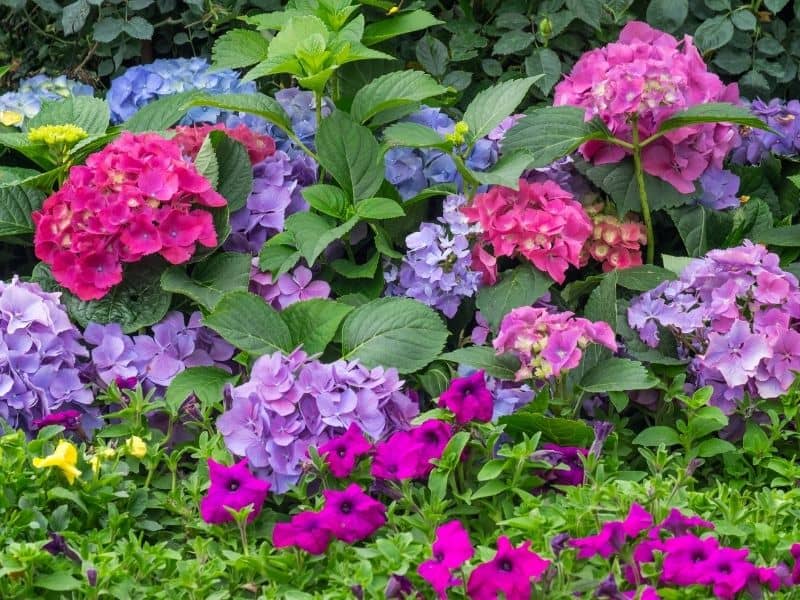
First, there are a few limitations to changing the color of a hydrangea: you will have the most control over potted hydrangeas, though you can also affect the color of those planted in the ground.
Additionally, white hydrangeas cannot be coerced to change color. They may become pink as they age, but there is no guarantee that will happen. It is easiest to change pink to blue.
When a hydrangea is transplanted, it may change color on its own in response to the change in the soil. Wait about two years after planting a hydrangea before attempting to change its color. Once you begin amending the soil, it may take a few weeks or even a few months for the color to change, so be prepared to wait a bit.
Turning a hydrangea blue involves increasing aluminum uptake while turning it pink requires reducing aluminum. This is most commonly done by changing the pH of the soil, as hydrangeas absorb aluminum more easily at lower pH levels. Purple hydrangeas fall somewhere in the middle.
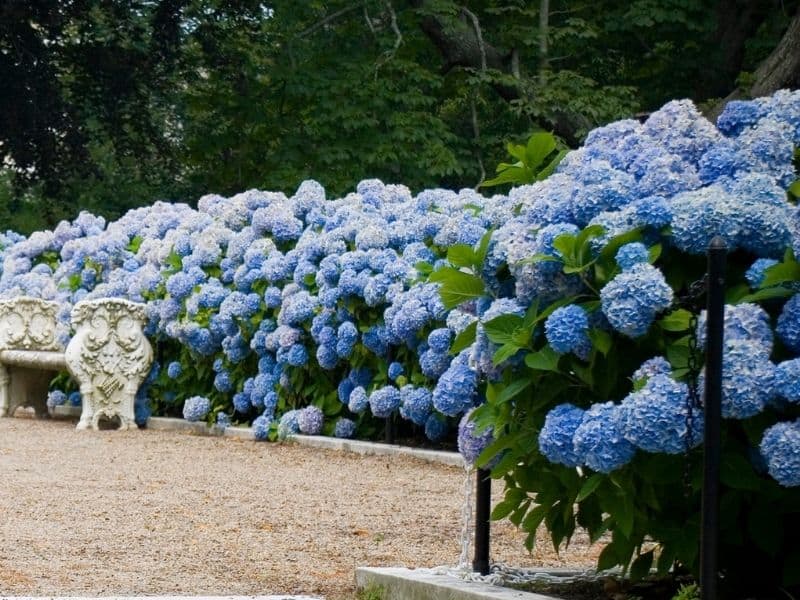
For blue flowers, add aluminum sulfate to the soil, and test to ensure the pH hovers around 5.2 to 5.5. The aluminum sulfate should reduce the pH, but if it does not lower it sufficiently, try adding organic matter, like coffee grounds, fruit peels, or grass clippings.
If you fertilize your hydrangea, choose a fertilizer low in phosphorus and high in potassium, such as 25-5-30.
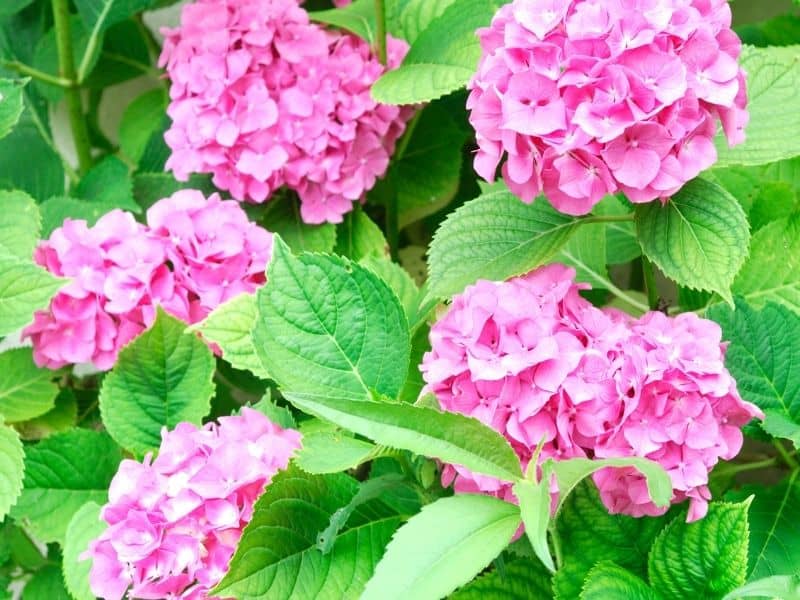
Pink, as noted above, is a bit trickier, since you have to prevent the hydrangea from taking up aluminum. Try raising the pH by adding dolomitic lime a few times a year, aiming for 6.0 to 6.2. Additionally, feed with a fertilizer that contains more phosphorus, such as a 25-10-10 ratio.
If your soil contains significant amounts of aluminum and your hydrangeas tend toward blue, growing them in pots will be your best bet for pink blooms.
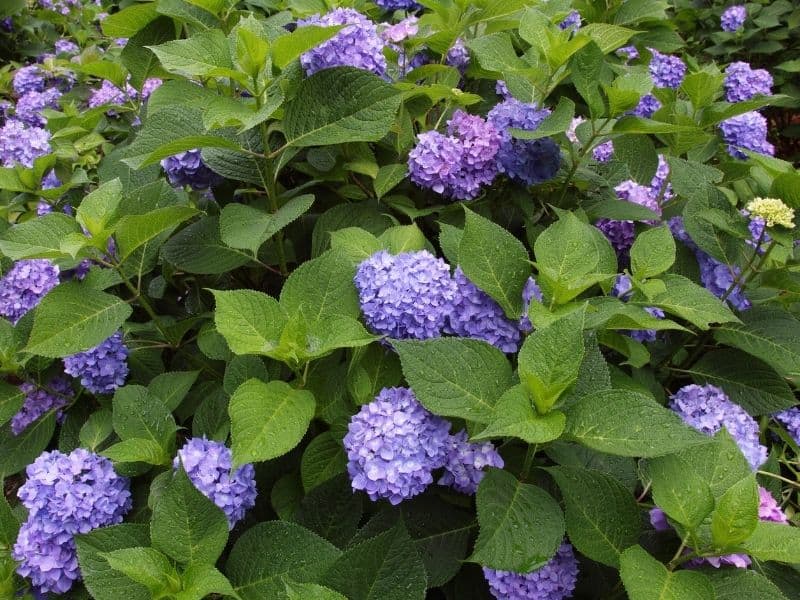
Since the conditions for purple hydrangeas fall in the middle, test your soil pH, and amend as necessary to achieve a level between 5.5 and 6.0.
How to grow hydrangeas from cuttings
Look for a branch of new growth but no flowers: the leaves will be a lighter shade of green and the stem less rigid. Cut the branch about four to six inches from the tip, making sure to include three to four pairs of leaves. Remove all but the top two pairs of leaves, and if desired, dust the bottom portion of the stem with a rooting hormone (this is what I use).
Fill a small pot with moistened sterile potting mix, vermiculite, or sand, and insert the cutting into the soil up to just below the first set of leaves.
To help keep the soil moist, cover the plant loosely with a plastic bag, held up with sticks so it doesn’t touch the leaves, or place a clear plastic cup or another container over it. Place the cutting in a warm, sheltered area with bright but indirect light, and water only when the surface of the soil begins to feel dry. Depending on the temperature and humidity, the cutting should root in one to three weeks.
When is the best time to plant hydrangeas?
Plant hydrangeas after the last frost in spring but before the full heat of summer or in fall before the first frost. Overwintering cuttings can be difficult without a greenhouse, so early summer is the best time to start them so they can be planted out in the fall.
Common hydrangea problems and FAQs
Why are my hydrangeas not blooming?
A disappointing lack of blooms can happen for several reasons. A common one is improper pruning; if you cut back the new buds, there won’t be any, or many, left to bloom. Most likely, your big beautiful blooms will come back next year! Other causes include a late spring freeze, too much fertilizer, too much shade, or hungry deer (here’s how to stop deer from eating hydrangeas).
What happens if you don’t prune or deadhead hydrangeas?
Not pruning a hydrangea likely won’t have any ill effects, though deadheading is recommended to keep the bush looking fresh, healthy, and full of big blossoms. If you don’t deadhead, the hydrangea will be covered in spent blossoms and begin to put energy toward seed production rather than flowers.
Will hydrangeas grow back if cut down?
Yes, hydrangeas will typically grow back if cut down to the ground. Although this practice may rejuvenate an old, neglected, or damaged hydrangea, cutting back the entire plant every year will result in smaller, weaker stems. Instead, try cutting just a third of the branches back to the ground. See the pruning section above for more details.
Are coffee grounds good for hydrangeas? What about eggshells or banana peels?
Adding organic matter like coffee grounds or fruit peels will help lower the pH of the soil and encourage blue flowers (see “How to change the color” above). Adding eggshells will provide the plants with calcium, making them stronger, as well as neutralize the pH of the soil, possibly resulting in purple flowers. However, it’s important to crush the eggshells into a powder first, or they won’t decompose.
Big, beautiful blossoms
When grown in the proper conditions, hydrangeas will happily provide big, beautiful blossoms with minimal care. A little extra effort can result in extra-showy bushes, and even if you make a mistake or run into problems, these forgiving plants will still reward you with stunning flowers the following year.




I have had a beautiful hydrangea for about 8 years. Over the last few years I’m lucky to see 1 or 2 blooms The leaves are green during the summer. What do I need to do to get those beautiful blooms back
Are you fertilizing them? Did anything change in the sun/shade balance?
I have 3 hydrangea bushes, 2 of one variety and one of another. The bushes grow beautifully and full each season, but have not grown one single flower in the 3 years I’ve lived here. They were here when we moved in. I believe they are too close to each other, but don’t know if this is the problem? I researched and found differing opinions on whether to cut the old wood down each season, so we have tried both cutting and not cutting. Still no blooms.
Probably over-pruning: Most hydrangeas, including all the mopheads (the most common — the variety in all of these photos) grow on last season’s wood (stems). If you cut off those stems you won’t have flowers. A friend radically pruned her hydrangea: Did not have flowers for three seasons! So prune very judiciously, and only in very early spring (Feb. or early March in the northeast).
What should I do to my Bush in the fall? Trim it down or leave it alone?
Donita, It depends what type of hydrangea you have. Did you read the article? There’s a section about pruning hydrangea bushes where you’ll see some suggestions.
We moved into a new hone in south Carolina. I have 2 hydrangeas. one is under a tree and the other is on the north side of the house. There is a row of azales in front of it. How can I tell what kind of flowers these are?
Thank you for your time
I i thought I would share this with my other hydrangea loving friends..i have rooted them both with Root Tone in a pot and in water as well…however i heard of a lady that encircled her whole big wrap-around Victorian porch with mopheads by simply using a lay-over technique…it works! Simply lay over an outer branch …bending carefully as not to snap…weight it down to a spadeful of good quality outdoor planting mix with a brick or two. (Keep an eye on it so it doesn’t dry out)Eventually it will take root where there is a leaf joint and can be snipped away from the mother plant. I’ve done this with my penstomen as well. Happy gardening!
@Gail, this is how I’ve always rooted additional hydrangeas.
I have a plant that was given to me and planted by a neighbor who is a landscaper. My plant has never bloomed and never had any blossoms. Am I doing something wrong? I water and use plant food starting in the spring.
There could be a number of things, and rather than write them all here, I suggest reading this article: https://www.gardeningknowhow.com/ornamental/shrubs/hydrangea/hydrangea-not-blooming.htm
My Incrediball hydrangea started growing but the leaves always droop and eventually dry up. What is wrong?
Are you watering it enough? Hydrangeas need to be kept moist. Or, is it in full sun? It might be too much sun for it. And lastly, if the leaves turn yellow before drying up and falling off, you might have a fungus.
Is it possible to fertilizer too late in the season for my oakleaf plants to bloom. I don’t ever prune them. I planted a new one last year and it’s not big but should be a good size to bloom. But I fertilized twice and nothing happens. What time of year in Zone 7 should I start fertilizing?
I thought there was something wrong with my hydrangea plants because I would only get one or two flowers. After we had a light snowfall, my husband noticed deer footprints by the bushes – mystery solved! The deer were eating the tender buds thus no flowered the next season.
Awww… i’m sorry. Yes, deer loves hydrangeas. Add some human hair around the base of your plants (go to your hairdresser and ask for some), and it should keep them out of your hydrangea bushes.
Can you use human hair clippings for other plants to keep the deer off or is it only for the hydrangea plants?
Yes, it works for all plants. Deer just hate the hair!
Just moved into a new house it already has a Hydrangea plant but the flowers are green. Can these be changed?
Wait till next spring/summer. Some of the pink and blue hydrangeas turn green as they age. And some of the white ones turn green a couple weeks after blooming. I’m not sure which kind you have but you’ll love them no matter what!
How much epsion salt do you mix with water to get them to a deep blue?
If a plant dies out can the flowers come back?
I’m not sure I understand your question. If the plant dies, it’s not going to flower.
My hydrangeas which used to be gorgeous blues and pinks bloomed this year but they were all just dull dry looking grey blooms on healthy green bushes. What caused this
I’m not sure, but a few things to think about: did you over/under water them? Maybe they need a good feeding of nutrients. Something else that may have changed in their environment?
Where is the best location to plant hydrangeas? Sun, no sun, morning or afternoon sun?
Last fall we had to cut down our elm tree in the front yard which provided shade for the front of our house. All across the front of the house is hydrangeas which has no shade now. These have been there for 8 years. They are not looking too good this summer, the leaves look wilted and only a few flowers, but I really don’t want to have to get rid of them, I love hydrangeas.
I don’t have any room in the back so I am hoping you can give me a solution to my problem. Thanks, Jan
You mentioned fruit peels, so what kind do you suggest?
I’d try some grapefruit (or any other citrus).
@Adriana, I got blackspots on the leaves, do you have a cure to get rid of this? We have tried many sprays recommended
Laura has a great article about hydrangea black spots here: https://www.petscribbles.com/black-spots-on-hydrangeas-goodbye-for-good/