12 Ethereal Flowers That Bloom at Night
Your garden offers a vibrant display of color and life during the day, but what happens after the sun goes down? A different kind of magic can unfold. A moon garden, filled with plants that come alive at night, offers a unique and enchanting experience.
These special flowers often release their intoxicating fragrances after dusk, attracting nocturnal pollinators like moths and bats.
Creating a space to enjoy the cool evening air surrounded by luminous, sweet-smelling blossoms adds a whole new dimension to your outdoor living area. Imagine stepping out into your yard on a warm evening, guided by the soft glow of white and pale yellow flowers and the sweet scent of jasmine or honey in the air.
These night-bloomers transform a familiar space into a serene, almost mystical retreat.
1. Moonflower (Ipomoea alba)

As its name suggests, the Moonflower is a classic choice for any moon garden. This vigorous vine is a close relative of the morning glory, but it performs its show at the opposite end of the day. Its large, heart-shaped leaves are attractive on their own, but the main event is the massive, pure white flowers. These 6-inch blooms unfurl rapidly in the late afternoon or early evening, sometimes so quickly you can watch it happen. They release a powerful, sweet fragrance throughout the night before closing for good when the morning sun touches them.
Moonflowers are perfect for covering a trellis, arbor, or fence, creating a living wall of green and white. Their bright white color makes them appear to glow in the moonlight, creating a stunning visual effect. They are fast growers and will provide ample coverage and blooms in a single season.
- USDA Hardiness Zones: 10 to 12 (grown as an annual in cooler zones)
- Size: 10 to 15 feet (vining)
- Sunlight: Full sun
- Soil: Moist, well-draining soil
2. Angel’s Trumpet (Brugmansia)
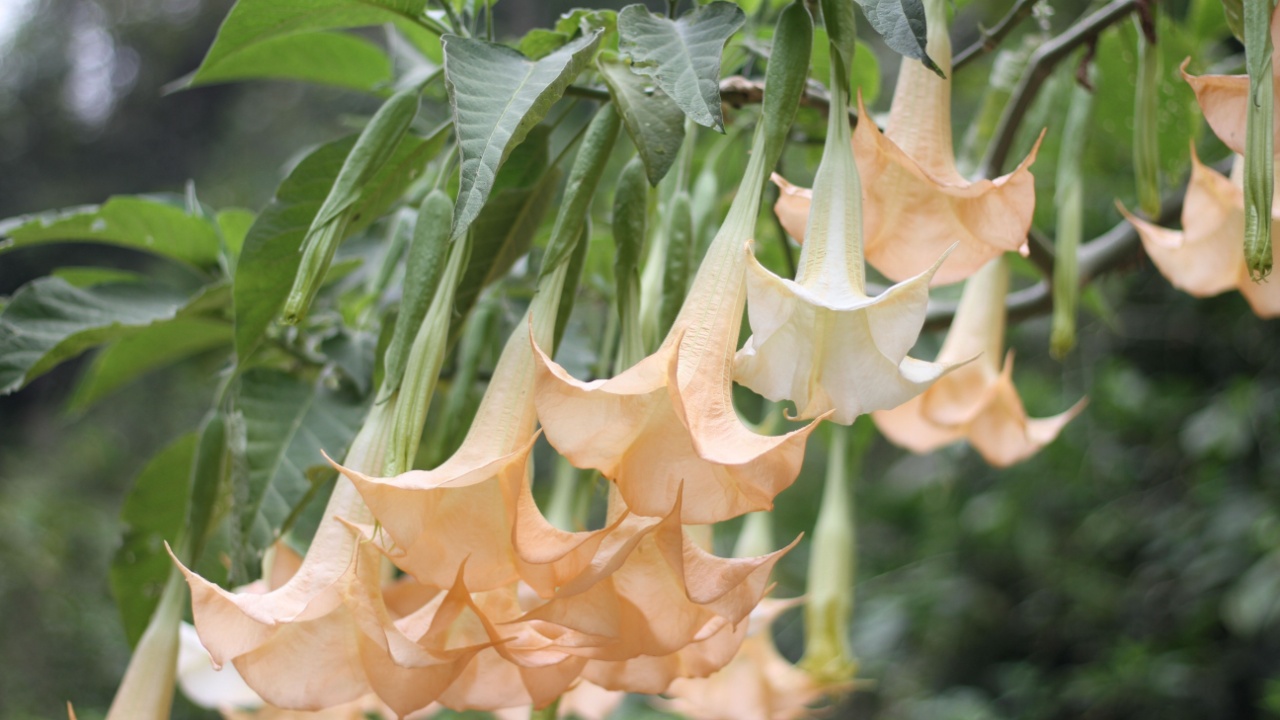
For a truly dramatic statement, look no further than Angel’s Trumpet. This tropical shrub produces enormous, pendulous, trumpet-shaped flowers that can be up to a foot long. While they are present during the day, they open more fully and release an intense, heady fragrance as night falls. The scent is often described as a mix of citrus and floral notes, and a single plant can perfume an entire patio.
Blossoms come in shades of white, yellow, pink, and peach. Angel’s Trumpet works beautifully as a specimen plant in a large container or as a centerpiece in a garden bed. Its size and spectacular flowers command attention. However, it’s crucial to note that all parts of the Brugmansia plant are highly toxic if ingested, so it should be planted with care in areas away from curious children and pets.
- USDA Hardiness Zones: 9 to 11 (can be overwintered indoors in cooler climates)
- Size: 6 to 15 feet tall and wide
- Sunlight: Full sun to partial shade
- Soil: Consistently moist, rich, well-draining soil
3. Evening Primrose (Oenothera biennis)
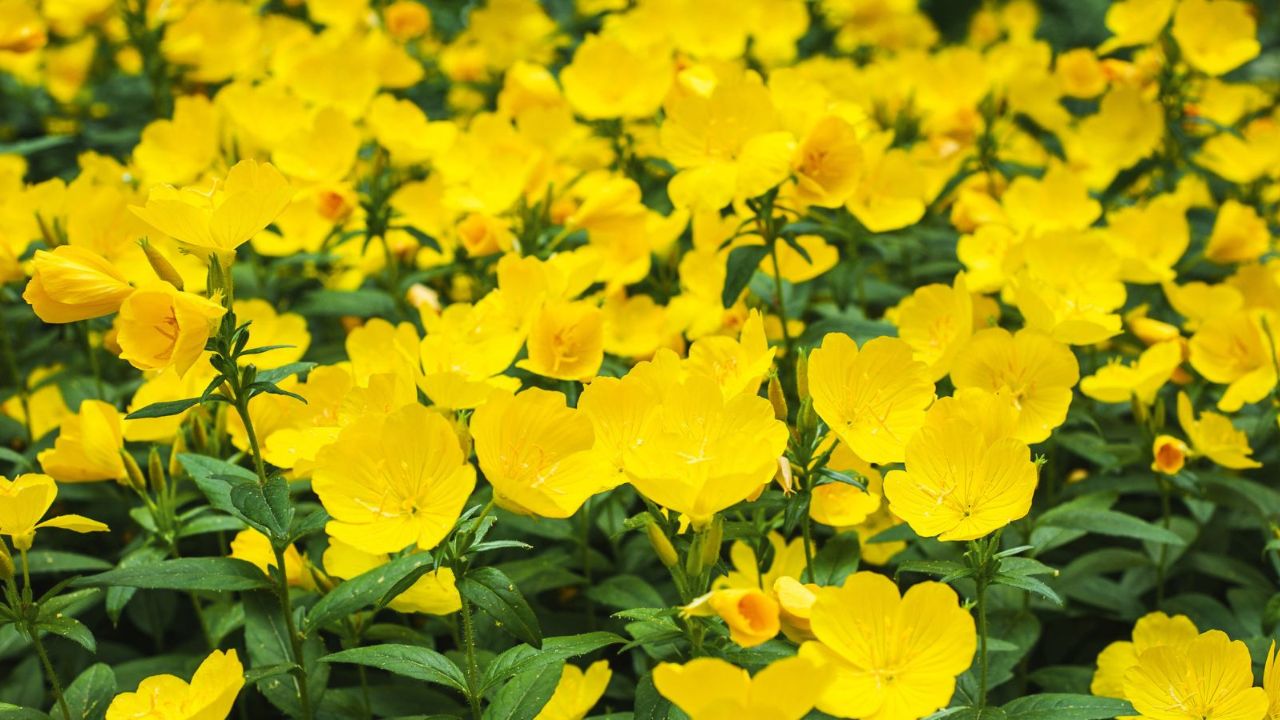
Evening Primrose brings a cheerful burst of sunshine-yellow to the twilight garden. These charming wildflowers have blooms that open in the evening and last until the following morning. The four-petaled flowers are delicate and cup-shaped, creating a soft, lovely effect when planted in drifts.
As they open, they release a sweet, lemon-like scent that attracts sphinx moths. This biennial plant is exceptionally easy to grow and often self-seeds, making it a great choice for naturalized areas, cottage gardens, or along borders where it can spread. It’s a low-maintenance option that provides reliable evening color from late spring through summer.
- USDA Hardiness Zones: 4 to 9
- Size: 3 to 5 feet tall, 2 to 3 feet wide
- Sunlight: Full sun
- Soil: Well-draining, average soil; tolerates poor soil
4. Night-Blooming Jasmine (Cestrum nocturnum)
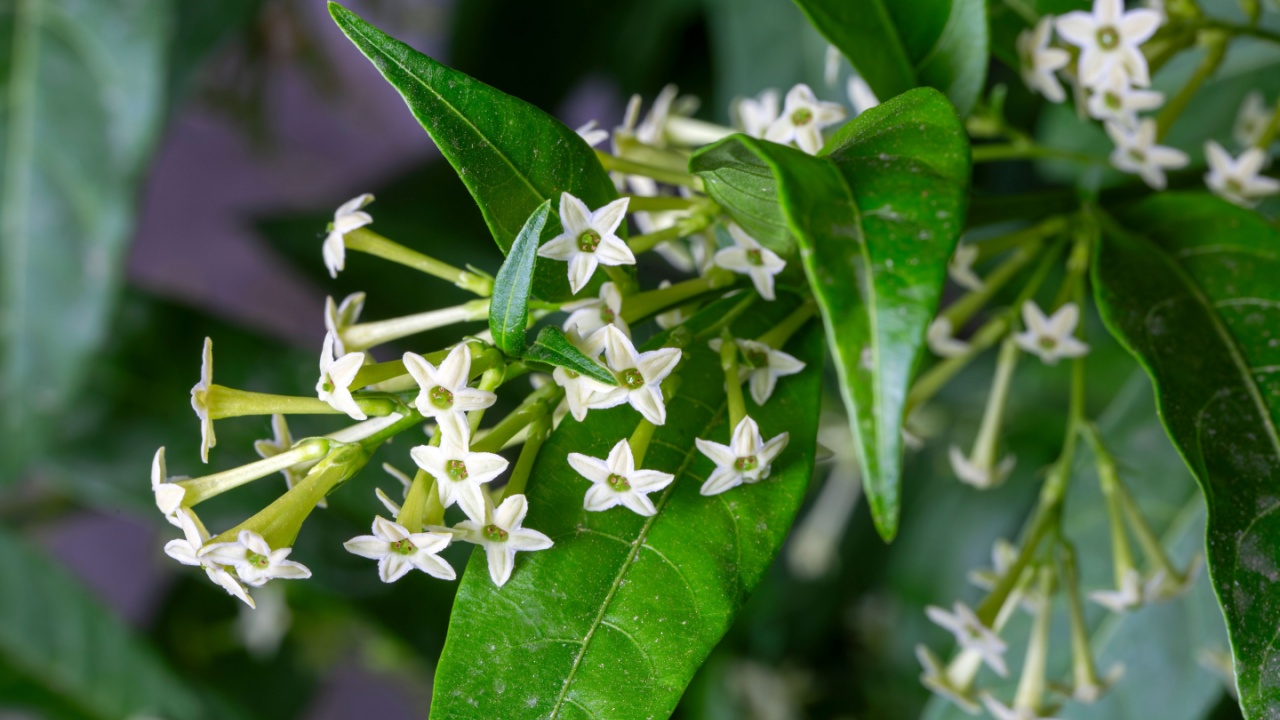
Despite its common name, Night-Blooming Jasmine is not a true jasmine. It’s a member of the nightshade family, but its fragrance is what earns it a place in any nighttime garden. This evergreen shrub produces clusters of slender, greenish-white tubular flowers. While the flowers themselves are not particularly showy, their scent is legendary.
After dark, the plant releases an incredibly powerful, sweet, and pervasive perfume. Because the fragrance is so potent, it’s best to plant Night-Blooming Jasmine near a patio, window, or walkway where you can enjoy it without it becoming overwhelming. A single shrub can fill your entire yard with its intoxicating aroma. It blooms in cycles throughout the warmer months.
- USDA Hardiness Zones: 8 to 11
- Size: 8 to 10 feet tall, 3 to 4 feet wide
- Sunlight: Full sun to partial shade
- Soil: Sandy, well-draining soil
5. Four O’Clock (Mirabilis jalapa)
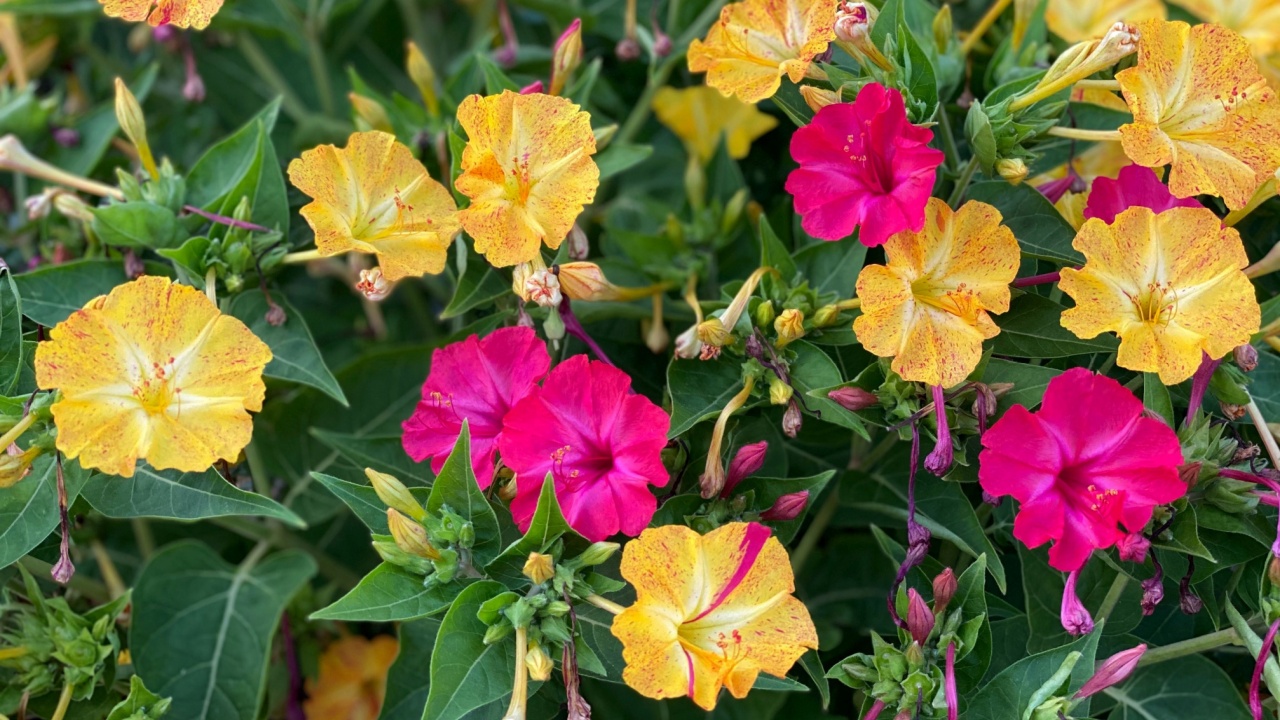
Just as their name implies, Four O’Clocks begin to open in the late afternoon as temperatures cool, staying open all night. These bushy, tuberous perennials produce trumpet-shaped flowers in a dazzling array of colors, including shades of pink, red, yellow, and white.
Some plants even produce flowers of multiple colors or marbled patterns on the same plant. Four O’Clocks are a fantastic addition to garden borders and beds. They form dense, mounded plants that fill in spaces nicely. They release a pleasant, spicy-sweet fragrance in the evening that adds to the garden’s sensory experience. They are easy to grow from seed and will readily self-sow for the following season.
- USDA Hardiness Zones: 7 to 10 (grown as an annual in cooler zones)
- Size: 2 to 3 feet tall and wide
- Sunlight: Full sun to light shade
- Soil: Well-draining soil
6. Flowering Tobacco (Nicotiana alata)
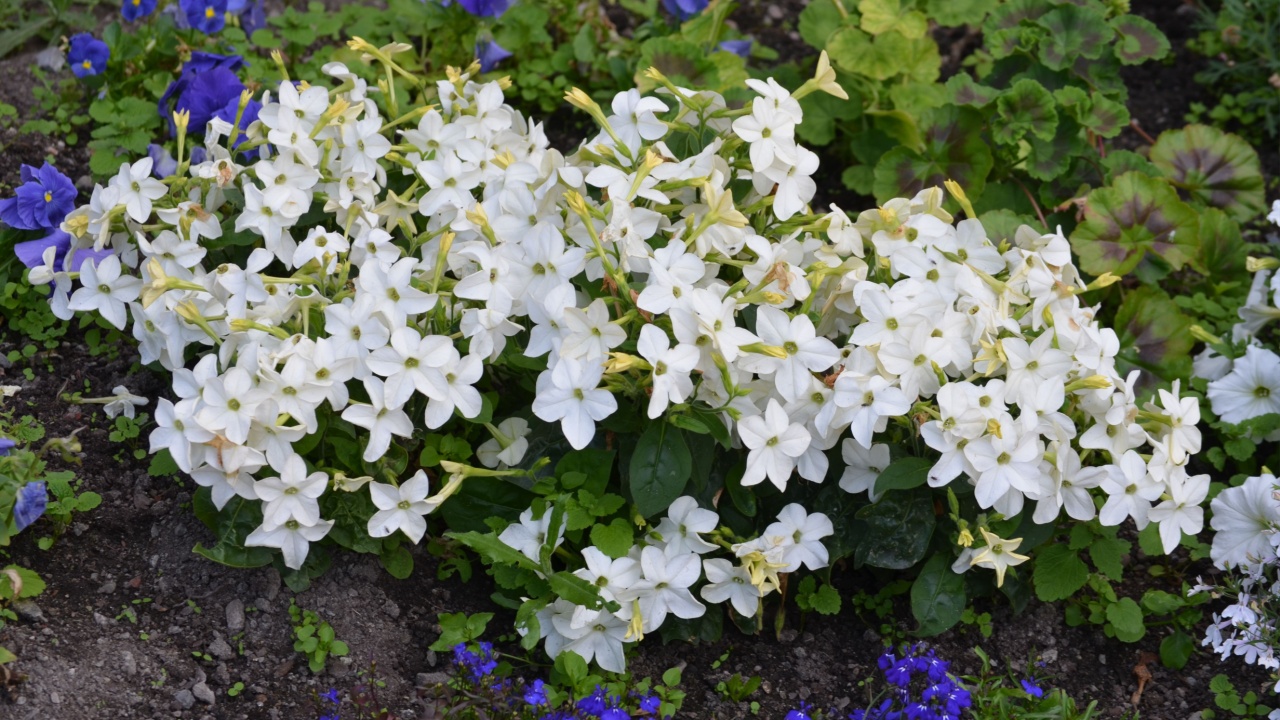
Flowering Tobacco is a graceful and elegant addition to the moon garden. It produces long, thin stems topped with star-shaped, tubular flowers. While some modern hybrids bloom during the day, the heirloom varieties, especially Nicotiana alata and Nicotiana sylvestris, save their best for last.
They open in the evening and release a rich jasmine-like fragrance. The white-flowered varieties are particularly effective at night, as they seem to float in the dark. This plant is wonderful for adding height and an airy quality to the middle or back of a border. Its sweet scent attracts hummingbirds by day and sphinx moths by night, making it a hub of pollinator activity.
- USDA Hardiness Zones: 10 to 11 (grown as a tender perennial or annual)
- Size: 3 to 5 feet tall, 1 to 2 feet wide
- Sunlight: Full sun to partial shade
- Soil: Moist, rich, well-draining soil
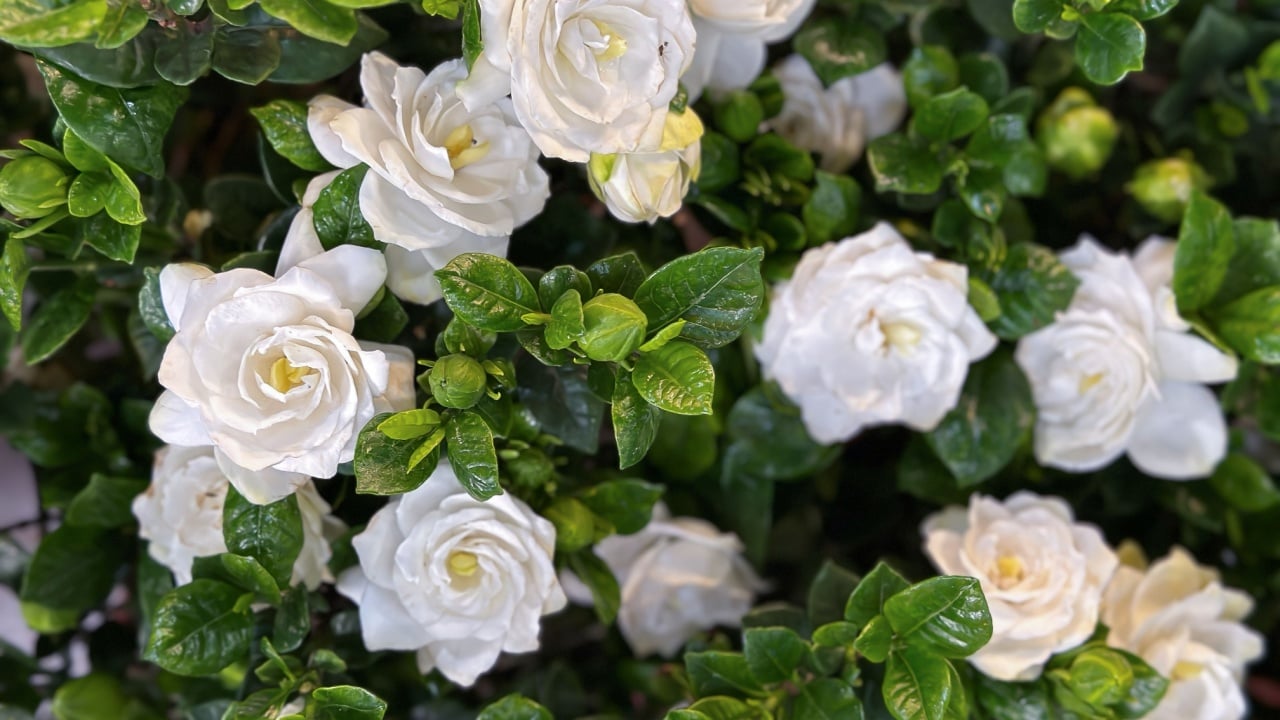
7. Gardenia (Gardenia jasminoides)
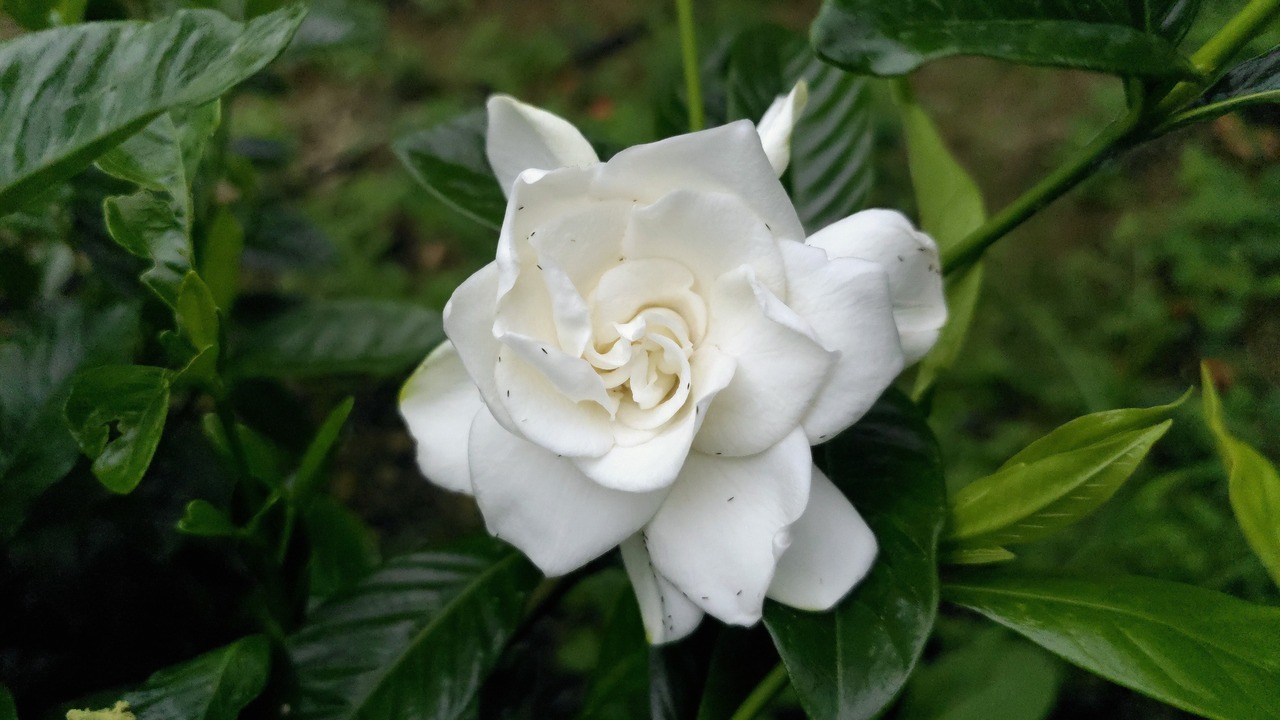
Gardenias are beloved for their creamy white, waxy flowers and iconic, intoxicating scent. While they are fragrant throughout the day, their perfume intensifies significantly after the sun sets. This is the plant’s strategy to attract its primary pollinators, which are nocturnal moths. The stark contrast between the pristine white blooms and the glossy, dark green leaves is stunning both day and night.
As a shrub, Gardenias are excellent for foundation plantings, hedges, or as container specimens. Planting one near an entrance or patio ensures you’ll be greeted by its heavenly fragrance every evening. They can be a bit particular about their care, requiring acidic soil and consistent moisture, but the reward is well worth the effort.
- USDA Hardiness Zones: 8 to 11
- Size: 5 to 8 feet tall and wide (varies by cultivar)
- Sunlight: Partial shade (prefers morning sun and afternoon shade)
- Soil: Acidic, moist, well-draining soil rich in organic matter
8. Queen of the Night (Epiphyllum oxypetalum)
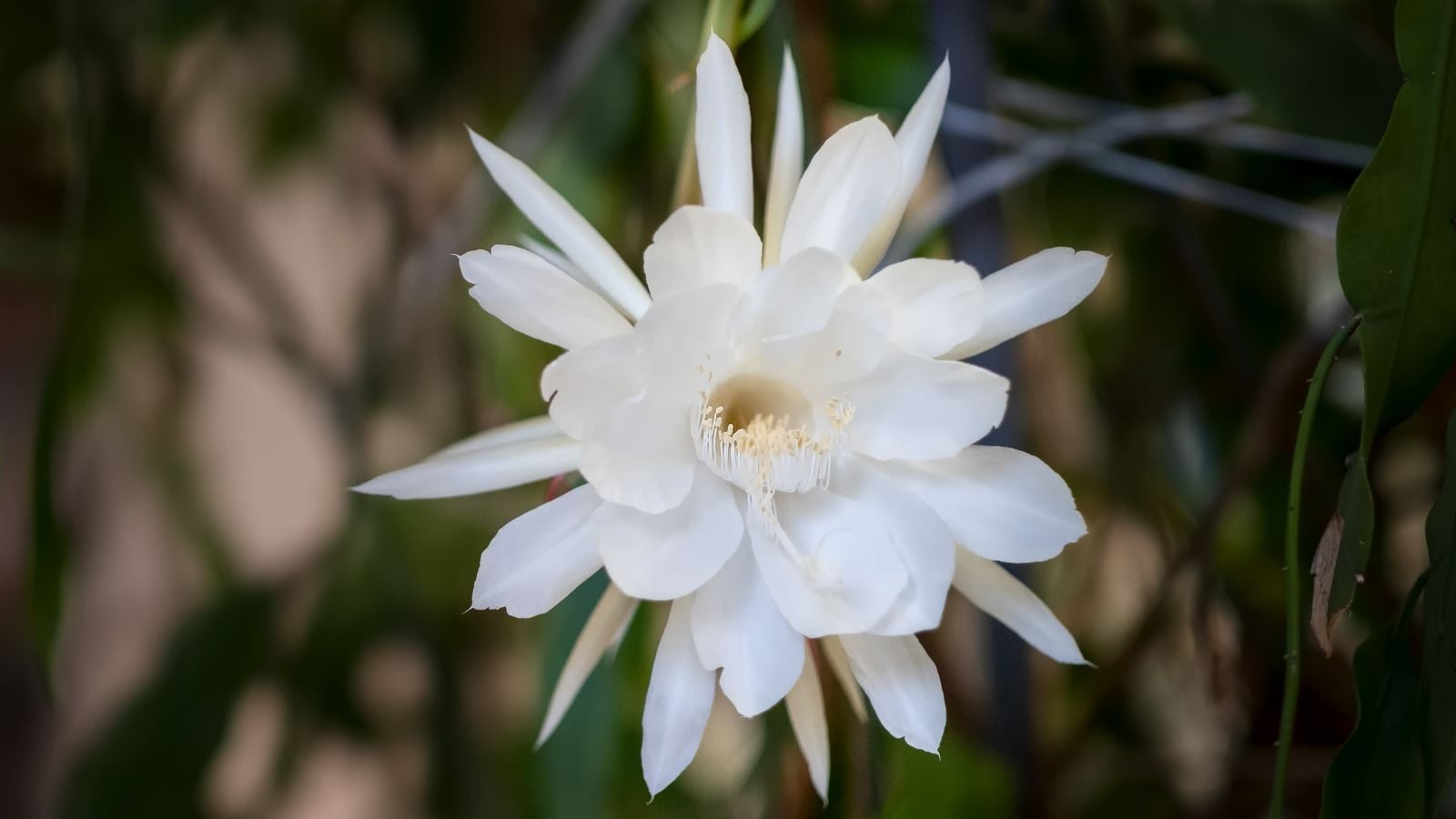
The Queen of the Night is an orchid cactus that puts on one of the most spectacular—and fleeting—shows in the plant world. This epiphytic cactus has long, flat, leaf-like stems rather than spines. For most of the year, it’s an interesting but unassuming plant. But for one or two nights a year, it produces enormous, intricate white flowers that can reach up to 10 inches across.
The flowers begin to open after dark and release an exquisite, clean fragrance. By sunrise, they wilt. Growing a Queen of the Night requires patience, but witnessing a bloom is an unforgettable event many gardeners celebrate with “bloom parties.” It is best grown in a hanging basket or pot where its long stems can cascade down. It needs protection from frost and thrives in bright, indirect light.
- USDA Hardiness Zones: 10 to 11
- Size: Stems can reach 10 feet long
- Sunlight: Bright, indirect light
- Soil: Well-draining cactus or orchid mix
9. Night Phlox (Zaluzianskya ovata)
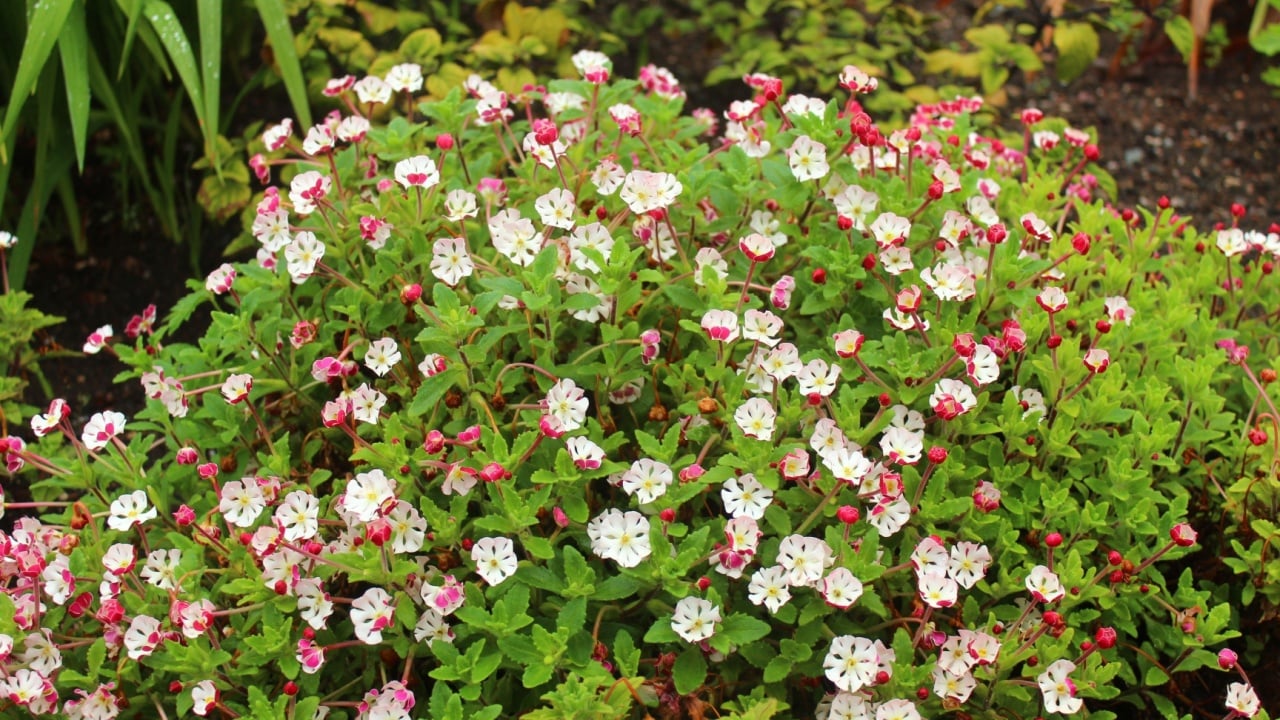
Also known as “midnight candy,” Night Phlox is a delightful little plant that packs a powerful fragrant punch. During the day, its small, maroon-backed petals remain closed. But as evening approaches, they open to reveal pristine white, star-shaped faces. The real magic is the scent: a sweet fragrance reminiscent of honey, vanilla, or almond.
Night Phlox is a low-growing, mounding perennial that is perfect for the front of a border, rock gardens, or in containers. Its petite size makes it ideal for placing on a patio table or near a seating area where its delicate beauty and strong fragrance can be fully appreciated up close.
- USDA Hardiness Zones: 9 to 11 (often grown as an annual)
- Size: 8 to 12 inches tall and wide
- Sunlight: Full sun to partial shade
- Soil: Well-draining, sandy soil
10. Mock Orange (Philadelphus coronarius)
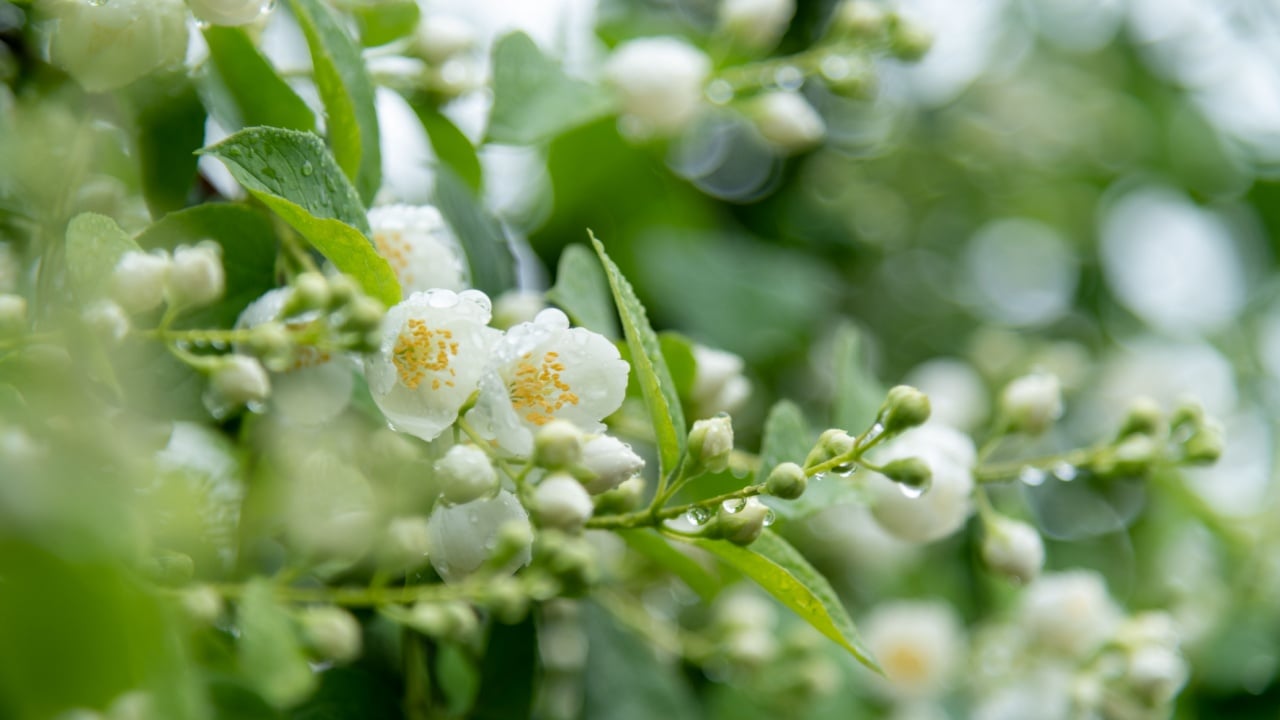
Mock Orange is a deciduous shrub that earns its name from the wonderful citrusy fragrance of its blossoms, which is very similar to that of an orange tree. In late spring or early summer, this hardy shrub is covered in clusters of simple but beautiful four-petaled white flowers.
While fragrant during the day, the scent becomes noticeably stronger and carries further on the evening air. This is an excellent, low-maintenance shrub for creating a fragrant hedge or as a background plant in a mixed border. Its arching branches give it a graceful, fountain-like shape. Be sure to choose a fragrant variety, as some modern cultivars have been bred for flower size at the expense of scent.
- USDA Hardiness Zones: 4 to 8
- Size: 10 to 12 feet tall, 10 to 12 feet wide
- Sunlight: Full sun to partial sun
- Soil: Moist, well-draining soil
11. Datura (Datura inoxia)
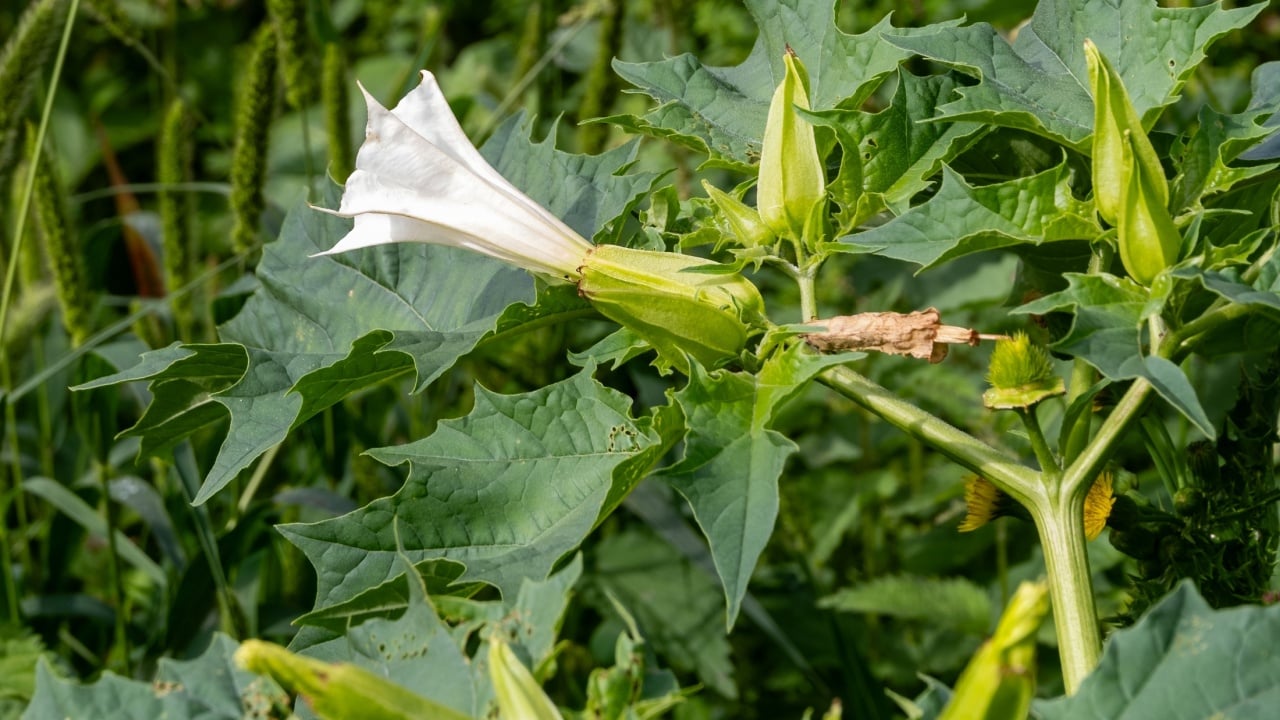
Often confused with the downward-facing Angel’s Trumpet (Brugmansia), Datura features large, upright, trumpet-shaped flowers that face the sky. These blooms, often called Devil’s Trumpets, unfurl at dusk and stay open until noon the next day, releasing a honeysuckle-like fragrance. The flowers are typically white but can have purple accents. They are followed by a spiky, round seed pod that gives the plant another common name, Thornapple.
Datura is a fast-growing, shrubby annual or tender perennial that makes a bold statement in the garden. Like its relative Brugmansia, all parts of the Datura plant are highly toxic and should be handled and placed with extreme caution, away from children and pets.
- USDA Hardiness Zones: 9 to 10 (grown as an annual elsewhere)
- Size: 2 to 4 feet tall and wide
- Sunlight: Full sun
- Soil: Rich, well-draining soil
12. Casa Blanca Lily (Lilium ‘Casa Blanca’)
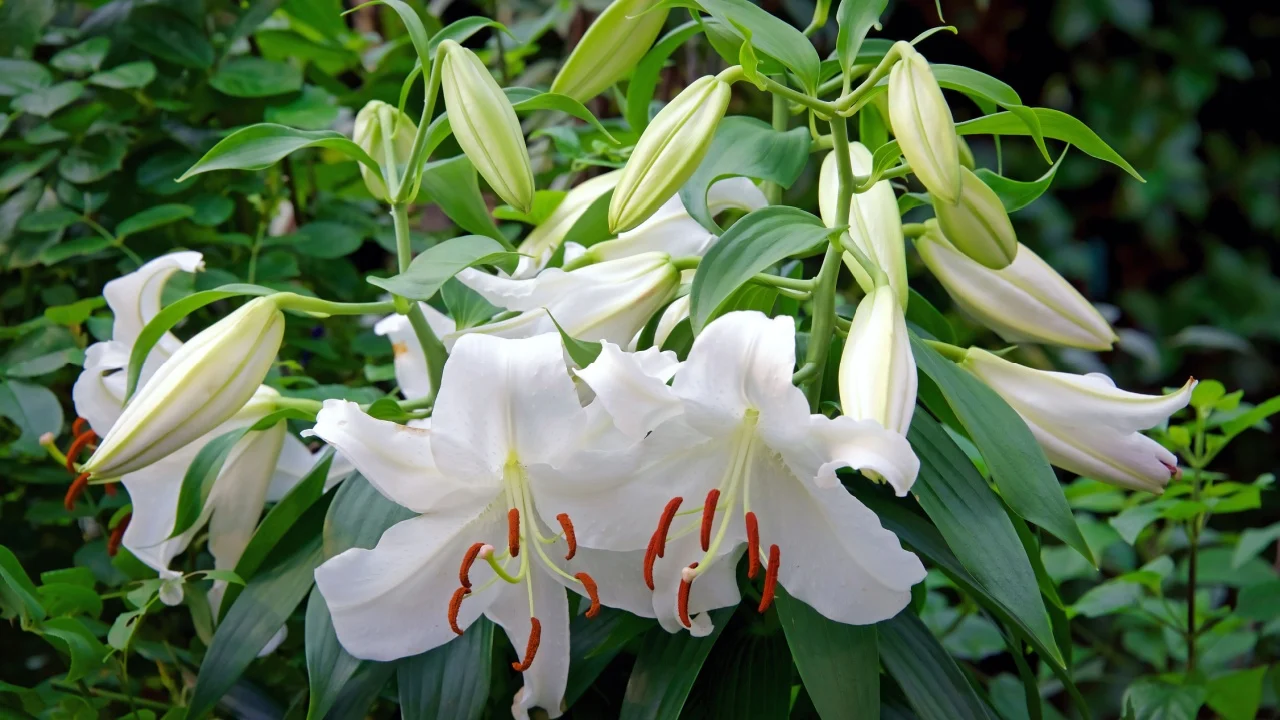
As one of the most famous Oriental lilies, ‘Casa Blanca’ is celebrated for its huge, outward-facing, pure white flowers that can be 8 to 10 inches across. These stunning blooms are held on strong, tall stems and make an incredibly elegant statement in the mid-summer garden.
When evening arrives, they release a classic, spicy-sweet lily perfume that is both potent and sophisticated. These bulbs are perfect for the middle of a perennial border, where their height allows them to stand out. They are excellent cut flowers, but just a few stems can fill a whole room with fragrance. Their pure white color shines in the low light of evening, making them a superb choice for a moon garden.
- USDA Hardiness Zones: 4 to 9
- Size: 3 to 4 feet tall
- Sunlight: Full sun to partial sun
- Soil: Well-draining, slightly acidic soil
Planning Your Nighttime Garden
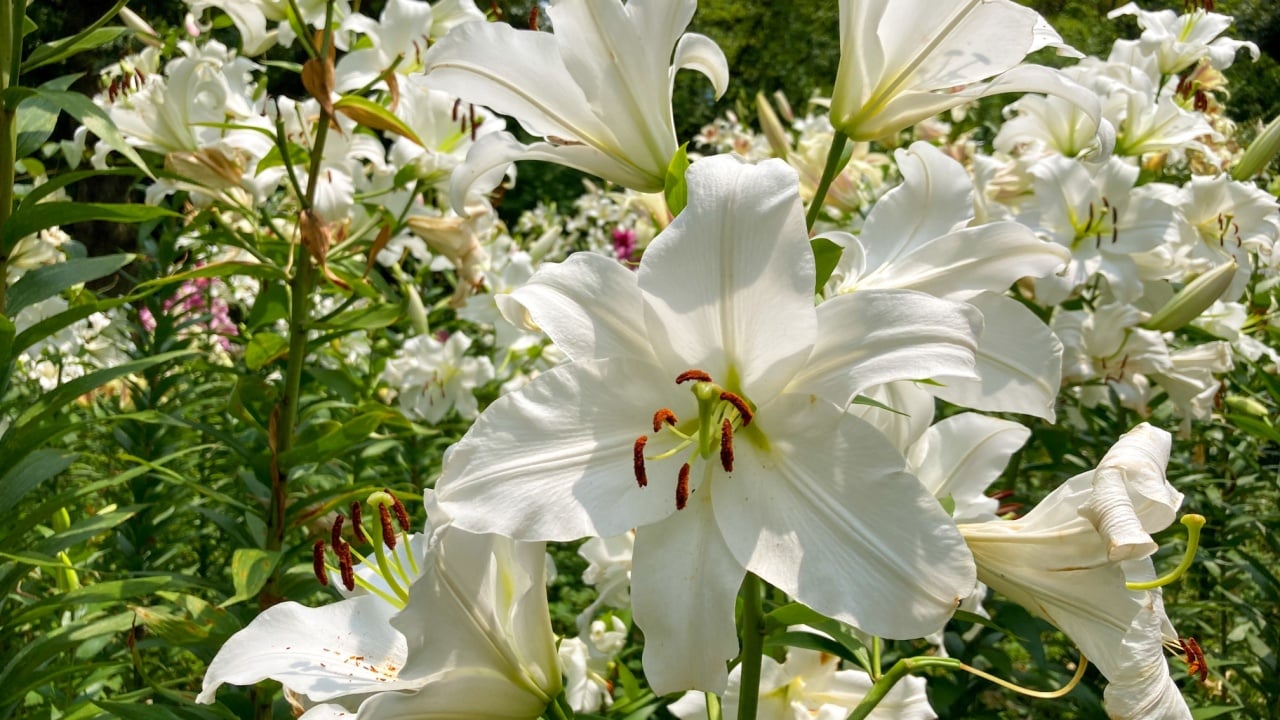
Feeling inspired to create your own moon garden? The next step is to start planning. Think about where you spend your evenings outdoors—perhaps a patio, deck, or a favorite bench. This is the perfect spot to build your nocturnal oasis around.
Start by choosing two or three plants from this list that are well-suited to your climate and soil conditions. Consider a mix of plants for a variety of heights and bloom times. Plant a vine like Moonflower on a trellis for vertical interest, a shrub like Gardenia or Night-Blooming Jasmine for a fragrant foundation, and tuck in some smaller plants like Night Phlox in pots. Remember to choose plants with white or pale-colored flowers, as they will reflect the moonlight and seem to glow in the dark. With a little planning, you can design an enchanting garden that comes to life just as you’re settling in to enjoy a peaceful evening.
Read more
18 Gorgeous Bell-Shaped Flowers That Make a Garden Dreamy
8 Enchanting Flowers to Transform a Garden Into a Dreamy Cottagecore Paradise