
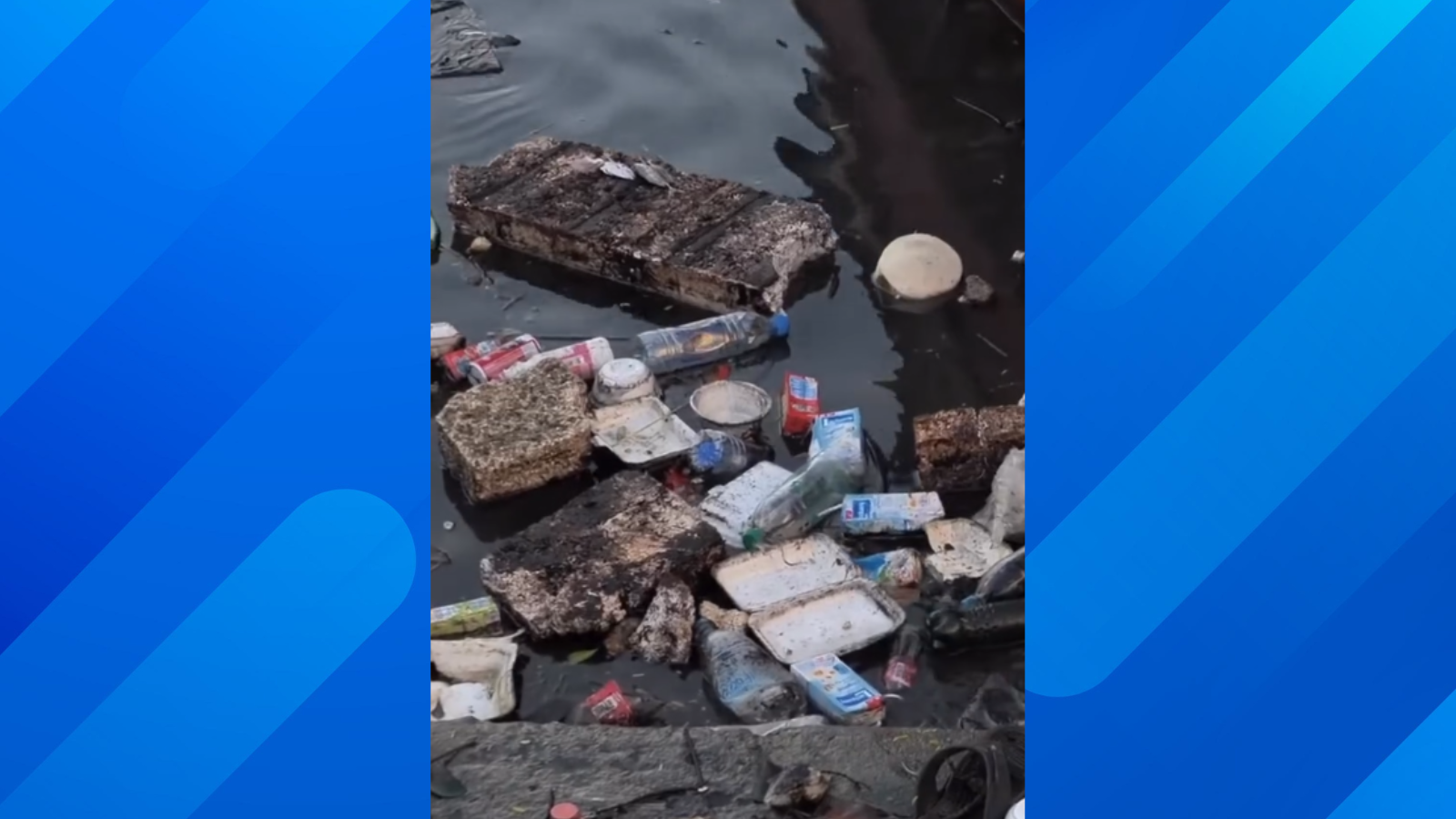
Conservancy Company Finds a Simple Way To Keep Garbage From Entering the Ocean
There’s a lot of money being thrown around by people who are trying to come up with clever ways to keep our oceans free of trash and debris. For example, The Ocean Cleanup uses large U-shaped floating systems that rely on natural currents to trap trash. On the ground, volunteers like those with the Ocean Conservancy will walk the coastline, picking up trash on foot.
However, organizers at The Great Bubble Barrier say they may have come up with a way to block trash from entering the ocean in the first place.
Much like the name suggests, the bubble barrier puts up a barrier of air bubbles along the mouths of waterways that enter larger bodies of water, like the Bubble Barrier Amsterdam, which sits in the Westerdok canal, and collects approximately 177 pounds of trash a month, according to the group’s Instagram page.
So why aren’t bubble barriers standard everywhere? Keep reading to find out.
View this post on Instagram
The Great Bubble Barrier Is Based in Amsterdam
It should come as no surprise that the Westerdok canal is a major focus of the team behind the barrier, since the company is based right in the Netherlands. The bubble barrier works by creating a bubble curtain, which prevents most plastic trash from passing through.
The website touts the bubble curtain as being one of the “most effective and energy-efficient” solutions that reduce plastic pollution without having a negative impact on ships or marine life.
Then, the company says that the local water authority cleans up the plastic captured by the barrier, taking it to a recycling center to be processed.
Why Aren’t Bubble Barriers Standard
It may sound like this system would be ideal for any number of waterways, especially since it stops new plastic pollution from ever entering the ocean, but there’s a good reason why it’s not the gold standard. One of the things holding The Great Bubble Barrier back from a larger deployment seems to be the energy required to run it.
The company says that the barrier uses compressed air that is pumped through a tube that spans the length of the waterway. Larger waterways would require much more energy to run the bubbles, making it harder to deploy in some areas.
And while the company says that it uses renewable energy whenever possible, it sounds like not everywhere provides similar access to this kind of power source.


