Your Pillows Are Dirtier Than You Think — Here’s How to Wash Them the Right Way
A favorite pillow holds more than a head at night. After months of use, it collects sweat, body oils, dust, and the faint yellow stains that show up no matter how often the pillowcase gets swapped. That buildup is normal, but it does not have to stay.
Many people guess at the cleaning process and hope for the best. Some reach for cold water, others scrub by hand with dish soap, and plenty just toss the pillow in with a heavy scoop of detergent.
These choices feel reasonable, yet they often leave pillows damp with residue or barely cleaner than before. One approach
Here is the method that consistently brings pillows back to a bright, fresh state with little effort.
The Right Way to Wash Pillows
Check the Care Tag First
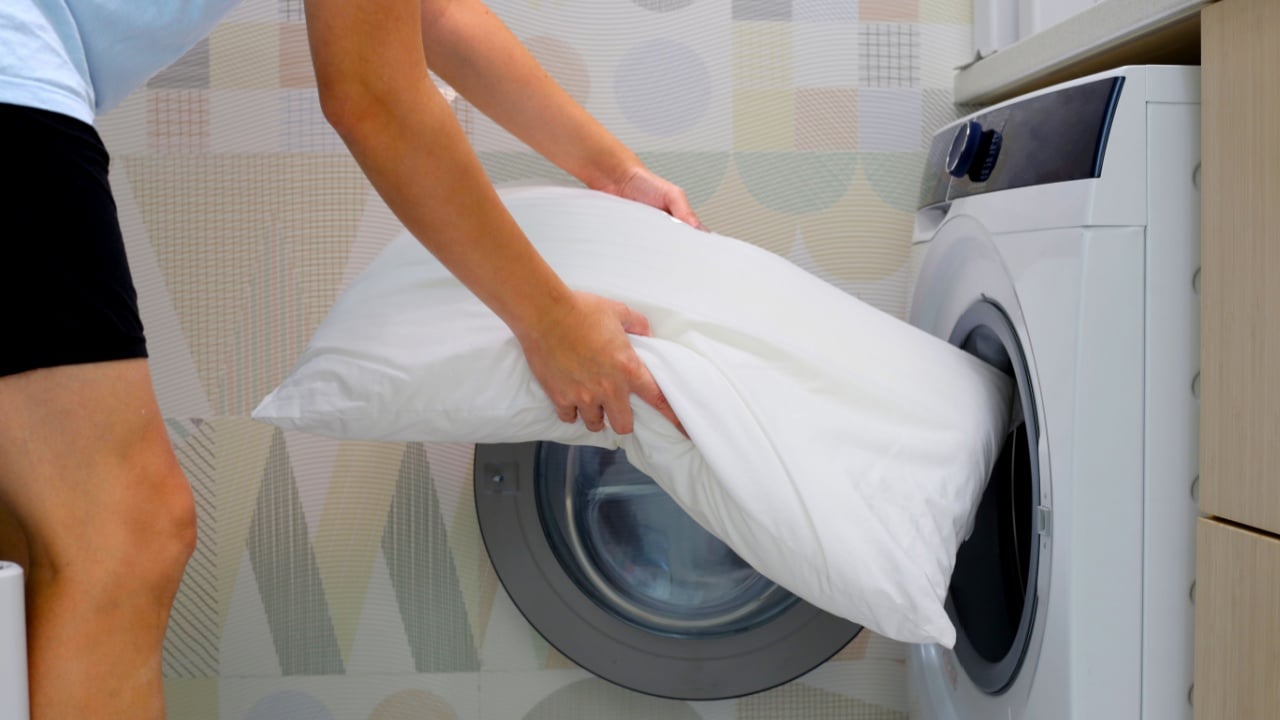
Every pillow carries a small tag that states how it should be cleaned, and that tag decides everything that follows. Some pillows handle a full machine wash without trouble, while others, such as certain memory foam or specialty fill types, can break down or clump when soaked.
A quick read of the label prevents a ruined pillow and wasted time. The advice in this article applies only to pillows clearly marked as machine washable.
The tag also lists drying limits, which matter as much as the wash itself. Many washable pillows tolerate warm water but require low heat or no heat during drying. Skipping that detail can melt synthetic fill or shrink the cover.
A pillow that survives the wash can still suffer in the dryer, so both instructions deserve a careful look.
Why Warm Water Wins
Warm water does the heavy lifting that cold water cannot. Body oils, sweat, and skin cells bond to fabric fibers, and these substances loosen far more easily at a higher temperature. Warm water softens that buildup so the wash can carry it away.
The result is a pillow that comes out brighter and noticeably cleaner. Cold water, by contrast, leaves much of that grime in place.
It lacks the warmth needed to break down oils, so stains and yellowing tend to stay even after a full cycle. A cold wash might freshen the surface, yet the deeper buildup remains locked in the fibers.
For pillows that allow warm water, the temperature alone makes a clear difference in how clean they get.
The Delicate Cycle Protects Shape
A pillow is mostly soft fill held inside a thin cover, and rough agitation can wreck both. The delicate cycle uses slower, gentler movement that cleans the fabric without twisting or compressing the inside.
This keeps the fill evenly spread instead of bunched into hard lumps. The pillow holds its form and stays comfortable after it dries.
A heavier cycle puts that structure at risk. Strong spinning can shift fill to one side, leaving a pillow that feels flat in some spots and dense in others.
Once that happens, fluffing rarely restores the original shape. The delicate setting trades a little speed for a result that lasts, which is well worth the swap.
Less Detergent, Better Results
More soap does not mean a cleaner pillow, and a smaller amount actually works better. Pillows hold soap deep in their fill, and a heavy dose creates suds that the rinse struggles to clear.
Leftover detergent stiffens the fabric and can irritate skin during sleep. A reduced amount cleans well and leaves far less behind.
Too much soap also traps moisture and odor inside the pillow. Residue gives dust and bacteria a surface to cling to, which undoes the point of the wash.
A modest scoop of detergent lifts dirt without flooding the fibers. Restraint here protects both the pillow and the person who sleeps on it.
Give it a Second Rinse
A single rinse rarely clears every trace of soap from a thick pillow. The filter absorbs water and detergent, so an extra rinse cycle gives the machine another pass to flush out what lingers.
This step removes hidden residue that the first rinse misses. The pillow comes out clean rather than coated.
The second rinse also shortens drying time and reduces stiffness. A pillow free of leftover soap dries softer and smells fresher once finished.
After the rinse, the pillow should air-dry or go in the dryer on low or no heat, depending on what the care tag allows. That final choice locks in the clean result without harming the fill.
The Wrong Ways to Wash a Pillow
Using Cold Water
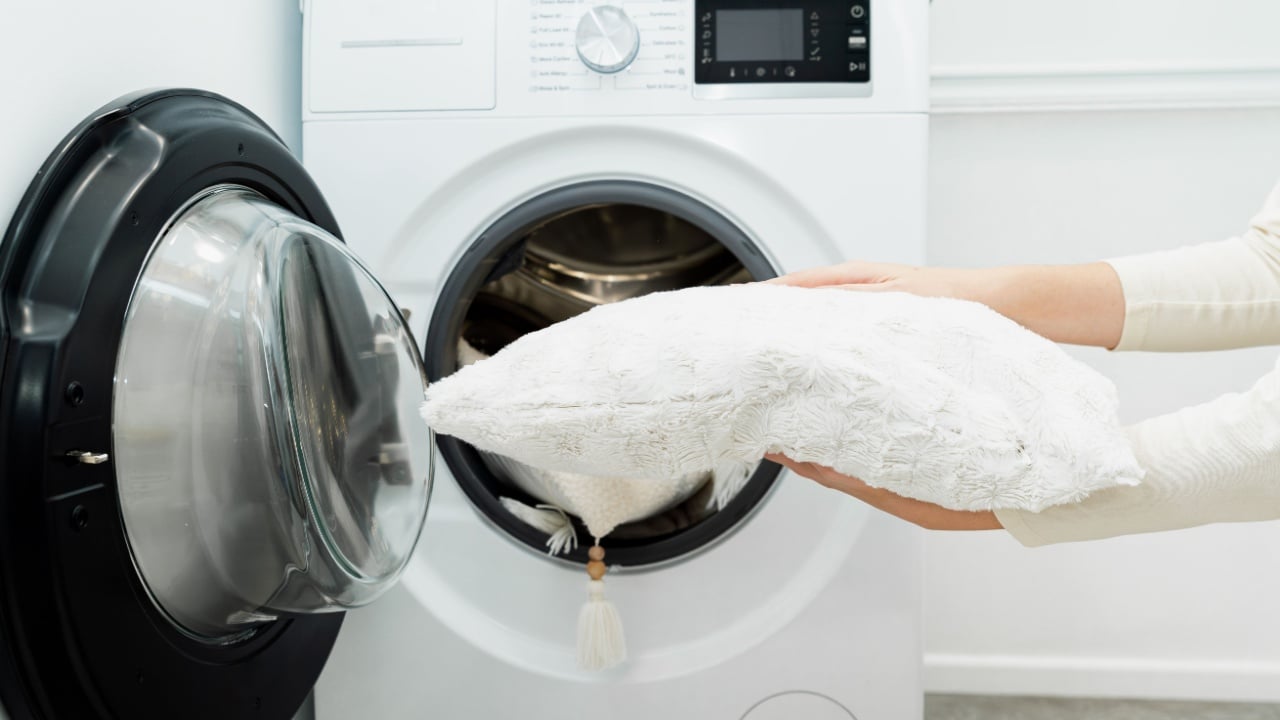
Cold-water machine washing follows the right steps with the wrong temperature, and that single flaw limits the outcome.
The delicate cycle and second rinse still help, yet cold water cannot break down the oils that cause yellowing.
The pillow looks freshened on the surface, while the deeper stains hold on. The effort matches a warm wash, but the payoff does not.
Handwashing Falls Short
Hand-washing with warm water and dish soap sounds gentle, though it demands far more work for a weaker finish.
Dish soap is built for grease on dishes, not for the even cleaning a pillow needs, and it foams heavily and clings to fibers.
Without a machine to spin out the soap, residue stays trapped, and rinsing by hand becomes a long, tiring job. The pillow ends up damp, soapy, and only partly clean.
A Cleaner Night’s Rest
A washable pillow responds best to warm water, a delicate cycle, a light hand with detergent, and a second rinse, followed by drying that respects the care tag.
Each step solves a specific problem, from lifting oils to clearing soap, and together they bring a tired pillow back to a bright, fresh state. The method asks for almost no extra effort once the routine becomes familiar.
Pillows benefit from a wash every few months, and pairing that schedule with a protective pillow cover slows future buildup between cleanings.
Read More:
Making Dream Pillows With Herbs From The Garden
When to Replace Your Pillows (Hint: More Often Than You Think)