6 Snakes You Don’t Want Anywhere Near Your Property
Discovering wildlife in your backyard can be one of the joys of gardening and homeownership. From busy squirrels to colorful birds, these visitors often add a touch of nature to our personal green spaces. However, not all creatures are welcome guests. While many common garden snakes are harmless and even beneficial, helping to control rodent populations, some species pose a significant danger to you, your family, and your pets (although, remember, they are part of the ecosystem too- just hopefully not your yard).
Knowing how to identify potentially hazardous snakes is a crucial skill for any homeowner. It allows you to take proper precautions, make your yard less attractive to them, and know exactly what to do if you encounter one. This guide will walk you through ten snakes you definitely don’t want to find slithering through your garden, providing you with the knowledge to keep your outdoor sanctuary safe and enjoyable for everyone.
1. Rattlesnakes

Rattlesnakes are one of the most iconic and widespread venomous snakes in the Americas. They are a type of pit viper, meaning they have heat-sensing pits on their faces to help them locate warm-blooded prey. Their appearance can vary greatly depending on the species and region, but they typically have thick, heavy bodies with rough scales colored to blend in with their environment, from desert sands to forest floors. Their most famous feature is the rattle at the end of their tail, made of interlocking keratin segments, which they vibrate as a loud warning when threatened.
While they have a reputation for being aggressive, rattlesnakes prefer to avoid confrontation and will use their rattle to tell you to stay away. Bites usually occur when they are surprised or cornered. Their venom is a potent hemotoxin that destroys tissue and can be fatal without prompt medical attention, making them a serious threat to humans and pets. They are often found in cool, hidden spots like under decks, in rock gardens, or near woodpiles.
Quick Facts: Rattlesnakes
- Why it’s dangerous: Highly venomous bite that can cause severe pain, tissue damage, and death.
- Where it’s found: Across the Americas, from southern Canada to northern Argentina. Habitats include deserts, forests, and grasslands.
- Prevention tips: Seal gaps under sheds and decks. Install snake-proof mesh fencing buried a few inches into the ground. Keep your yard tidy to eliminate hiding spots. Consider a rattlesnake vaccine for pets in high-risk areas.
2. Copperheads
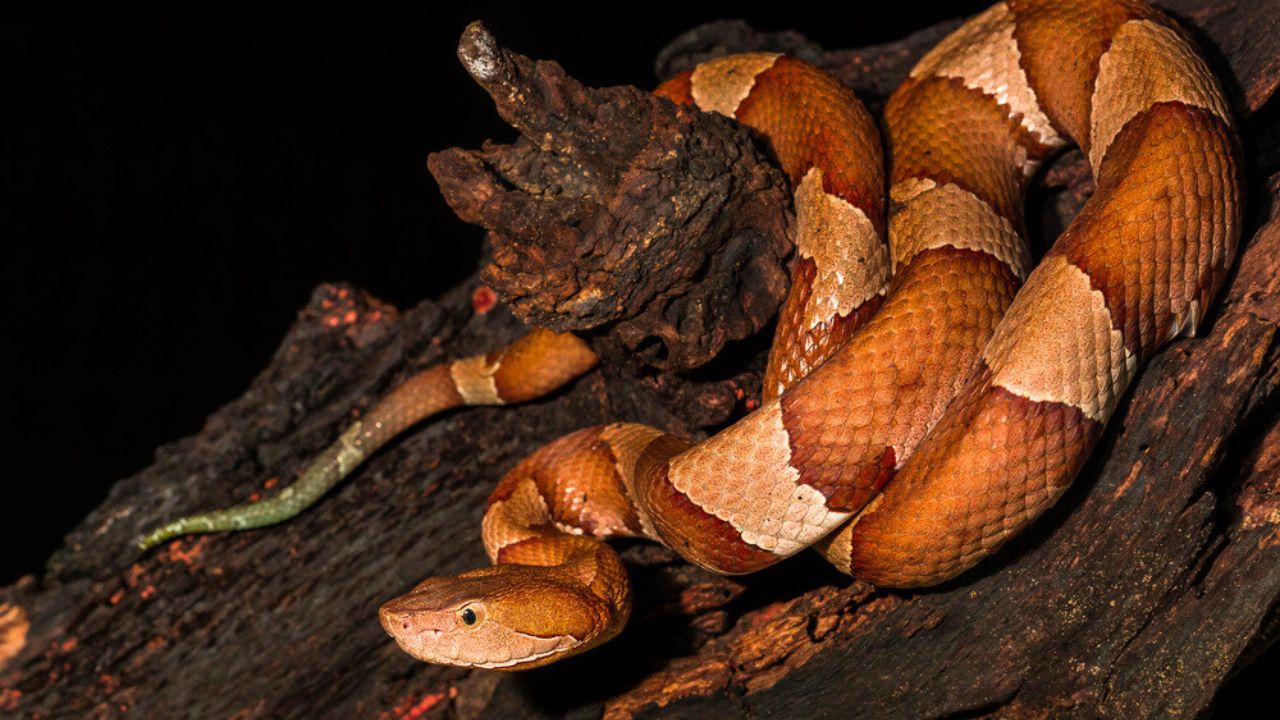
Copperheads are another common pit viper found throughout the eastern and central United States. They are named for the coppery-red hue of their heads. Their bodies are light brown or tan with distinctive dark brown, hourglass-shaped bands running down their length. This pattern provides excellent camouflage among fallen leaves and forest debris, which is where they spend most of their time. They are medium-sized snakes, typically reaching 2 to 3 feet in length.
Copperheads are responsible for more venomous snakebites in the United States than any other species, largely because they are so well-camouflaged and often freeze instead of fleeing when approached. People and pets can accidentally step on them without realizing it. While their venom is less potent than a rattlesnake’s, a bite is extremely painful and requires immediate medical care. They are often found in woodpiles, leaf litter, and overgrown areas.
Quick Facts: Copperheads
- Why it’s dangerous: Venomous bite that causes intense pain and swelling, though rarely fatal to healthy adults.
- Where it’s found: Eastern and central United States, in forested areas, rock outcroppings, and suburban neighborhoods.
- Prevention tips: Keep your lawn mowed short. Remove piles of leaves, wood, and other debris. Manage rodent populations, as they are a primary food source.
3. Cottonmouths (Water Moccasins)
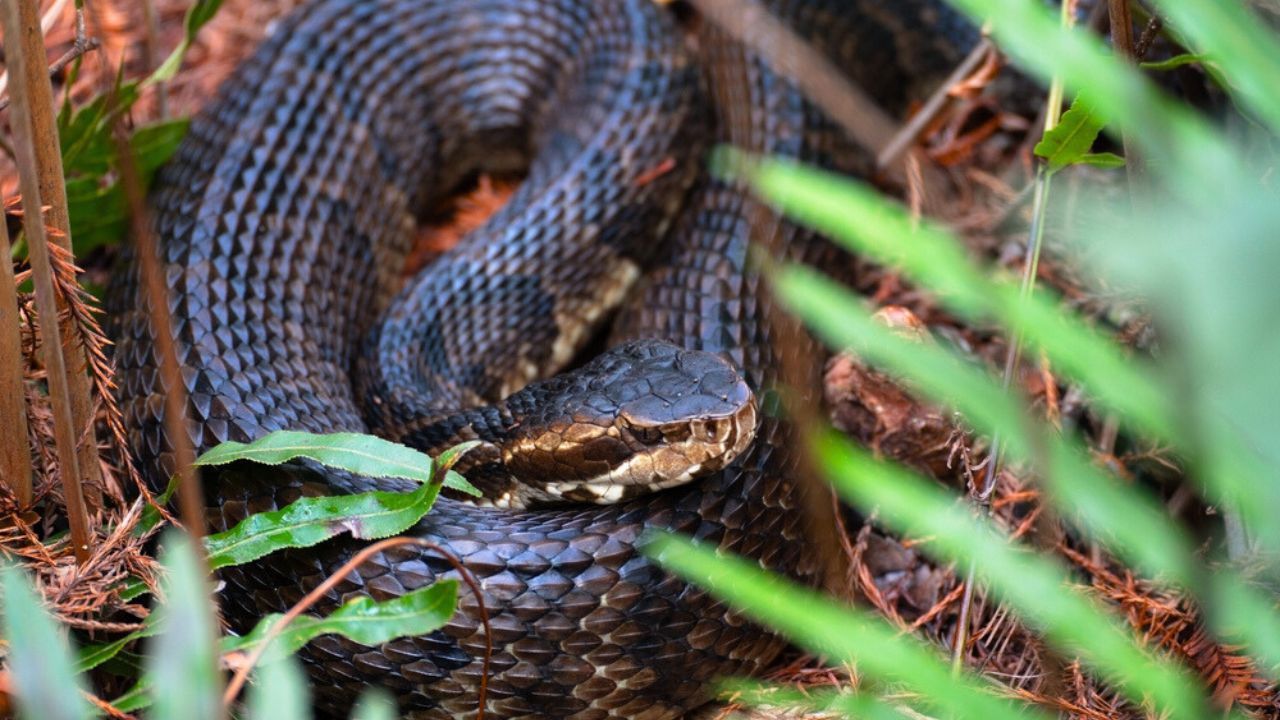
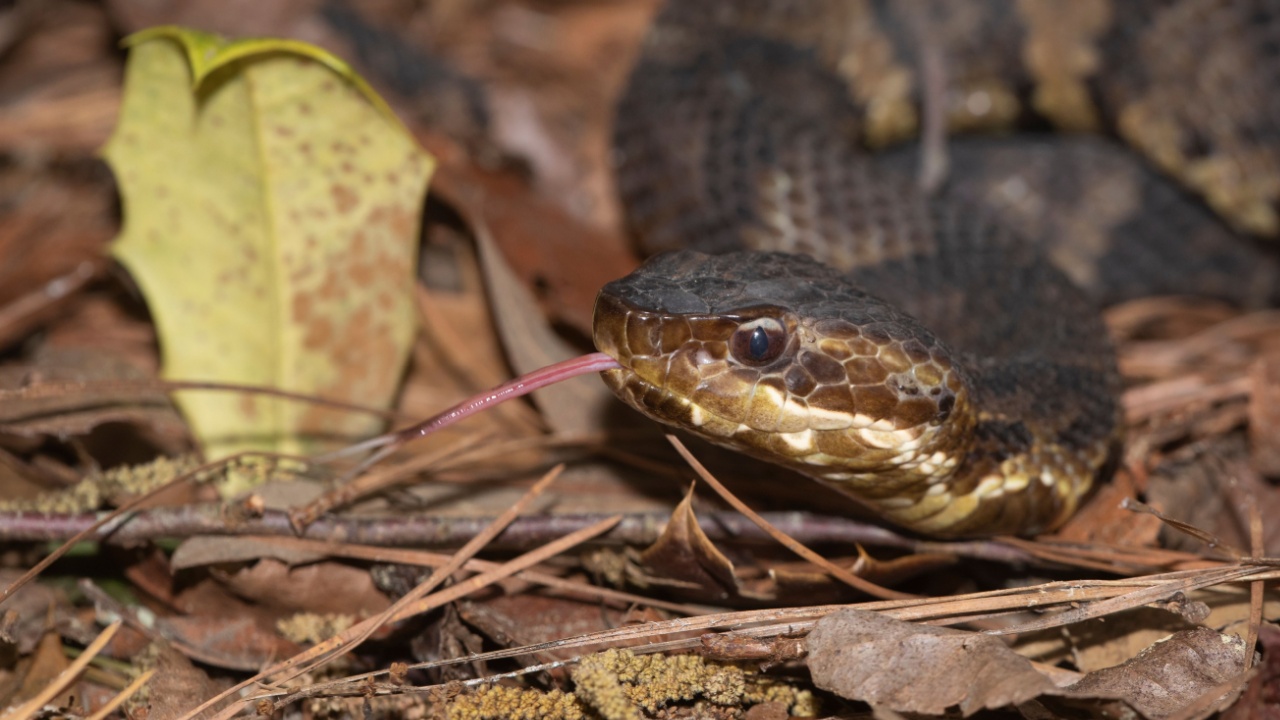
Cottonmouths, also known as water moccasins, are semi-aquatic pit vipers native to the southeastern United States. They are large, heavy-bodied snakes that can grow up to 4 feet long. Their coloration ranges from dark brown and olive green to solid black, which can make them difficult to spot in muddy waters. Their most defining feature is the bright white interior of their mouths, which they display in a defensive “gape” when threatened, giving them the name “cottonmouth.”
These snakes are known for their defensive nature and may stand their ground when approached, unlike many other snakes that flee. This behavior, combined with their potent cytotoxic venom that destroys tissue, makes them particularly dangerous. They are typically found in or near water sources like ponds, lakes, rivers, and marshes, but can travel overland, especially after heavy rains.
Quick Facts: Cottonmouths
- Why it’s dangerous: Potent venom causes severe tissue damage. Their defensive behavior increases the risk of a bite.
- Where it’s found: Southeastern United States, in swamps, marshes, ponds, and slow-moving streams.
- Prevention tips: Be cautious around water edges. Wear thick boots and long pants when doing yard work near water. Keep pool areas secure and remove any standing water that might attract them.
4. Coral Snakes
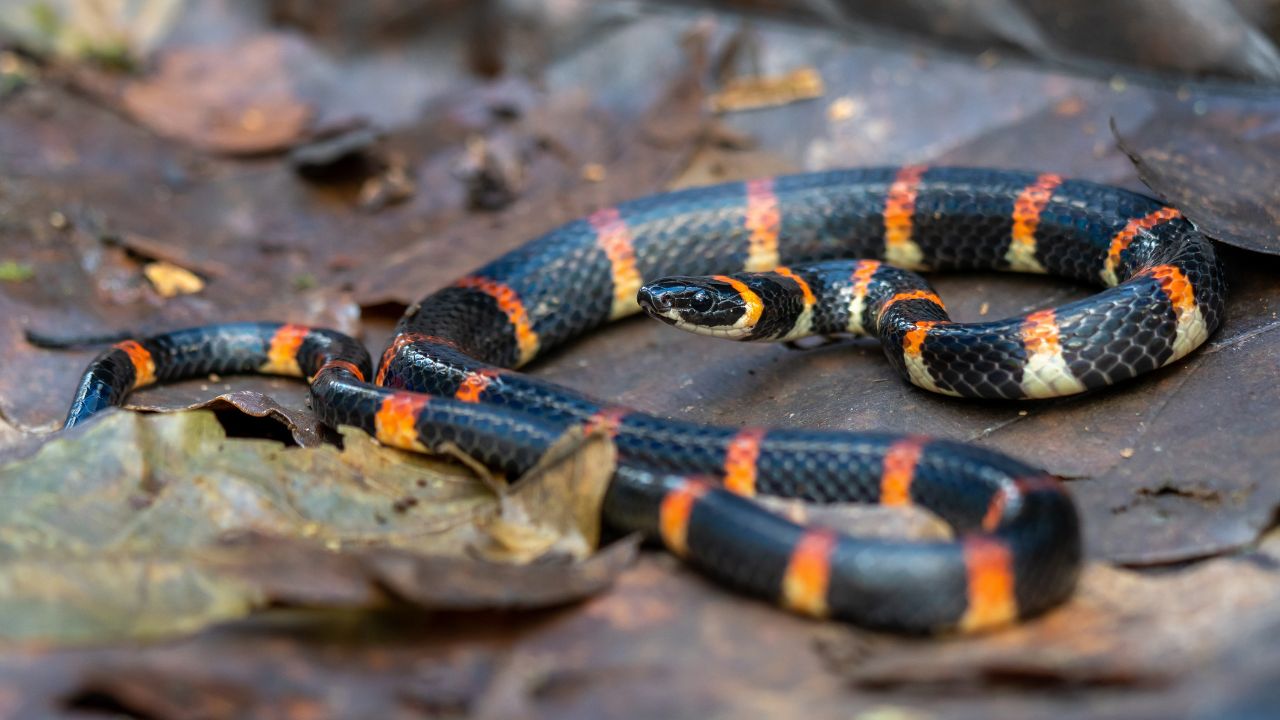
Coral snakes are known for their vibrant color pattern of red, yellow, and black bands. Found in the southern United States, these snakes are often confused with the non-venomous milk snake or king snake. The famous rhyme, “Red on yellow, kill a fellow; red on black, venom lack,” helps distinguish them: on a coral snake, the red and yellow bands touch. They are slender snakes with rounded heads, and they are part of the Elapidae family, related to cobras and mambas.
Coral snakes are shy and reclusive, often hiding under logs, leaf litter, or burrowing into the soil. Bites are rare and usually occur when someone handles or accidentally steps on one. However, their venom is a powerful neurotoxin that can cause respiratory failure and death if not treated. The effects may be delayed, so any bite from a coral snake should be considered a medical emergency.
Quick Facts: Coral Snakes
- Why it’s dangerous: Extremely potent neurotoxic venom that can paralyze the respiratory system.
- Where it’s found: Southern United States, from Arizona to Florida, in wooded, sandy, and marshy areas.
- Prevention tips: Be careful when moving logs, rocks, or compost piles. Use a tool to flip objects toward you to create a barrier. Educate family members on how to identify them.
5. Invasive Pythons
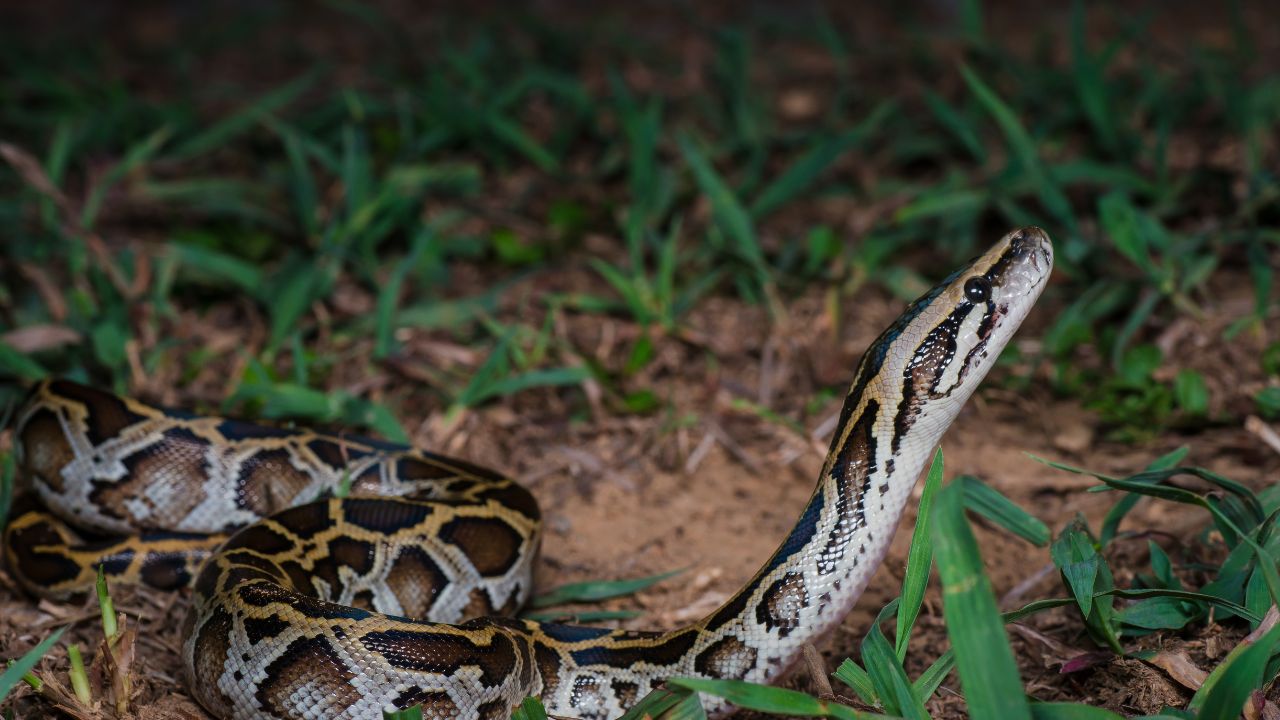
While not venomous, invasive pythons, particularly the Burmese python in Florida, are a significant threat. These massive constrictors can grow to over 15 feet long and are powerful enough to prey on large animals, including dogs, deer, and even alligators. Their presence has devastated native wildlife populations in the Everglades, and they are gradually expanding their territory. Their camouflage of tan, brown, and black blotches makes them difficult to spot in swampy or overgrown environments.
The danger from a python comes from its immense size and strength. A large python can easily overpower an adult human and poses a lethal threat to pets and children. They are ambush predators and may be found near water sources, in dense underbrush, or even in suburban yards in affected areas.
Quick Facts: Invasive Pythons
- Why it’s dangerous: A powerful constrictor capable of killing large pets and posing a threat to humans.
- Where it’s found: Primarily in South Florida, especially near the Everglades, but its range is expanding.
- Prevention tips: If you live in an affected area, keep a close watch on pets when outdoors. Report any sightings to your state’s fish and wildlife agency immediately. Do not attempt to approach or capture one yourself.
6. Sidewinders
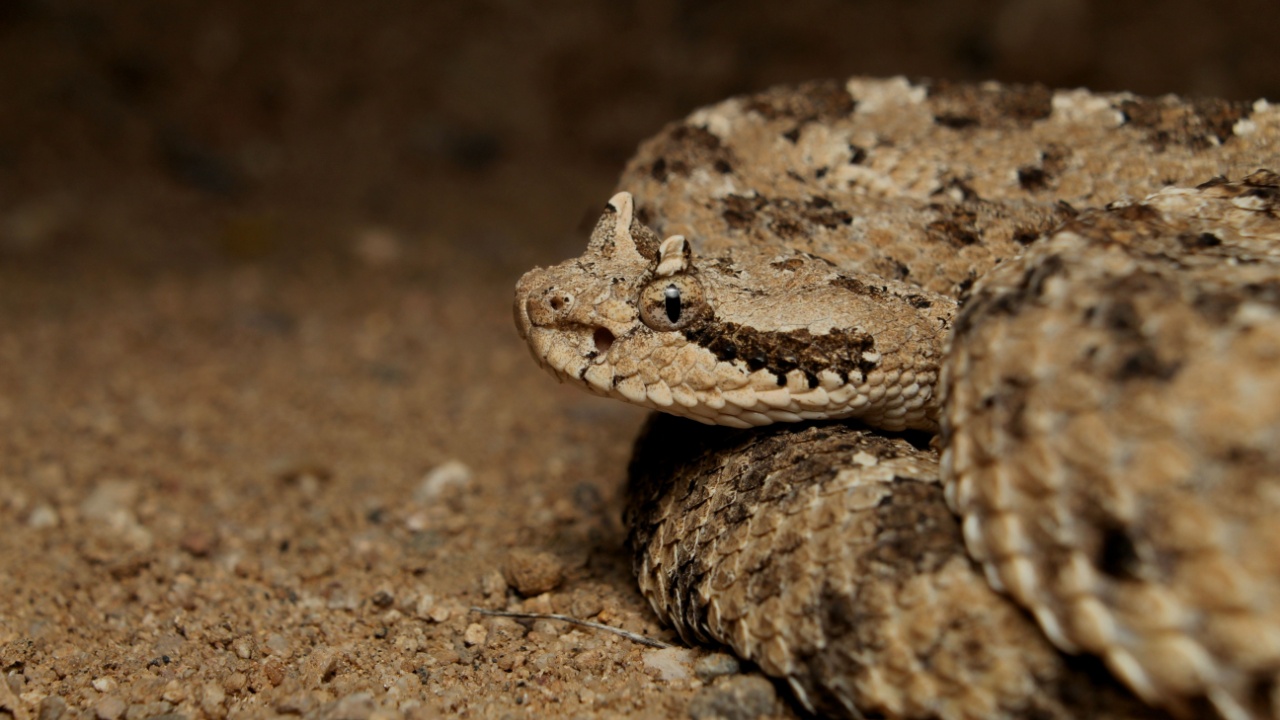
The sidewinder is a unique species of rattlesnake adapted to desert environments. Found in the deserts of the southwestern United States and northwestern Mexico, they are named for their unusual S-shaped, sideways movement, which allows them to move quickly across hot sand. They are small rattlesnakes, usually under 3 feet long, with a sandy or pale brown color that helps them blend into their surroundings. A key identifying feature is the raised, horn-like scale above each eye.
Like other rattlesnakes, sidewinders are venomous. Their venom is less potent than that of larger rattlesnakes but can still cause significant pain, swelling, and localized tissue damage. Because of their small size, they can be hard to spot in sandy or rocky landscaping. They are primarily nocturnal, hunting for lizards and rodents at night.
Quick Facts: Sidewinders
- Why it’s dangerous: Venomous bite that, while less potent than other rattlesnakes, still requires medical attention.
- Where it’s found: Desert regions of the Southwestern U.S. and Northwestern Mexico.
- Prevention tips: Be cautious when walking in sandy areas at dusk or night. Look for their distinctive J-shaped tracks in sand. Remove rock and debris piles where they might hide from the daytime heat.
Next Steps for a Snake-Safe Yard
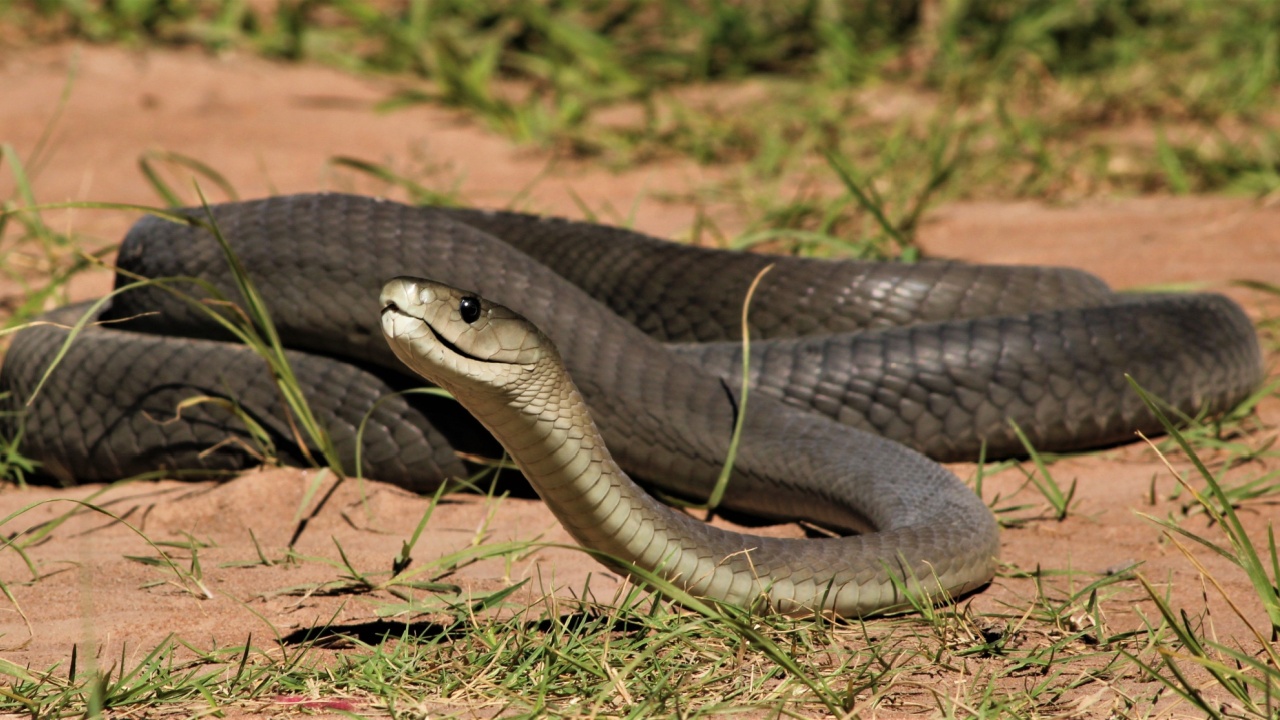
While you’re unlikely to encounter a mamba or bushmaster in your American garden, knowing how to handle local threats like rattlesnakes and copperheads is essential. Here are some actionable steps to protect your home:
- Make Your Yard Uninviting: The best defense is prevention. Keep grass short, trim dense bushes, and remove piles of leaves, rocks, and wood where snakes love to hide. Secure your compost pile and eliminate any standing water.
- Control the Food Source: Snakes are often drawn to yards in search of food. Use humane methods to control rodent and insect populations, and you’ll make your property far less appealing to their predators.
- Seal Your Home: Inspect your home’s foundation, porches, and steps for cracks and holes. Seal these entry points to prevent snakes from seeking shelter inside or underneath your house.
- Know When to Call a Professional: Never try to handle, trap, or kill a venomous snake yourself. If you identify a dangerous snake in your yard, keep a safe distance, secure your pets and children indoors, and call a professional wildlife removal service immediately. They have the training and equipment to handle the situation safely.
- Educate Yourself and Your Family: Teach everyone in your household, especially children, to recognize dangerous snakes in your region and to respect them by keeping their distance.
By taking these proactive measures, you can create a backyard that is both beautiful and safe, ensuring that your garden remains a place of peace and enjoyment for years to come.
Read more:
14 Spots in the Yard Snakes Love to Hide
9 Fastest Snakes in the World (And Where They Live)