22 Indoor Plants You Can Grow in Bottles and Jars at Home
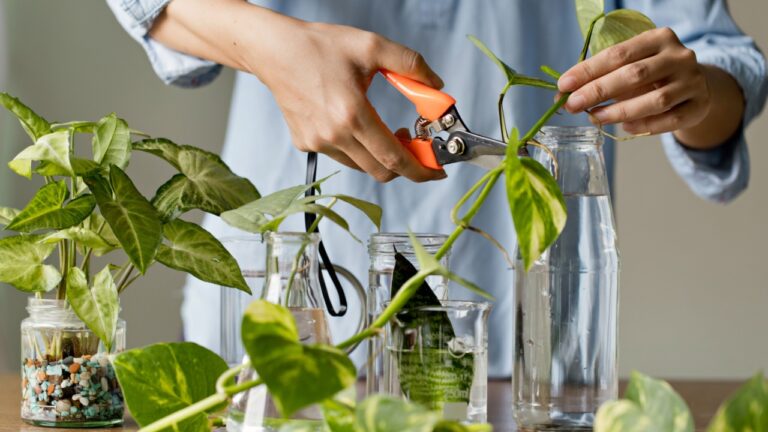
Growing plants indoors doesn’t always require bulky pots and bags of soil. You can create stunning green displays using simple glass jars and bottles you already have at home. This method, often a form of hydroponics, allows you to watch roots develop, adding a unique scientific and decorative element to your space. It’s a fantastic way to upcycle, propagate new plants from cuttings, and bring a touch of nature to even the smallest of spaces, like a windowsill or a desk corner.
Whether you’re a seasoned plant parent looking for a new project or a beginner wanting to start with something low-maintenance, growing plants in water is a rewarding experience. We will walk you through 22 excellent plant choices that thrive in jars and bottles, offering everything you need to know to get started and succeed from experts we sourced online.
1. Pothos (Epipremnum aureum)
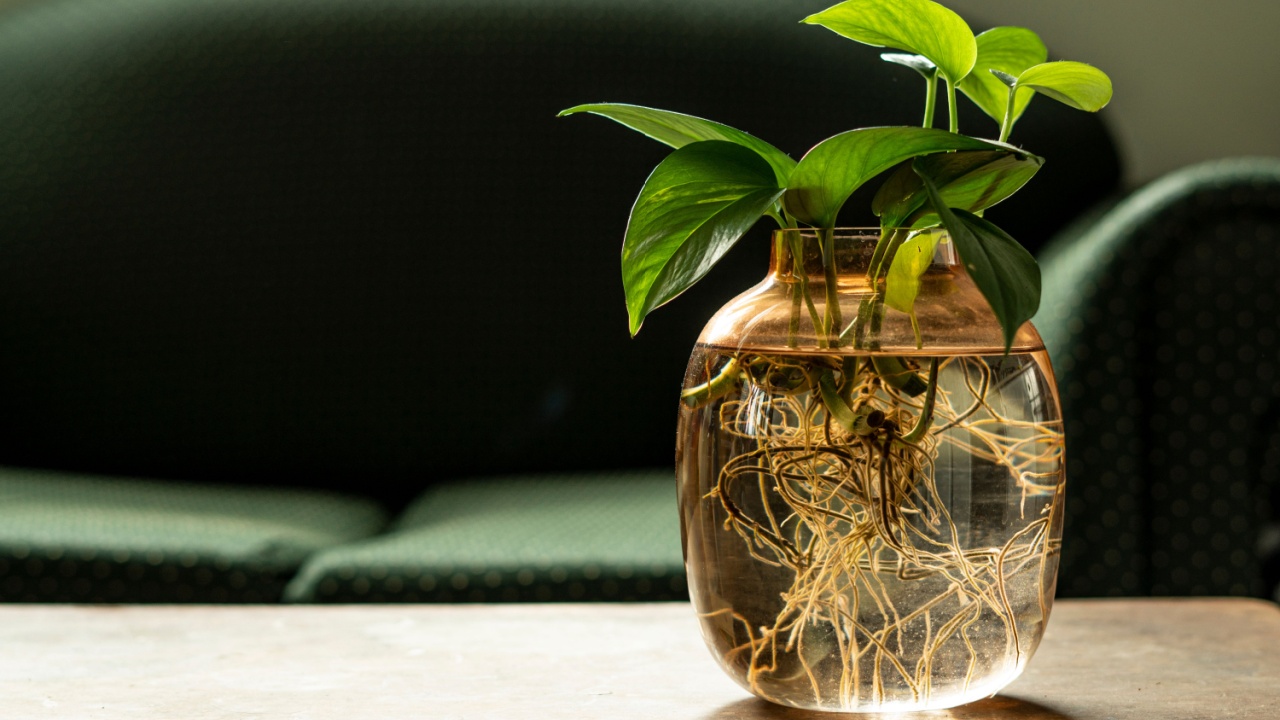
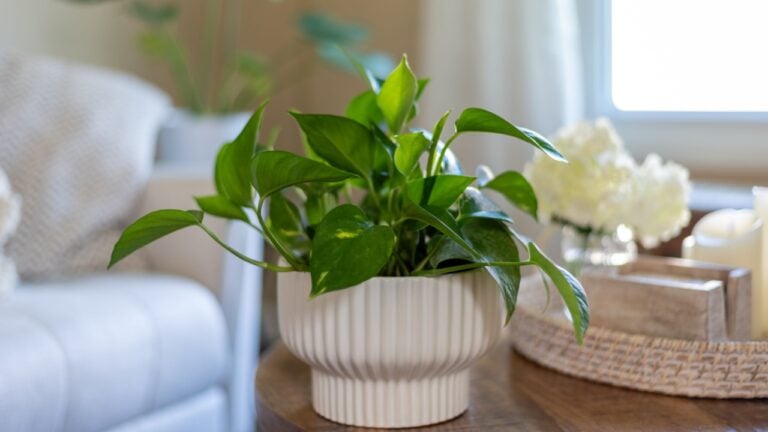
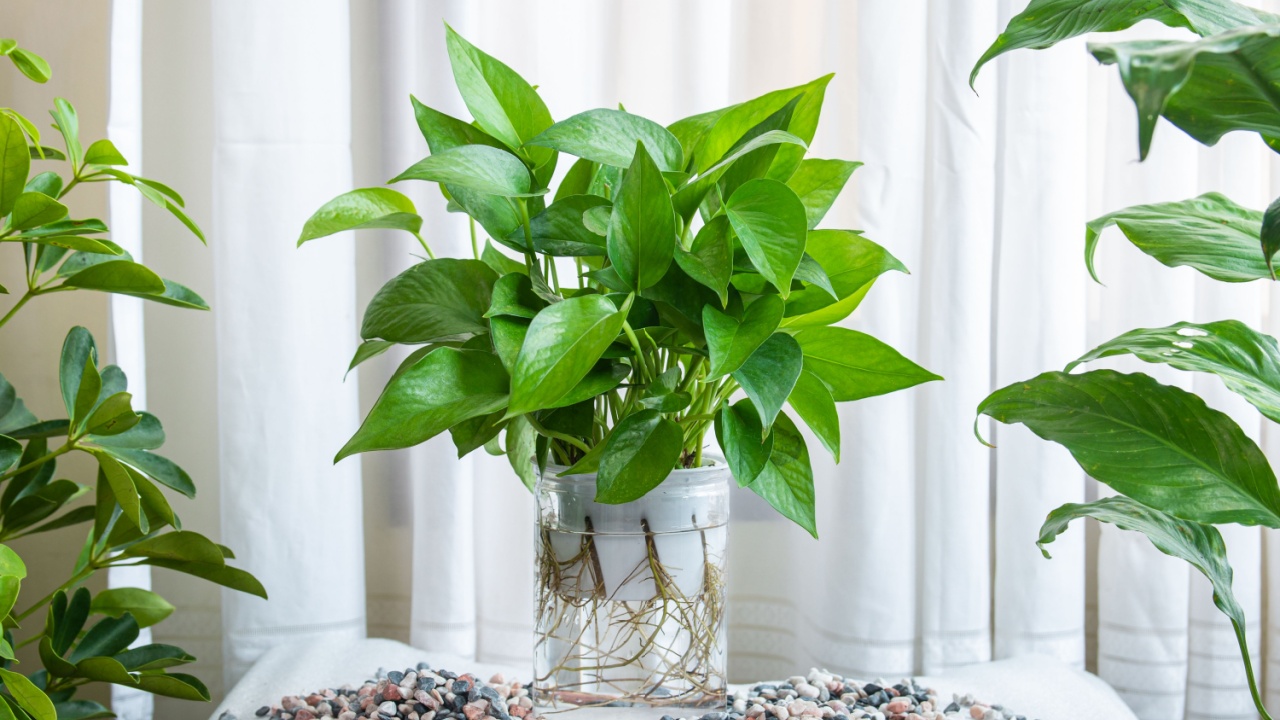
Pothos is arguably the king of easy-care houseplants, making it a perfect starting point for growing in water. Its trailing vines and heart-shaped leaves, which can be solid green, yellow, or variegated, look beautiful cascading from a jar on a shelf or mantelpiece. It’s incredibly forgiving and adapts well to various light conditions.
This plant is a great choice because its cuttings root exceptionally fast in water. You can create new plants with minimal effort, and its hardy nature means it can live in a water-filled jar for years.
Quick Care Guide:
- Next Steps: Take a 6-inch cutting from a healthy Pothos, ensuring it has at least three leaves. Remove the bottom leaf and place the cut stem in a jar of water.
- Light: Prefers bright, indirect light but tolerates low light.
- Water: Change the water every 1-2 weeks or when it becomes cloudy. Use room-temperature water to avoid shocking the roots.
- Feeding: Add a few drops of a balanced liquid houseplant fertilizer once a month to provide essential nutrients.
2. English Ivy (Hedera helix)
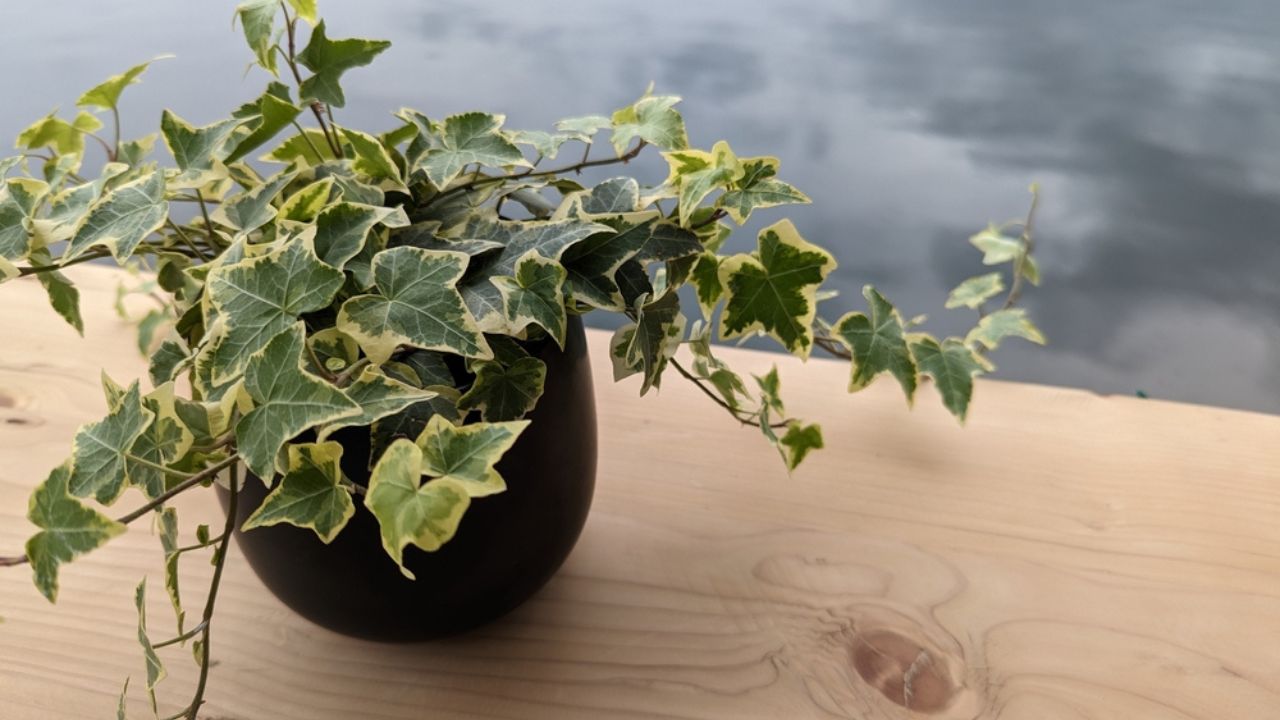
With its classic, elegant vines, English Ivy brings a touch of old-world charm to any indoor setting. The lobed leaves create a lush, dense look that is particularly striking when its intricate root system is visible through a clear glass bottle.
English Ivy is an excellent candidate for jar cultivation because it readily propagates from cuttings and grows vigorously. Its trailing habit makes it ideal for hanging displays or for adding a green accent to a high shelf.
Quick Care Guide:
- Next Steps: Snip a 4-6 inch piece of vine just below a leaf node. Place it in a jar of water, making sure no leaves are submerged.
- Light: Thrives in bright, indirect light but can adapt to lower light levels.
- Water: Refresh the water weekly to keep it oxygenated and clean.
- Pro Tip: Choose a narrow-necked bottle to support the vine as it grows, encouraging it to trail downwards gracefully.
3. Wandering Jew (Tradescantia zebrina)
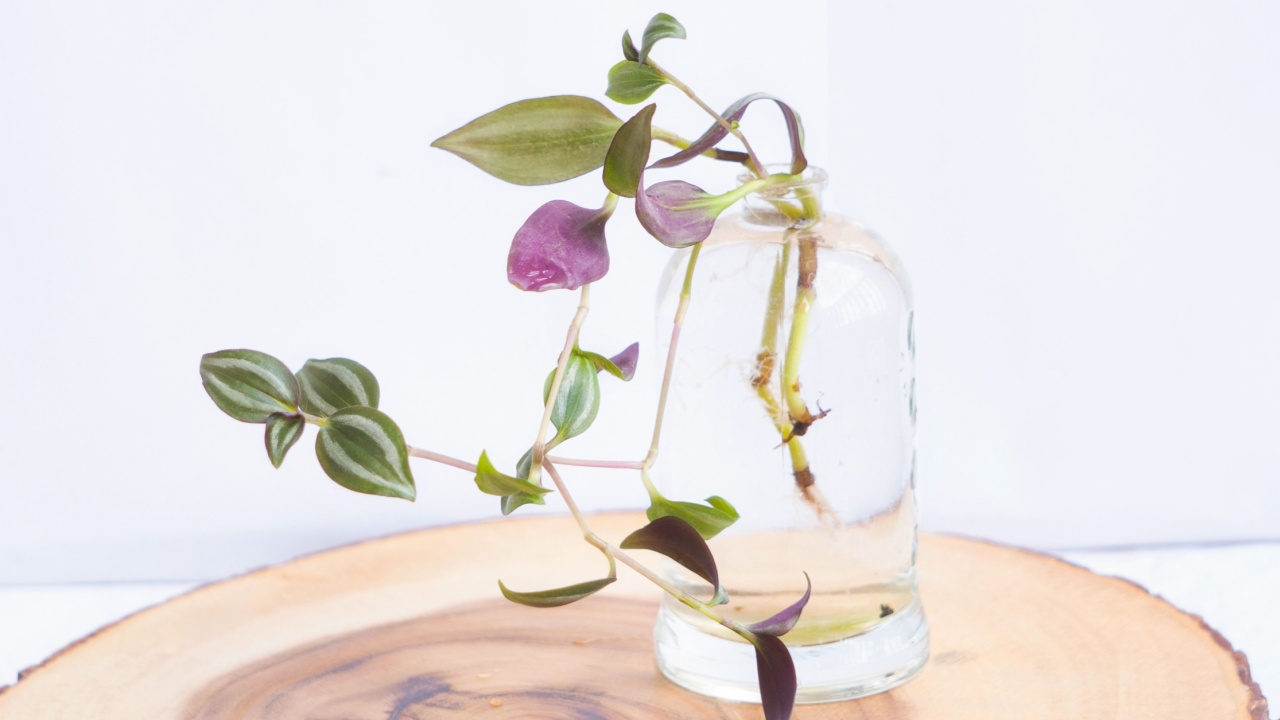
The Wandering Jew plant is celebrated for its stunning, colorful foliage. The leaves feature stripes of silver, purple, and green, adding a vibrant splash of color wherever you place them. Its fast-growing, trailing nature makes it a dynamic and eye-catching choice for a jar.
This plant is ideal for water culture because its stems root with remarkable speed and ease. It’s a low-effort way to enjoy a high-impact plant, and you can quickly grow a full, lush specimen from just a single cutting.
Quick Care Guide:
- Next Steps: Cut a few stems from an established plant and place them in a jar filled with water. Roots often appear in as little as a week.
- Light: Bright, indirect sunlight is best for maintaining its vibrant leaf coloration.
- Water: Change the water every week. Using distilled or rainwater can help prevent mineral buildup.
- Maintenance: Pinch back the stems occasionally to encourage bushier growth.
4. Herbs

Many common kitchen herbs adapt beautifully to living in water, placing fresh flavors right at your fingertips. Varieties like mint, basil, oregano, parsley, and thyme are excellent candidates. A collection of herb jars on a sunny kitchen windowsill is both functional and beautiful.
Growing herbs in jars is perfect for cooks who want easy access to fresh ingredients. Mint and basil, in particular, root so easily that you can start a new plant from a bundle purchased at the grocery store.
Quick Care Guide:
- Next Steps: For herbs like mint or basil, take a 4-inch cutting below a leaf node and remove the lower leaves. For herbs like chives or green onions, you can place the root end in water.
- Light: Most herbs need at least 6 hours of bright, direct sunlight per day.
- Water: Change the water every few days to prevent rot and keep it fresh.
- Harvesting: Snip leaves as needed, which also encourages the plant to grow fuller.
5. Coleus (Plectranthus scutellarioides)
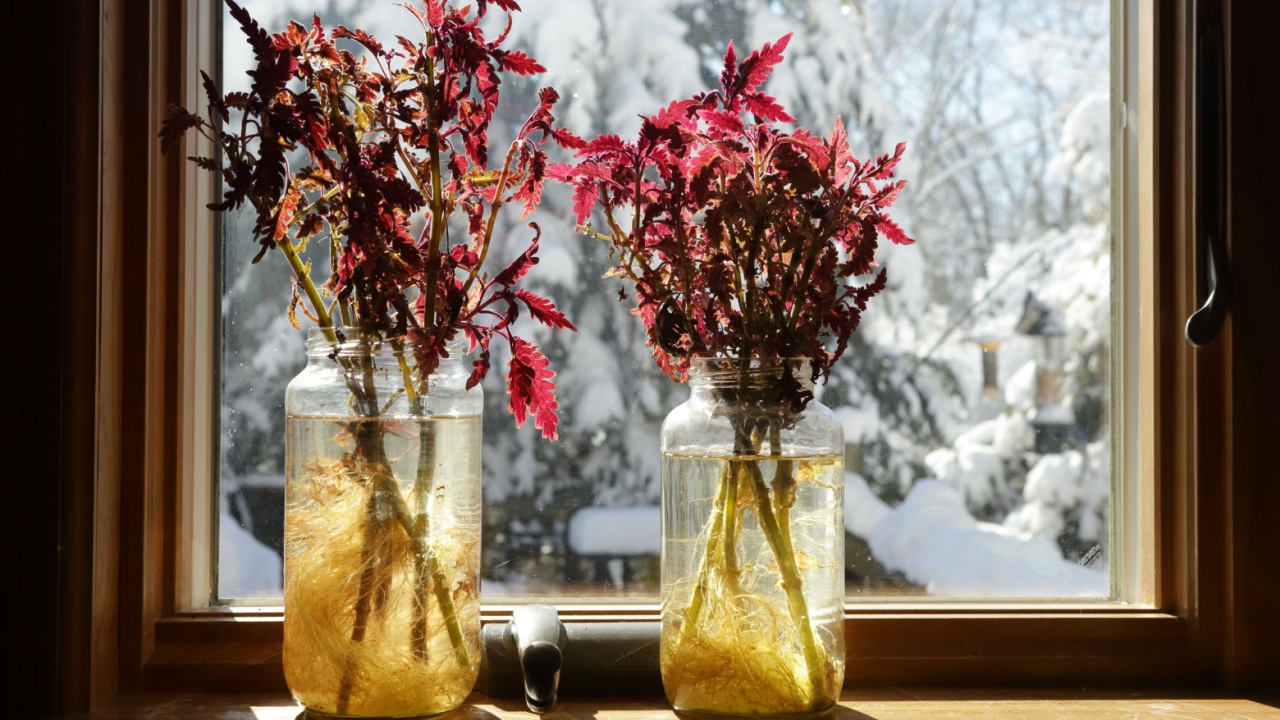
Coleus is known for its incredibly diverse and vibrant foliage, with colors ranging from lime green and hot pink to deep burgundy and velvety purple. Its serrated leaves and upright growth habit make it a striking centerpiece in a clear glass jar.
This plant is fantastic for water growing because its cuttings are almost foolproof to root. It’s a quick way to multiply your favorite varieties or rescue a piece that broke off the main plant. The visual of its colorful leaves above the water and white roots below is stunning.
Quick Care Guide:
- Next Steps: Take a 4-6 inch stem cutting from a healthy plant. Remove the leaves from the bottom half of the stem and place it in a jar of water.
- Light: Prefers bright, indirect light. Too much direct sun can scorch the leaves, while too little light will dull its colors.
- Water: Change the water twice a week. Coleus drinks a lot, so keep the jar topped up.
- Feeding: A very weak solution of liquid fertilizer every month will help maintain its vibrant colors.
6. Philodendron (Philodendron hederaceum)
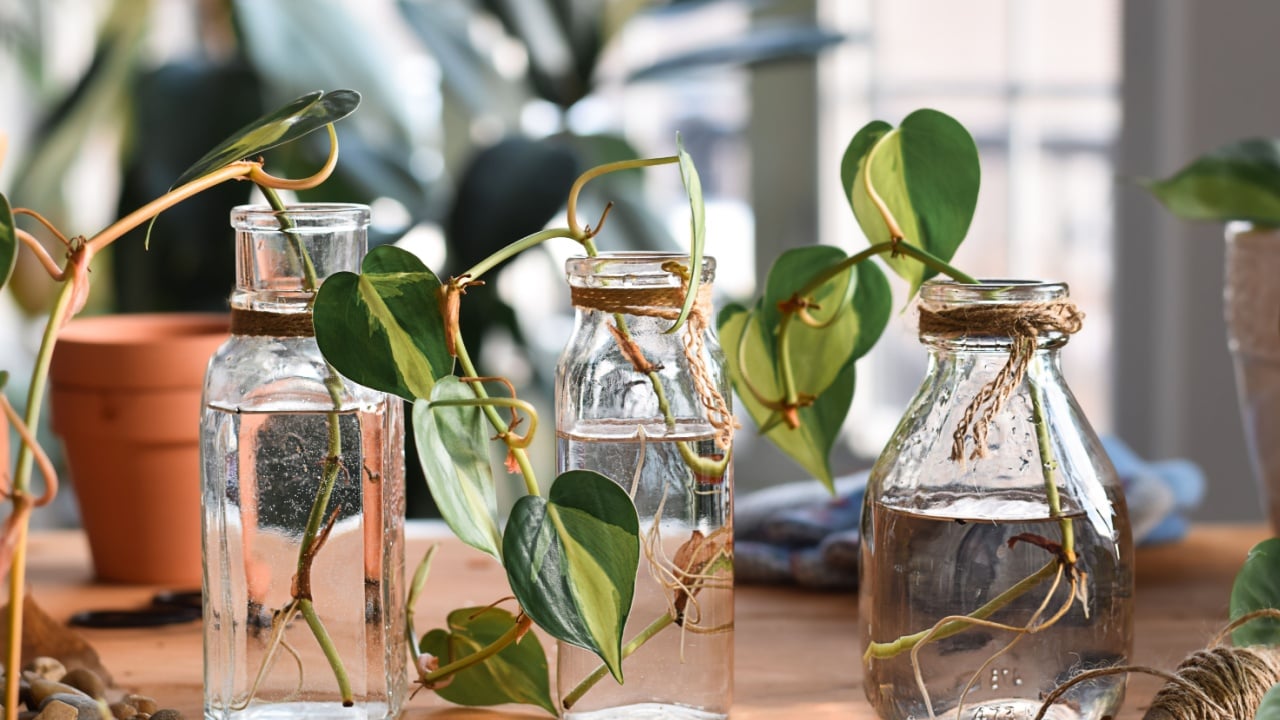
Similar to Pothos, the Heartleaf Philodendron is a vining plant with lovely heart-shaped leaves that is exceptionally easy to grow. It’s incredibly adaptable and requires very little maintenance, making it a reliable choice for beginners.
The Philodendron is perfect for jars and bottles because it roots readily in water and can thrive this way long-term. Its trailing vines will spill beautifully over the side of its container, making it ideal for placing on shelves, bookcases, or in hanging displays.
Quick Care Guide:
- Next Steps: Cut a stem that includes a few leaves and at least one node. Place the cutting in a water-filled jar, ensuring the node is submerged.
- Light: Adapts to a wide range of light conditions, from low to bright, indirect light.
- Water: Change the water every 1-2 weeks.
- Pro Tip: If you notice growth slowing, add a tiny amount of liquid fertilizer to the water to give it a boost.
7. Snake Plant (Dracaena trifasciata)
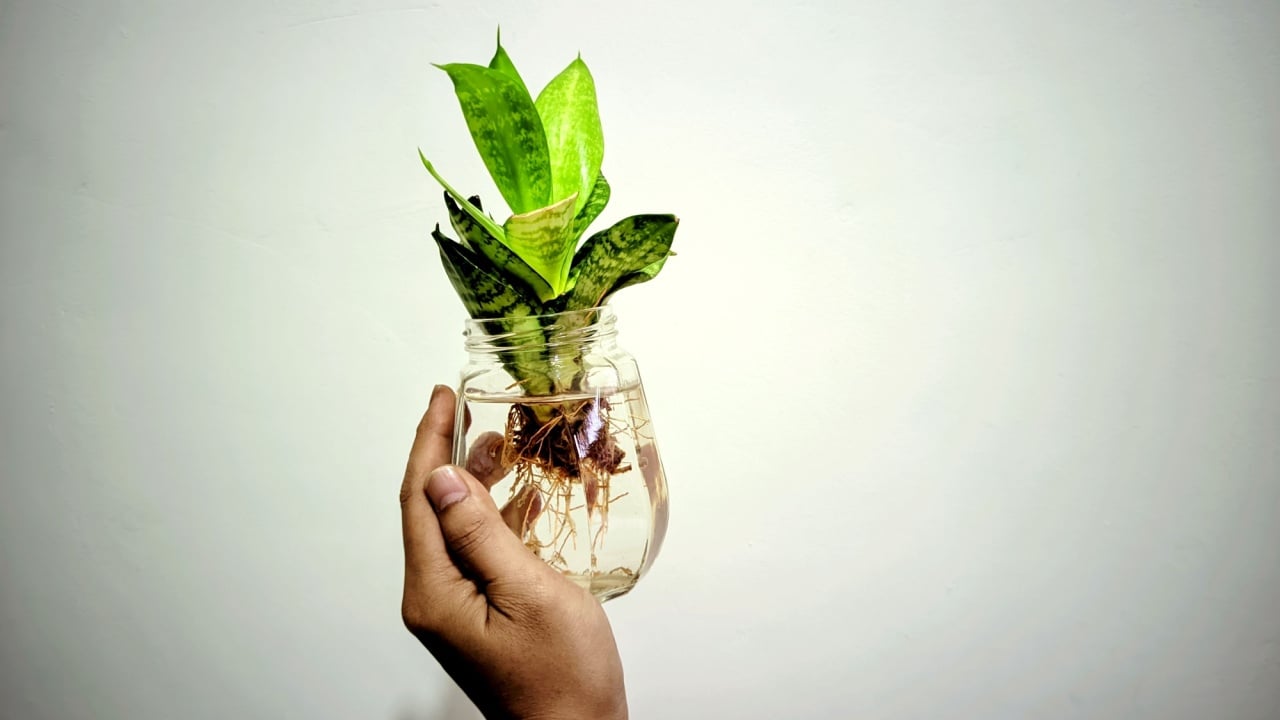
The Snake Plant, or Mother-in-Law’s Tongue, is a famously resilient succulent known for its stiff, upright leaves with striking patterns. While it’s a succulent, it can be propagated and grown in water, offering a modern, minimalist aesthetic.
Growing a Snake Plant in water is a unique way to display this architectural plant. It’s a great option because the process is slow and fascinating to watch. A single leaf cutting can produce roots and eventually tiny new plantlets, all visible through the glass.
Quick Care Guide:
- Next Steps: Cut a healthy leaf from the base of the plant. You can place the whole leaf in water or cut it into 2-3 inch sections. Let the cuts callus over for a day before placing them in a jar with an inch of water.
- Light: Tolerates low light but grows best in bright, indirect light.
- Water: Change the water weekly. Be patient, as rooting can take several weeks or even months.
- Note: Ensure only the bottom part of the leaf is in the water to prevent the entire cutting from rotting.
8. Spider Plant (Chlorophytum comosum)
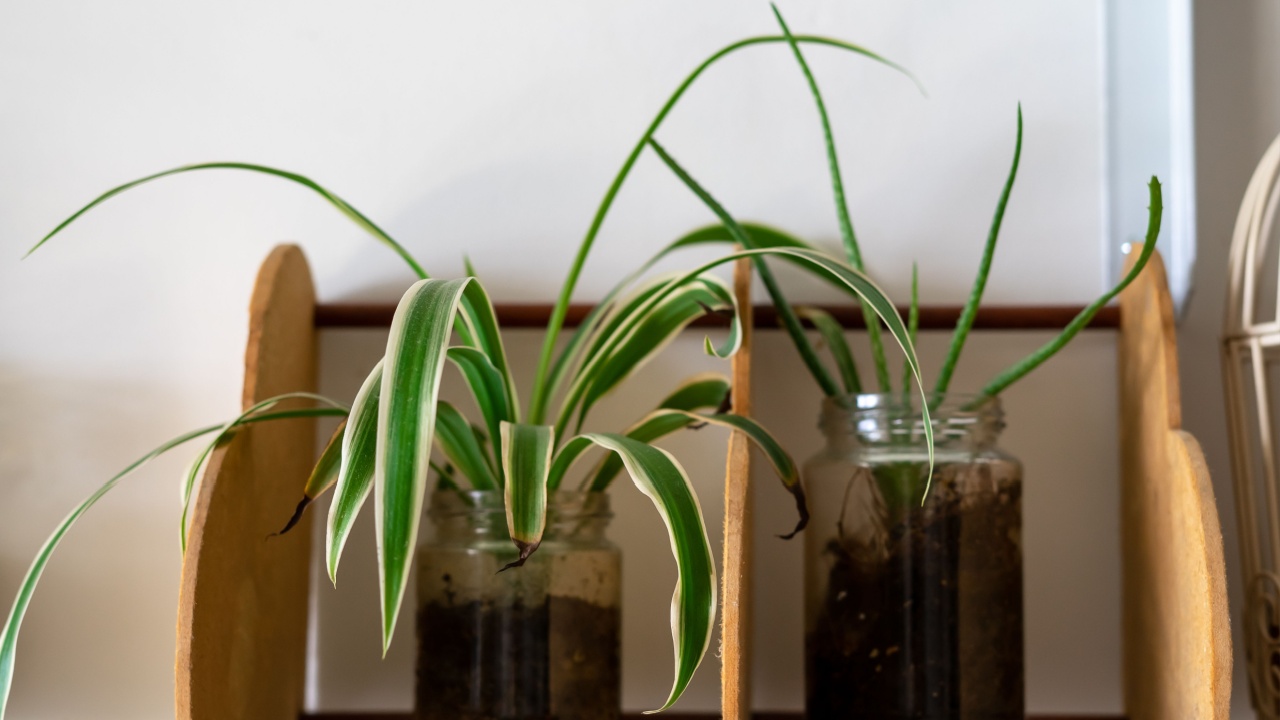
Spider Plants are beloved for their arching leaves and the charming baby plantlets (pups) that dangle from long stems. These pups make propagation incredibly simple and are perfectly suited for starting new plants in water.
This is an ideal plant for jar culture because the pups already have small root nubs, giving them a head start on growing. Placing a few pups in a small jar creates a delightful miniature display, and they root very quickly.
Quick Care Guide:
- Next Steps: Snip off a plantlet that has started to form tiny roots. Place it in a small jar of water so that the base of the plantlet is submerged, but the leaves are not.
- Light: Prefers bright, indirect light. Avoid direct sun, which can scorch the leaves.
- Water: Refresh the water every week.
- Transitioning: Once a healthy root system develops, you can either keep it in water or transplant it into soil.
9. Lucky Bamboo (Dracaena sanderiana)

Despite its name, Lucky Bamboo is not a true bamboo but a type of Dracaena. It’s a popular plant for indoor settings, often associated with Feng Shui and good fortune. It is almost exclusively grown in water, making it a natural fit for jars and bottles.
Lucky Bamboo is a perfect choice because it requires no soil and looks sleek and modern in a simple glass vase. You can train its stalks to grow in interesting spiral shapes, adding an artistic touch to your decor.
Quick Care Guide:
- Next Steps: Purchase stalks of Lucky Bamboo and place them in a jar or vase with a few inches of water—just enough to cover the roots. You can add pebbles or marbles for stability.
- Light: Thrives in bright, filtered sunlight.
- Water: Use distilled or filtered water, as tap water can contain minerals that cause yellowing leaves. Change the water every two weeks.
- Feeding: Feed with a very diluted liquid fertilizer formulated for Lucky Bamboo once every couple of months.
10. Arrowhead Plant (Syngonium podophyllum)
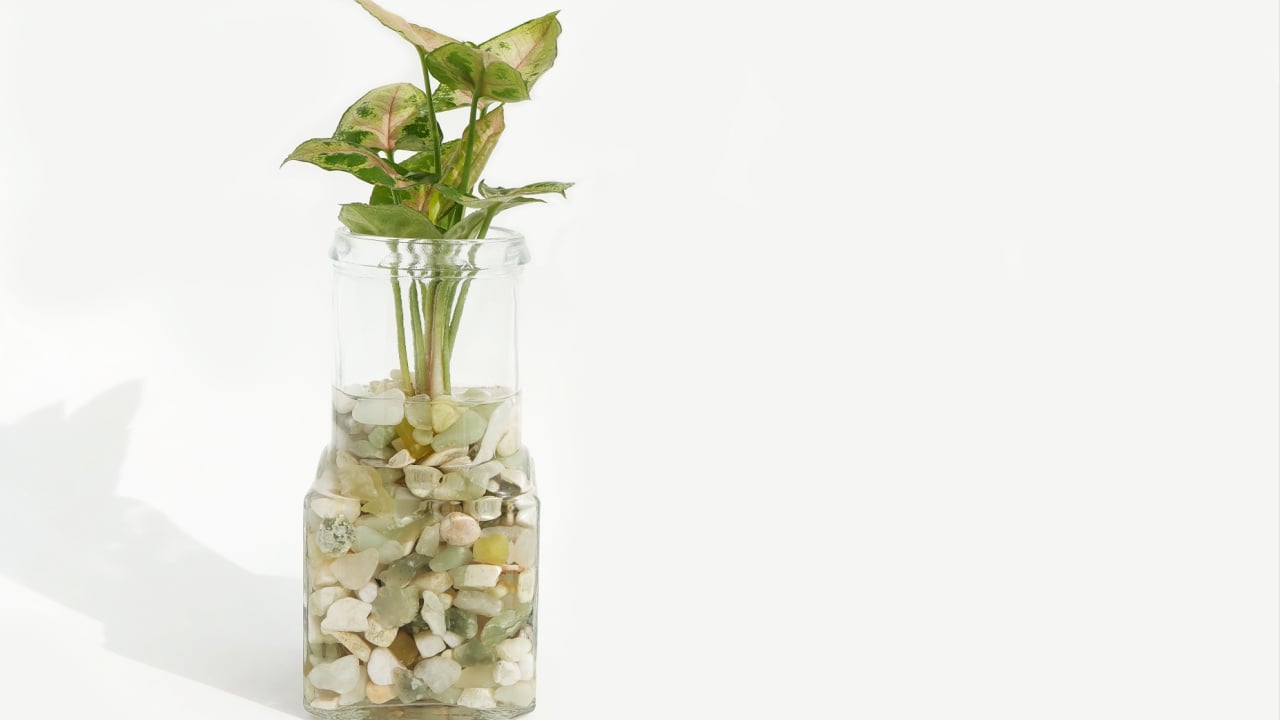
The Arrowhead Plant gets its name from its distinctive arrow-shaped leaves. As the plant matures, it develops a vining habit, making it a versatile and attractive houseplant. Its foliage comes in shades of green, pink, and burgundy.
This plant adapts exceptionally well to growing in water. It’s a great choice because cuttings root quickly, and the plant can live happily in a jar for a long time. The changing leaf shape as it matures adds an element of interest.
Quick Care Guide:
- Next Steps: Take a stem cutting with at least one node and place it in a jar of water.
- Light: Prefers bright, indirect light to maintain its best color.
- Water: Change the water weekly.
- Maintenance: You can let it trail or provide a small support for it to climb, even within a larger bottle.
11. Purple Oxalis (Oxalis triangularis)
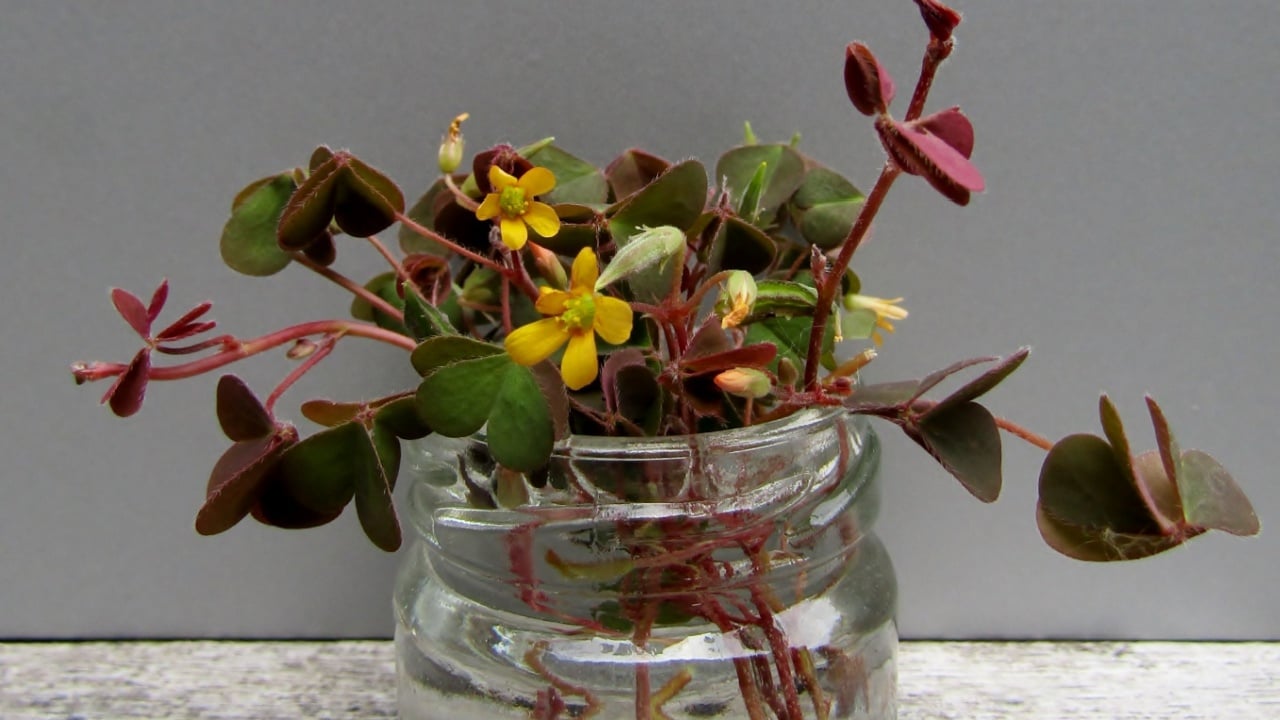
Also known as the False Shamrock, Purple Oxalis is a showstopper with its deep purple, triangular leaves that look like butterflies. The leaves fold up at night and open again in the morning, a fascinating process called nyctinasty.
This plant is a beautiful choice for a transparent jar, where its delicate stems and vibrant color can be fully appreciated. It grows from small bulbs (corms), which can be started in water to sprout roots and foliage.
Quick Care Guide:
- Next Steps: Separate a few corms from a parent plant and place them in a shallow layer of water in a jar. Use small stones to keep them upright.
- Light: Loves bright, indirect light.
- Water: Keep the water level consistent and change it weekly.
- Dormancy: Oxalis may go dormant periodically. If it dies back, reduce watering and wait for new growth to appear.
12. Succulents
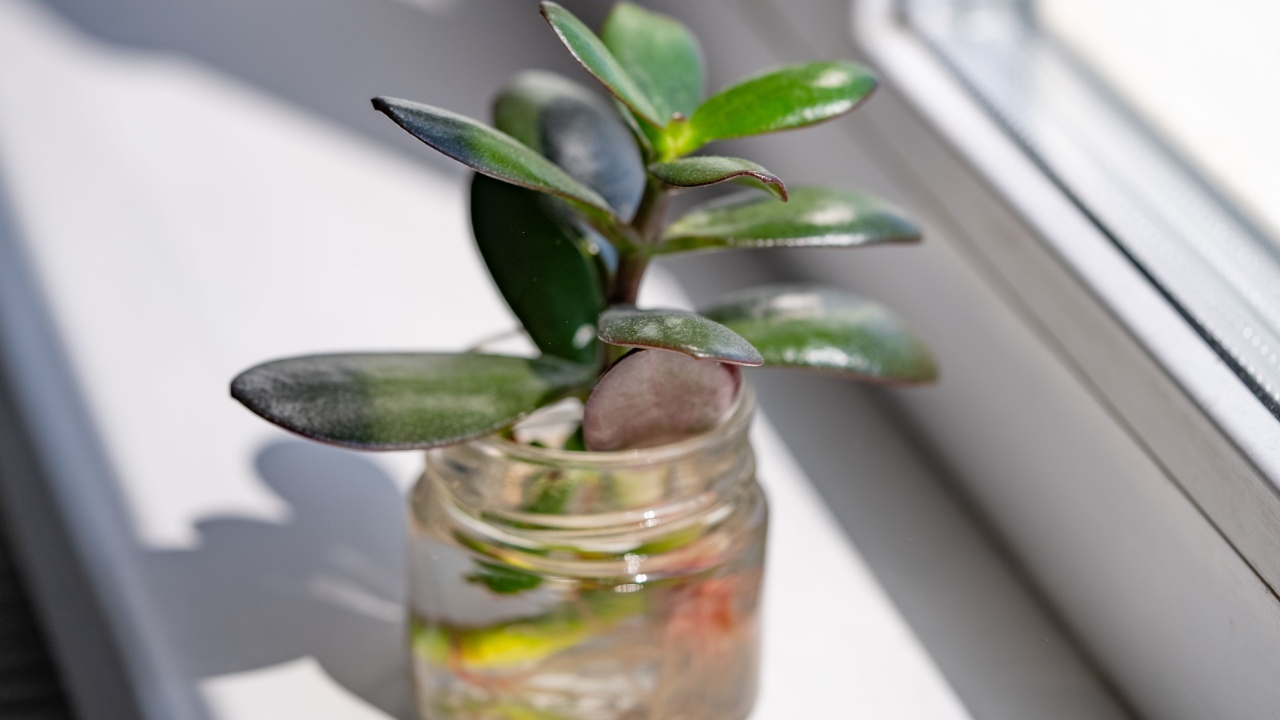
While it might seem counterintuitive for drought-tolerant plants (and there is some disagreement on whether they’re a good fit for water), many small succulents can be propagated and even grown in water. This method, called “water therapy” or “water propagation,” can encourage faster rooting than soil propagation.
Growing succulents in water is a fun experiment and a unique way to display them. It’s a good choice for those who tend to overwater succulents in soil, as this method provides consistent hydration without the risk of soil-borne rot. Small Echeverias, Sedums, and Crassulas are good candidates.
Quick Care Guide:
- Next Steps: Take a leaf or stem cutting and let it callus over for a few days. Suspend the cutting just above the surface of the water in a jar. Roots will grow down into the water.
- Light: Needs plenty of bright, indirect light.
- Water: Change the water weekly to keep it fresh and oxygenated.
- Important: The key is to have the base of the cutting hover just above the water, not submerged, to prevent rot while still encouraging roots to seek out the moisture.
13. Maidenhair Fern (Adiantum)
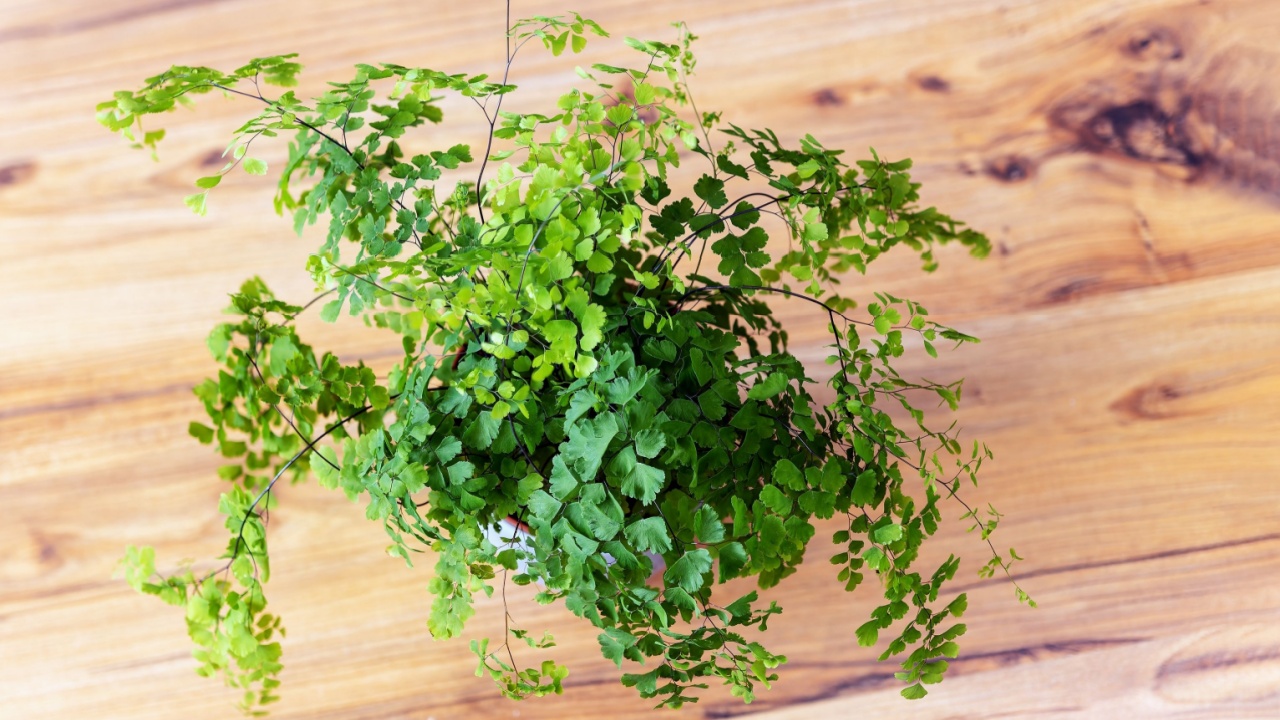
Maidenhair Ferns are known for their delicate, feathery fronds on thin, black stems. They have a reputation for being fussy, primarily because they demand constant moisture, which can be difficult to manage in soil.
This fussiness is precisely why a Maidenhair Fern can be a great candidate for growing in a jar. A self-contained terrarium environment in a lidded jar helps maintain the high humidity it craves. Alternatively, growing it directly in water eliminates the risk of the soil ever drying out.
Quick Care Guide:
- Next Steps: For a terrarium, add layers of charcoal, pebbles, and soil to a large jar. For water culture, carefully rinse the soil from the roots of a small fern and place it in a jar of water.
- Light: Requires bright, indirect light. Avoid direct sun.
- Water: If in a terrarium, water sparingly. If in water culture, change the water weekly.
- Humidity: A lidded jar will trap humidity, creating the perfect micro-climate.
14. Cactus
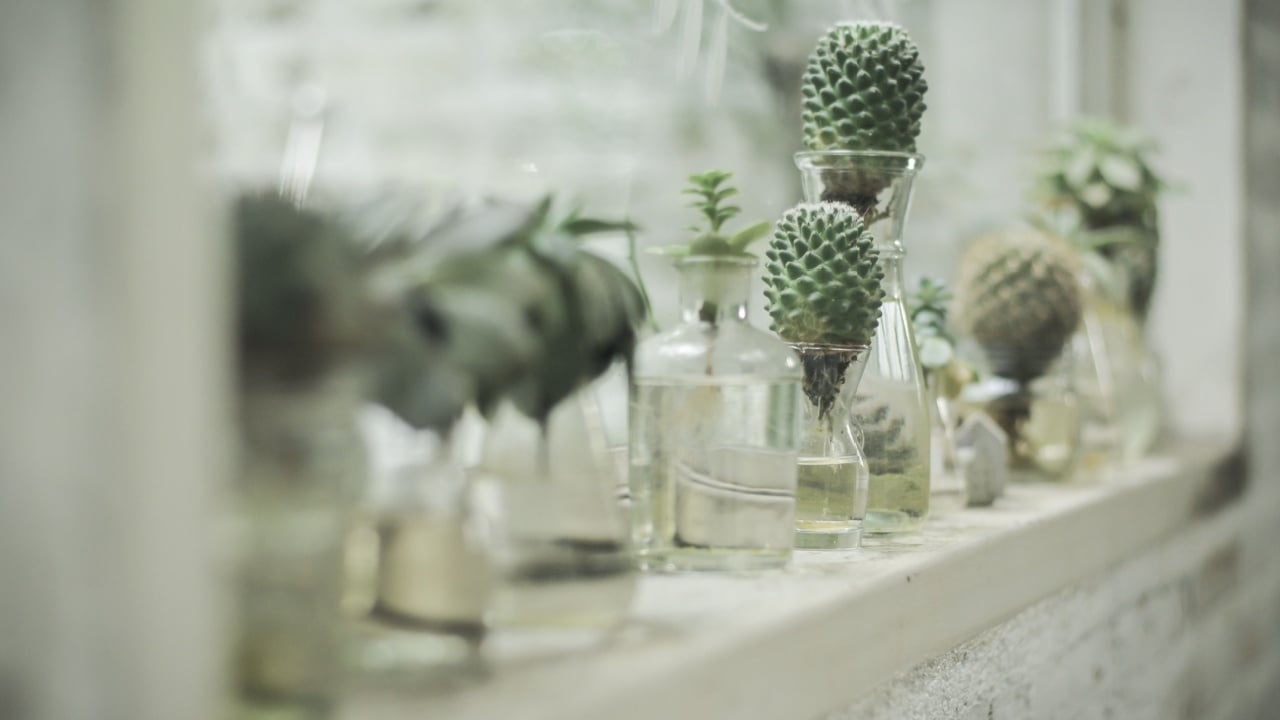
Similar to succulents, small cacti can be grown in jars, particularly when creating a terrarium. This allows you to control their environment and create a miniature desert landscape that requires very little maintenance.
A cactus terrarium in a glass jar is a wonderful decorative project. It’s a good option for those who love the look of cacti but want a more contained, artful display. Choose small varieties like Bishop’s Cap or Bunny Ears cactus.
Quick Care Guide:
- Next Steps: Use an open jar or bowl. Add a layer of sand or fine gravel, followed by a fast-draining cactus soil mix. Carefully plant the small cacti.
- Light: Cacti need a lot of direct sunlight. Place the jar in a south- or west-facing window.
- Water: Water very sparingly, only when the soil is completely dry. A jar without drainage is prone to root rot, so less is more.
- Container Choice: An open jar is crucial to prevent humidity buildup, which can be fatal to cacti.
15. House Holly Fern (Cyrtomium falcatum)
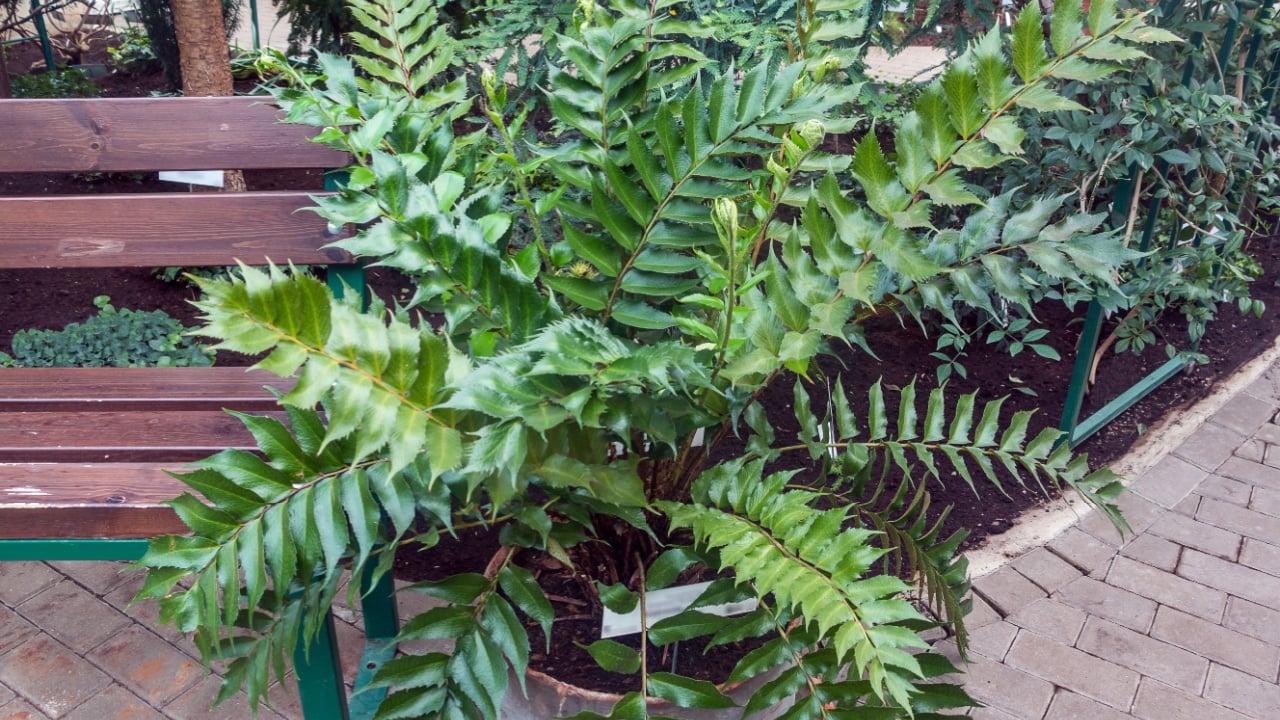
The House Holly Fern has tough, leathery, serrated leaves that resemble holly branches. It’s much more durable and forgiving than more delicate ferns, making it an excellent indoor plant.
This fern is a good choice for growing in a jar without drainage holes because it is more tolerant of moist conditions than other plants. Its glossy green foliage provides a beautiful contrast against a simple glass container.
Quick Care Guide:
- Next Steps: Plant a small House Holly Fern in a jar using a well-draining potting mix. Add a layer of charcoal at the bottom to absorb impurities.
- Light: Prefers shady spots or areas with indirect light.
- Water: Water carefully, allowing the top inch of soil to dry out between waterings. Be mindful not to overwater.
- Care: Its hardy nature means it can handle the less-than-ideal drainage of a jar better than most.
16. Wheatgrass (Thinopyrum intermedium)
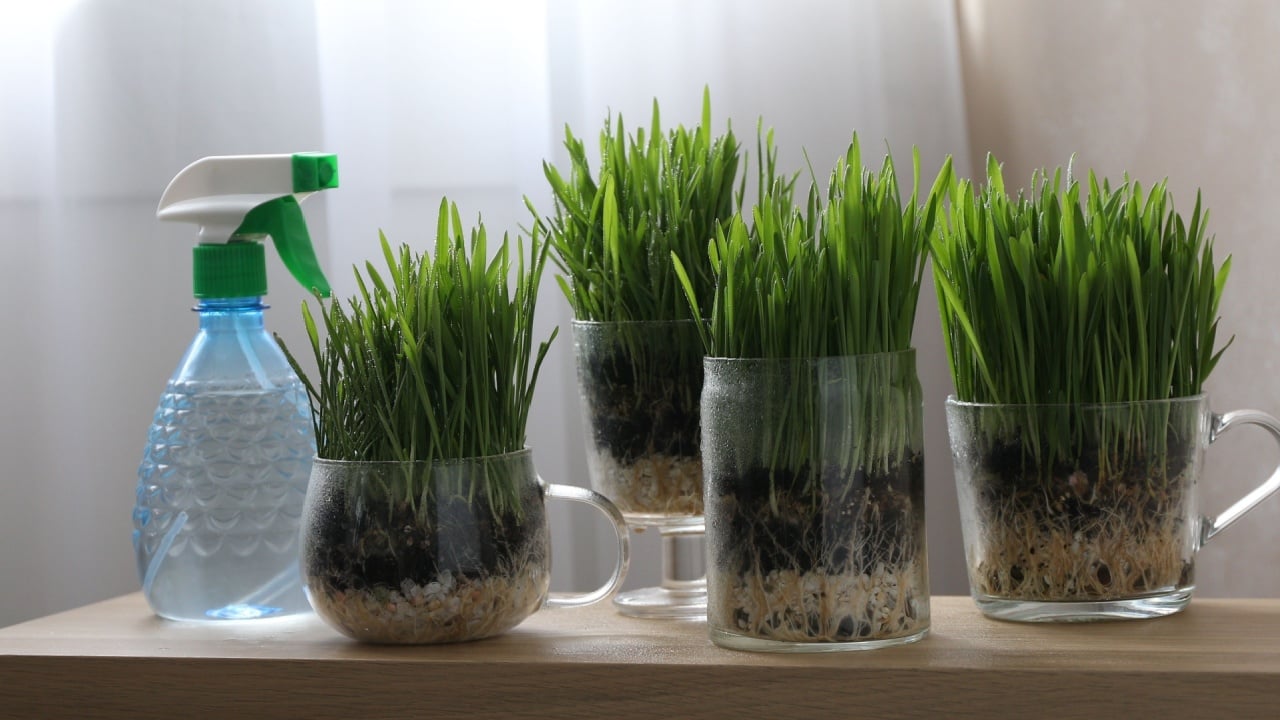
Wheatgrass is the young grass of the common wheat plant. It’s famous for its health benefits but also grows into a vibrant, bright green mat that looks fantastic in a glass jar.
Growing wheatgrass is a fast and satisfying project. It’s a great option because you can go from seed to a lush mini-lawn in about a week. It offers a pop of intense green color and can be juiced for a health boost.
Quick Care Guide:
- Next Steps: Fill the bottom of a mason jar with a thin layer of potting soil. Sprinkle a dense layer of wheatgrass seeds on top and press them down gently.
- Light: Keep the jar in a shady spot for the most tender, bright green blades.
- Water: Mist the seeds and soil daily to keep them consistently damp but not waterlogged.
- Harvest: You can trim the grass with scissors when it’s about 4-6 inches tall.
17. Aloe Vera (Aloe barbadensis miller)
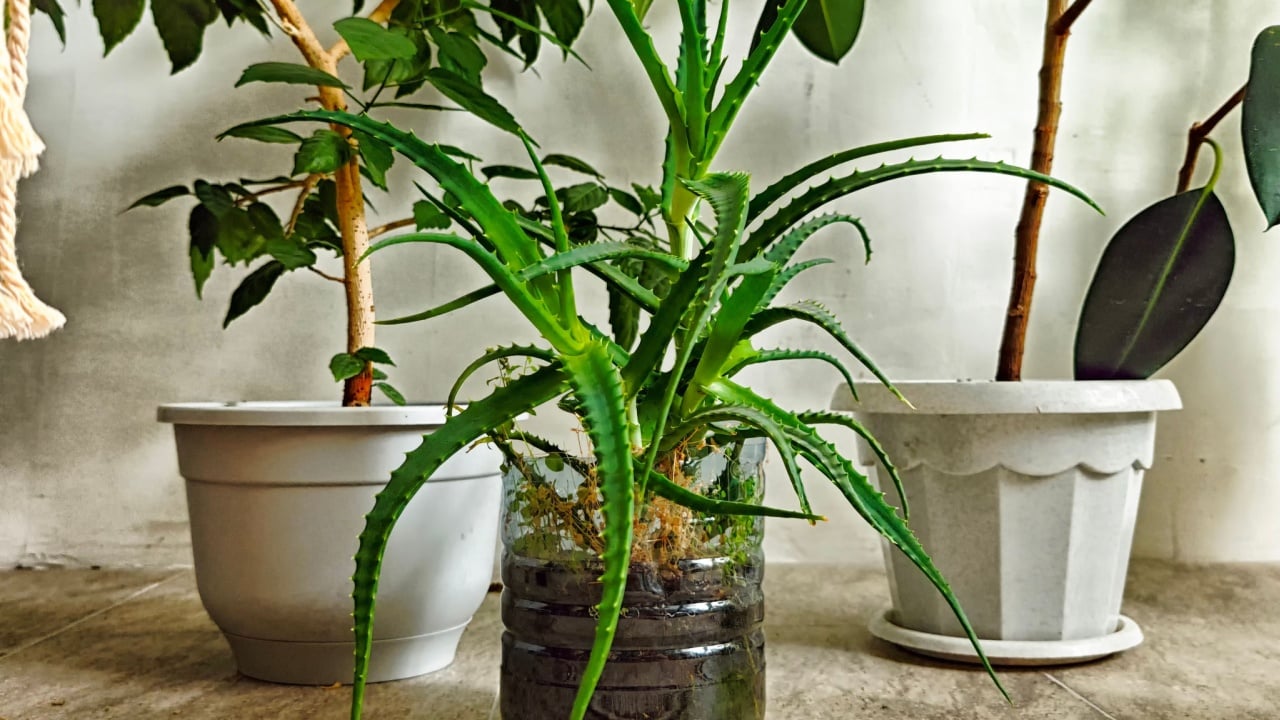
Young Aloe Vera plants, or pups, can be started and grown in jars. Known for its medicinal gel and distinctive spiky leaves, Aloe makes a functional and attractive houseplant.
Starting aloe pups in water is a great way to monitor root growth before transferring to soil. While they won’t thrive in water long-term, it’s an excellent method for propagation and for creating small, temporary displays.
Quick Care Guide:
- Next Steps: Gently remove a small pup from the base of a mother plant. Place it in a narrow-necked bottle so the base is in water but the leaves stay dry.
- Light: Needs bright, indirect light.
- Water: Change the water weekly.
- Transition: Once a strong root system has formed (after a few weeks), it’s best to transfer the aloe to a pot with well-draining cactus soil.
18. Jade Plant (Crassula ovata)
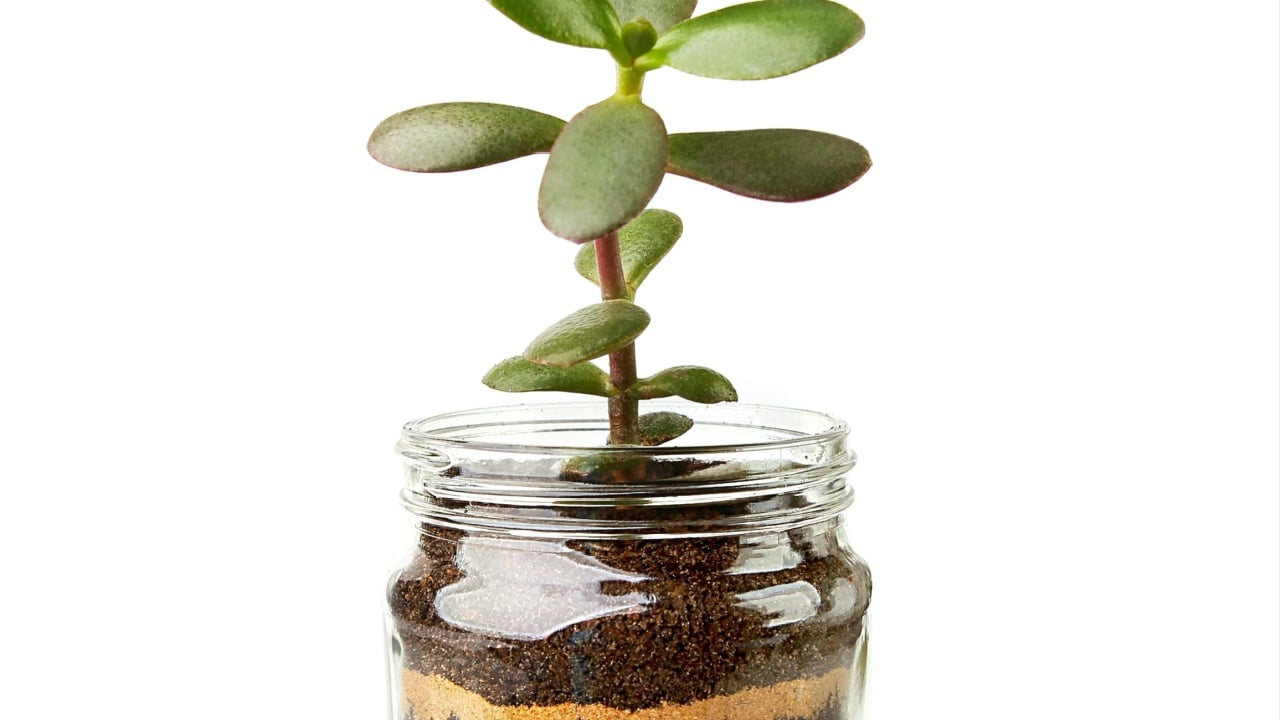
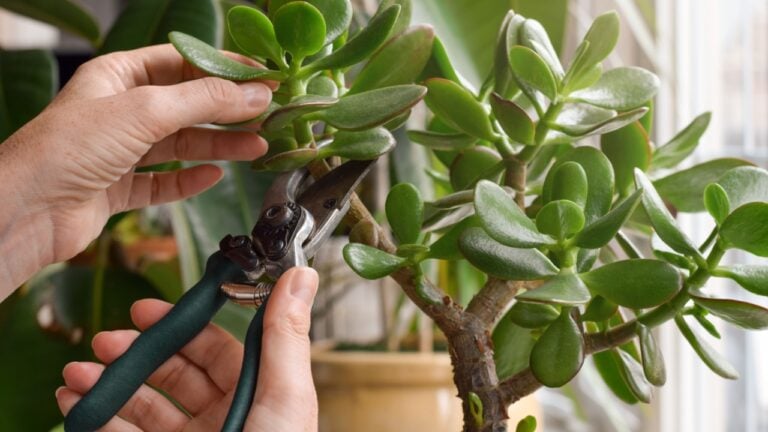
The Jade Plant is a popular succulent with thick, woody stems and glossy, fleshy leaves. It’s often called a “money tree” and is considered a symbol of good luck. Small cuttings can be rooted in water.
Rooting Jade cuttings in water is a reliable way to create new plants. Displaying a few cuttings in a small, elegant bottle can make a beautiful and meaningful gift or party favor.
Quick Care Guide:
- Next Steps: Take a 3-4 inch stem cutting and let it callus for a few days. Place it in a jar with the cut end submerged in about an inch of water.
- Light: Prefers bright, indirect light.
- Water: Change the water weekly and be patient; rooting can take a few weeks.
- Next Step: Like aloe, jade plants are best moved to soil once they have established roots for long-term health.
19. Variegated Monstera (Monstera deliciosa ‘Albo Variegata’)

The Variegated Monstera is a highly sought-after plant due to its stunning leaves splattered with patches of pure white. Cuttings of this rare beauty are often propagated in water.
Placing a cutting in a simple glass bottle is the preferred method for propagating this valuable plant. It allows you to monitor the precious cutting for root development without the risk of soil-borne pests or rot. It also makes for a breathtakingly beautiful display.
Quick Care Guide:
- Next Steps: Obtain a stem cutting that includes at least one leaf and a node (ideally with a small aerial root). Place the node in a jar of water.
- Light: Needs very bright, indirect light to support its variegation.
- Water: Change the water every few days to keep it highly oxygenated.
- Patience: Rooting can be a slow process, but watching a new root emerge from a Monstera cutting is a truly rewarding experience.
20. Chinese Money Plant (Pilea peperomioides)

The Chinese Money Plant is adored for its unique, coin-shaped leaves that bob on delicate stems. It’s a cheerful, modern-looking plant that is incredibly easy to propagate from the small offsets it produces.
Pilea is perfect for growing in water because its pups separate from the mother plant with their own tiny root systems already intact. Placing one of these babies in a small bottle of water is a simple and charming way to start a new plant and share it with friends.
Quick Care Guide:
- Next Steps: Cut a small offset from the base of the mother plant. Place it in a narrow-necked bottle to support its stem, with the roots in water.
- Light: Thrives in bright, indirect light.
- Water: Change the water weekly.
- Growth: Roots will grow quickly, and you can enjoy watching the plant develop before deciding whether to move it to soil.
21. Begonia (Begonia spp.)
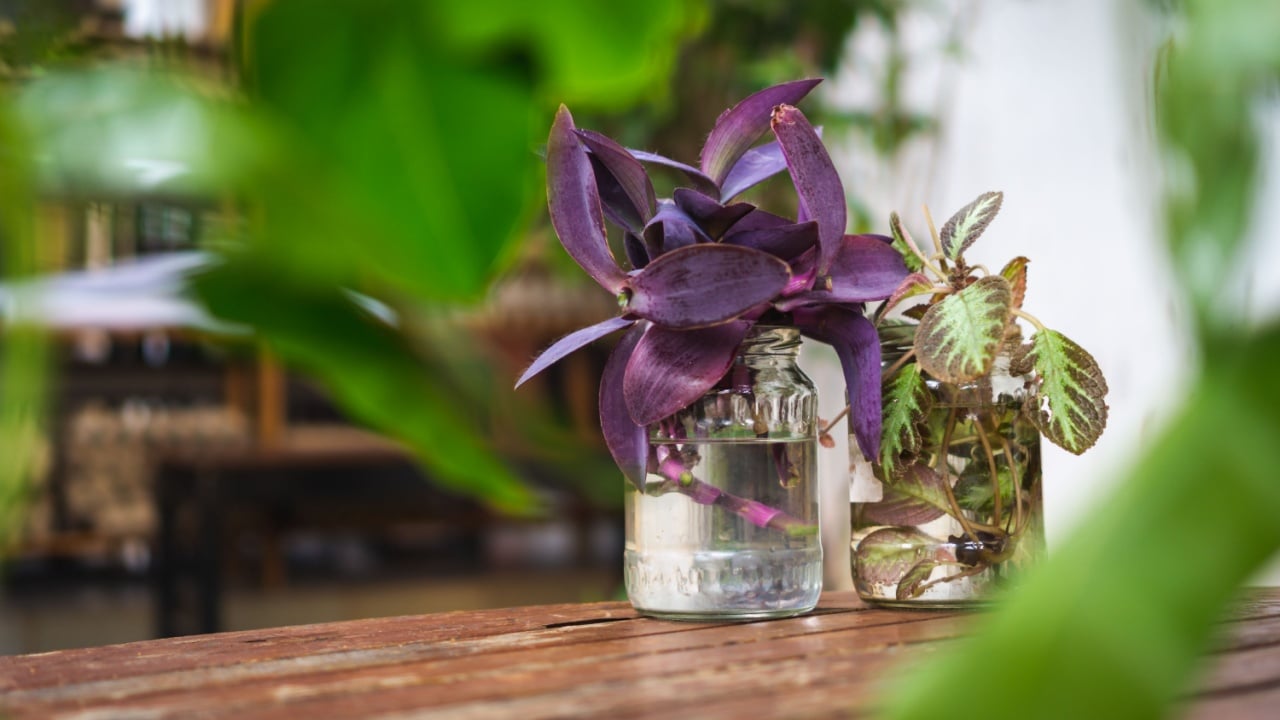
Many types of Begonias, especially Rex and Cane Begonias, are known for their spectacular foliage, which features amazing patterns, colors, and textures. Begonias are a fantastic choice for water propagation.
A single leaf from a Rex Begonia or a stem cutting from a Cane Begonia can sprout new roots and even tiny new leaves while in water. A simple jar can transform a single leaf into a brand new plant.
Quick Care Guide:
- Next Steps: For a Cane Begonia, take a stem cutting below a node. For a Rex Begonia, you can place a whole leaf with its petiole (stem) in water.
- Light: Prefers bright, indirect light.
- Water: Change the water every 5-7 days.
- Pro Tip: Be patient, as leaf cuttings can take longer to root than stem cuttings, but the result is magical.
22. String of Pearls (Senecio rowleyanus)
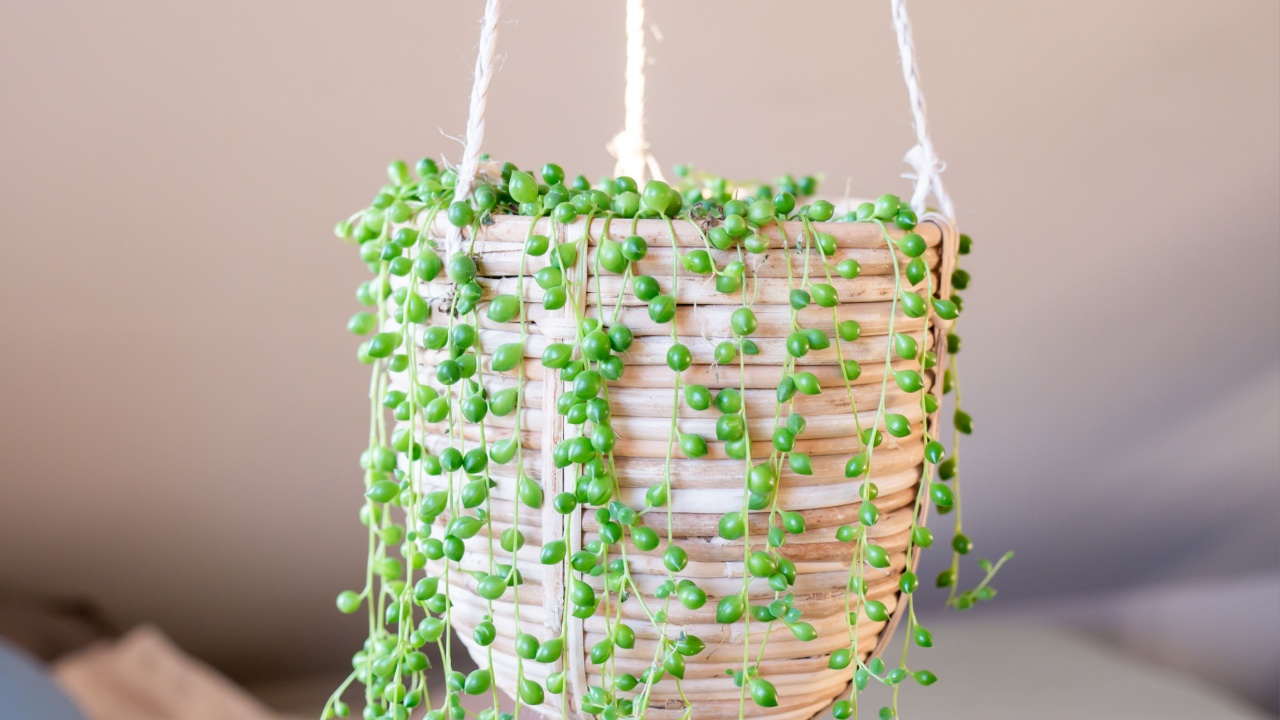
The String of Pearls plant, with its trailing stems of bead-like leaves, is a captivating and popular succulent. Its unique form makes it a stunning specimen to display in a hanging pot or on a high shelf. While it’s a succulent, cuttings of String of Pearls root readily in water.
It’s a great candidate for a narrow-necked bottle, where you can insert a few strands. The bottle will support the cuttings upright while allowing the “pearls” to spill over the side, creating a beautiful effect as you watch the roots form.
Quick Care Guide:
- Next Steps: Take a few 4-inch cuttings. Remove the pearls from the bottom inch of the stem and place the bare stems in a jar with water.
- Light: Needs bright, indirect light.
- Water: Change the water weekly. Make sure the leaves themselves are not sitting in the water.
- Display: The contrast between the delicate green pearls and the clear glass is visually striking.
How to Get Started with Indoor Jar Gardening
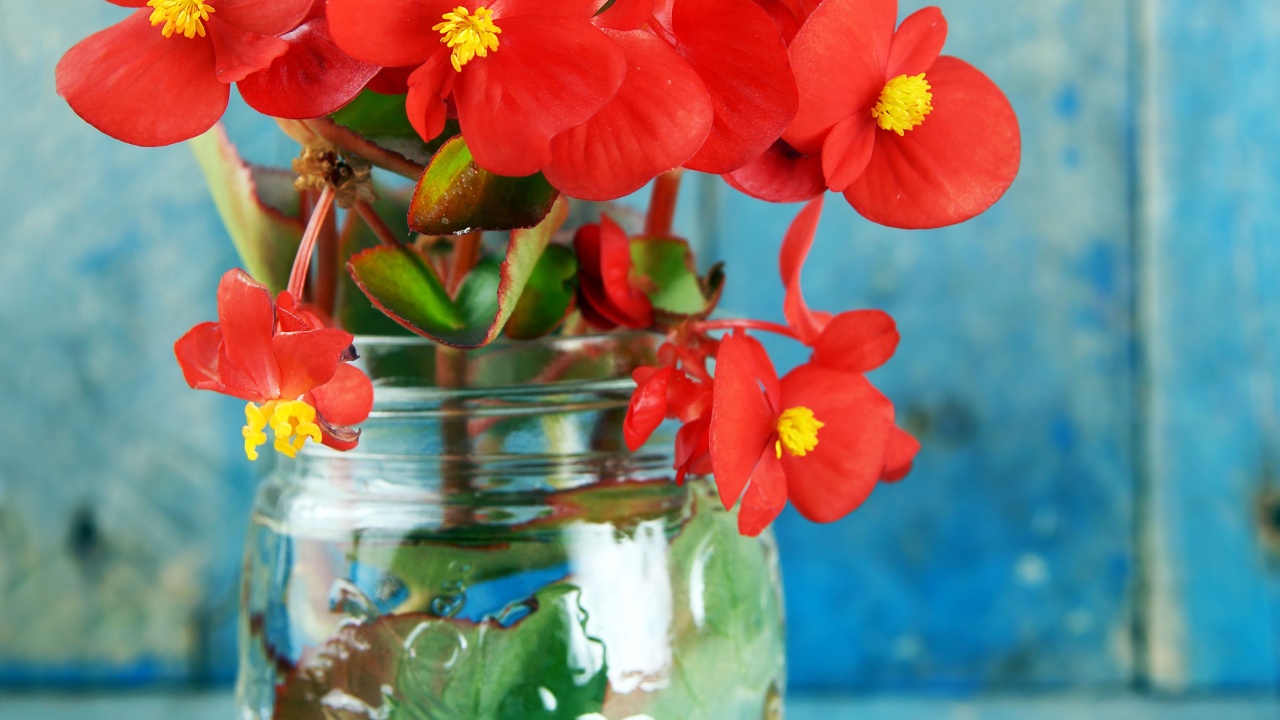
Now that you have a list of fantastic plants to choose from, it’s time to get started. Your next step is to look around your home for the perfect containers. Old jam jars, stylish olive oil bottles, vintage milk jugs, or even simple drinking glasses can all be transformed into beautiful planters.
Begin by selecting one or two plants from this list that caught your eye. Take a cutting, fill your chosen jar with water, and place it in a spot that gets the right amount of light. The simple joy of watching roots sprout and a new plant take shape is one of gardening’s greatest rewards. Don’t be afraid to experiment, group different jars together, and turn your indoor space into a vibrant, water-based garden.