How to Pick the Perfect Watermelon Every Time
There are many difficult things we all need to learn in life, from reverse parallel parking to pronouncing Worcestershire sauce. However, knowing how to pick the perfect watermelon is an essential summer pastime for everyone. Juicy watermelon is in season now, perfect for a refreshing snack for the kids or to enjoy yourself on a hot day. But how do you avoid getting home to a bland disappointment? (Pro tip: Instead, grow your own for the best fresh taste around!)
You can become the ultimate watermelon whisperer if you know what to look out for. The best watermelons have a deep red color, are sweet to taste, and have a crisp texture. If the watermelon is pale or squishy, you have picked poorly.
Here’s how to select a ripe watermelon for your snacks, salads, or juice this summer.
1. Check For Symmetry

A perfectly ripe watermelon should be round or oval but symmetrical. Examine the melon all around its surface. Look for consistency in shape. An uneven shape can indicate irregularities in growth, which might affect the flavor.
Symmetry suggests that it received consistent sunlight and water, allowing it to mature evenly. If it’s irregular, it may also mean that it was not properly pollinated, which can result in a bland taste.
2. Weigh it in Your Hands
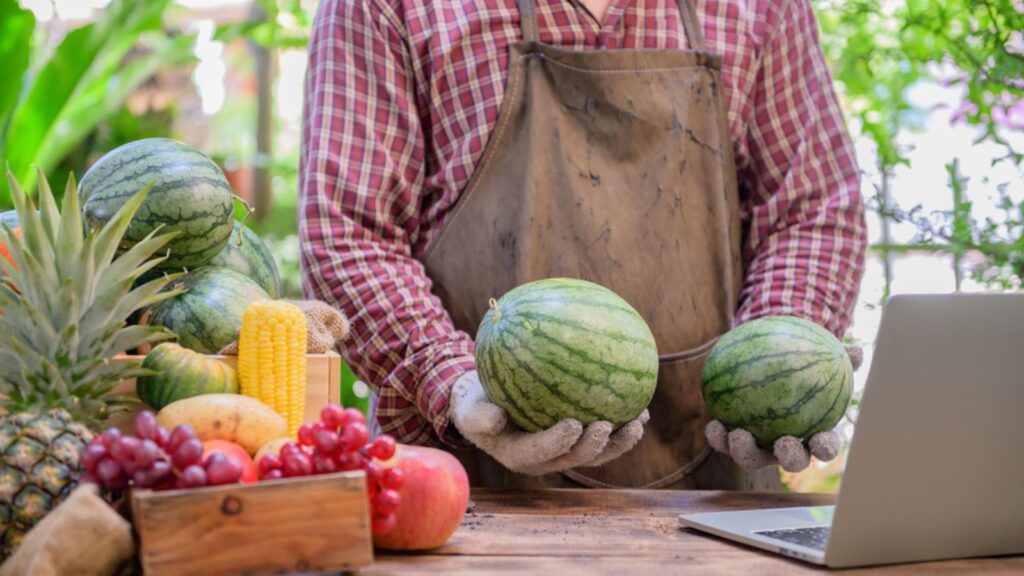
Don’t just pick the first melon you lay your hands on. Pick out a few good-looking contenders and weigh them in your hands. A ripe, juicy watermelon should feel heavy for its size. Compare several similar sizes and opt for the heaviest one.
A weighty melon is filled with water and will be sweet. If it feels light for its size, it might be a bit on the dry side.
3. Check the Skin Color
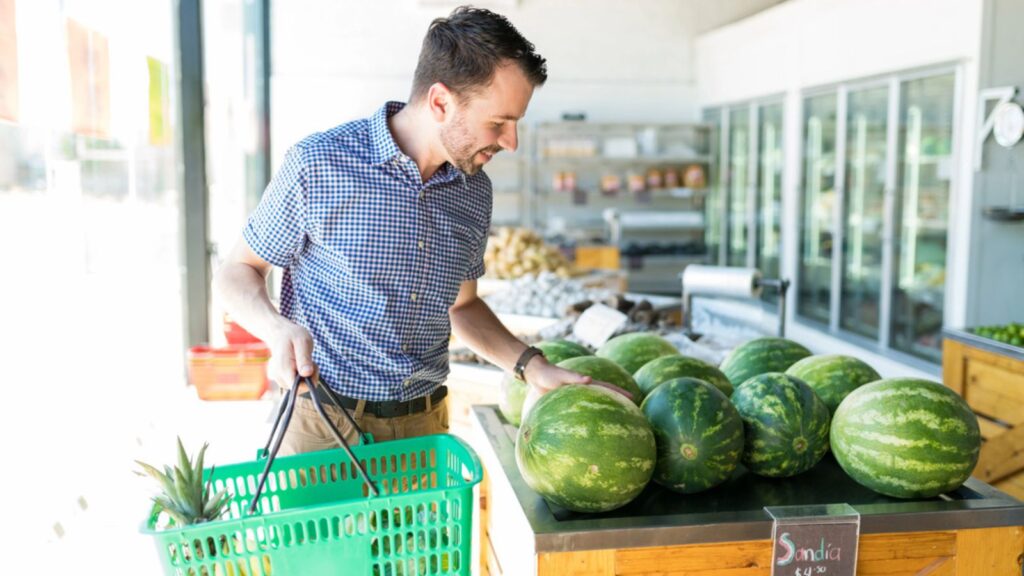
The color of a watermelon’s skin can reveal a lot about its ripeness. A ripe melon typically has a darker, dull sheen. The hue should be deep and consistent, whether it’s a traditional striped pattern or a solid color.
Avoid those that are overly shiny, as this glossy appearance may suggest that the fruit is underripe. Shiny melons can be a sign that it hasn’t had enough time to develop their full flavor and sweetness.
4. Examine the Webbing

Webbing on a watermelon is those brown, web-like scars on its skin. This ‘scar’ is actually a sign of sweetness, as it indicates where the melon was pollinated by bees.
The more webbing, the more times the bee visited and pollinated the flower, which means a sweeter melon. A melon with fewer or thinner webs indicates that it may not have had enough pollination and could be less sweet.
5. Look at the Field Spot
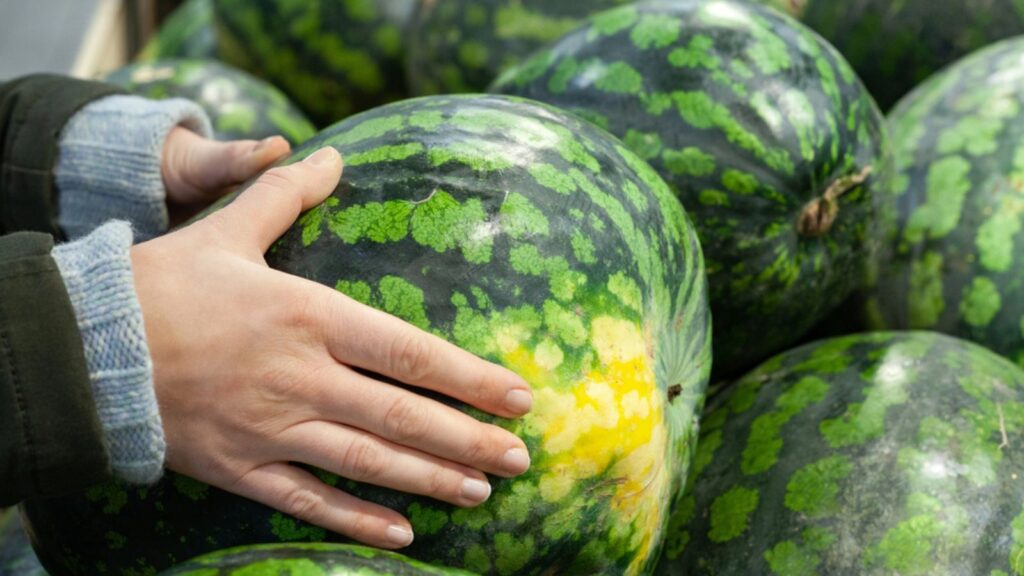
The field spot is that creamy yellow patch where the watermelon rested on the ground while ripening in the sun. A darker, goldish field spot indicates more time spent ripening on the vine.
A longer exposure to the sun results in a sweeter flavor. If the watermelon is light yellow or white, it may suggest that it was picked too soon.
6. Tap It

Almost everyone knows you should tap a watermelon to know if it’s ripe, but what exactly do you listen for? Give it a firm tap with your knuckles. If you hear a deep, hollow sound, the melon is ripe, juicy, and ready to eat.
A dull sound might indicate it’s overripe, underripe, or just plain bland in flavor.
7. Check For Bruises
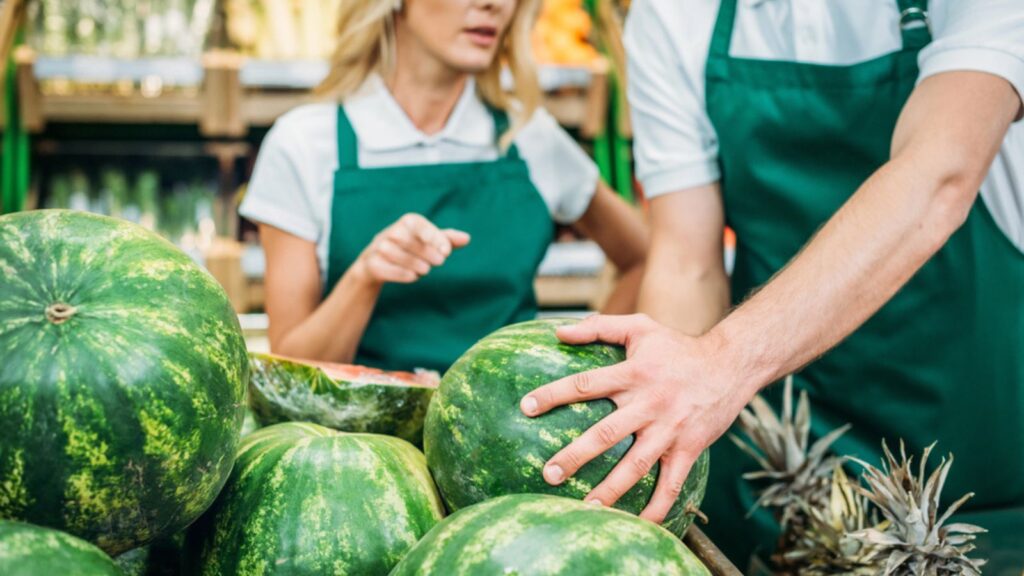
You really don’t want a melon that’s had a rough ride. Inspect your watermelon for bruises or soft spots, which can indicate damage.
While minor scratches are okay, significant dents or cracked areas might suggest it’s not good for consumption. If a melon looks like it’s gone through a wrestling match, you might want to keep looking.
8. Use the Two-Finger Rule

Here’s a little trick—place two fingers between the stripes of the watermelon. If they fit snugly within the spacing, it’s a good indication of ripeness.
The stripes should be evenly spaced and well-defined. If they are too far apart or almost nonexistent, the melon may not be ripe yet.
9. Smell It
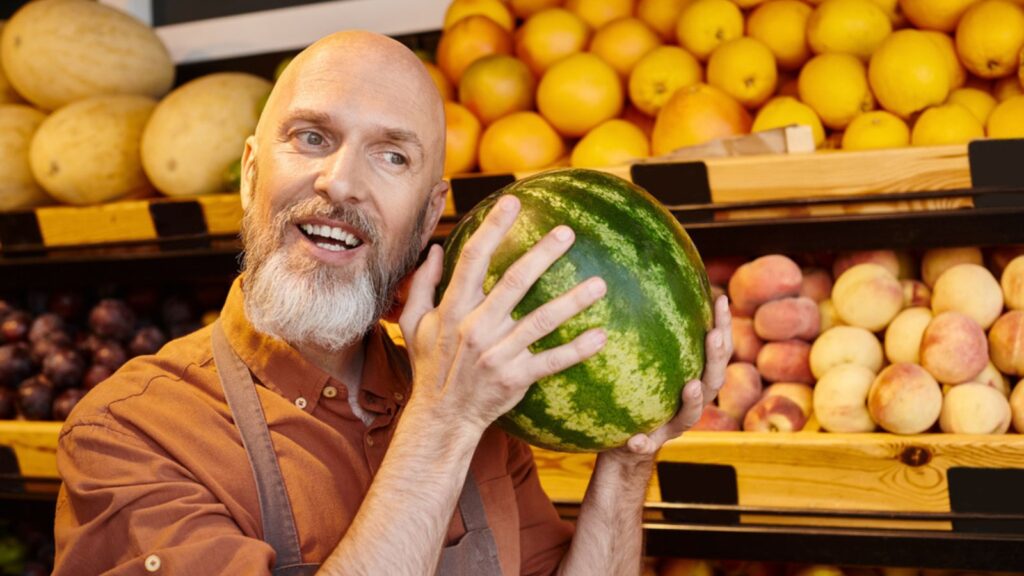
Yes, take that melon away from the others and give it a good sniff. The base of a ripe watermelon should have a sweet, fresh aroma. Ripe fruit should smell how you expect it to taste.
If it smells like, well, nothing much, it might not be ripe yet. On the flip side, if it smells overly sweet or fermented, it could be past its prime.
10. Press to See if Dents

Give the watermelon a gentle press. A ripe melon should feel firm, with just a tiny bit of give. If it’s too hard, it might not be ripe yet. If it feels soft or mushy, it’s likely overripe.
Melons are not like avocados, which will ripen if you give them some time on your counter. What you see in the market is what you get. So, make sure the one you carry home is ripe already.
11. Look at the Vine
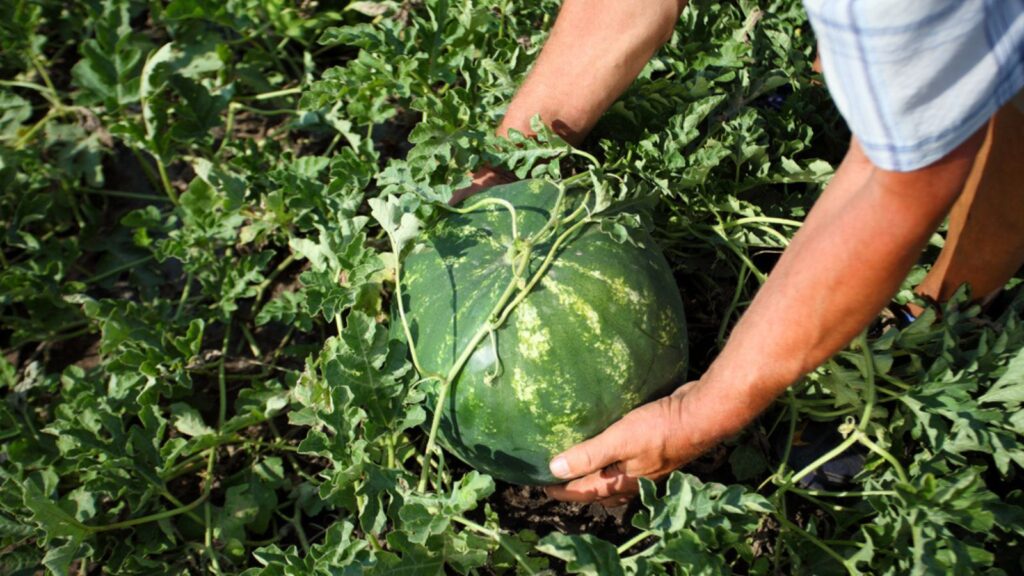
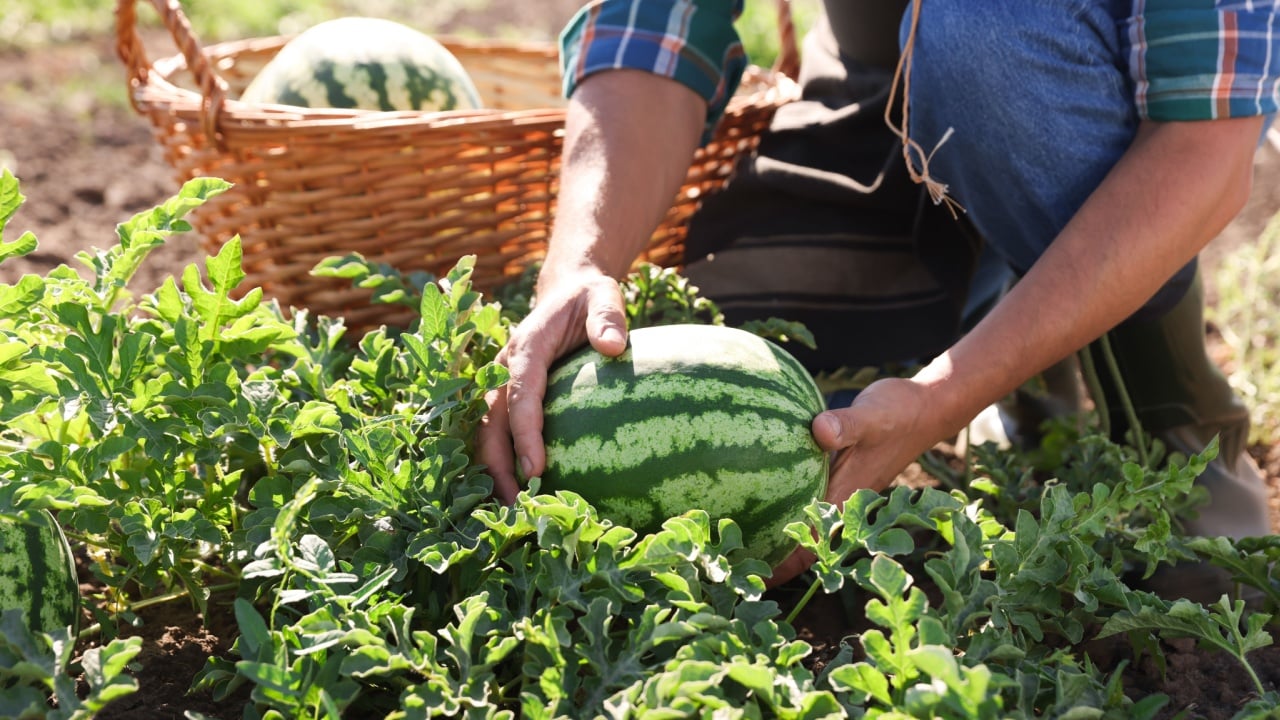
When growing, watermelons have green curly tendrils at the base that dry as they mature. If the watermelon still has a bit of the vine attached, check its condition.
A dry, brown vine indicates that the melon ripened fully on the vine. A green or partially green vine means it might have been picked before it ripened.
12. Choose Domestically Grown Watermelon

The time between melon harvesting and its consumption can significantly impact its taste and quality. If supporting your local farmers is your goal, now is the time. Check the tags to see where your watermelon is from.
Locally grown melons often take a shorter time from farm to table, meaning they’re fresher and riper when they reach your local grocery store.