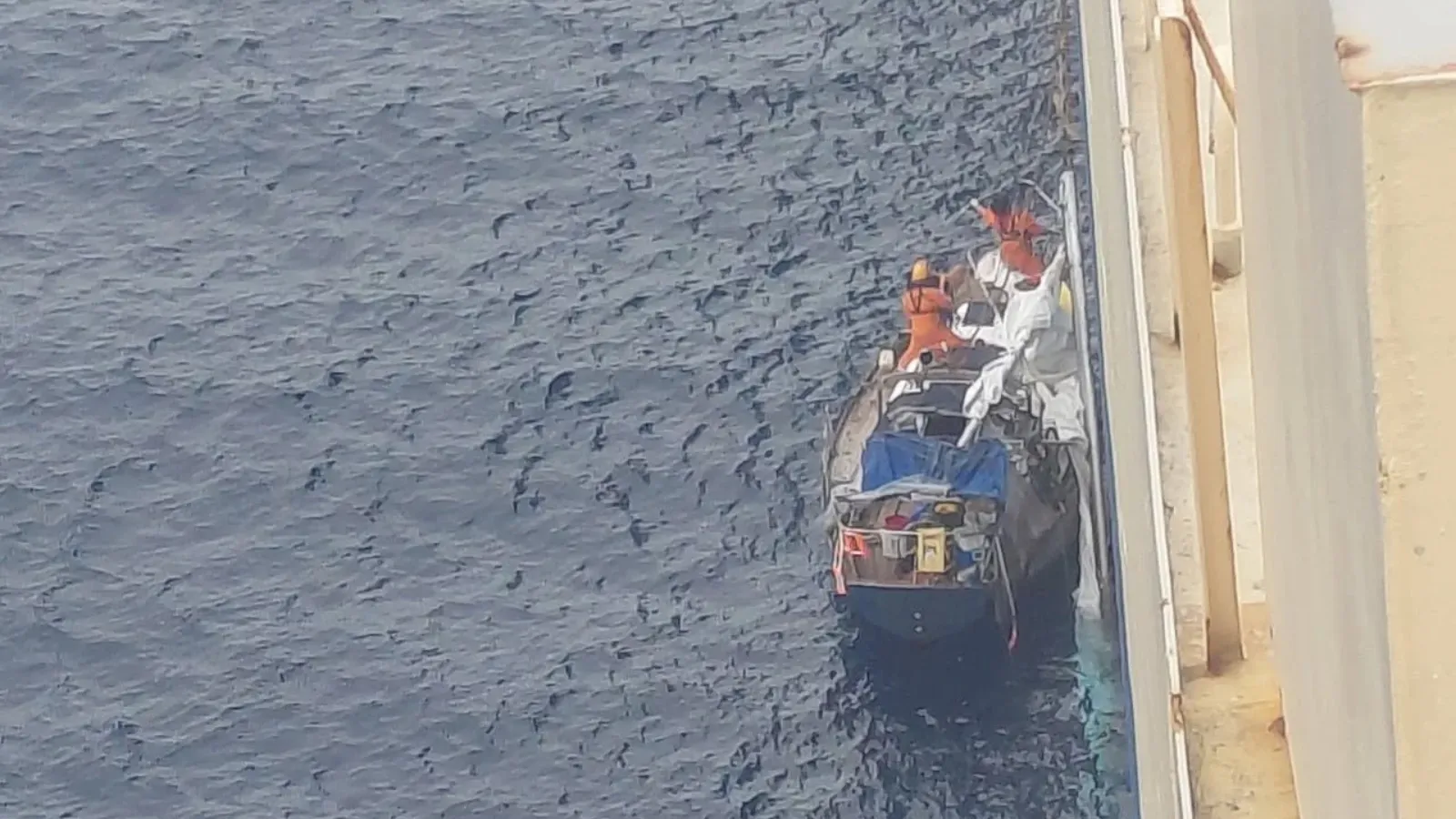
86-Year-Old Sailor and One-Eyed Dog Rescued After Two Months Missing at Sea
An 86-year-old sailor and his one-eyed dog have been rescued from the Pacific Ocean after disappearing for more than two months during an ambitious voyage. Their damaged sailboat was eventually found hundreds of miles off California—quite a ways off from the original destination the man had hoped to reach.
Harry Blodgett set out from Astoria, Oregon, in August aboard his trusty sailboat, Willow Wind. At his side was his trusty companion Sasha, a dog he had been fostering. Together, they were bound for Pago Pago, American Samoa, on what was supposed to be the adventure of a lifetime, all thrills, no pitfalls.
From the start, since the plan’s very conception, friends had tried to discourage Blodgett from making the journey, their warnings in part inspired by the thousands of miles across the Pacific he would need to traverse. Not about to be dissuaded, he went anyway, no less determined to accomplish something he’d dreamed about for years.
Then his sails failed, his fuel supply dwindled, and contact with home ceased altogether.
The U.S. Coast Guard eventually coordinated a rescue on Oct. 28. Interviews with The New York Times and People have unearthed additional details of how exactly the pair survived—and the unlikely piece of equipment that was instrumental in saving the wayward duo.
An Emergency Signal Ends Weeks of Uncertainty
Embedded media follows. Please allow a moment for it to load.
Blodgett had not been heard from since Aug. 20. When more than two months passed without contact, a concerned friend notified the Coast Guard on Oct. 24. Search teams faced a daunting problem: the sailor had planned a journey of roughly 5,000 miles, and nobody could say exactly where he might be.
Three days later, an emergency beacon registered to the Willow Wind began transmitting. Coast Guard Cmdr. Jason Nguyen told People that the device had been left aboard by the boat’s previous owner.
“It was still working,” recounted Nguyen, “and for whatever reason it went off and we got the alert and were able to find him.”
Coast Guard aircraft began searching the area. They at last found the sailboat approximately 460 miles off San Diego. Nearby, a commercial vessel, the Grand Orion, floated. The vessel changed course to assist. Its crew reached Blodgett’s location early on Oct. 28. After all those efforts, travels, and hope, however, they found rough seas made transferring him and Sasha too dangerous.
Everyone would have to wait just a bit longer.
Hours passed, and finally hazardous waves yielded to safer conditions; at last, the merchant sailors brought both aboard at 5:36 p.m. The Willow Wind, its sails damaged, was left at sea. The following morning, a Coast Guard helicopter lifted Blodgett and Sasha from the Grand Orion and flew them to San Diego.
Sailor Says He Still Wants to Finish His Journey
Blodgett reached shore; however, the ordeal left him weak, and he experienced difficulty walking. Despite this, rescuers reported no major injuries. Blodgett was taken to Scripps Mercy Hospital for evaluation.
Speaking to The New York Times, Blodgett described surviving on freeze-dried meals and water that became unpleasantly “stinky,” a word no one wants to associate with their water. Sasha, especially, objected to the odorous water so much that he refused to drink it.
Blodgett said his troubles began roughly two weeks into the voyage, although the exact point when the boat became disabled remains unclear. Despite the ordeal, he insisted he had never been frightened.
The voyage had been a deeply personal ambition. Blodgett told the newspaper that sailing across the Pacific was the final item on his bucket list. His friend Randy Enders said he had urged Blodgett to reconsider, particularly after the sailor gave up his home and sold possessions to pursue the trip.
Blodgett is back on land, but he is no longer on steady ground. A support page organized on his behalf says he and Sasha lost their belongings along with the boat and are now trying to establish a stable living situation. Still, Blodgett hasn’t abandoned his original ambition. He told The New York Times that he intends to reach American Samoa someday, despite everything that happened on his first attempt.
“You shouldn’t give up on your dreams or your goals,” said Blodgett.
How far would you go to check off a treasured item on your bucket list?