8 Weekend Upgrades That Finally Turn Your Greenhouse Into the Best Room on Your Property
There is a greenhouse somewhere in your neighborhood that looks like it belongs in a magazine, and the woman who owns it will tell you she spent almost nothing on it. She will also tell you she uses it every single day, even in January, while most greenhouse owners quietly abandon theirs by October.
The difference isn’t money or talent. The gardeners with the most inviting greenhouses simply made a handful of small, practical decisions early on that transformed a glass growing box into a space worth retreating to all year long. Most of those decisions cost less than a flat of annuals.
For gardeners in their 50s and 60s who have spent decades perfecting outdoor spaces, this is the project that finally brings it all together: a private, beautiful room that connects you to your garden in every season, costs almost nothing to maintain, and becomes the favorite corner of your entire property.
Here are eight upgrades, most of them doable in a single weekend, that turn any greenhouse from seasonal afterthought into a personal retreat you will never want to leave.
1. Start With a Floor That Works as Hard as You Do
The single best investment you can make in a greenhouse retreat is right under your feet. A proper floor transforms the feeling of the space instantly and makes it usable as a sitting area, a dining spot, or a quiet morning coffee nook.
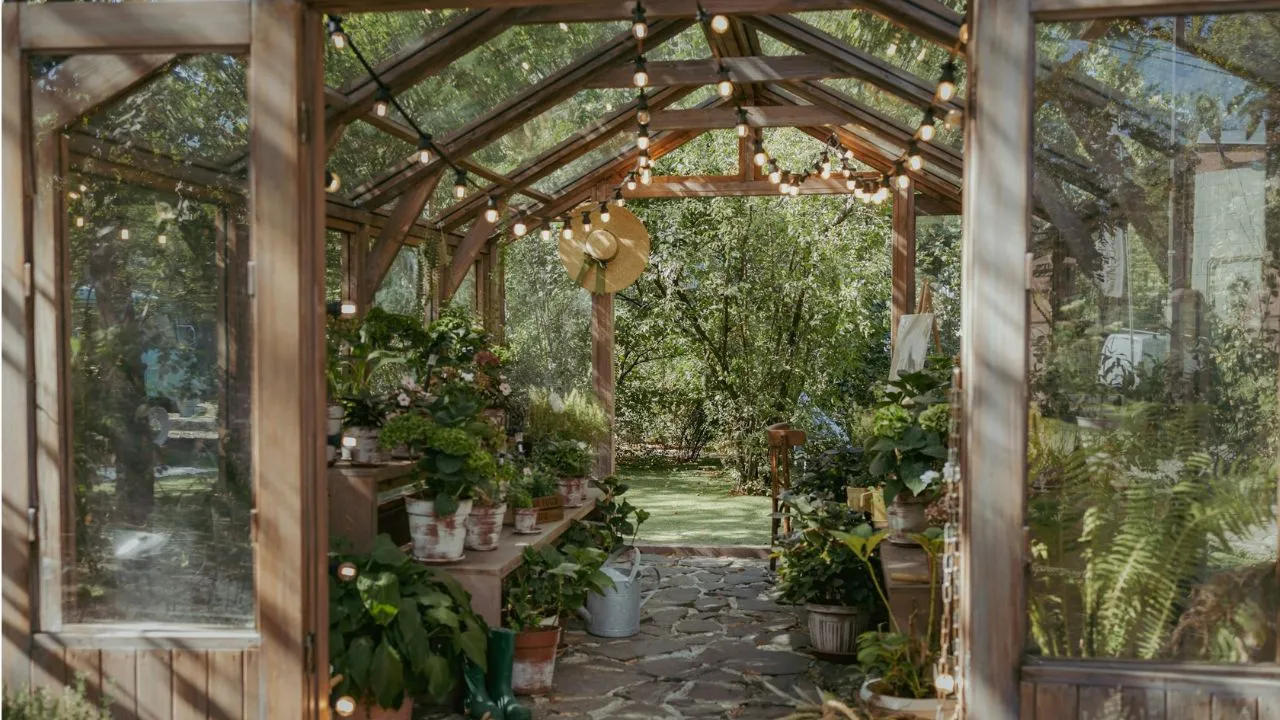
“Greenhouses have long been spaces for nurturing plants, but increasingly, we are seeing them evolve into places that nurture people too,” says Grazzie Wilson, head of creative at Ca’ Pietra, in Country Living. “The tumbled limestone underfoot links beautifully with the rest of the space, while also remaining forgiving of muddy boots and sun-warmed paws.”
The most affordable option also happens to be the one seasoned growers love most: crushed gravel (about 10mm) laid over landscape fabric. It drains perfectly, keeps weeds down, and costs roughly $50 to $100 for a standard hobby greenhouse. Unlike poured concrete, it won’t crack in winter and won’t classify your greenhouse as a permanent structure on your property assessment.
2. Give It Room to Breathe
A greenhouse with good airflow is a greenhouse you can actually sit in during July and August. Without ventilation, interior temperatures can climb past 120°F on a sunny afternoon, even in moderate climates. According to Michigan State University Extension, managing heat is one of the simplest and most impactful improvements a home greenhouse owner can make.
The easiest solution is also beautifully low-tech: automatic vent openers, available for under $30, use a wax cylinder that expands with heat and opens your vents without electricity or wiring. Your grandmother would have propped open a door and called it done, and she was on to something. Pair automatic vents with a simple shade cloth for the hottest months, and your greenhouse becomes a cool, breezy retreat when the rest of the yard is sweltering.
3. Choose Furniture That Actually Belongs There
The right seating is what separates a greenhouse you visit for five minutes from one you linger in for an hour. But standard outdoor furniture wasn’t built for the humidity, UV exposure, and temperature swings inside a greenhouse. The secret is choosing materials that thrive in those conditions rather than fighting them.
“There is now an increasing focus on coordinating every element, from staging to sinks,” says Tori Tomlin, director at White Cottage Greenhouses, in Country Living. “The trend is for elegant, functional interiors designed to delight.”
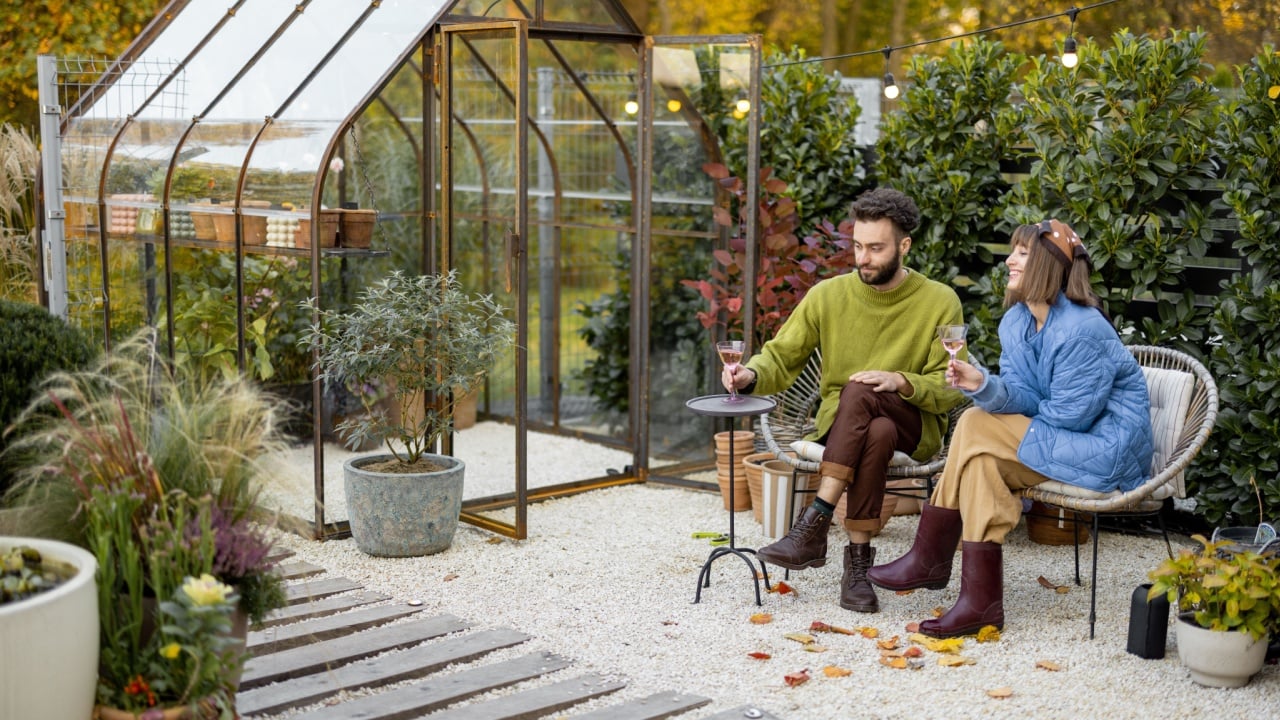
Plastic wicker, sometimes called “plicker,” is widely available at big-box stores, costs a fraction of genuine wicker, and survives greenhouse conditions beautifully for years. Pair it with a washable outdoor rug, and you have a sitting area for under $150 that looks charming and holds up season after season. A daybed, if you have the space, turns your greenhouse into the kind of reading nook you always wished your house had.
4. Heat It the Smart Way
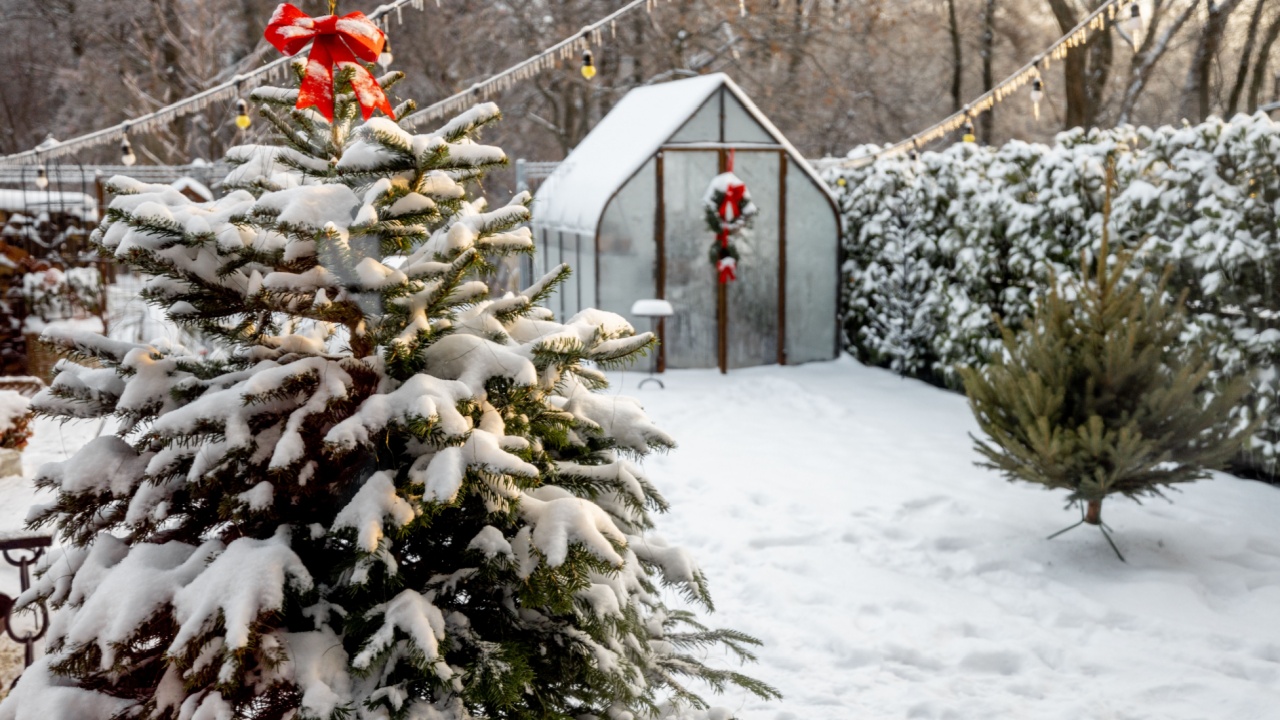
Year-round use doesn’t have to mean year-round heating bills. A 20-gallon propane tank lasts about 30 hours of continuous heating, and in cold climates, powered heating can run $100 to $400 per month, according to greenhouse owners on Houzz. But the most experienced growers lean on a technique that costs almost nothing: passive solar mass.
Black water barrels, stone or brick floors, and thermal mass walls absorb the sun’s heat during the day and release it slowly at night, keeping temperatures above freezing without a single dollar spent on fuel. According to the University of Wisconsin Extension, combining insulation with thermal mass can reduce greenhouse heating costs by 30 to 50 percent. It’s the same principle behind those beautiful old brick-walled greenhouses your grandparents’ generation built, and modern science has confirmed they had it exactly right.
5. Know the Rules So Nothing Slows You Down
A little homework now saves a lot of headaches later. In most U.S. municipalities, a greenhouse with a concrete foundation, permanent utilities, or electrical wiring is classified as a permanent structure and may require a building permit. According to Garden Professors, a research-based horticulture resource from university extension faculty, enforcement is “often complaint-based,” so staying informed keeps your project running smoothly.
HOA rules sometimes add guidelines around height, placement, and distance from property lines. Checking these before you add permanent features means your dream project moves forward without surprises. Many beautiful greenhouse retreats sidestep permit requirements entirely by using gravel floors instead of concrete, solar-powered lighting instead of wired electricity, and portable heaters instead of permanent utility hookups.
6. Make It Safe for Every Member of the Family
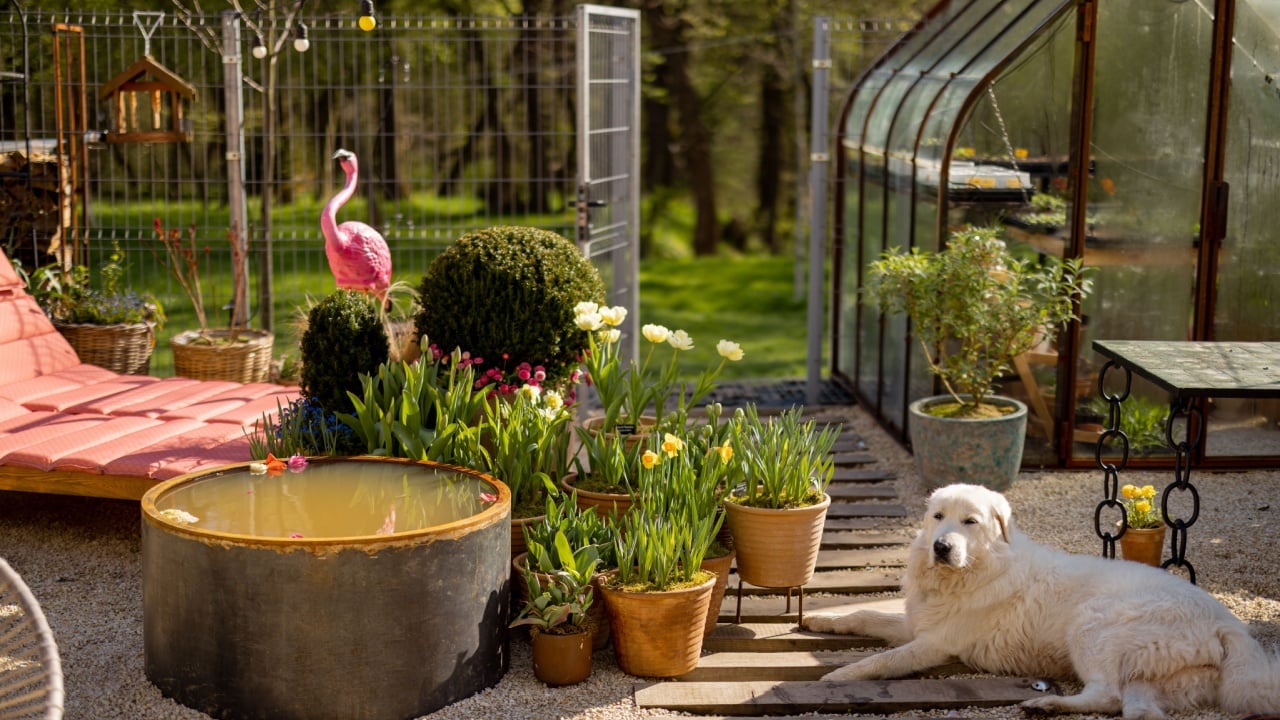
If your dogs or cats wander into your greenhouse (and they will, because it’s going to be that inviting), you’ll want to know which plants are safe for them. Peace lilies, philodendrons, pothos, dieffenbachia, and aloe vera are popular greenhouse choices. Still, all of them are toxic to pets, according to the ASPCA and Clemson University’s Home and Garden Information Center.
The good news is that plenty of gorgeous, greenhouse-friendly plants are completely pet-safe. Spider plants, Boston ferns, African violets, and calatheas all thrive in greenhouse conditions and pose no risk to curious noses. Choosing pet-safe varieties from the start means your greenhouse truly becomes a retreat for the whole family, four-legged members included. The ASPCA’s free online database makes it easy to check any plant before you bring it home.
7. Style It Like a Room, Not a Garden Center
This is the single most transformative shift you can make. The greenhouse owners who use their space every day all did the same thing: they stopped thinking of it as a place for plants and started thinking of it as a room that happens to have plants in it.
“There is an increase in customers choosing a larger structure that can be used as part greenhouse, part lifestyle space for hosting and relaxing,” says Iain Cumming, production manager at Gabriel Ash, in Country Living. “There’s nothing better than tending to your plants, then being able to sit back and relax amongst them.”
A comfortable chair. Layered lighting at different heights; not grow lights, but floor lanterns, tabletop lamps, and string lights overhead. A workbench that doubles as a dining table for summer suppers surrounded by greenery. These elements cost less than a cart full of ornamental pots and create something no other room in your house can offer: a space where you are simultaneously indoors and in the garden.
8. Design It for Every Season, Not Just Spring
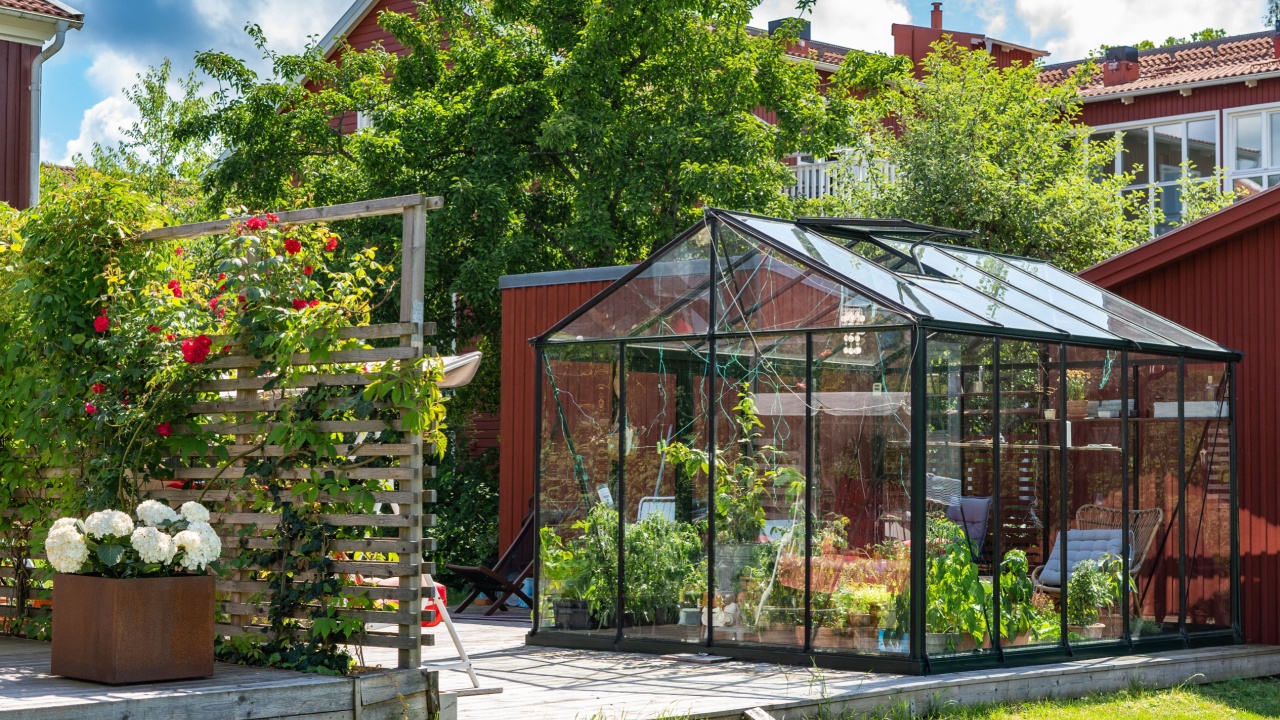
The difference between a three-season greenhouse and a year-round oasis is surprisingly small. Shade cloth handles summer. Bubble wrap on interior glass panels (a trick that looks better than it sounds) handles winter insulation. A thoughtful seasonal plant rotation keeps the space alive and interesting in every month.
“A botanical space like this offers more than simply the beauty of nature,” says James Watchorn, design and sales manager at Vale Garden Houses, in Country Living. “They provide a sense of calm, a daily connection to the outdoors that brings balance and quiet to an increasingly fast-paced world.”
Late August is the perfect window to prepare for the transition. Swap summer annuals for cool-weather greens that will carry you through fall. Tuck thermal mass (even a few dark-painted water jugs) into corners before the first frost. The gardeners who take these small steps now are the ones who will be sitting in their greenhouse with a cup of tea on a January afternoon, watching the snow fall from the warmest seat in the yard.
A Space That Gives Back
Start with the floor, the ventilation, and a comfortable place to sit. Those three changes cost less than $200 combined and are worth more than $2,000 in decorative pots you would never look at twice. Check your local permit guidelines before adding permanent features, run your plant list against the ASPCA’s free toxic plant database, and treat the whole project as what it really is: creating the best room in your house, just on the other side of the back door.
The best greenhouse oasis doesn’t look like a magazine spread. It looks like your grandmother’s sun porch; a little worn, a little personal, and used every single day. It’s the place where you start your morning, where you eat dinner on warm evenings surrounded by the scent of basil and jasmine, and where you sit quietly with a book when the rest of the world feels like too much. All of that is closer than you think, and most of it costs less than you’d spend on a single weekend at a garden center.
Read More
The 7 Best Garden Items to Thrift This Fall
9 Smart Ways to Save Money in the Garden Before Fall Ends