Meet the First Baby Giant Anteater Ever Born at a Kansas Wildlife Park
Tanganyika Wildlife Park in Goddard, Kansas, has officially welcomed a very special new arrival. Amara and Armando are now parents to the first giant anteater ever born at the park.
Tanganyika was “so excited” to reveal the birth in a Facebook announcement, after staff had been dropping hints about the new arrival just prior. The park said Amara and her baby were doing well.
“This is the first giant anteater ever born at Tanganyika,” the announcement shares. “We can’t wait to share their growth with you.”
This celebrated birth was a long time coming. Tanganyika Wildlife Park says staff had been trying to breed Amara and Armando for about two years and had nearly given up on Amara and Armando becoming parents, until Amara unexpectedly gave birth.
The new arrival is significant beyond being a first for the park. Giant anteaters have a Conservation Status of Vulnerable, and females typically produce only one pup at a time after a pregnancy that lasts about six months, according to the Smithsonian’s National Zoo.
Per Tradition, The Newborn Quickly Grabbed A Ride
Embedded media follows. Please allow a moment for it to load.
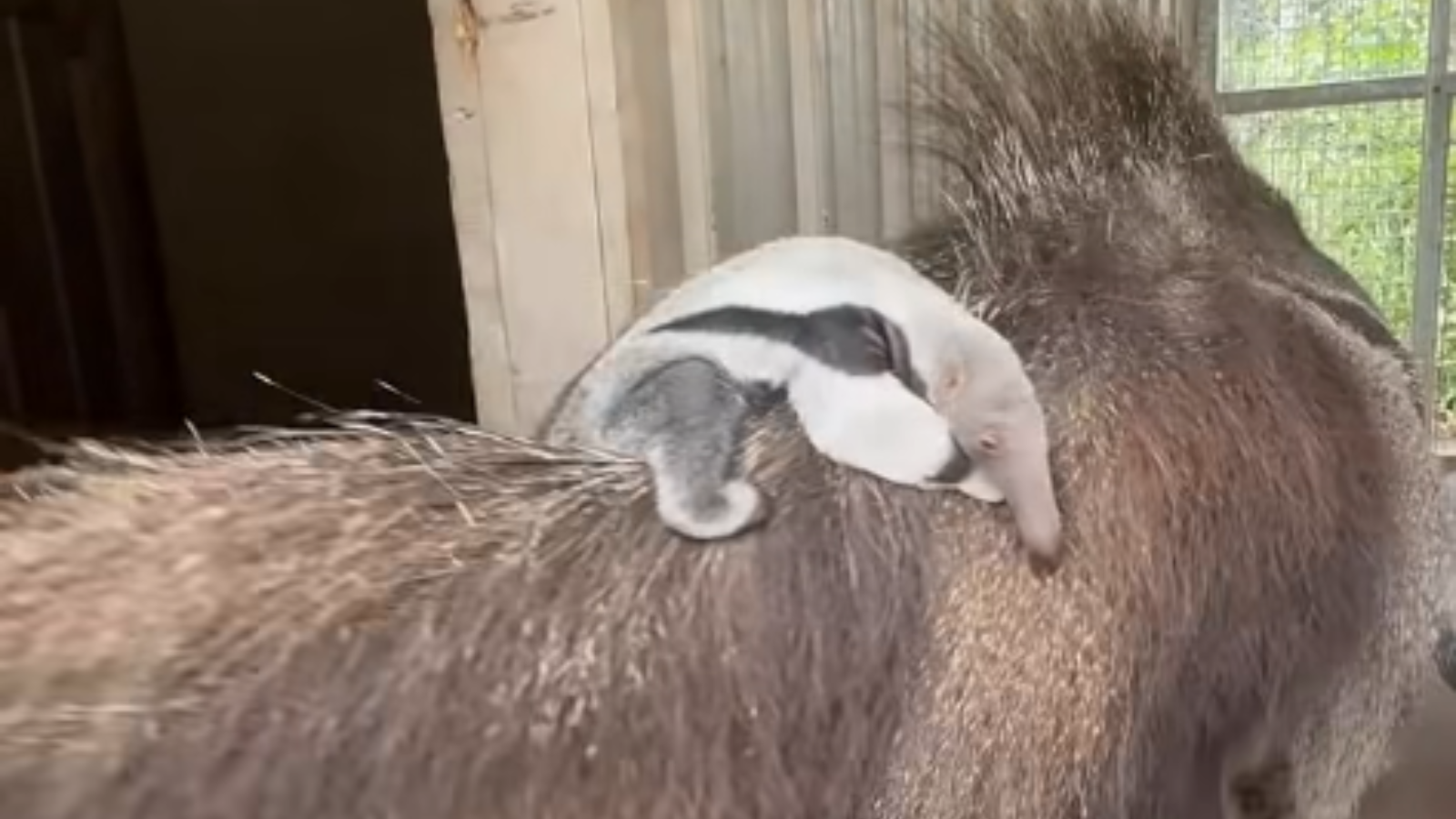
On July 30, Tanganyika reported that Amara gave birth overnight. Keepers say she has been nursing the pup regularly and carrying it almost everywhere on her back.
Piggyback rides are actually quite normal for the species. In fact, the San Diego Zoo explains that newborn giant anteaters spend much of their first year riding on their mothers, growing stronger so they can eventually travel on their own.
This setup even provides great camouflage for the little one. A pup’s dark stripe lines up with its mother’s markings while it rides on her back, helping the pup blend into her body and making it harder for predators to spot the baby, according to the San Diego Zoo.
This Tiny Pup Has A Lot Of Growing To Do
For now, Tanganyika does not know whether its new pup is male or female. The park says Amara and the baby are being kept apart from Armando because giant anteaters are naturally solitary animals.
Giant anteater babies may start small, but with time, that name sure does become accurate. Pups weigh around 3 pounds at birth, and adults can reach 6 to 8 feet from their nose to the tip of their tail, according to Tanganyika and the Smithsonian.
This giant species has a fittingly long tongue, for which it is also quite famous. The Smithsonian says an adult giant anteater’s tongue alone can reach about 2 feet long and flick in and out of its mouth as many as 150 times per minute while the animal feasts—usually on ants, but also on termites.
As they grow, pups gradually spend more time away from their mothers. The San Diego Zoo writes that pups begin venturing onto the ground after their first month, although they continue riding on Mom frequently and generally remain with her until they are fully grown.
Visitors may have a chance to watch that process unfold. Tanganyika says Amara and her pup are being exhibited during the mornings, giving guests a chance to see the park’s first baby giant anteater riding along with Mom.