Kilauea Volcano Puts on Dazzling Sunset Show as Lava Shoots Hundreds of Feet Into the Air
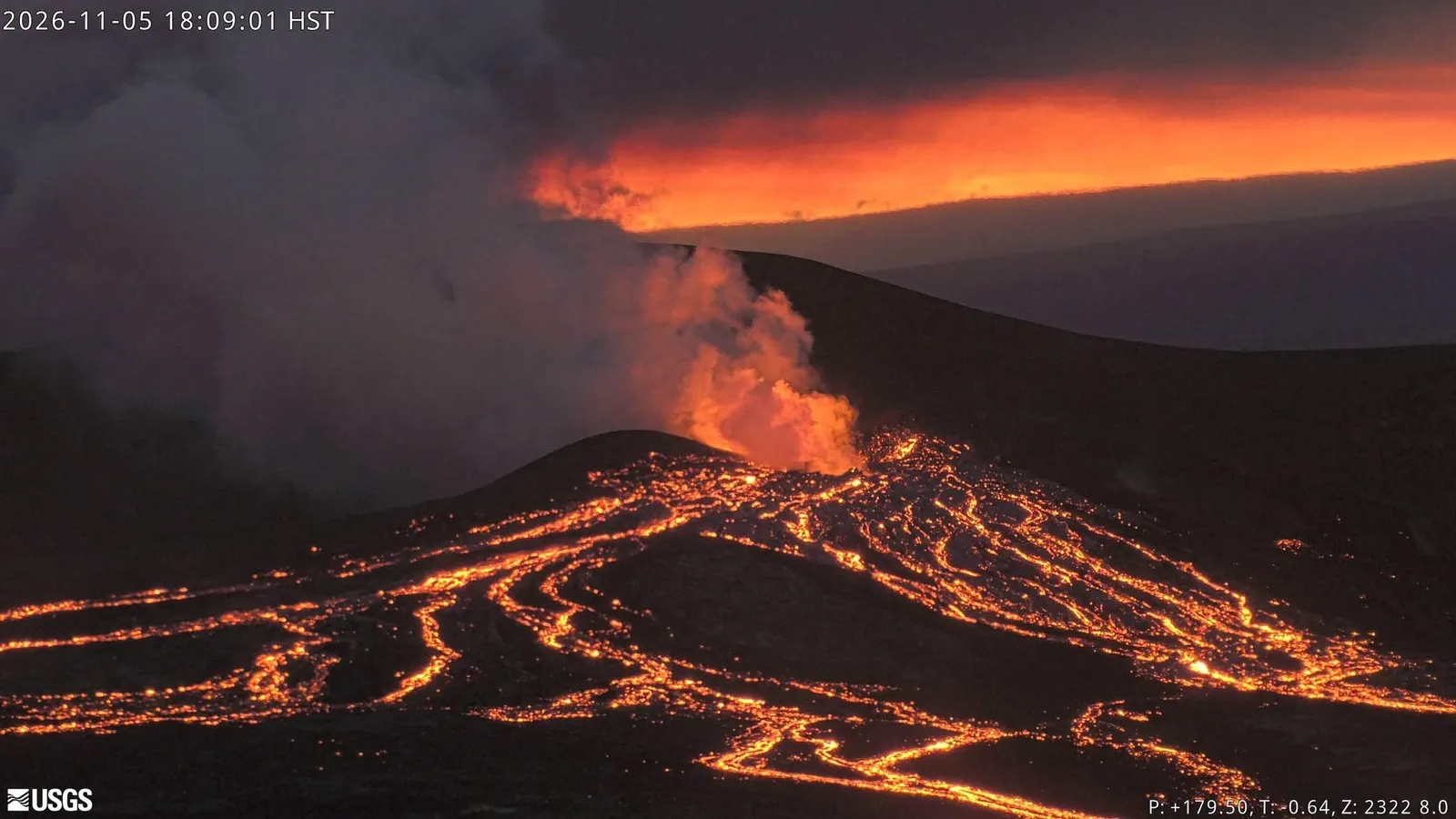
Kīlauea volcano sent towering fountains of lava into the Hawaiian sky on Thursday, Nov. 5, some reaching heights of more than 600 feet. The eruption continued into the evening, when the setting sun and volcanic gases produced an unusual display of colors over the crater just before the fountains stopped.
The dramatic display unfolded at Hawaiʻi Volcanoes National Park, where lava fountains reached approximately 660 feet above the volcano’s summit crater. The spectacle lasted nearly six hours before abruptly ending at 6:01 p.m. local time.
It was actually the 56th episode in an ongoing series of eruptions that began in December 2024. Although the latest display has ended, scientists continue to monitor the volcano for signs of any more bursts of activity.
In a Facebook post, Hawaiʻi Volcanoes National Park shared photographs of the eruption’s final moments, including dramatic images of the lava fountains against the sunset. The park described the scene as “a grand finale,” complete with the “volcanic gas and sunset producing some incredible colors.”
Lava Fountains Soared Hundreds of Feet Above the Crater
Embedded media follows. Please allow a moment for it to load.
According to the U.S. Geological Survey, the latest episode began at 12:10 p.m. on Nov. 5 in Halemaʻumaʻu crater at Kīlauea’s summit. The north vent produced the towering fountains, which reached their maximum height of approximately 660 feet during the early afternoon.
Scientists estimate that approximately 8 million cubic yards of lava erupted during the episode.
Above the fountains, a plume of volcanic gas and other eruptive material climbed as high as 18,000 feet above sea level. Winds carried the plume across the surrounding area, while volcanic fragments fell primarily within closed sections of the national park.
Some material traveled even further, though. Scientists documented light deposits of ash and Pele’s hair—which are delicate strands of volcanic glass formed when molten lava stretches and cools—near Highway 11 and the Footprints Trailhead. The glass can be hazardous because its fine strands are deceptively—and dangerously—sharp.
By late afternoon, the fountains had weakened considerably. Activity fluctuated briefly just before 6 p.m., then stopped abruptly at 6:01 p.m. Lava already on the crater floor continued moving for a time after the fountains disappeared.
Scientists Are Watching for Kīlauea’s Next Eruption
Kīlauea has been erupting intermittently since Dec. 23, 2024, and the Nov. 5 event marked its 56th episode of lava fountaining. These eruptions have typically lasted several hours before subsiding, sometimes leaving the volcano quiet for weeks before activity resumes.
Visitors have had opportunities to witness some of those displays from designated viewpoints around the summit. Photographs published by the USGS Hawaiian Volcano Observatory show spectators gathered at Uēkahuna overlook during episode 56, watching the fountains rise above the crater.
The wonderment of the display is matched by the perils it brings. Volcanic gases can affect air quality; plus, windblown ash or volcanic glass may reach areas beyond the eruptive vents. The lava itself has remained confined to Halemaʻumaʻu crater, an area closed to public access.
Following the eruption, the USGS lowered Kīlauea’s volcano alert level from Watch to Advisory and its aviation color code from Orange to Yellow on Nov. 6. These classifications reflect the reduction in activity after the fountains stopped.
As of Nov. 9, Kīlauea’s lava fountains had stopped, although scientists detected renewed swelling at the summit as magma accumulated underground. The USGS estimated that another episode was likely more than a week away. Until then, the volcano remained under close observation as researchers tracked the changes that could help them narrow down when the next eruption might begin.