

7 Best Methods for Decluttering That’ll Actually Stick, According to Experts
Most people don’t struggle with wanting a tidier home. They struggle with knowing where to begin. Clutter builds up quietly, and before long, drawers won’t close, shelves are overloaded, and rooms feel heavy with stuff.
What makes decluttering hard isn’t the physical act of sorting through things. It’s the decision fatigue, the emotional pull of certain items, and the lack of a clear structure to follow. Without a method, most people stop before they finish or undo their progress within weeks.
Experts across organizing, psychology, and minimalism have studied what makes decluttering last, and their approaches go far beyond just “throw things out.” The best methods work with how people actually make decisions, manage their energy, and maintain habits over time.
This article covers seven well-known, expert-backed decluttering methods that are built to stick.
1. The KonMari Method
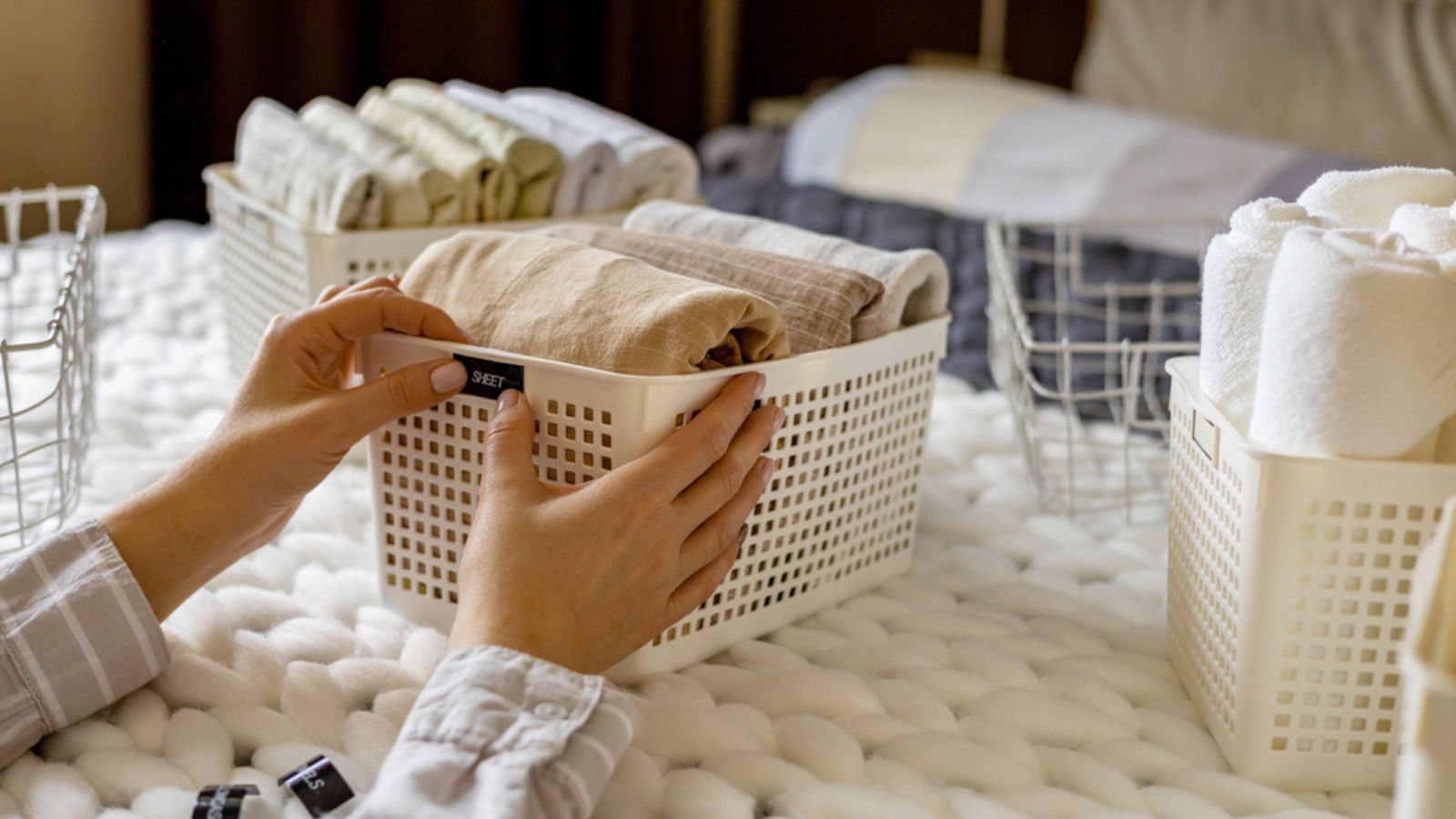
Developed by Japanese organizing consultant Marie Kondo, the KonMari method asks one central question about every item you own: Does this spark joy? If it does, you keep it. If it doesn’t, you thank it and let it go.
This approach works by category rather than by room, so you gather all your clothes, for example, from every corner of your home before sorting through them at once.
The order matters in KonMari, and it’s deliberate. You move through clothes, books, papers, miscellaneous items, and sentimental objects in that sequence because earlier categories are emotionally easier to sort through.
By the time you reach the items with the most personal meaning, you’ve already developed sharper instincts for what you actually want in your life. Many people find that this process doesn’t just clear their space but shifts how they relate to what they own.
2. The Four-Box Method

The Four-Box Method is one of the most practical ways to work through a cluttered space without getting stuck in endless deliberation.
You set out four labeled boxes or bags for keep, donate, trash, and relocate, then work through a space systematically, placing every single item into one of the four.
Nothing gets a free pass, and nothing gets set aside to “decide on later.” The real value of this method is that it forces a decision in the moment, which is exactly what most clutter-clearing efforts lack.
Organizers recommend keeping a tally of what fills each box as you go, because it reveals patterns quickly. If your keep box is overflowing and your donate box is nearly empty, that’s a signal to revisit your criteria, not a reason to stop.
3. Swedish Death Cleaning

Swedish Death Cleaning, introduced by author Margareta Magnusson in her book The Gentle Art of Swedish Death Cleaning, is built around a quietly powerful idea.
The practice involves decluttering your home with your loved ones in mind, removing anything that would become a burden for them to sort through after you’re gone.
It sounds heavy, but Magnusson is clear that this approach is for any age and any stage of life.
The method works from large items down to small ones, and sentimental objects are always saved for last. Basements, attics, and storage areas are good starting points because that’s where forgotten clutter tends to pile up.
4. Decluttering by Time
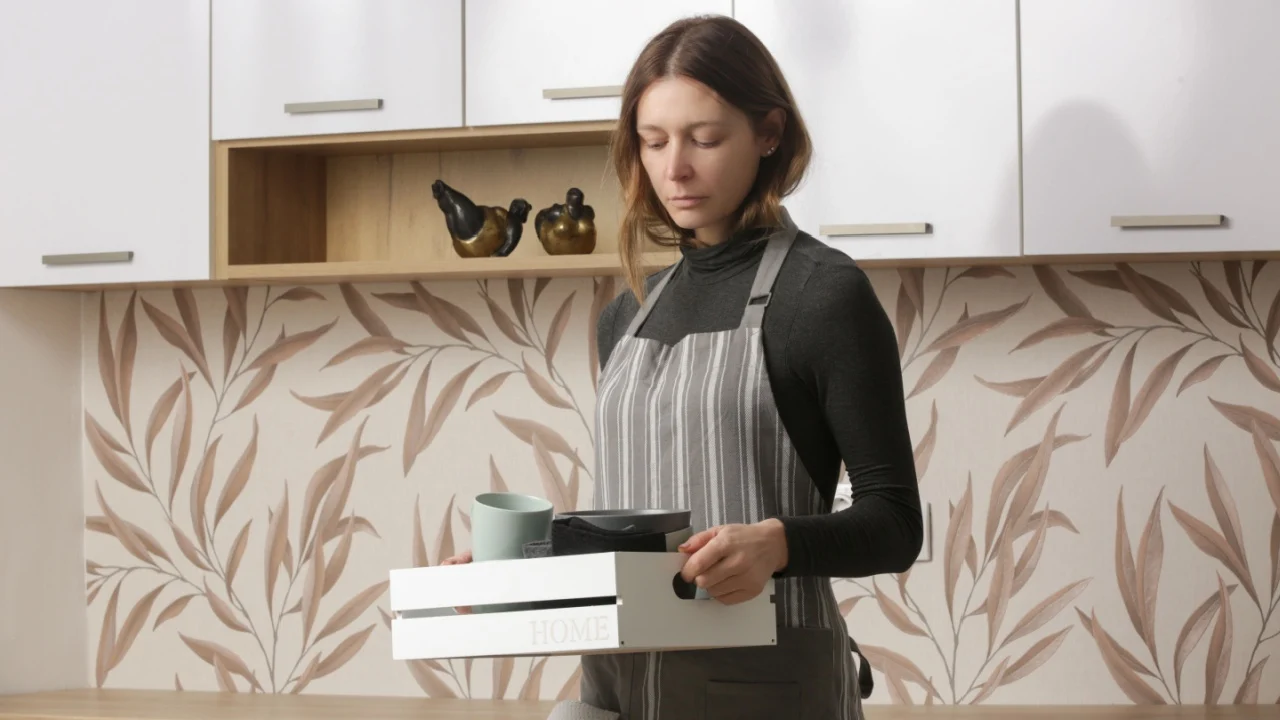
Decluttering by time means setting a timer and working for a fixed, intentional window, typically anywhere from 10 to 30 minutes, then stopping when the timer ends.
This method is backed by behavioral research showing that people sustain effort and focus more effectively in short, bounded sessions than in open-ended ones. You’re less likely to burn out, and you’re more likely to return the next day.
The approach is effective for people who feel overwhelmed by the scale of a full declutter, as well as for those with limited time. Professional organizers often use timed sessions with clients to maintain momentum and prevent the decision fatigue that sets in after long stretches of sorting.
Over the course of a week, several 20-minute sessions add up to a significant amount of cleared space without ever requiring a full weekend commitment.
5. The Minimalist Game

The Minimalist Game was created by Joshua Fields Millburn and Ryan Nicodemus, known as The Minimalists, and it turns decluttering into a month-long challenge. On day one, you remove one item.
On day two, you remove two. By the end of a 30-day month, you’ve cleared 465 items. The game aspect comes from doing it alongside a friend or partner and seeing who can make it furthest.
What makes this method work psychologically is that it removes the pressure of deciding everything at once. Early in the month, the numbers are so small that the task barely registers as effort.
By mid-month, the habit is already forming, and you’ve built enough momentum to push through the harder days. The items need to leave your home each day, whether through donation, recycling, or disposal, which adds a layer of accountability that keeps the process moving.
6. Save Sentimental Items for Last

Organizing experts, including Marie Kondo and Margareta Magnusson, consistently agree on one point. Sentimental items should always be sorted through last, after you’ve already worked through the rest of your belongings.
The reason is rooted in how emotional decision-making works. When you start with objects tied to strong memories, you exhaust your emotional energy before you’ve made any real progress.
By the time you reach sentimental items, you’ve already made hundreds of smaller decisions and sharpened your sense of what genuinely matters to you. That built-up clarity changes how you approach the harder choices.
You’re less likely to keep things out of guilt or vague nostalgia and more likely to hold onto what carries real meaning. Items you choose to keep after this process tend to be displayed or used, rather than boxed away and forgotten.
7. The One-in, One-out Rule

The One-in, One-out Rule is less a decluttering method and more a maintenance system, but experts consistently name it as one of the most effective ways to prevent clutter from returning.
The premise is simple: every time a new item enters your home, an equivalent item leaves. Buy a new jacket, donate an old one. Add a book to the shelf, pass one along.
This rule changes the way you shop and acquire things. When you know that a new purchase means letting something else go, impulse buying slows down naturally.
Consumer behavior researchers have noted that people who use this rule report feeling more intentional about what they own, not because they deprive themselves, but because every new item has to earn its place.
Make Your Clean Space Last

A clean, cleared space is easier to maintain when you build a system around it, not just a single big session.
The methods above work best when you choose one that matches your current situation, whether that’s a slow and steady game, a single timed session each evening, or a whole-home approach that goes category by category.
The emotional side of decluttering is just as important as the physical side. Addressing why clutter accumulates in the first place, attachment, habit, decision avoidance, or simply never having a structure, is what separates a one-time clear-out from a lasting change.


