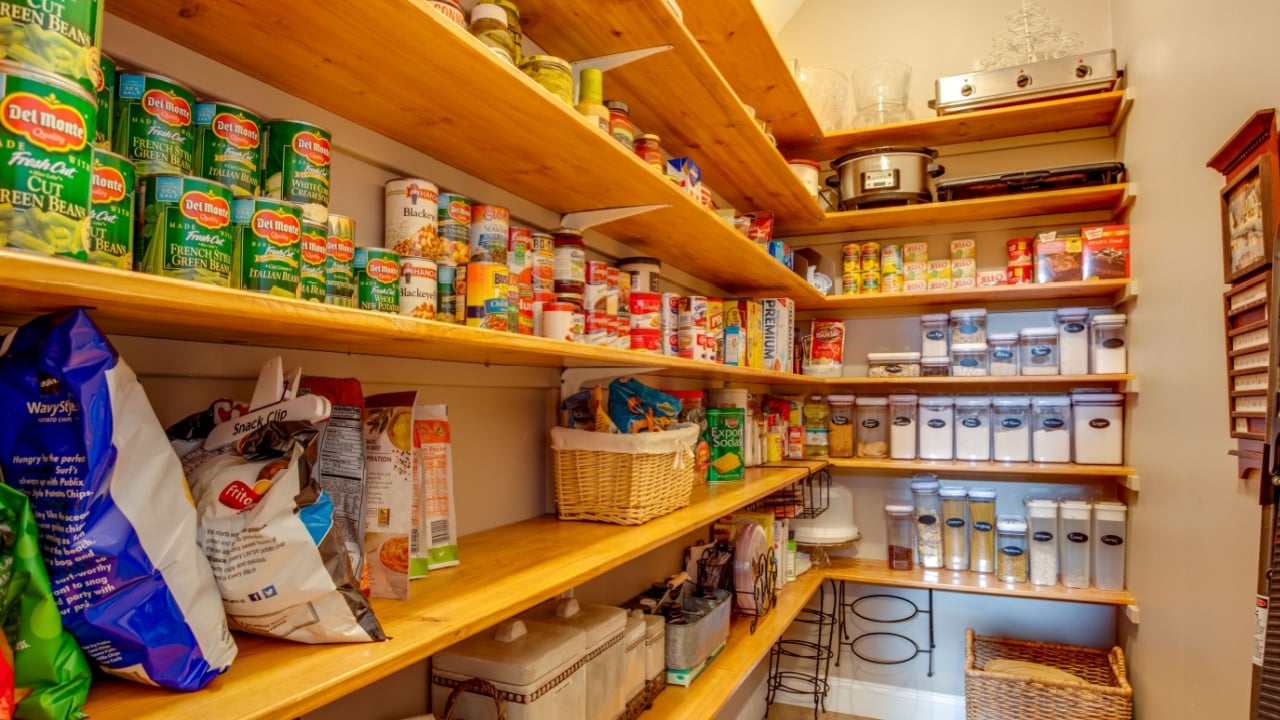
The Emergency Fund You Can Eat (How to Stock a Smart, Stress‑Free Pantry)
Savvy consumers know that it’s vital to have an emergency fund – some cash set aside for unexpected expenses. With food prices rising so sharply, here’s another smart personal finance move: a well-stocked pantry, aka the emergency fund you can eat.
If you got laid off, you’d have plenty to eat until you find a new job. A deep pantry will also save you money right now, because plenty of food on hand means less reliance on takeout/food delivery. Cooking even half your dinners will save you a ton. So will brown-bagging your lunch now and then.
Food prices could rise as much as 6% in 2026, according to the U.S. Department of Agriculture. Avoid supermarket sticker shock by building your own edible emergency fund.
If you’ve got a dollar or two a week, you can prep a pantry. Here’s how.
Start Slowly

You don’t need to fill your cupboards all at once. Instead, aim for one or two extra items each time you shop. We’re talking shelf-stable items like pasta, dry or canned beans, ramen, canned or frozen vegetables, dried or canned fruit, peanut butter (or some other nut butter), and canned fish/meat.
When you see a stupid-cheap deal, get as many as you can afford. Just make sure it’s something your household uses. Cream of asparagus soup for 79 cents isn’t a great deal if no one will eat it.
Finding the Sweet (Price) Spot

Sign up for store loyalty programs to get weekly deals, and maybe additional mailed or downloadable coupons. As store algorithms learn your buying habits, those coupons could be tailored to what you use most often.
Sweeten those deals further with shopping apps like Fetch Rewards, Ibotta, Pogo, and Shopkick, which offer rewards points or rebates for scanning/buying specific items. Trade points for supermarket or big-box store gift cards, then shop for free.
Eat It!

Write the purchase date on the front (not the top) of each food item, and store it at the back of the cupboard/freezer. The idea is to use the newest stuff last.
Yes, use. This is food you should be using, not hoarding. Because the ingredients were bought at rock-bottom prices, each pantry meal saves you money. This, in turn, frees up a few more dollars for restocking your shelves.
Aim to replace them at the lowest possible price point. Don’t worry: Smart shopping quickly becomes a habit.
Dollar Dinners

Feeling financially pinched? It’s OK. You can get started on as little as a buck – or maybe a buck twenty-five – by checking the local dollar store.
Pasta, rice, dry and canned beans, canned tomatoes, sugar, teabags, cereal, and other foods will plump up your pantry. Some of these stores, such as Dollar Tree and Dollar General, accept manufacturer coupons.
Dollar stores also sell a ton of snacks, but keep walking. Your focus should be real foods, not cheesy poufs.
Secret Spots for Great Deals
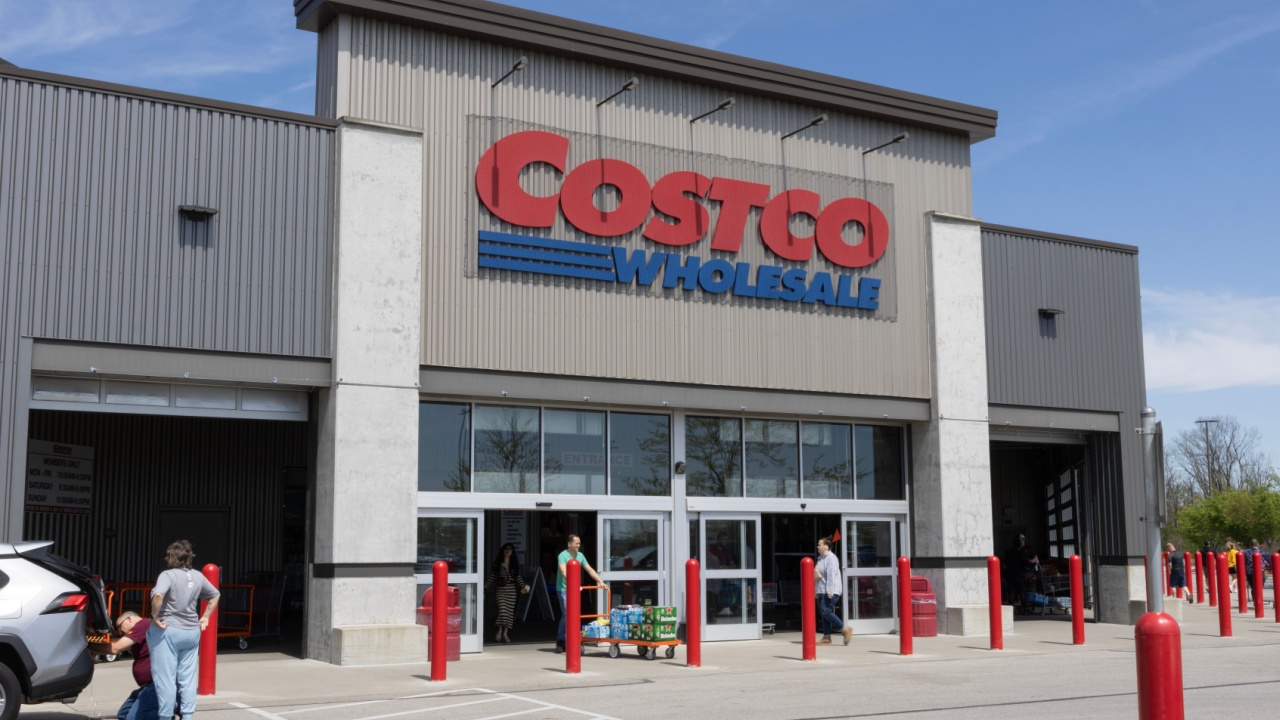
Grocery stores aren’t the only places to buy food! Here are a few other options:
- Stores like Target, Walgreens, and CVS offer loss-leader prices on some foods. Spaghetti sauce, cereal, ramen, and such might beat the supermarket prices (especially if coupons or rebates are available).
- So-called “ethnic markets” that focus on Asian, Hispanic, or other specialized cuisines offer rice, beans, and other shelf-stable foods at noticeably lower prices than a typical supermarket.
- Warehouse stores like Costco and Sam’s Club have good prices on large quantities. You have to buy a six-pack of canned chicken or a giant jug of salsa, but that simply means you can use some now and store (or freeze) the rest of it. Offer to drive a relative or friend who’s already a member (and help unload the items at their home) in exchange for being allowed to shop with them.
- Restaurant supply stores like Cash And Carry or The Restaurant Store offer warehouse-club sizes without a membership fee. Again: Eat some now and some later, or share with like-minded savers.
- Search “Buy Nothing groups near me” on Facebook. Their “give where you live” premise connects neighbors to give, receive, and ask for what they need. Often, that includes food.
Be Prepared

Food prices aren’t going down any time soon. Is your salary keeping pace? Stock your pantry, and improve your financial peace of mind.
Read more:
13 Plants That Keep Your Wallet Happy and Your Pantry Full
5 Pantry Staples That Are Always Worth Buying in Bulk