Rare Rain Transforms One of the World’s Driest Deserts Into a Sea of Flowers
One of the driest places on Earth has become a canvas of color after uncharacteristically heavy rainfall brought millions of dormant seeds and bulbs to life in Chile’s Atacama Desert.
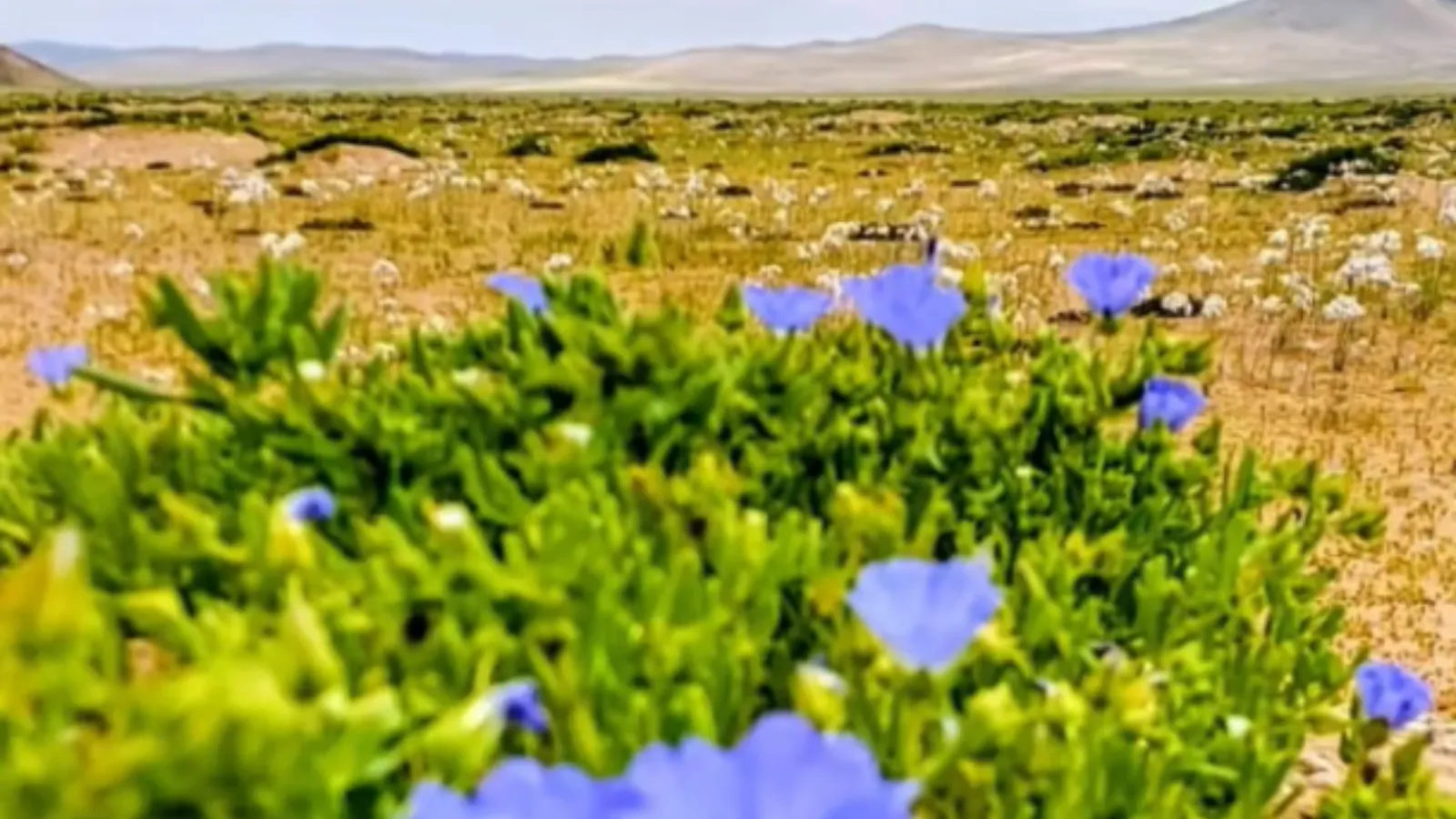
Vast stretches of the normally barren landscape are now coated in violet and white wildflowers. Tourists normally flocking to sprawling stretches of amber landscape are now eager to witness a natural phenomenon known locally as desierto florido, or the “flowering desert.”
The transformation follows extraordinary winter rainfall associated with El Niño. According to Chile’s National Forestry Corporation (CONAF), the phenomenon occurs when unusual rains awaken over 200 species of plants that have adapted to surviving long periods of drought.
In an Aug. 20 announcement, the Atacama regional government predicted an extensive flowering season, with the diversity and abundance expected to reach its apex around mid-October.
Exceptional Rainfall Awakens the Desert
Embedded media follows. Please allow a moment for it to load.
Observar sin Intervenir | Lamentablemente ya se han registrado a personas pisando el manto de flores en el #DesiertoFlorido2026.
Si queremos seguir disfrutando de este fenómeno debemos cuidarlo y conservarlo.
Es simple: NO pises ni cortes las flores. pic.twitter.com/B6z7sKa6Jq
— CONAF – Corporación Nacional Forestal (@conaf_minagri) September 22, 2026
Some parts of Atacama received approximately seven inches of rainfall during the Southern Hemisphere’s winter. César Pizarro, who oversees biodiversity conservation for CONAF in Atacama, told AFP that such high rainfall amounts had never previously been recorded in those areas.
The exceptional rainfall allowed additional moisture to penetrate deeper into the desert sand than usual. This, in turn, allowed dormant seeds and bulbs to germinate. Flowers that can remain hidden beneath the soil through prolonged dry periods are now emerging across the landscape.
This transformation across the desert landscape is not limited to flowers alone; rather, there has been a cascade effect across the whole greater ecosystem. Pizarro explained that the renewed vegetation also supports insects, snails, birds, reptiles and mammals. Bees pollinate the flowers. Beetles help fertilize the soil.
Researchers are taking advantage of the extraordinary season, too. On Sept. 15, Chile’s Environment Ministry reported that a citizen-science project documenting this year’s flowering desert had already collected nearly 3,000 observations covering more than 650 species.
Officials Prepare for Visitors as Flowers Continue to Bloom
With the flowering expected to reach its peak by mid-autumn, Chilean officials are preparing designated viewing areas while encouraging visitors to protect the fragile landscape.
The Atacama regional government announced plans for five information and educational sites in areas expected to experience substantial flowering. The effort is part of a broader initiative that represents a marriage between conservation, tourism and road repairs after heavy winter storms.
In its official visitor information, CONAF urges tourists to stay on established roads and marked paths, avoid trampling or picking flowers, and leave all pets at home. The agency further warns against collecting seeds and bulbs, which are essential to future flowering events—maybe even a repeat of this season.
Road access is another consideration. On Sept. 17, Chile’s Directorate of Roads identified four routes available for visitors, though it is worth noting repairs were still underway following the July and August storms.
Tourists are encouraged to plan their journeys and use designated parking areas to help preserve the desert’s spectacular but fragile display.