It’s Almost April — Here’s Exactly When (and When Not) to Fertilize Your Houseplants This Year
Most houseplant problems aren’t caused by neglect; they’re caused by too much care at the wrong time. Feeding your plants on the wrong schedule is one of the most reliable ways to damage roots, stunt growth, and undo months of careful tending. And yet the seasonal timing of fertilizing is the one thing most plant care guides treat as an afterthought.
Here is a clear, season-by-season guide to when your houseplants actually need feeding, when they absolutely do not, and what to do if you’ve already made the most common mistake.
Why Timing Matters More Than Which Fertilizer You Buy
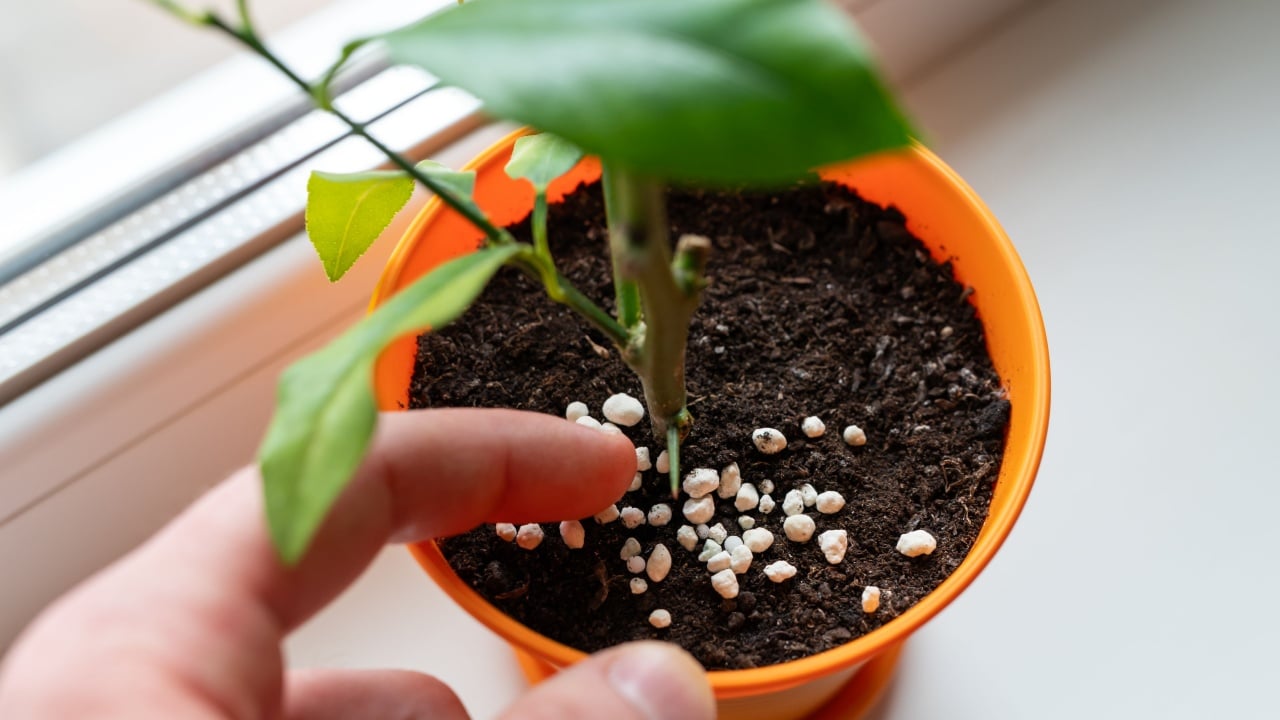
Walk into any garden center, and you’ll find an overwhelming wall of fertilizer options. Liquid, granular, organic, slow-release, orchid-specific, succulent-specific. But before you spend a minute comparing labels, understand this: the type of fertilizer you choose matters far less than when you apply it.
The biology is straightforward. Houseplants can only absorb and use nutrients when they are actively growing: producing new leaves, roots, and stems. Offering fertilizer to a resting plant is like setting a full meal in front of someone sound asleep. The food doesn’t nourish them; it just sits there and causes problems. According to the University of New Hampshire Extension, you should only fertilize houseplants when they are actively growing, because plants only use added nutrients when they are producing new growth.
Houseplants require at least 16 chemical elements to carry out basic photosynthesis and growth. Outdoors, most of these nutrients are continuously replenished through the natural decomposition of organic matter in the soil. Indoors, that cycle doesn’t exist. As horticulturist Justin Hancock of Costa Farms explained to Martha Stewart Living, “Indoors, you don’t necessarily get this entire natural cycle, so fertilizer fills in these gaps.” Your houseplants are entirely dependent on you for nutrients that the natural world would otherwise provide for free. That’s why timing your fertilizing correctly, rather than simply applying more product more often, is the single most important fertilizing decision you can make.
Spring (March–May): Time to Start Feeding Again
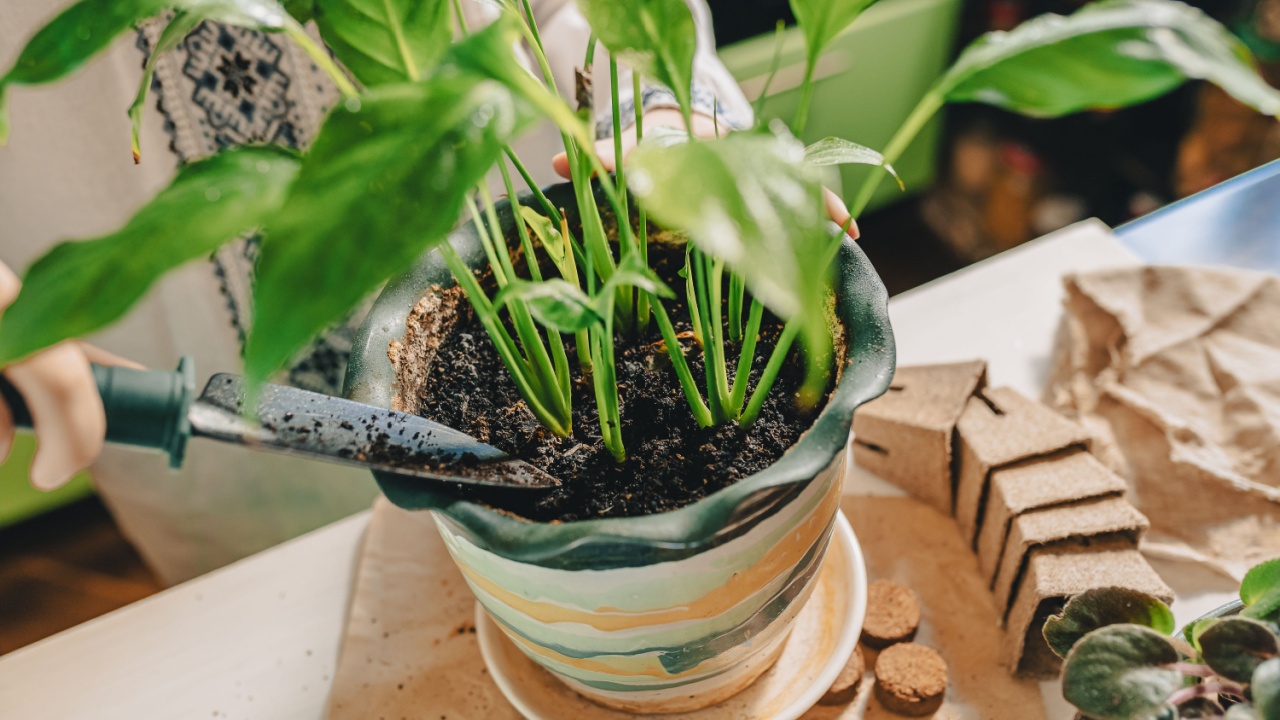
March is your green light. As daylight hours increase and indoor temperatures start to climb, houseplants wake from their winter rest and begin actively producing new growth. This biological shift is your cue to resume fertilizing, and it’s not a coincidence that multiple horticultural authorities, including Proven Winners and the University of New Hampshire Extension, specifically name March as the month to begin.
The key in early spring is to start gently. Begin with fertilizer diluted to half the recommended strength and gradually work up to a full-strength application by late spring. Most houseplants will do well with feeding every two to three weeks during this period. The Almanac recommends waiting for visible signs of new growth before beginning, and always watering the soil before applying fertilizer to protect roots from nutrient burn.
One important caveat is that if you recently repotted a plant into fresh potting mix, hold off on fertilizing for four to six weeks. Fresh potting soil already contains nutrients, and adding more on top creates the exact salt overload you are trying to avoid.
Summer (June–August): Full Feeding Season
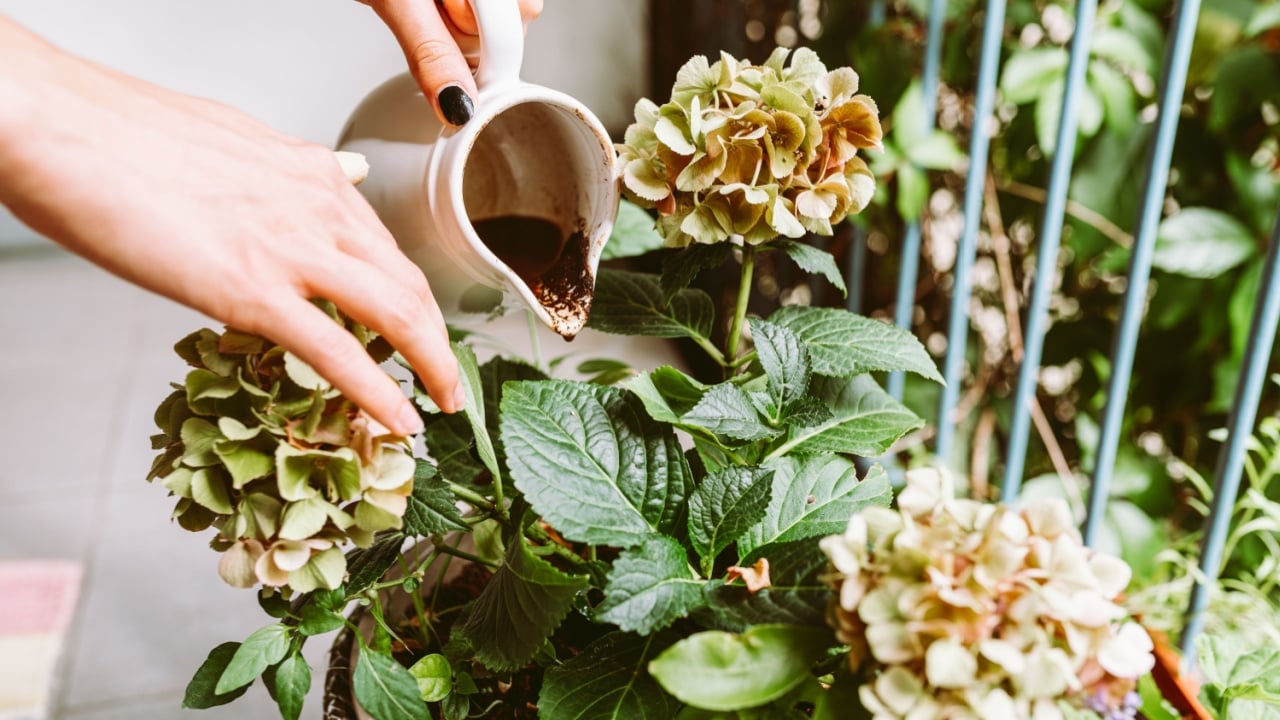
Summer is the peak of your houseplant’s growing season, and your fertilizing routine should match that energy. Continue feeding every two to three weeks for most plants. Fast-growing tropicals like monstera, pothos, and philodendron can handle more frequent, dilute applications (e.g., every week or two at half strength) if they are in strong light and putting on visible new growth.
Patrick Hillman, owner of the plant shop Buzz & Thrive, advises in Martha Stewart Living that the best time to apply fertilizer is in the morning before the sun reaches its peak: “This helps to not burn the plants and gives the plant time to absorb the nutrients before it gets too bright or too hot.” Always apply to moistened soil, never dry; dry soil concentrates fertilizer salts directly against root tips and causes burn almost immediately.
Keep an eye on the soil surface during peak summer feeding. A white, powdery crust forming around the rim of the pot or on the soil is an early warning sign of salt buildup — a sign to flush the pot thoroughly with water before continuing your routine.
Fall (September–October): Taper Off Gradually
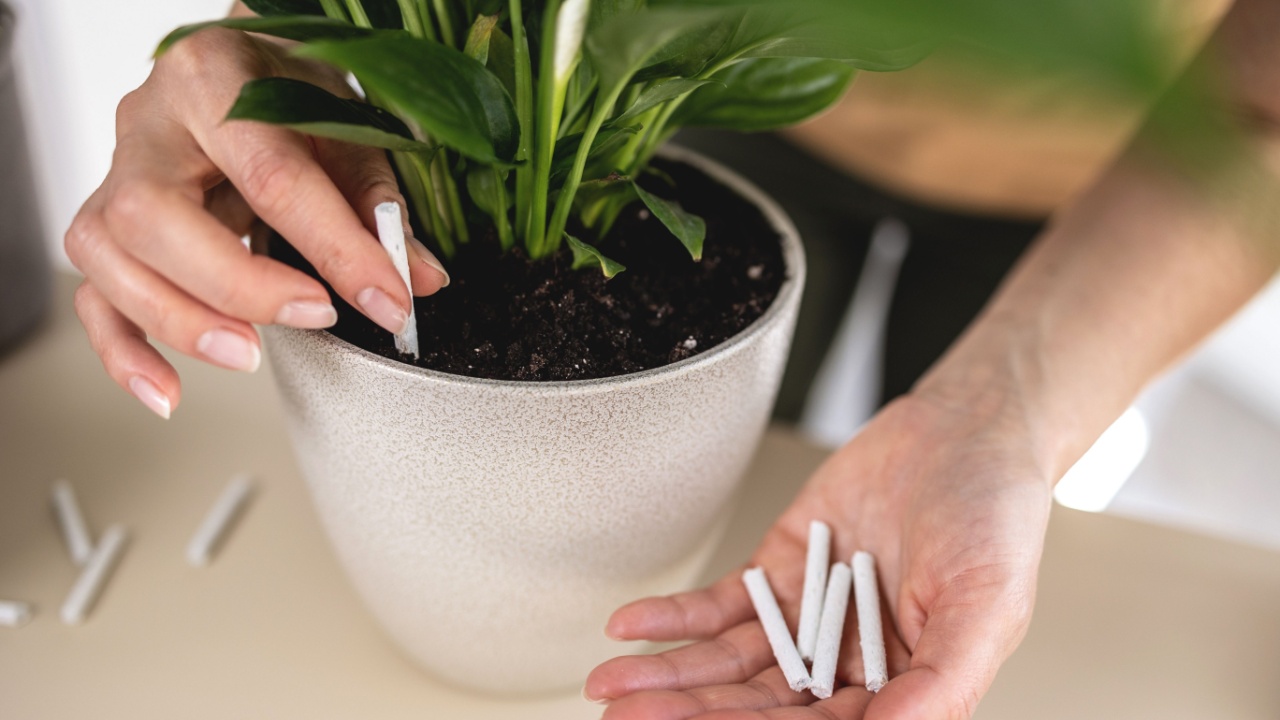
Fall is the most overlooked season in every houseplant fertilizing guide, and skipping it is one of the most reliable ways to damage plants that were perfectly healthy all summer long. As daylight hours shorten and indoor temperatures cool, your houseplants begin slowing their growth. They no longer need the same nutrient input, and they can no longer process what you give them as efficiently.
The mistake most plant owners make is continuing their summer schedule straight through October, then abruptly stopping in November. Instead, taper gradually: reduce feeding frequency to once a month by mid-September, then drop to once in October at half strength. By the end of October, most plants should be off the feeding schedule entirely.
Fertilizing a houseplant that is beginning to slow down does not push it to keep growing. It simply deposits excess salt and nutrients into the soil that the plant cannot absorb, setting up the root damage and winter decline that so many plant parents blame on cold drafts or dry air.
Winter (November–February): Put the Fertilizer Away
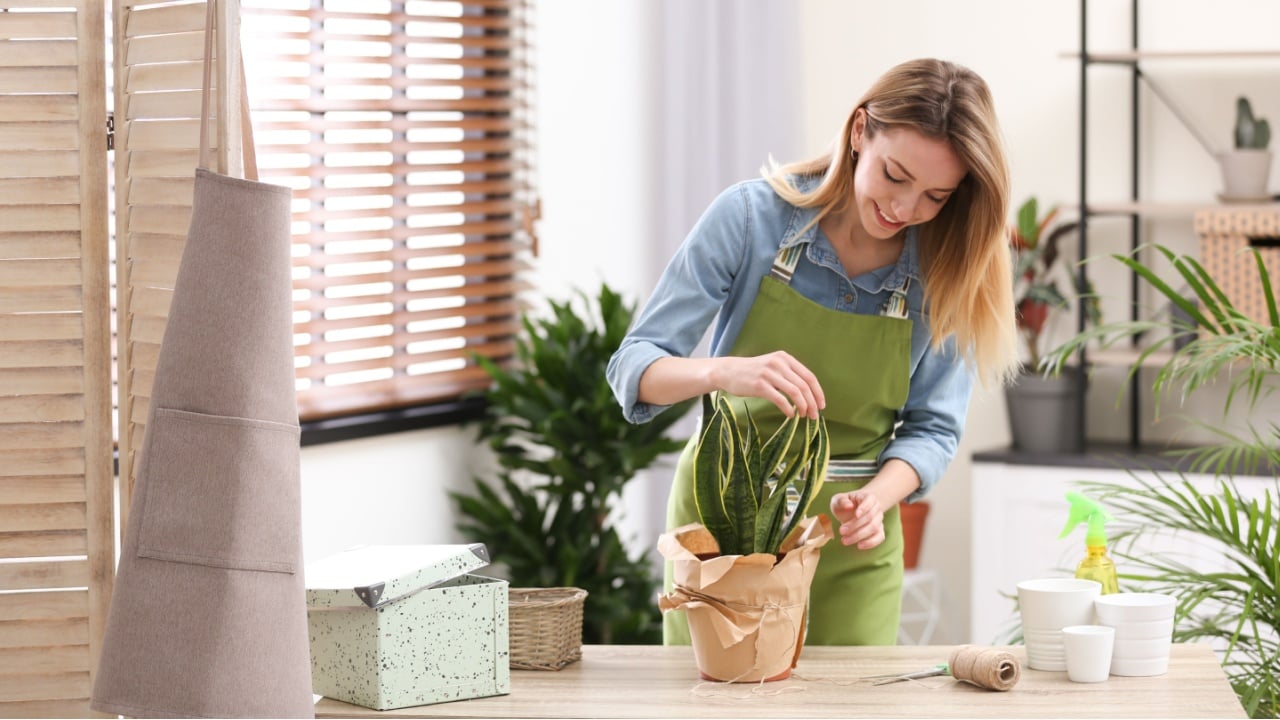
This is the rule with the fewest exceptions: do not fertilize most houseplants during winter. Growth has slowed or stopped entirely. Light levels are at their annual low. The plant’s metabolic rate is a fraction of what it was in July. Nutrients offered now accumulate as soluble salts in the potting mix, drawing moisture away from roots through osmosis and leaving plants dehydrated even when the soil appears damp.
The UNH Extension recommends putting the fertilizer away from October through spring, noting that plants only use nutrients when actively producing new leaves and roots, which most are not doing in winter. Homes & Gardens describes winter fertilizing as a common houseplant care mistake that can lead to root rot and foliage burn.
If you must do something for a plant that looks weak in winter, the answer is rarely more food. Check light placement first; move the plant closer to a south or west-facing window. Address humidity. Adjust watering frequency downward. These interventions work with the plant’s winter biology rather than against it.
The Exceptions: Plants That Break the Seasonal Rules
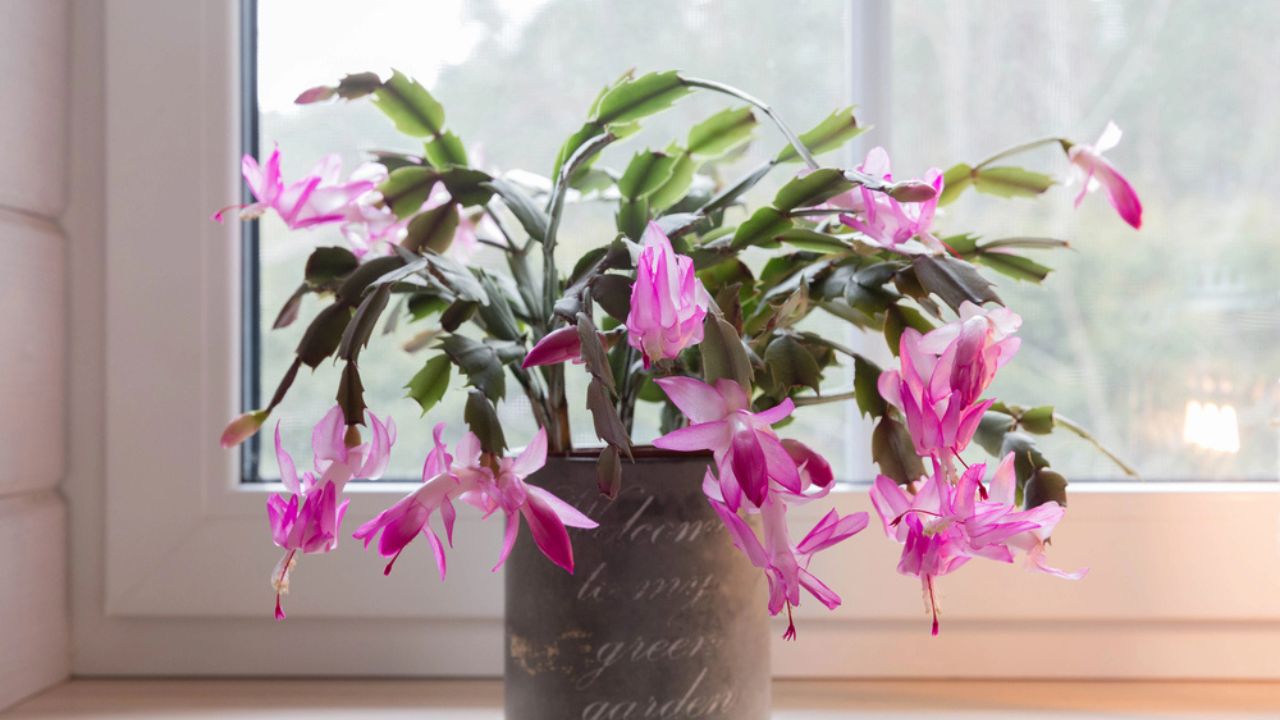
A few common houseplants do not follow the standard spring-to-fall schedule, and it is worth knowing which ones before you apply any blanket rule.
Winter-blooming plants such as Christmas cactus, poinsettia, and some orchid varieties are actively growing and flowering during months when other houseplants are resting. These plants should be fed during their bloom cycle, not in summer when they may actually be dormant. Research your specific plant’s bloom timing and adjust accordingly.
Cacti and succulents are lean feeders year-round. Proven Winners notes that these plants prefer leaner growing conditions and need little or no supplemental fertilizer, particularly in winter. If you do fertilize, do so sparingly in spring and summer only.
Growers using supplemental grow lights are a special case. Because light, not calendar date, is the true driver of plant growth, a plant growing under strong artificial light in January may be actively producing new leaves and could benefit from light feeding. Let visible growth, not the month, be your guide in these situations.
Signs You’ve Fertilized at the Wrong Time (and How to Fix It)
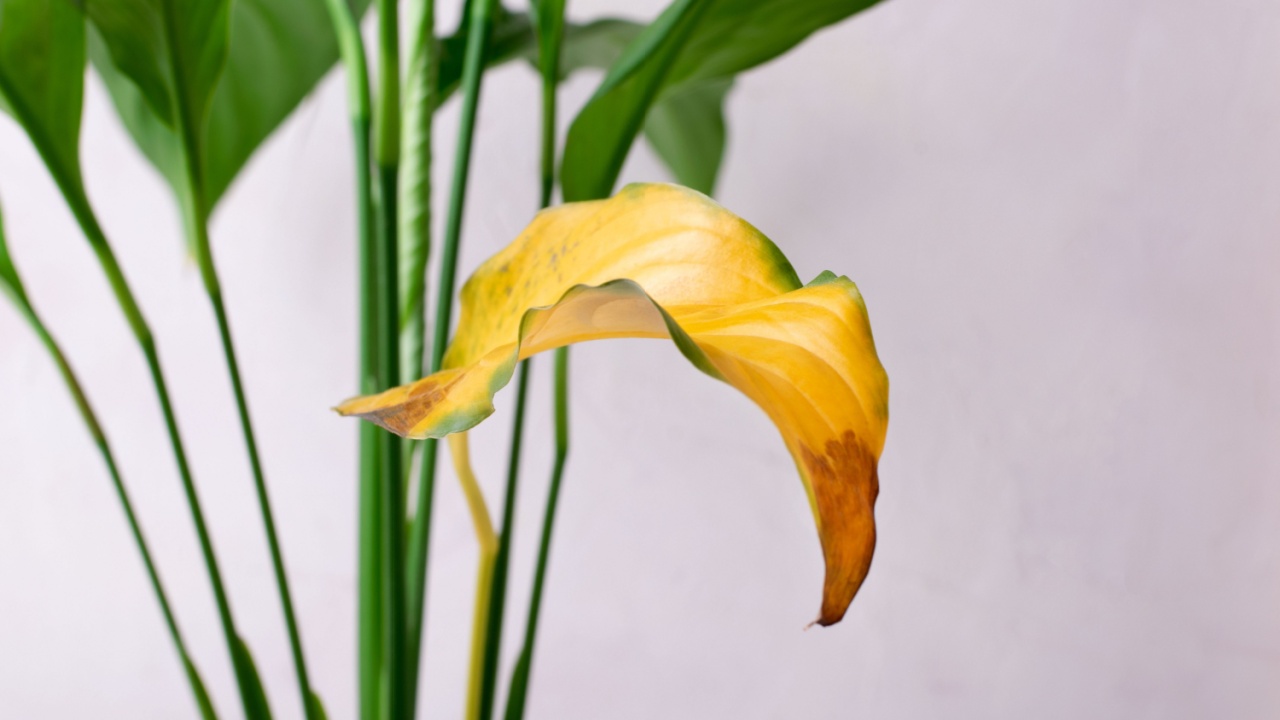
Over-fertilization and off-season feeding produce a recognizable set of symptoms. According to Adrienne Roethling, in Martha Stewart Living, garden director for Paul J. Ciener Botanical Garden, the signs include crispy brown leaf edges, possible crown rot, dying roots, and an overall wilted appearance, which is damage that can look deceptively similar to overwatering.
The key distinction is that fertilizer burn appears quickly, often within days of application, while overwatering symptoms develop more gradually. If your plant wilts or develops brown tips shortly after you feed it, over-fertilization is a likely culprit.
The first-line remedy is leaching: place the pot in a sink or tub and run copious water through the soil until it drains freely from the bottom. Repeat once or twice. This flushes accumulated salts without requiring repotting. For more severe cases, Roethling recommends removing the soil entirely, trimming damaged roots, rinsing with clean water, repotting in fresh soil, and allowing the plant to form new growth before resuming any fertilizing routine. UNH Extension further recommends leaching pots proactively every four months as a preventive measure, regardless of how careful your routine has been.
One Simple Rhythm Is All You Need
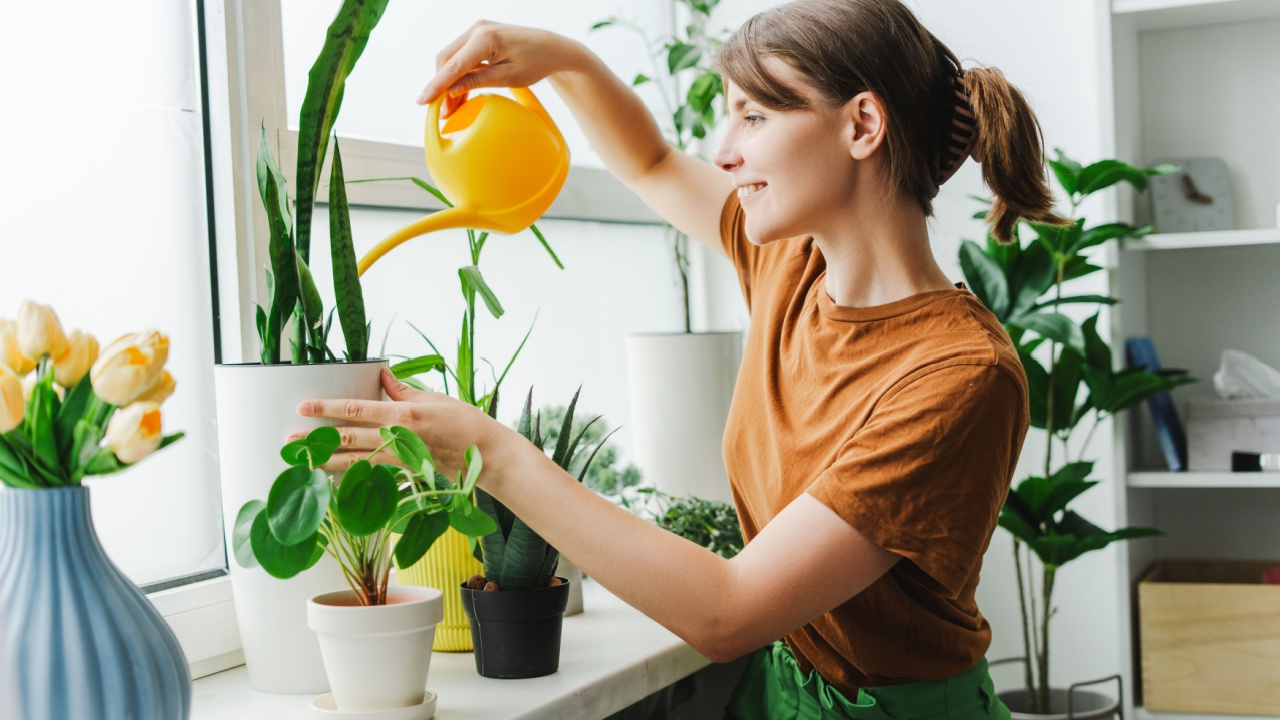
You do not need a different fertilizer for every plant on your shelf, a complex weekly schedule, or a degree in horticulture to feed your houseplants well. You need one reliable rhythm: feed from March through early October when plants are actively growing, taper off in fall, and put the fertilizer away for winter.
The plants that thrive year after year in people’s homes are rarely the ones that get the most fertilizer. They’re the ones whose owners learned to work with the plant’s natural calendar rather than against it. Start feeding again this month, follow the seasons, and your houseplants will show you the difference by summer.
Read More
Do these 12 raised garden bed tasks before March ends, or lose your head start
12 vegetables to direct sow in the garden right now in March