12 Beautiful Houseplants That Double as Home Decor
Decorating your home is a great way to show off your unique personality, but it can be a challenge to find unique pieces that truly bring a room to life.
While paint, pillows, and prints are great, there’s another way to introduce vibrant color and organic texture: houseplants! While a green plant is a great place to start, there are so many other options out there to fit every preference and personality type.
Long gone are the days when indoor plants were just a splash of simple green. Today, a whole spectrum of colorful houseplants can transform your space with their stunning foliage and flowers.
These plants add aesthetic appeal, and many also offer wellness benefits, like purifying the air and boosting your mood. This guide will walk you through 12 of the most beautiful and colorful houseplants that are perfect for doubling as home decor.
1. Polka Dot Plant (Hypoestes Phyllostachya)
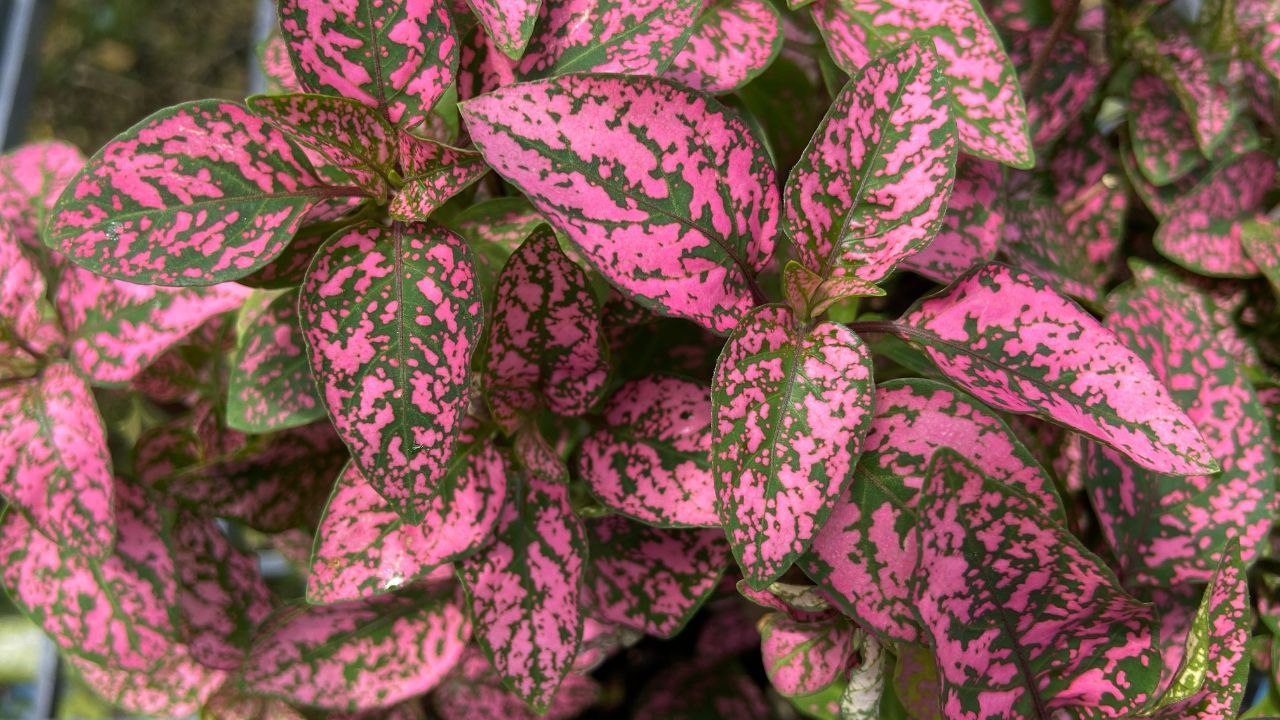
If you’re looking for a plant with a playful personality, the Polka Dot Plant is a fantastic choice. Its leaves are speckled with vibrant spots in shades of pink, red, or white against a green backdrop, creating a whimsical and eye-catching display.
This plant is a fantastic way to add a pop of color to a bookshelf, desk, or terrarium without overwhelming the space.
Care & Decor Tips
- Place in bright, indirect light.
- Keep soil consistently moist but not waterlogged.
- Adds a playful, speckled pattern and vibrant color to small spaces.
- Pro Tip: If the plant becomes “leggy” (long stems with few leaves), it’s a sign it needs more light.
2. Croton (Codiaeum variegatum)

For a truly bold and dramatic statement, look no further than the Croton. This plant is celebrated for its stunning, multi-colored leaves that feature a wild mix of yellow, orange, red, and even black, often on the same leaf.
The leaves can be leathery and glossy, with shapes varying from long and narrow to broad and oak-leaf shaped. A Croton can serve as a living sculpture, commanding attention as a centerpiece on a table or a floor plant in a bright corner.
Care & Decor Tips
- Bright, indirect light is crucial for vibrant colors.
- Water when the top inch of soil is dry; appreciates humidity.
- Offers a bold, tropical explosion of color that can anchor a room’s design.
- Pro Tip: Wear gloves when handling a Croton, as its sap can be irritating to the skin.
3. Caladium
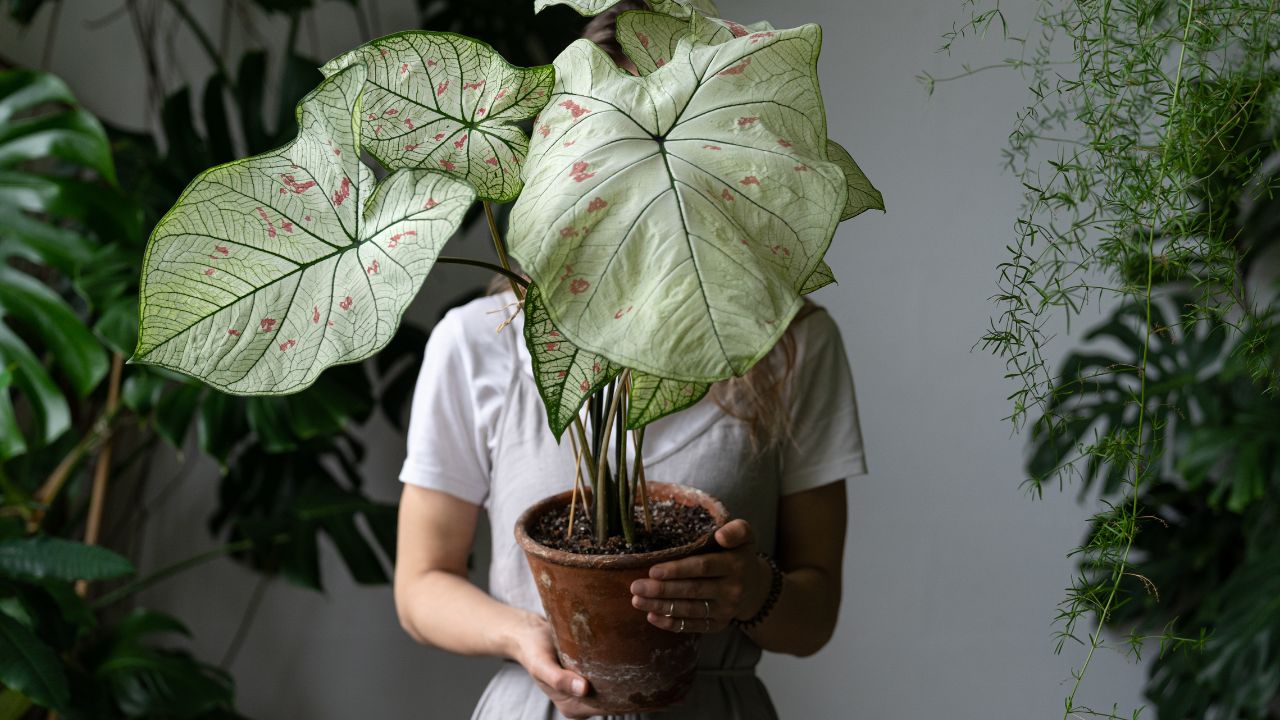
Caladiums are true showstoppers, with large, heart-shaped leaves that look like they’ve been hand-painted. Available in stunning combinations of pink, red, white, and green, their vibrant foliage can instantly brighten up any shady spot in your home with a touch of the tropics. A single plant offers the beauty of a floral bouquet that lasts all season long.
Don’t panic when the leaves die back in winter; it’s just going dormant. Store the tubers somewhere cool and dry, and replant them in the spring to enjoy their gorgeous display all over again.
Care & Decor Tips
- Place in medium to bright, indirect light.
- Keep soil evenly moist.
- Large, heart-shaped leaves with intricate patterns create a soft, artistic look.
- Pro Tip: Group Caladiums with other humidity-loving plants or use a pebble tray to keep them happy.
4. Prayer Plant (Maranta Leuconeura)
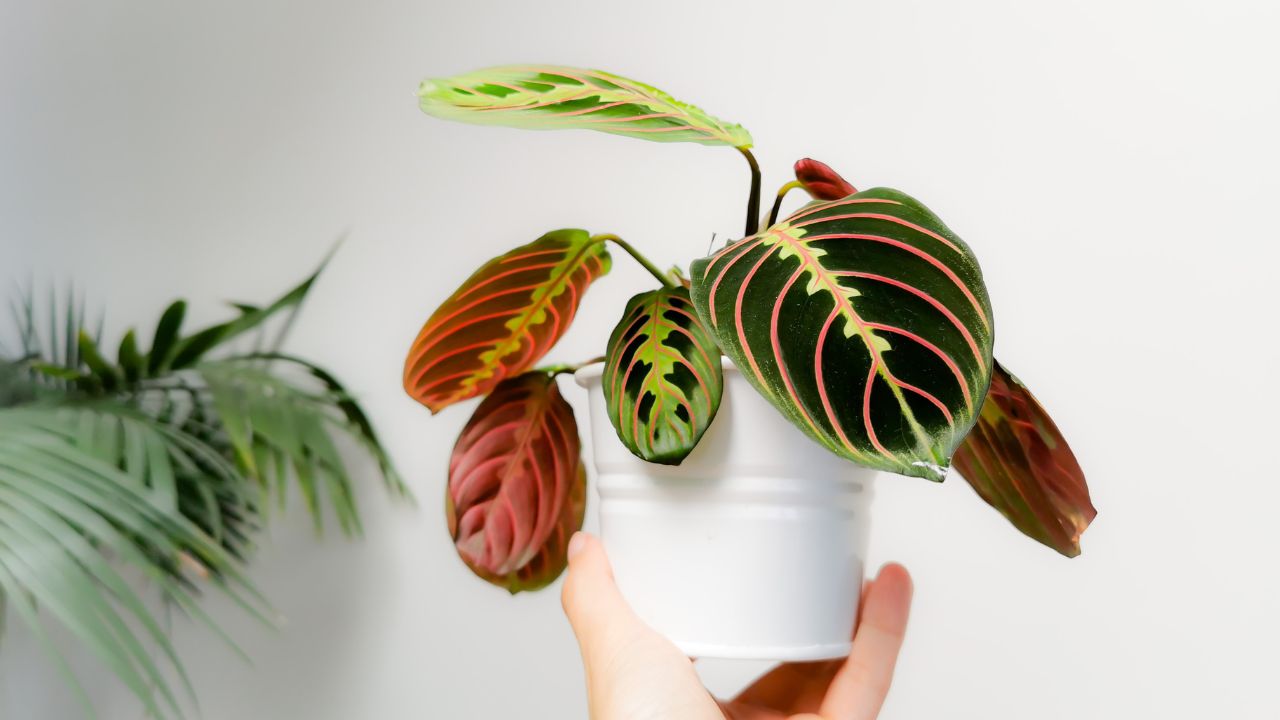
The Prayer Plant is as fascinating as it is beautiful. It earns its name from a unique behavior called nyctinasty, where its leaves fold up at night as if in prayer. During the day, the leaves lie flat, showcasing their intricate patterns. The most common variety features deep green, velvety leaves with striking red veins and a herringbone pattern. This movement and patterning make it a dynamic and engaging addition to any home.
Care & Decor Tips
- Needs medium to low, indirect light.
- Keep soil consistently moist; it requires high humidity.
- Features striking red veins and leaf patterns, plus its daily movement adds a dynamic element.
- Pro Tip: Use distilled or filtered water, as Prayer Plants can be sensitive to minerals in tap water.
5. Pink Princess Philodendron
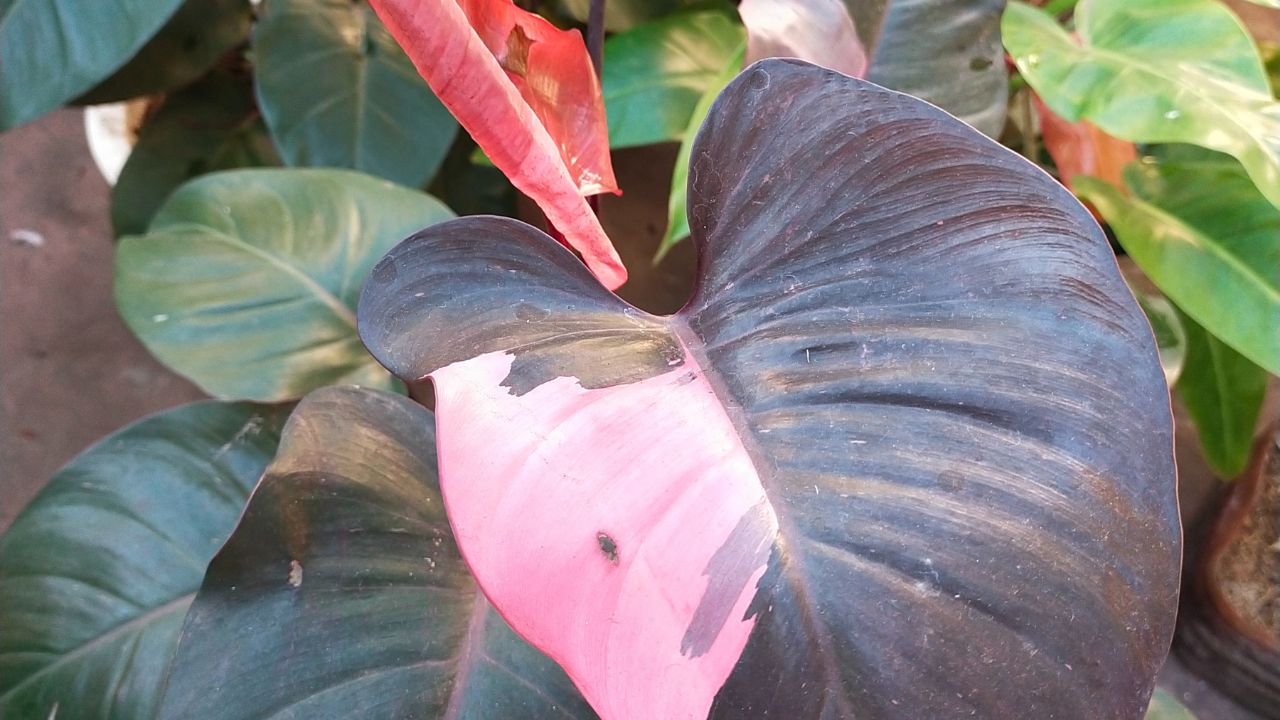
The Pink Princess Philodendron has become an icon in the houseplant community, and for good reason. This vining plant features dark green, heart-shaped leaves that are splashed with vibrant, bubblegum-pink variegation.
Each new leaf is a surprise, unfurling to reveal a unique pattern of pink. It’s a true showstopper that adds a touch of modern, trendy style to any space, whether climbing a moss pole or trailing from a hanging basket.
Care & Decor Tips
- Bright, indirect light.
- Water when the top 1-2 inches of soil are dry.
- Its stunning pink variegation on dark green leaves is incredibly trendy and stylish.
- Pro Tip: The amount of pink can vary. You can prune the vine back to a node above a well-variegated leaf to encourage more pink growth.
6. Polka Dot Begonia (Begonia maculata)
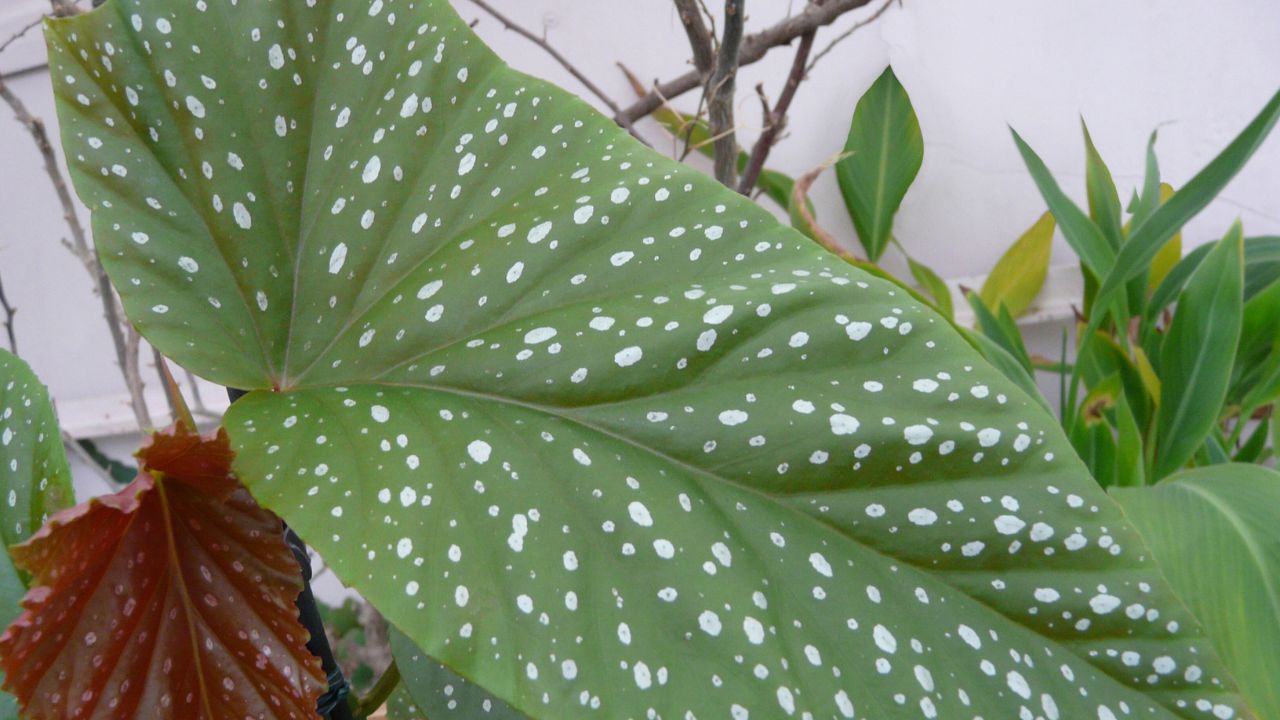
If you’re looking for drama and elegance, the Polka Dot Begonia delivers. This stunning plant features long, angel-wing-shaped leaves of deep green or olive, covered in whimsical silver spots.
As if that weren’t enough, the undersides of the leaves reveal a deep, contrasting red or burgundy. It’s a plant that demands attention and serves as a fantastic conversation piece.
Care & Decor Tips
- Bright, indirect light.
- Allow the top inch of soil to dry out before watering.
- The combination of spotted leaves and red undersides is uniquely dramatic and sophisticated.
- Pro Tip: This plant can produce delicate clusters of white flowers in the right conditions, adding another layer of beauty.
7. Chinese Evergreen (Aglaonema)

Chinese Evergreens are one of the most versatile and durable houseplants you can find, and modern varieties offer an incredible range of colors. While the classic versions are green, you can now find stunning cultivars with splashes of pink, red, white, and silver.
Varieties like ‘Siam Aurora’ have bright red edges, while ‘Silver Bay’ features silvery-green centers. Their adaptability makes them perfect for almost any room in the house.
Care & Decor Tips
- Tolerates low light, but colors are best in medium to bright indirect light.
- Water thoroughly when the soil is dry to the touch.
- Available in a wide variety of colors and patterns, it’s extremely easy to care for.
- Pro Tip: Aglaonemas are excellent air purifiers, helping to remove toxins like formaldehyde from the air.
8. Tradescantia Zebrina
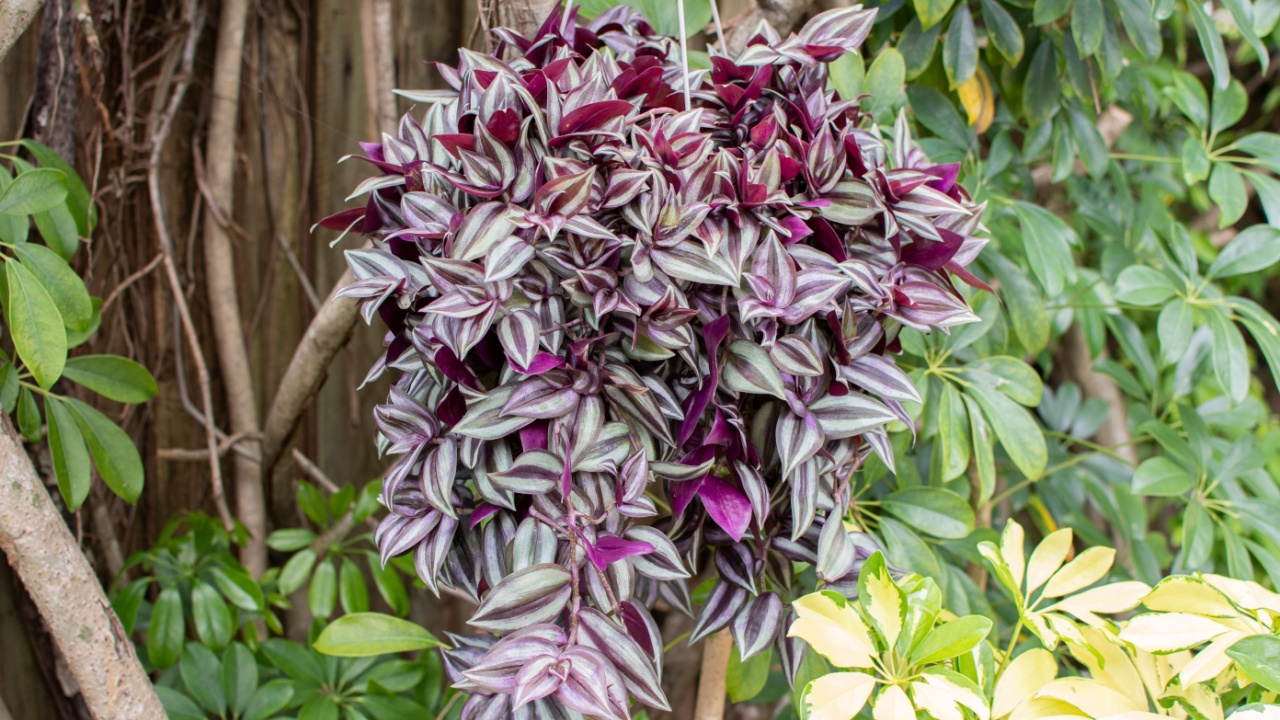
Often called the Inch Plant or Wandering Dude, Tradescantia zebrina is a fast-growing, trailing plant that is incredibly easy to care for. Its leaves are a work of art, with stripes of silvery-green and deep purple on the top and a solid magenta underside.
The foliage has a shimmery quality that catches the light beautifully. It’s perfect for hanging baskets or placing on a high shelf where its colorful vines can cascade down.
Care & Decor Tips
- Bright, indirect light for best color.
- Prefers to stay lightly moist.
- Fast-growing trailing vines with shimmery, striped purple and silver leaves.
- Pro Tip: Pinch back the stems regularly to encourage fuller growth and prevent the plant from becoming too sparse.
9. Bromeliad

If you want a tropical centerpiece that is both a plant and a flower, a Bromeliad is an excellent choice. These plants are known for their exotic appearance, with a rosette of stiff, arching leaves from which a spectacular flower spike emerges.
This central bract can be a brilliant shade of red, orange, yellow, or pink and can last for several months.
Care & Decor Tips
- Bright, indirect light.
- Keep water in the central cup and water the soil sparingly.
- The long-lasting, brightly colored flower bract provides an exotic and sculptural look.
- Pro Tip: After the main plant flowers, it will slowly decline but will produce “pups” or offshoots at its base, which can be repotted to grow new plants.
10. African Violet (Saintpaulia)
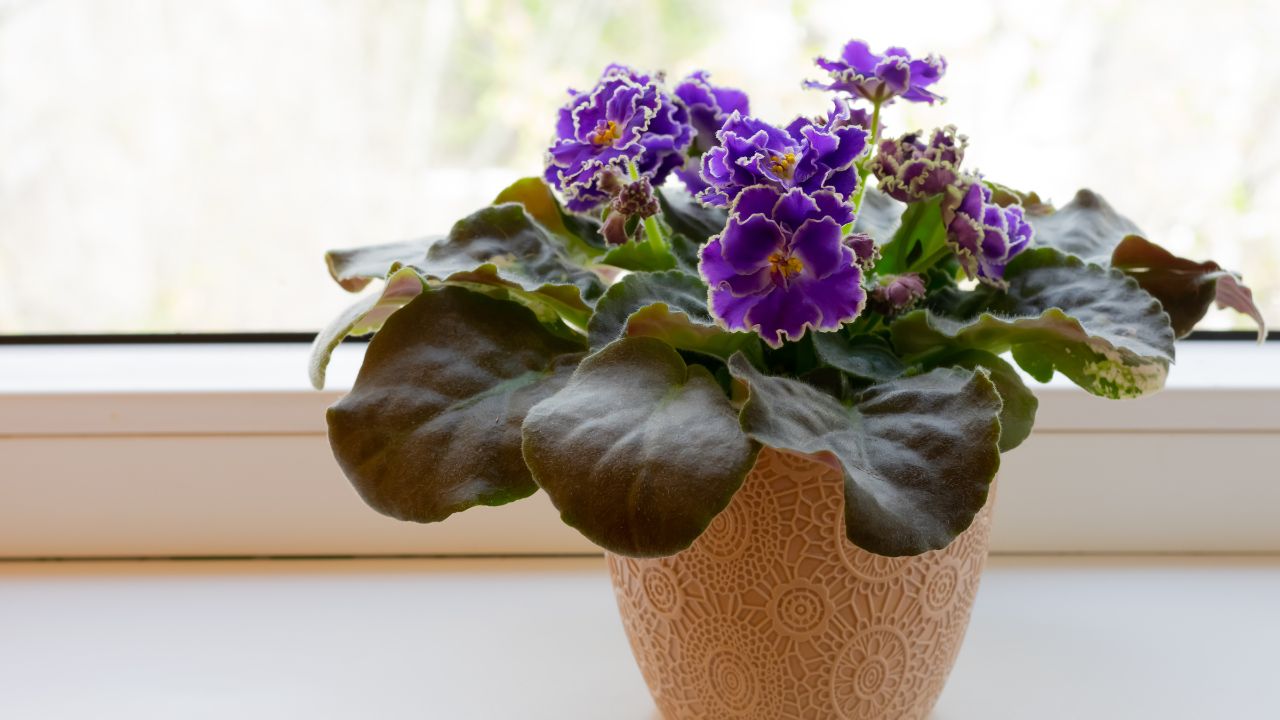
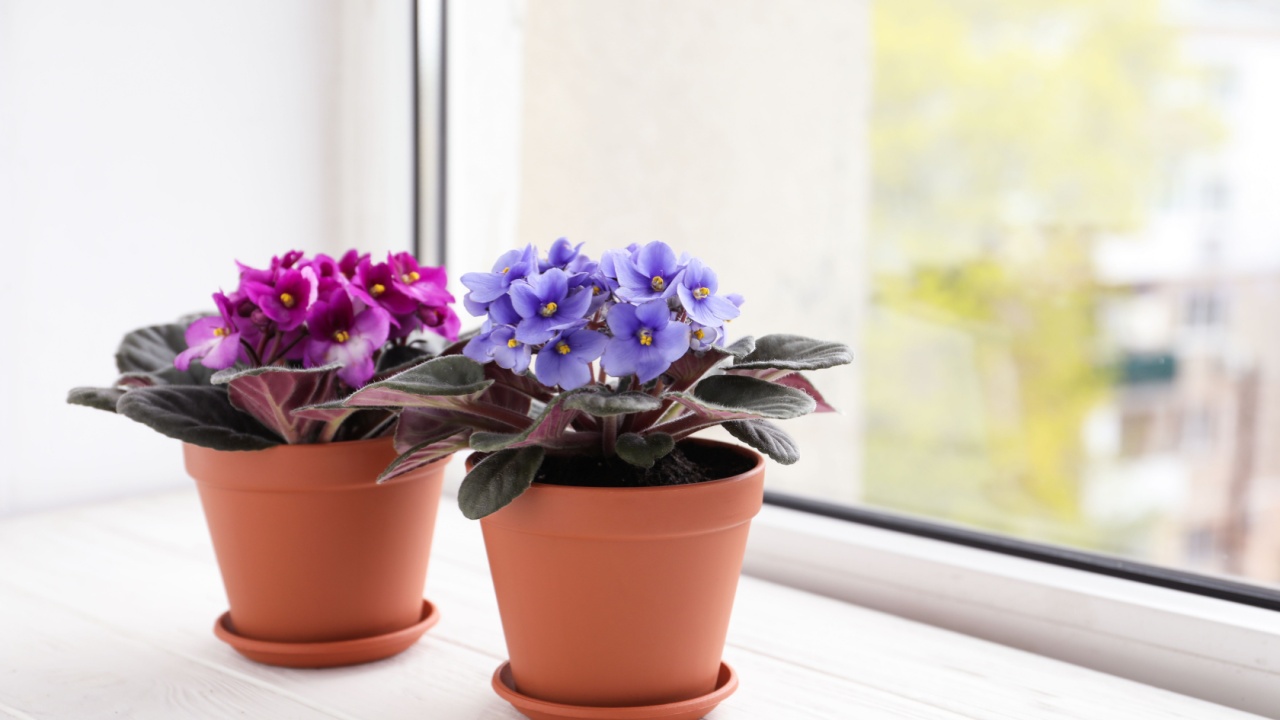
A classic for a reason, the African Violet is a charming plant that offers a near-constant display of color. Its fuzzy, dark green leaves form a neat rosette, from which clusters of delicate flowers emerge.
These blooms come in a wide range of colors, including deep purple, lavender, pink, blue, and white, and some varieties even have frilly or bi-colored petals. Their compact size makes them perfect for windowsills, side tables, or clustered together on a plant stand.
Care & Decor Tips
- Bright, indirect light.
- Keep soil evenly moist; best to water from the bottom.
- The African Violet provides continuous, delicate blooms in a variety of colors and has a charming, classic feel.
- Pro Tip: A little bit of neglect goes a long way. They often flower best when they are slightly root-bound.
11. Rex Begonia (Begonia rex-cultorum)
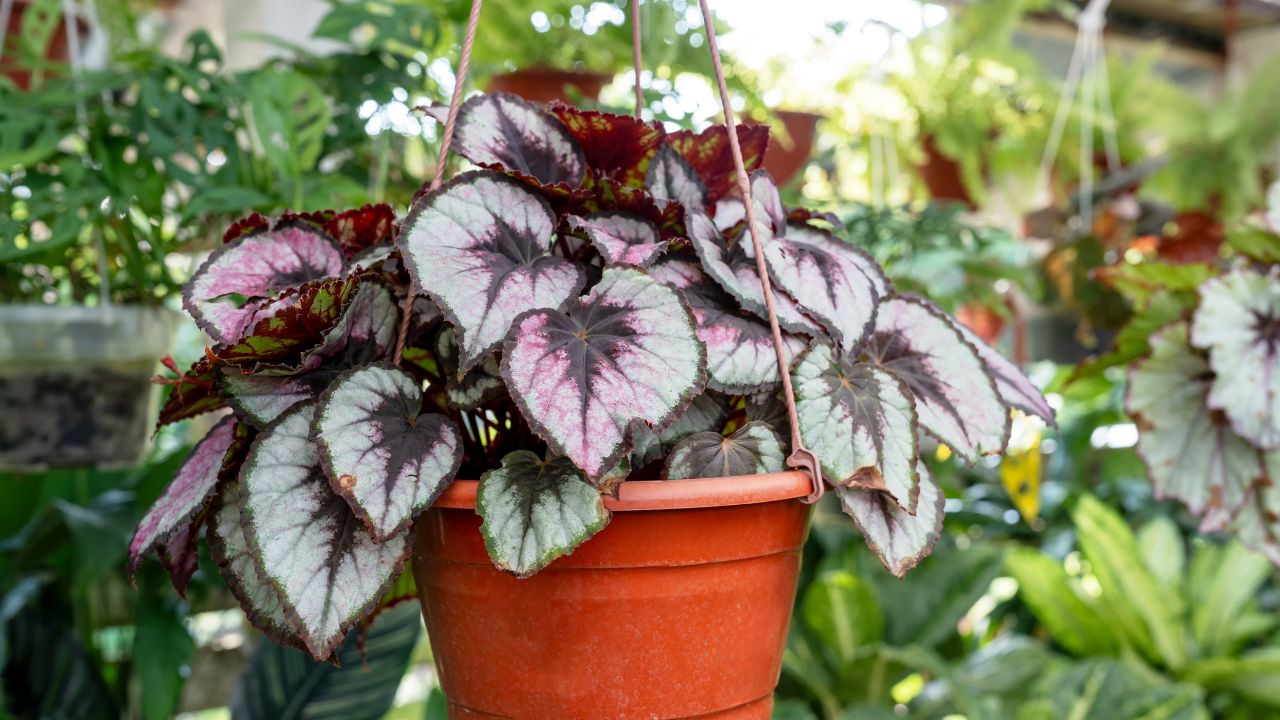
Known as the king of the begonia world, the Rex Begonia is grown for its magnificent and otherworldly foliage rather than its flowers. The leaves come in an astonishing variety of shapes, textures, and colors, including shades of green, pink, red, silver, and purple, often with dramatic swirls, spots, and metallic sheens. Each leaf is a unique masterpiece, making this plant a true living sculpture.
Care & Decor Tips
- Bright, indirect light.
- Water when the top inch of soil is dry; requires high humidity.
- Unrivaled foliage with complex patterns, textures, and metallic colors.
- Pro Tip: Rotate the plant regularly to ensure all sides receive equal light, promoting even growth.
12. Poinsettia (Euphorbia Pulcherrima)
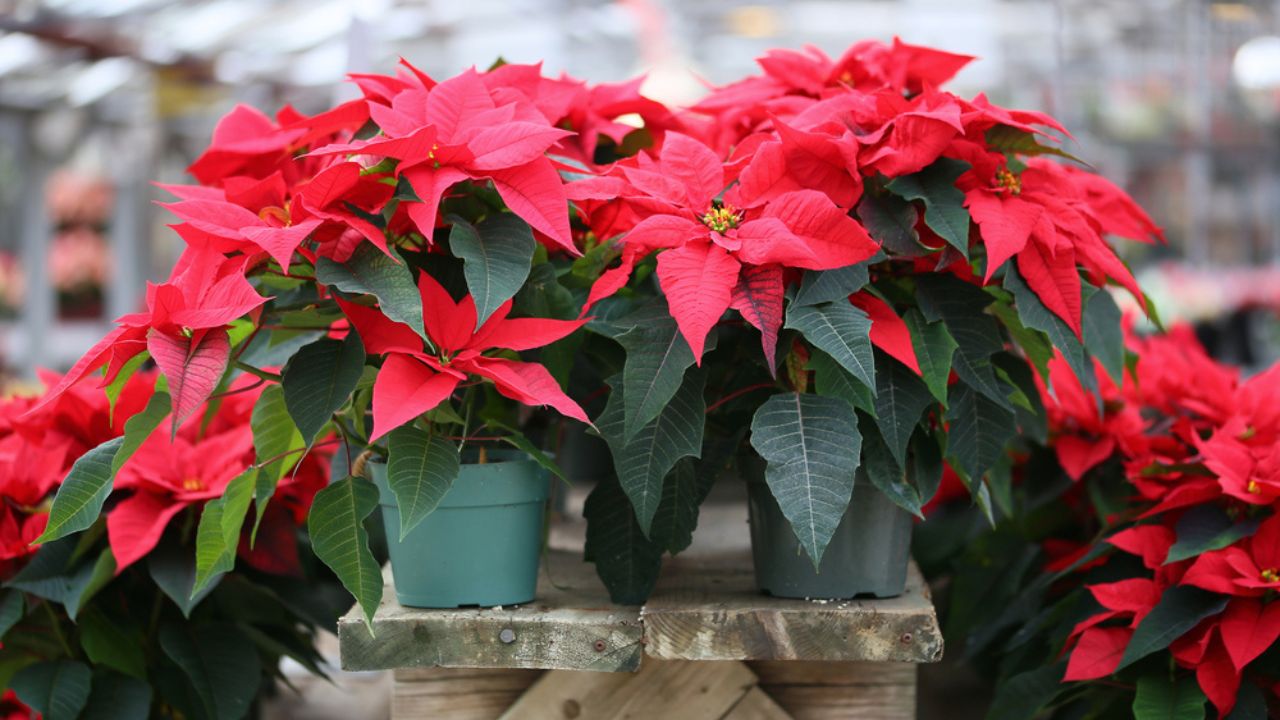
While synonymous with the holidays, the Poinsettia’s brilliant color can be enjoyed long after the festive season has passed. What many think are flower petals are actually modified leaves called bracts, which come in vibrant shades of red, pink, white, and even marbled patterns.
With proper care, these bracts can hold their color for months, providing a cheerful splash of decor.
Care & Decor Tips
- Bright, indirect light.
- Water when the soil surface is dry.
- Offers a powerful punch of festive color that can last for months.
- Pro Tip: The sap can cause a skin rash. It’s best to keep them out of reach of curious pets and children.
Time to Get Planting
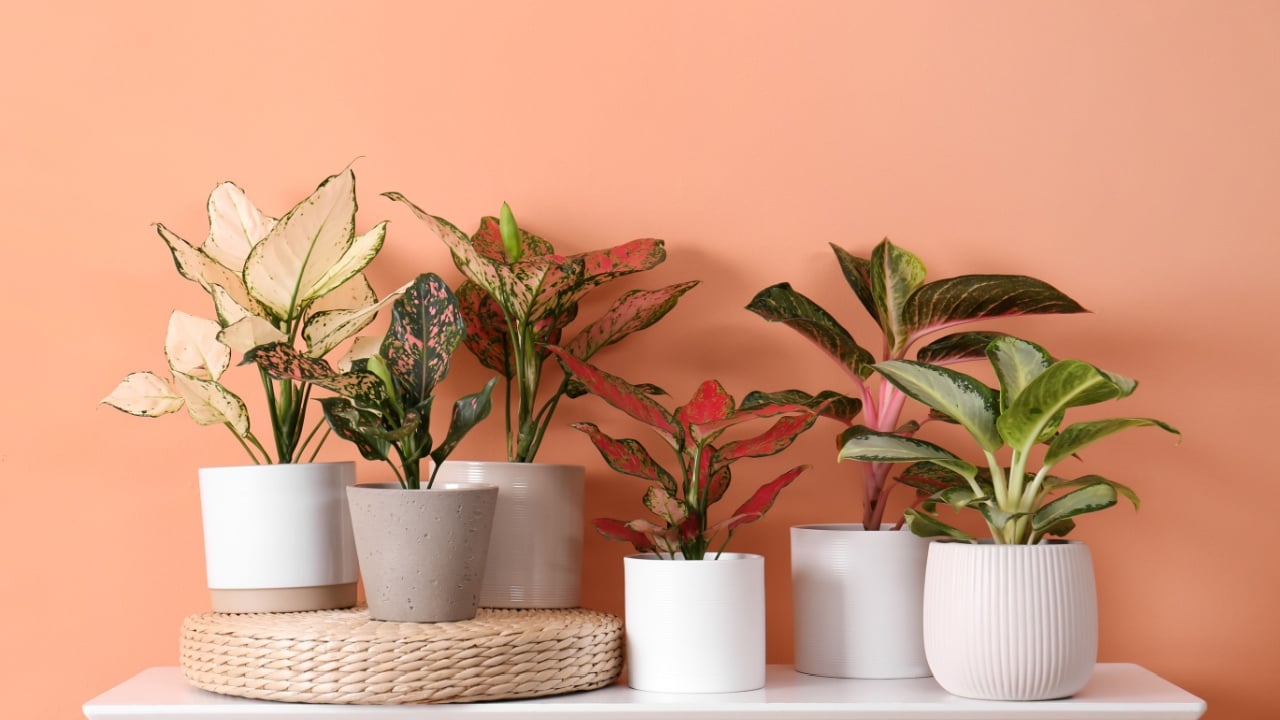
Adding colorful houseplants to your home is one of the easiest and most rewarding ways to refresh your decor.
Now that you have some ideas, the next step is to visit your local nursery or garden center. Seeing the plants in person will help you choose the ones that speak to you and will best fit your space and light conditions.