California Scientist Looking for Frogs Finds a 10,000-Year-Old Mastodon Tooth
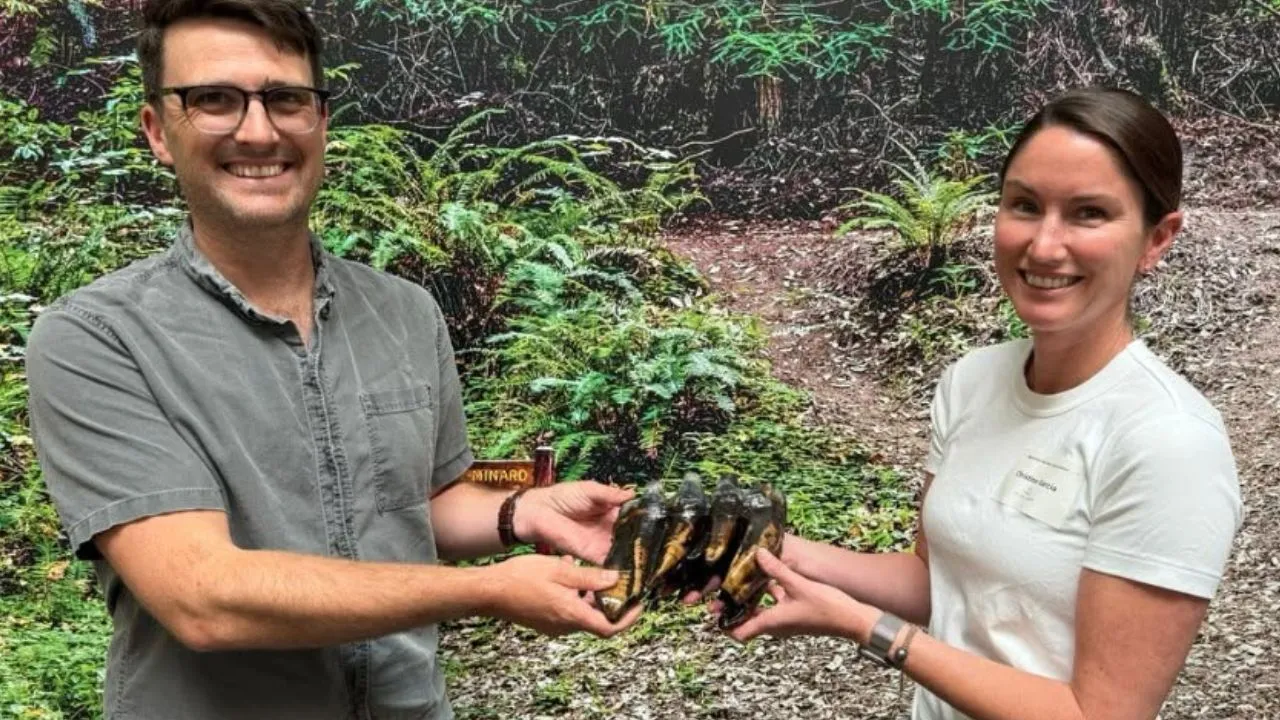
A scientist working on a project for threatened frogs ended up finding something much larger. Brigid Lynch discovered a fossilized mastodon tooth in a California creek.
Lynch is a geomorphologist with Balance Hydrologics. She was surveying the area for a project meant to improve the habitat for the California red-legged frog.
While walking through the creek bed, Lynch noticed what looked like an oddly shaped rock. Paleontologists later confirmed that it was an intact molar from an adult Pacific mastodon.
The fossil is believed to be approximately 10,000 years old, although researchers still need to determine its exact age. The Midpeninsula Regional Open Space District announced the discovery on Sept. 9.
The Tooth Was Found in a Creek Bed
Embedded media follows. Please allow a moment for it to load.
According to Midpen, the tooth was found at one of its preserves in San Mateo County. The district did not reveal which preserve or say exactly when Lynch spotted it.
Wayne Thompson, a paleontologist and the owner of Pacific Paleontology, examined the molar. He called it the most complete mastodon tooth found in the area and said it was in excellent condition.
The discovery came as a surprise to Lynch too. Although she regularly works outside as a geologist, she said she had never found anything this exciting.
Pacific Mastodons Once Lived in California
The Pacific mastodon is different from the better-known American mastodon. It had narrower teeth, thicker leg bones, and some differences in its tusks.
Mastodons and mammoths both belonged to the same group of animals as modern elephants, but they were not the same. According to La Brea Tar Pits, adult male American mastodons could stand about 10 feet tall and weigh approximately 6 tons.
The mastodon’s name comes from the unusual shape of its teeth. Its molars had cone-shaped bumps that helped crush twigs and leaves, while mammoths had ridged teeth that worked better for eating grass.
Researchers believe Pacific mastodons lived in areas that are now California, Oregon, Mexico, and the northern Rocky Mountains. They disappeared approximately 11,700 years ago.
Stanford Will Determine Its Exact Age
Midpen donated the tooth to Stanford University’s Doerr School of Sustainability. Researchers plan to use carbon dating to determine its exact age.
“Fossils are our only opportunity to see into past biodiversity,” explained Christine Garcia, Curator and Manager of the Geoscience Specimen Collection at Stanford. “We can study fossils to better understand Earth’s past, past wildlife and the ecosystem they were a part of, and to help us make better predictions and better decisions about how to help our ecosystems and biodiversity thrive into the future.”
The fossil will also be scanned so researchers can create a 3D-printed copy. Midpen plans to use the replica for education, but it hasn’t announced where or when people can see it.