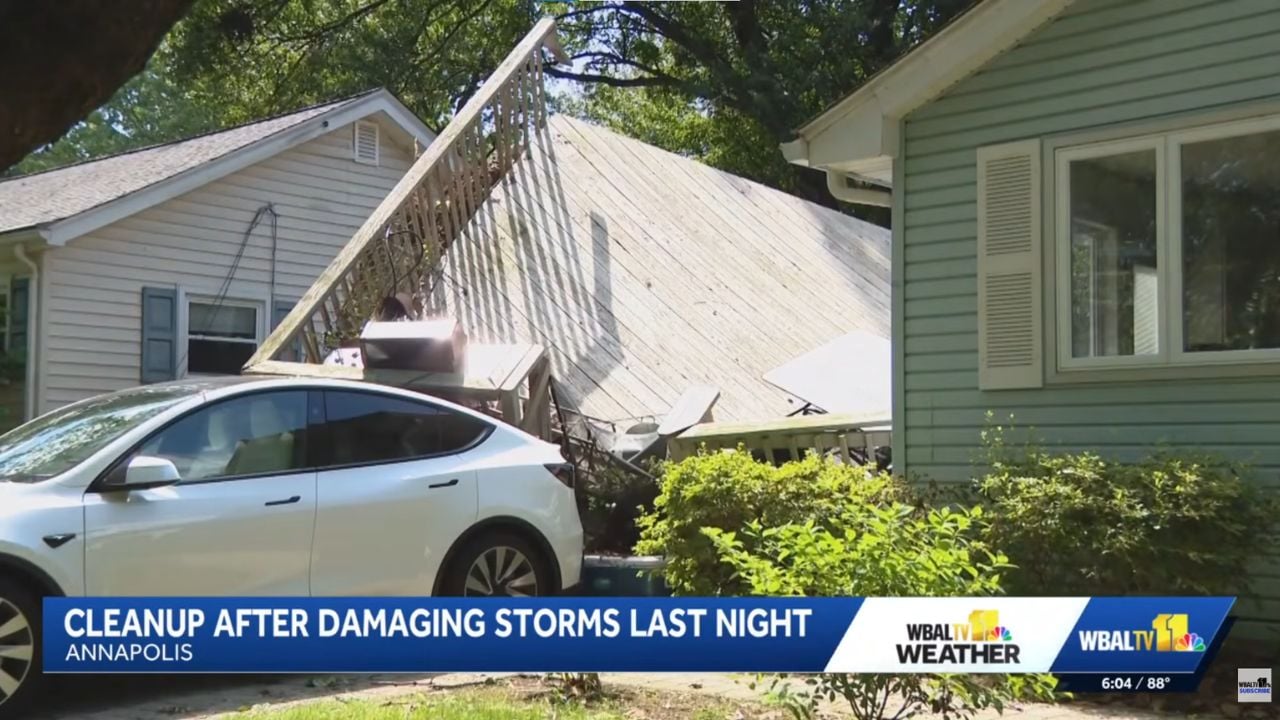
Annapolis Homeowners Were Still Clearing Storm Damage When Another Round Moved In
Annapolis residents were still clearing trees, broken limbs, and storm debris from Friday night’s severe weather when another round of storms moved toward the city Sunday night.
WMAR reported that western Annapolis and the Admiral Heights neighborhood were among the areas hit hardest by heavy rain and high winds. Residents were cleaning up damaged yards, broken windows, and downed trees while watching the next forecast.
The City of Annapolis said two families were displaced after trees fell onto residential structures. Officials said no injuries had been reported, and Public Works crews worked overnight to clear downed trees from roadways and restore traffic patterns.
The city’s warning for residents was direct: assume any downed wire is live, deadly, and dangerous, and do not touch trees or branches that are on or near power lines.
West Annapolis and Admiral Heights Took the Hardest Hit
The City of Annapolis said West Annapolis and Admiral Heights appeared to be the most severely impacted neighborhoods after the late Friday storm. WMAR spoke with Derek and Keren Lotfi, who described strong wind arriving before a nearby tree came down; Keren Lotfi told the station the family went to the basement because they were not sure whether a tornado was coming.
No official source cited in the reports confirmed a tornado. CBS Baltimore reported that a single severe thunderstorm moved through central Anne Arundel County during the 8 p.m. hour Friday, with winds measured above 60 mph in and around Parole and west Annapolis. The station reported that trees and power lines were knocked down by severe straight-line winds.
CBS Baltimore also reported that a tree was blown onto a home in the 400 block of Halsey Road, citing Annapolis Fire Department Captain and Public Information Officer Bud Zapata. The occupants were displaced, and the Office of Emergency Management assisted, according to the station.
Downed Wires and Damaged Trees Come Before Cleanup
Storm cleanup should not start around wires, leaning trees, hanging limbs, or branches resting on roofs, vehicles, fences, or utility lines. Annapolis officials told residents to assume any downed wire is live and to avoid trees or branches on or near power lines.
A branch can hide a wire or press against one after a storm. Wet soil, metal fencing, standing water, vehicles, and tree limbs can also make the area around a line dangerous even when the power appears to be out.
Residents should report downed wires to BGE and keep children, pets, neighbors, and vehicles away until utility crews say the area is safe. If a tree has damaged a roof, window, deck, or exterior wall, homeowners should photograph the damage from a safe location before cleanup or temporary repairs begin.
Power outages can also change the cleanup plan. The city said BGE showed nearly 800 Annapolis customers still without power as of noon Saturday, and WMAR reported that BGE crews were prepared for Sunday’s storm. Residents using portable generators should keep them outside, away from garages, doors, and windows because carbon monoxide can build up quickly.
Branches Can Go to the Road Only When It Is Safe
Annapolis Public Works crews worked overnight after the storm to clear downed trees from roadways. The city said residents may move downed branches to the roadway for DPW pickup where it is safe to do so.
Yard waste and refuse vendors will remove branches and other yard waste on the regularly scheduled pickup day, with normal size and bagging rules still applying. Large branches and trees may require professional tree removal, according to the city.
Small loose branches on open ground are different from heavy limbs resting on a house, fence, vehicle, deck, or utility equipment. Homeowners should not stand under a damaged tree canopy, cut limbs under tension, pull branches off wires, or drag large debris if the tree, roof, or ground still looks unstable.
Another Storm Can Turn Loose Damage Into a New Problem
WMAR reported that cleanup was still underway in Admiral Heights when more storm weather was moving in Sunday night. A second round of wind and rain can shift damaged trees, blow loose debris, push water through broken windows, and send unsecured yard items across the property.
Before another storm arrives, homeowners should secure or move loose patio furniture, grills, umbrellas, planters, trash cans, garden tools, toys, hanging baskets, and broken branches that can be handled safely. Damaged gutters, displaced downspouts, torn screens, loose fencing, cracked deck boards, and open windows should also be checked before more rain reaches the house.
The Annapolis Department of Planning and Zoning began assessing property damage Saturday morning, and the city said most reports involved minor damage. Residents can report damage with photos through the city’s online reporting form, and the Annapolis Call Center is open at 410-260-2211 for non-emergency storm recovery questions. Emergencies should still be reported to 911.
After the second storm passes, the safer inspection starts with roof edges, gutters, windows, trees, decks, fences, exterior stairs, sheds, drainage paths, service lines, and any branch or wire that could make cleanup dangerous.