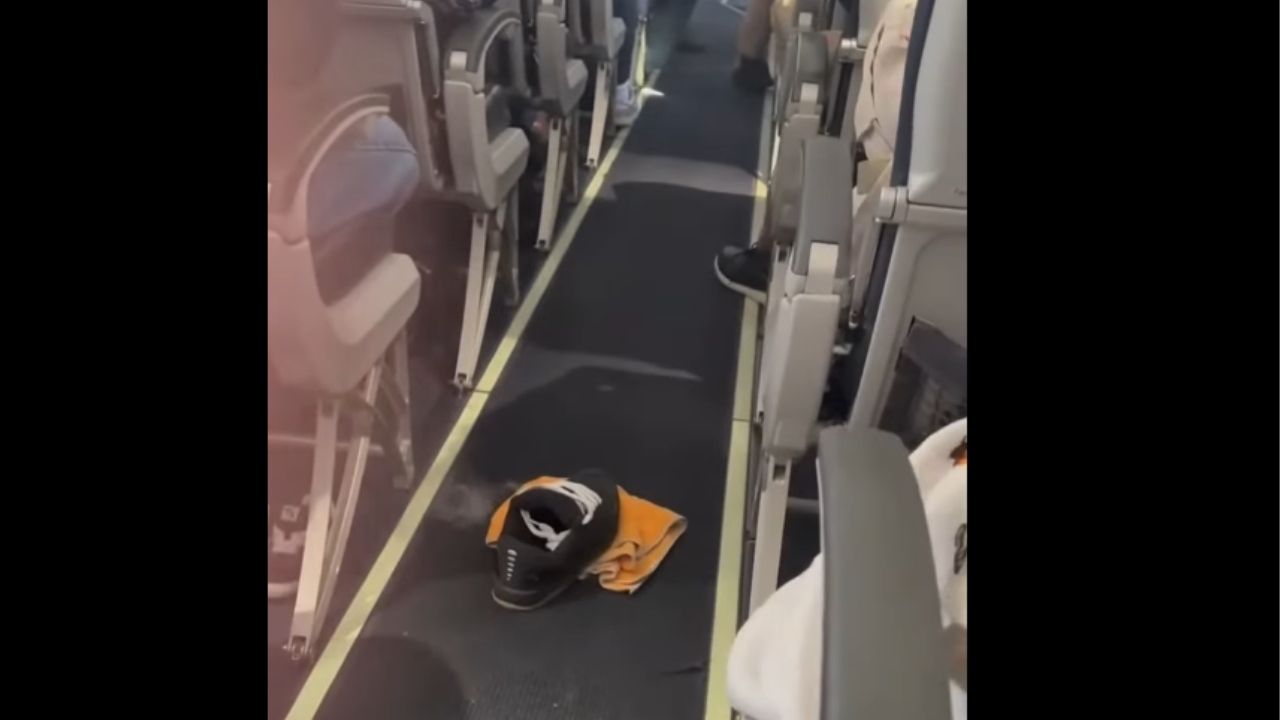
A Passenger’s Phone and Power Bank Burst Into Flames, And the Risk Is Growing
This year, a passenger’s phone and power bank burst into flames only minutes after her flight left Wichita, Kansas. The fire burned her arms and legs and forced the plane to return to the airport.
The scary incident occurred in February aboard Horizon Air Flight 2117, which operated for Alaska Airlines and was en route to Seattle. Flight attendants contained the fire with an extinguisher and thermal containment bag.
Phones, laptops, vapes, and portable chargers all contain lithium-ion batteries that can overheat and ignite. These incidents have become one of the fastest-growing safety concerns for airlines.
The devices are still permitted aboard most flights, but travelers need to pack and store them correctly. Power banks and spare lithium batteries must remain in the cabin where crews can quickly reach them.
Battery Incidents Are Happening Nearly Twice a Week
Embedded media follows. Please allow a moment for it to load.
The Wall Street Journal reported that U.S. lithium-battery incidents have more than doubled since 2019. Events involving smoke, fire, or extreme heat have occurred nearly twice a week during 2026.
The FAA cautions that its records do not represent every battery incident. Its list only includes events the agency has learned about, and the ways incidents are collected and recorded have changed over time.
A damaged, overcharged, or defective battery can enter thermal runaway, causing it to overheat rapidly. Airlines have started tightening their rules because batteries stored inside bags or overhead compartments can be harder to notice and reach.
Power Banks Cannot Go in Checked Bags
Embedded media follows. Please allow a moment for it to load.
The TSA prohibits power banks and portable phone chargers from checked luggage. They must be placed in carry-on bags, and passengers should remove them if their bags are checked at the gate.
Most rechargeable batteries rated at 100 watt-hours or less are permitted without airline approval. Batteries between 101 and 160 watt-hours require approval, while those exceeding 160 watt-hours are generally prohibited on passenger aircraft.
Travelers should protect battery terminals from contact with metal objects and avoid bringing damaged or recalled devices. Anyone who notices a phone or charger becoming unusually hot, expanding, smoking, or burning should immediately alert a flight attendant.