7 Adaptive Gardening Ideas for Older Adults with Limited Mobility
Your joints ache, your knees protest, and somewhere along the way, someone told you that gardening was a young person’s game.
That someone was wrong, and a University of Arkansas study of more than 3,300 women proves it. Researchers found that women over 50 who gardened at least once a week had higher bone density than those who jogged, swam, walked, or did aerobics. Not a little higher, significantly higher.
A long-term study by the University of Edinburgh tracked hundreds of older adults across their lifetimes and found that those who gardened regularly had better cognitive function in later life, including stronger memory, problem-solving ability, and word fluency, even after controlling for education, socioeconomic status, and overall physical activity levels.
A 2022 meta-analysis of 22 gardening studies, cited by the National Institutes of Health, concluded that gardening is associated with reductions in depression, anxiety, and BMI, alongside increases in quality of life, physical activity levels, and cognitive function. Yet millions of older adults abandon their gardens precisely when the health stakes are at their peak.
This year, before another season slips away, it is worth knowing that the garden does not have to be given up. It simply has to be redesigned. Adaptive gardening, or the art of working smarter, not harder, has given countless older adults not just a garden but a lifeline.
Stop Telling Yourself You Can’t Garden Anymore
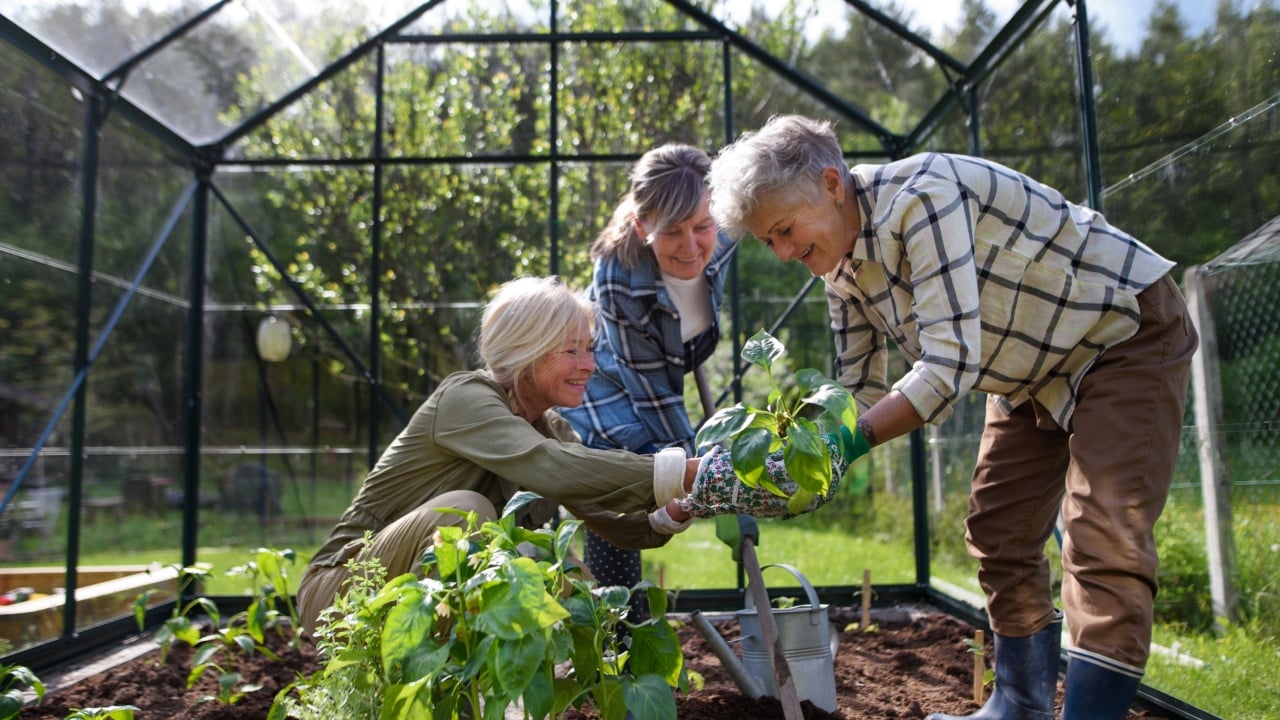
The biggest obstacle most older gardeners face is not arthritis or a bad knee. It is the belief that the garden belongs to a younger version of themselves. That belief is the real enemy, and it is not supported by the evidence.
Adaptive gardening is not a consolation prize. It is a philosophy of working with your body rather than against it by selecting tools, layouts, and plants that make the whole enterprise sustainable for decades. The National Garden Bureau, which has championed adaptive gardening for years, puts it plainly: every limitation has a corresponding solution, and most of those solutions cost less than a gym membership.
The gardeners who thrive past 70 and 80 are not the ones who push through pain on hands and knees. They are the ones who rebuilt their gardens around their abilities, often discovering that a smaller, smarter garden produces more beauty and more food than the sprawling ground-level plots they used to maintain.
As the National Garden Bureau notes, “I recommend that senior gardeners embrace imperfection”, and that imperfection often turns out to be a masterpiece.
Here are 7 ideas to make it work for you, no matter what your body is telling you today.
1. Build raised beds at waist height.
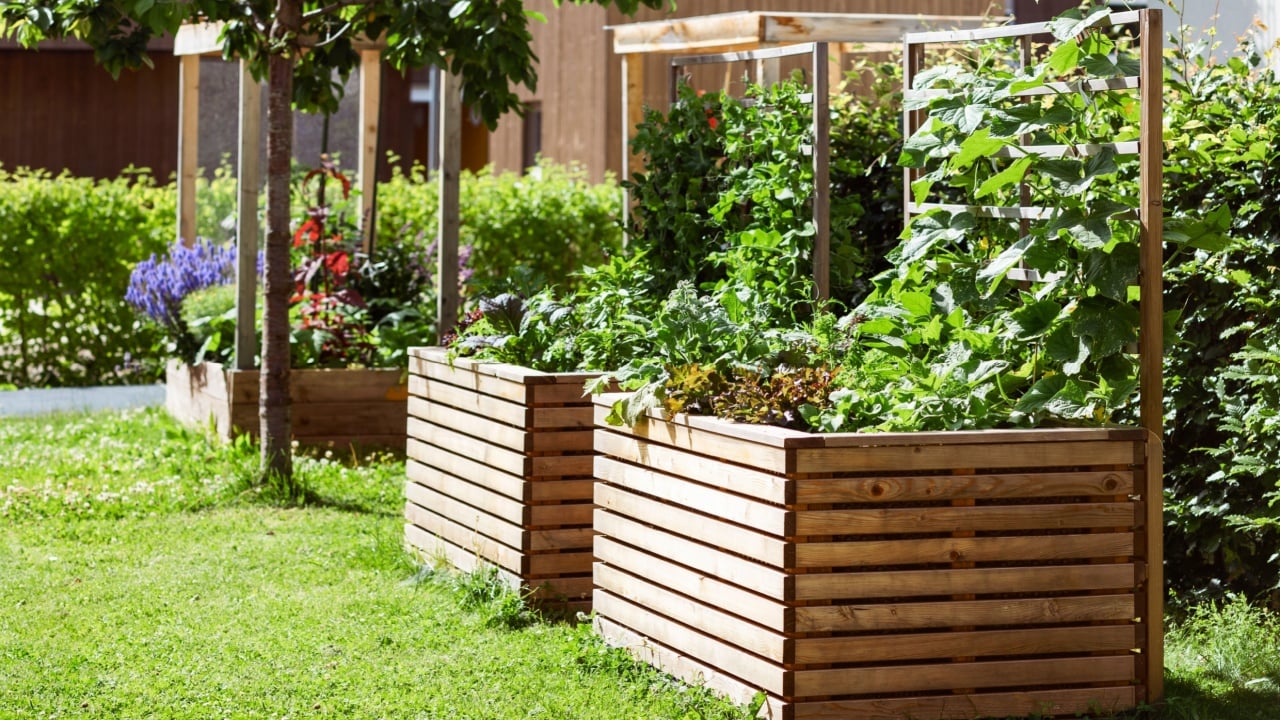
Aim for 24–36 inches tall; a height that lets you reach the center of the bed comfortably from either a seated or standing position without bending your spine. Wider is better, too; a bed no more than 24 inches across means you never have to overreach or twist to tend plants at the back.
Add a 6–8-inch-wide flat ledge around the top edge to serve as a built-in resting seat — no separate chair required. This ledge also doubles as a tool rest, keeping your trowel and pruners within arm’s reach rather than on the ground.
If you’re building new, consider adding a drip line along the interior before filling with soil; it’s far easier to install before the bed is planted than after, and it eliminates the heaviest daily task right from the start.
2. Switch to container gardening immediately.
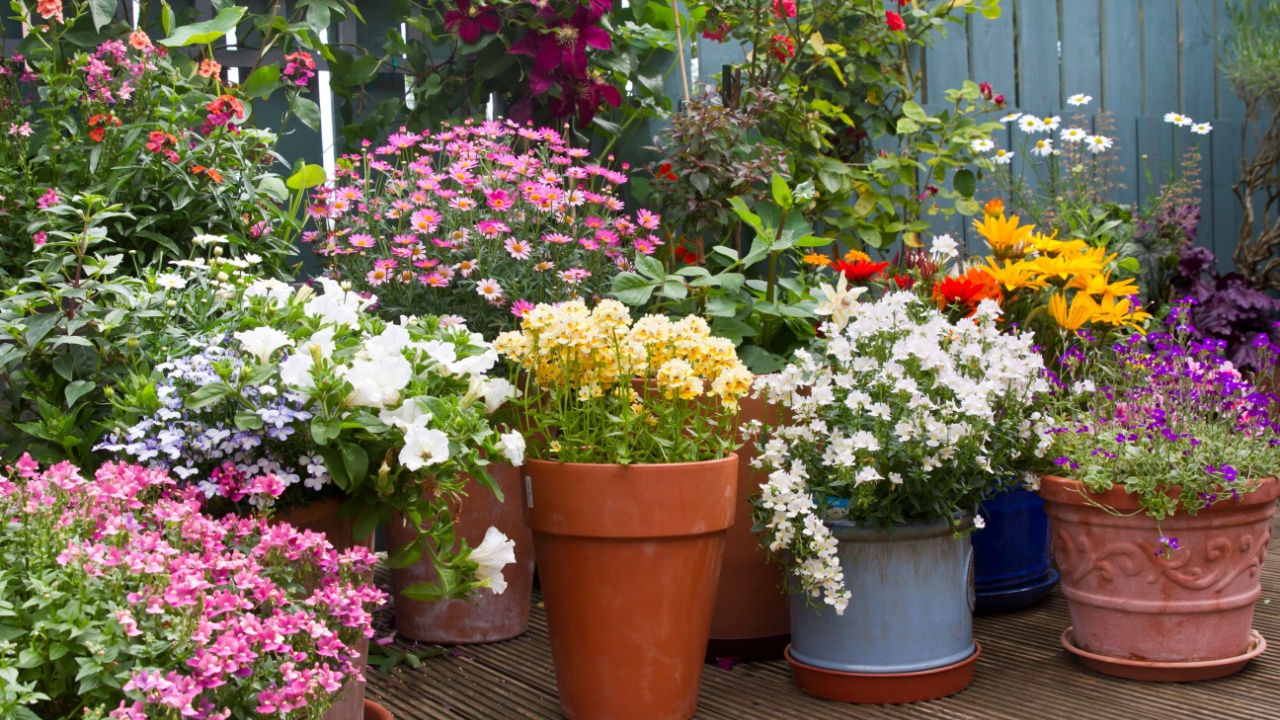
Pots, window boxes, and planters placed on tables or potting benches bring the garden to you, eliminating the single biggest physical demand of traditional gardening: getting down to ground level and back up again. A sunny porch, a back step, a balcony railing, or even a kitchen windowsill can become a productive garden with the right containers in place.
Containers also give you complete control over soil quality, which means healthier plants with less effort; no compacted clay, no tree roots competing for nutrients, no mystery soil problems carried over from last season. Fill them with a high-quality potting mix rather than garden soil, which tends to compact and drain poorly in containers.
One underappreciated bonus is that container gardens are far easier to protect from pests and frost, since a pot can be moved indoors or covered overnight in a way that a raised bed simply cannot. Start with three or four containers in your sunniest spot, grow what you love most, and expand from there.
3. Use lightweight pots on wheeled caddies.
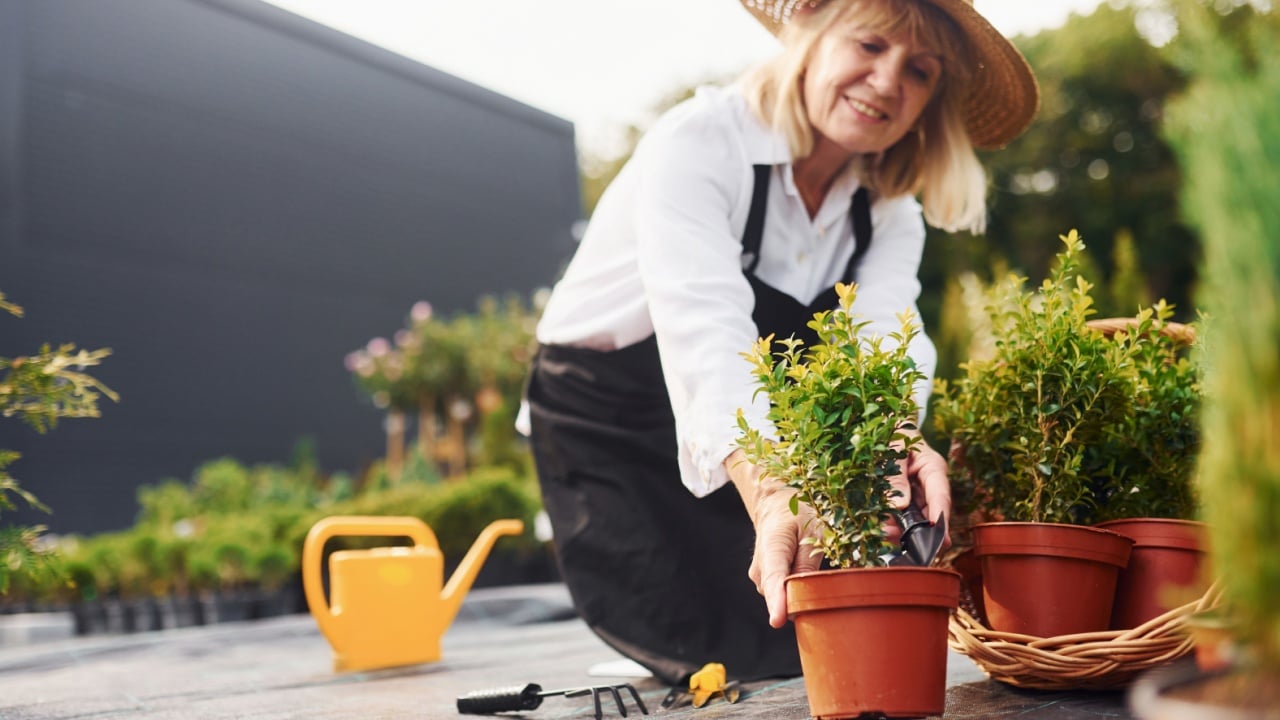
Standard terra cotta pots become unmanageable once filled — a 12-inch clay pot packed with moist soil can easily weigh 40 to 50 pounds, which is an injury waiting to happen for anyone with joint pain or balance concerns. Lightweight resin containers on rolling plant caddies solve this entirely.
Resin pots weigh a fraction of their clay equivalents, look nearly identical at a glance, and hold up well through freeze-thaw cycles. Place them on heavy-duty wheeled caddies rated for the pot’s filled weight, and you can reposition an entire planting from full sun to afternoon shade in under a minute, with no lifting at all.
This matters more than most gardeners realize. A tomato that is scorching in July heat can be rolled to a shadier spot. A tender herb threatened by a late frost can be wheeled inside overnight. Citrus in a cool-climate garden can follow the warmest wall as the seasons shift. The caddy turns a static container into a dynamic gardening tool, and for older adults managing limited energy, that flexibility means fewer lost plants and far less frustration.
4. Try vertical gardening on a fence or wall.
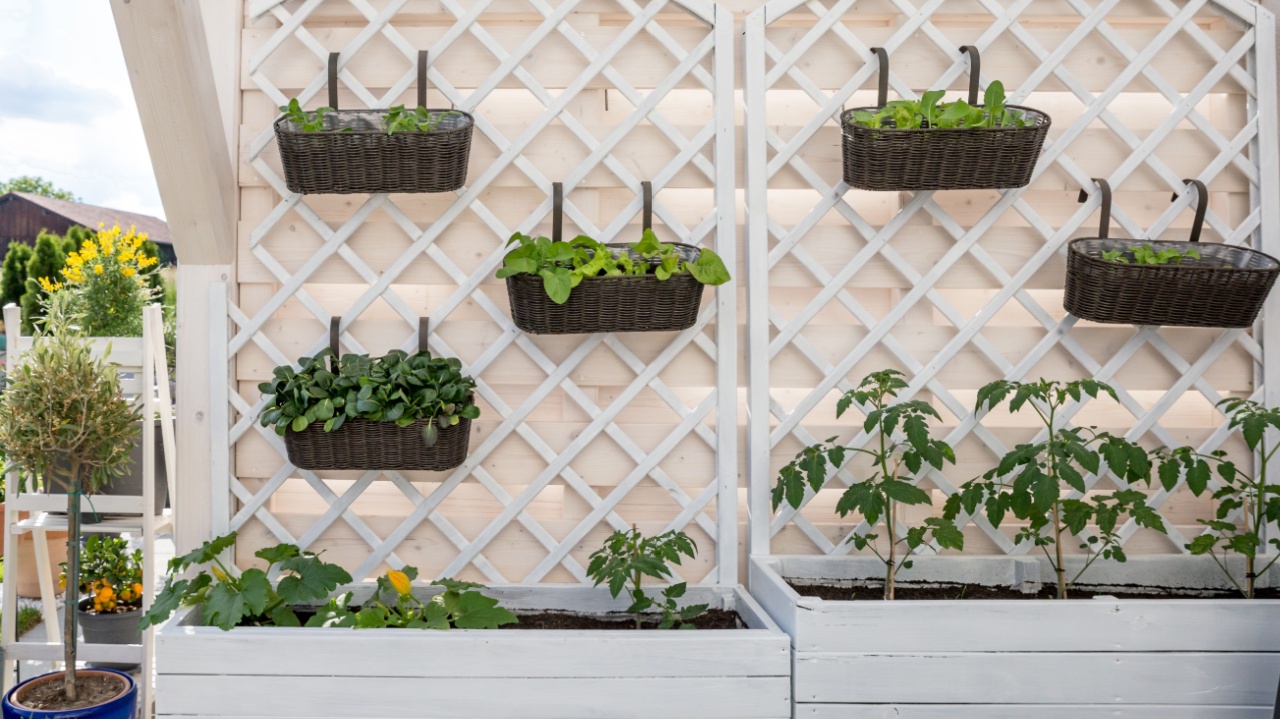
Wall planters, trellises, and hanging systems bring plants to eye or shoulder level, eliminating the need to crouch, kneel, or bend at the waist entirely.
A simple wooden trellis secured to a fence or exterior wall costs very little to install and can support years of climbing crops. Hanging systems with adjustable hooks let you set basket height precisely, so whether you garden from a chair, a stool, or a standing position, the plants come to you rather than the other way around. Climbing vegetables like peas, pole beans, cucumbers, and small-fruited squash thrive in vertical setups and are actually easier to harvest vertically than from sprawling ground-level vines, since the fruits hang freely and are visible at a glance rather than hidden under foliage. Most herbs do equally well in wall-mounted pocket planters, and a vertical herb wall near a kitchen door is one of the most satisfying and practical setups any gardener can build.
For wheelchair users, a ratchet pulley system takes vertical gardening one step further: containers mounted on the pulley can be lowered to lap height for planting, deadheading, and harvesting, then raised back to display height with minimal effort. The National Garden Bureau specifically recommends this setup for gardeners who need full seated access, noting that it makes wall-level gardening as accessible as any raised bed.
Vertical gardening also makes exceptional use of small spaces; a single 6-foot fence panel can support more growing area than several square feet of ground-level bed.
5. Upgrade to ergonomic tools with foam grips.
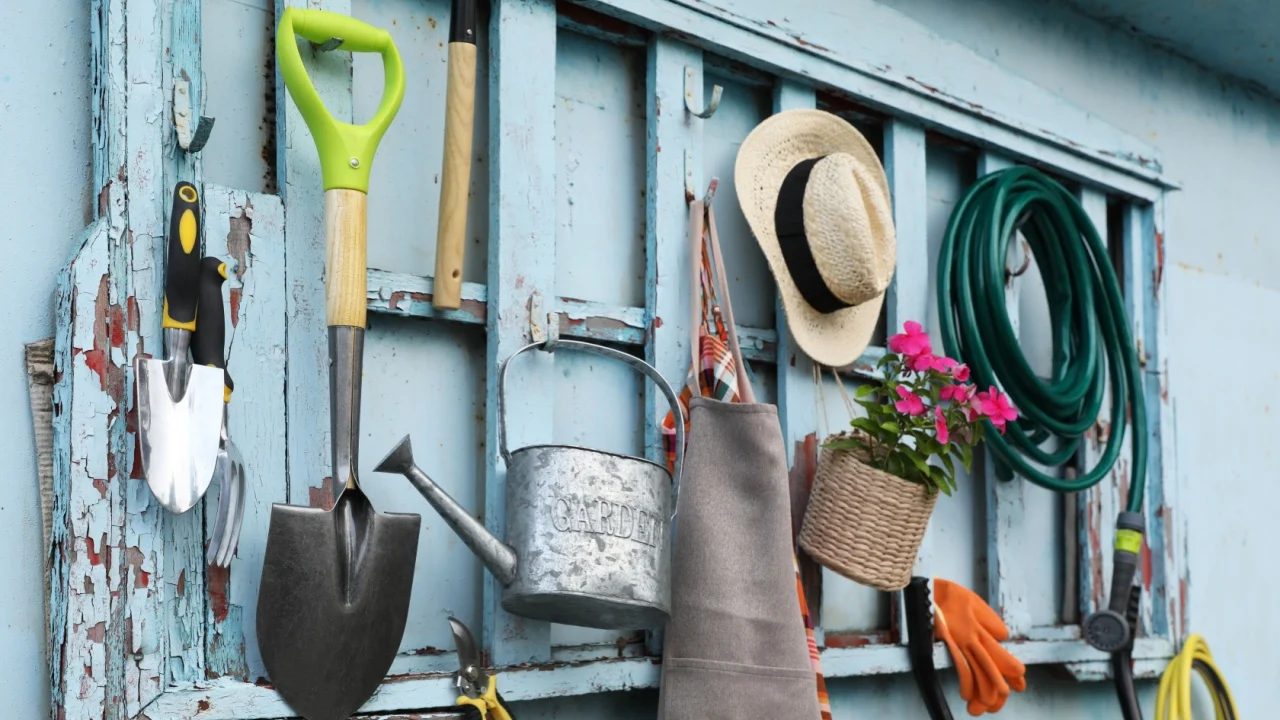
Ergonomic handles with non-slip rubber grips can improve hand grip efficiency by up to 58 percent, according to research reviewed by physical therapist and Master Gardener Sue Jones, which is a meaningful difference for anyone managing arthritis, carpal tunnel, or reduced hand strength.
The science behind this is straightforward: textured rubber surfaces increase friction between hand and handle, which means less muscular effort is required to maintain a secure grip during repetitive motions like digging, raking, and pruning. Tools with curved handles take this further by keeping the wrist in a neutral position throughout the task, reducing the torque placed on joints and dramatically lowering the risk of repetitive strain injuries over a full season of gardening. Jones also notes that handle span matters: research suggests the optimal grip distance between handles — on pruners, for example — is 40 to 60 millimeters, depending on hand size. Tools outside that range force the hand into an inefficient position that fatigues muscles faster and stresses joints more.
When shopping for ergonomic tools, look for a D-grip or T-grip on long-handled implements, a pistol-grip or vertical handle on trowels and hand tools, and a ratcheting mechanism on any pruner or lopper. If replacing a full tool kit feels like too large an investment, start with the tools you reach for most often, typically a trowel, a hand weeder, and a pair of pruners, and upgrade from there one piece at a time.
6. Use long-handled standing tools.

Rakes, hoes, stand-up weeders, and cultivators with extended handles allow weeding, planting, and soil work entirely from a standing or seated position, keeping your spine upright and your knees completely out of the equation.
The key is handle length: a tool that reaches comfortably from the ground to your hand without requiring you to hunch forward is doing half the ergonomic work before you even start. Many long-handled tools now feature telescoping shafts that adjust to your exact height, so the same rake works equally well for a five-foot-two gardener working from a chair and a six-foot gardener working standing up.
Stand-up weeders deserve special mention: a good one uses a claw mechanism that grabs the weed at the root with a simple foot-press and twist, then ejects it with a push of a lever, meaning the entire weeding process happens without bending, kneeling, or using your hands at ground level at all. For older gardeners who have avoided weeding because of what it costs to their knees and back, a stand-up weeder is often a revelation. For gardeners using a push weeder or hoe, look for models with an oscillating or stirrup head, which cuts weeds on both the push and pull stroke and requires half the effort of a standard fixed-blade hoe.
7. Garden in short sessions of 20–30 minutes.
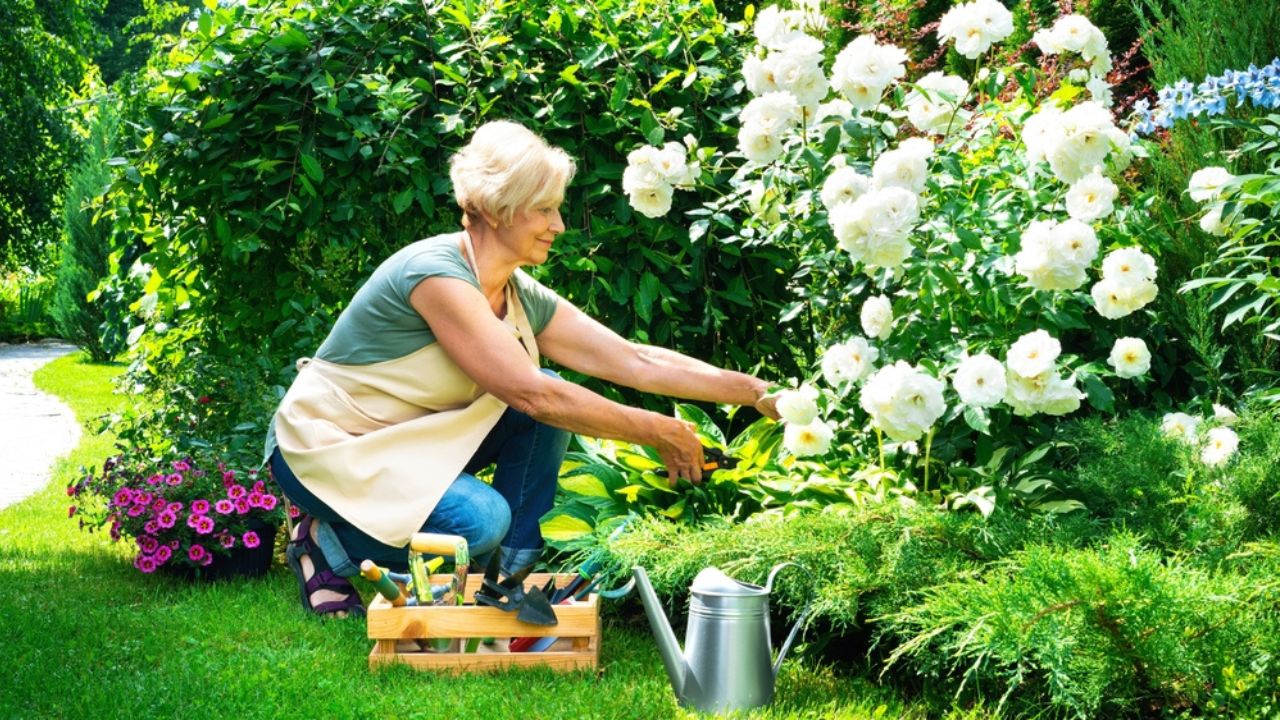
Experienced adaptive gardeners consistently recommend working in short blocks rather than marathon sessions, and the reasoning goes beyond simple fatigue management. Joints that are already inflamed or stiff respond poorly to sustained repetitive motion; short bursts of activity followed by genuine rest allow circulation to recover, muscles to reset, and pain signals to quiet before they escalate into the kind of soreness that keeps you out of the garden for days. Fifteen to twenty minutes of activity followed by five minutes of rest, repeated across a morning, allows more total time in the garden with dramatically less soreness and fatigue afterward. Many gardeners find they accomplish more this way than they ever did pushing through a two-hour session, because each fresh interval is more focused and efficient than the last hour of an exhausted one ever was.
The structure also makes it easier to listen to your body honestly. When you know a rest break is coming in fifteen minutes, you are far less likely to ignore a warning signal from a shoulder or a knee, and catching discomfort early is almost always the difference between a minor ache and a setback that costs you a week or more of gardening time.
Use rest intervals productively rather than passively: sit in a shaded spot with a glass of water, deadhead a nearby pot from your chair, or simply observe what is growing and what needs attention next. Planning your next interval during your rest makes the session feel less fragmented and more like a rhythm. Many older gardeners who adopt this approach report that it fundamentally changes their relationship with the garden, shifting it from a chore that must be completed to a daily practice that can be genuinely looked forward to, one short and satisfying stretch at a time.
Don’t Wait Until You Need a Walker to Plan for One
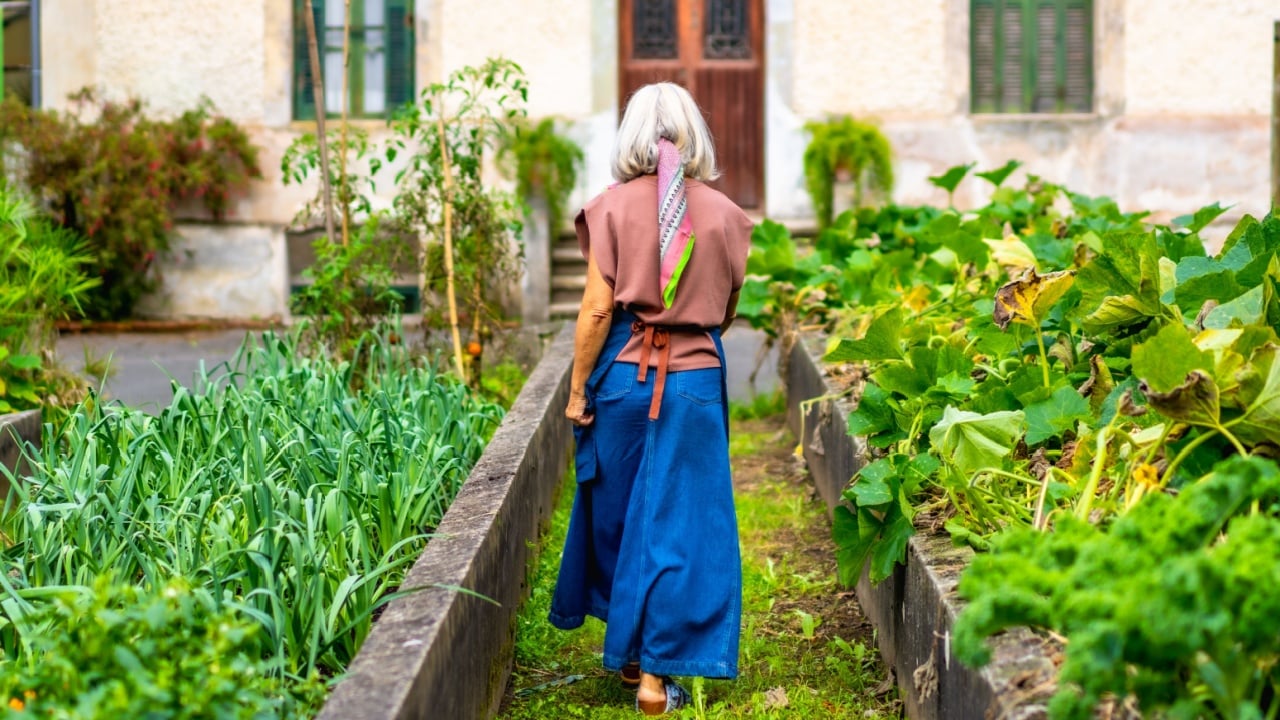
The single most important piece of adaptive garden advice has nothing to do with plants or tools. It is this: design your garden today for the mobility level you may have in ten years, not the one you have right now.
Paths that are 4 feet wide cost no more than paths that are 2 feet wide, but one accommodates a walker, and the other doesn’t. Gentle slopes replace steps for a fraction of the cost of retrofitting. Low-voltage path lighting installed now means safe early-morning and evening garden visits for years to come. Raised beds with built-in seating ledges work perfectly for standing gardeners today and seated ones tomorrow.
Right now is the ideal time to make one meaningful change, like building one raised bed, installing one drip line, or widening one path, because the payoff compounds over every season that follows.
The gardeners who keep growing into their 80s and beyond are not the toughest or the most physically gifted. They are the ones who planned, adapted early, and permitted themselves to garden differently. Their rewards are real: stronger bones, sharper minds, lower stress, and a garden that still brings them joy every single morning.
Read more:
7 perennial planting mistakes to stop making right now
How to Grow Zucchini Vertically: 7 Steps That Save Space and Double Your Harvest