6 Outdated Garden Path Ideas That Are More Trouble Than They’re Worth
Garden paths do more than connect point A to point B. They set the tone for your entire outdoor space, guide foot traffic, and shape how visitors experience your yard from the moment they arrive.
A well-designed path feels natural and intentional. A poorly chosen one becomes a constant source of frustration.
Many popular path styles from past decades have not aged well. Some look dated the moment you install them. Others create ongoing maintenance headaches that no amount of weekend effort can fully fix.
This article covers six garden path ideas that have overstayed their welcome, why they cause more problems than they solve, and what to use instead.
1. High-Maintenance Marble Chips
Marble chips have a clean, polished look straight out of the bag, but that appeal fades fast once they settle into a real garden. These small stones shift constantly underfoot, scatter onto lawns and flowerbeds with minimal provocation, and embed themselves in shoe treads in a way that drags debris straight into your home.
Weeds push through the gaps between chips with surprising persistence, meaning you’ll spend far more time on upkeep than you ever planned for.
Beyond the maintenance burden, marble chips are not a particularly practical surface for regular foot traffic. They offer poor traction on slopes, make accessibility difficult for anyone using a cane or wheelchair, and reflect heat in ways that can stress nearby plants during the summer months.
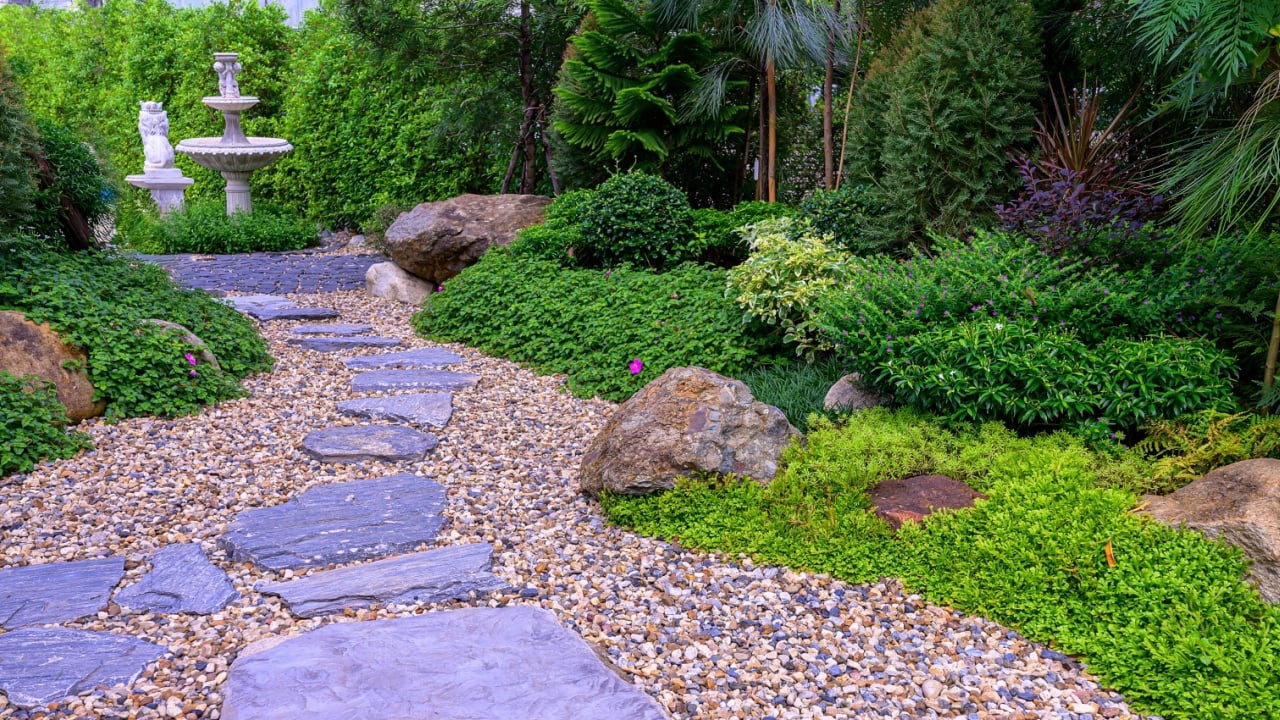
Large stone steppers set within river rock give you a more stable, accessible surface that holds its position far better while still offering visual texture and contrast.
2. Straight Paths Flanked by Overgrown Shrubs
A ruler-straight path running directly from the street to your front door might seem like the most logical layout, but it often creates a tunnel effect that feels uninviting and rigid.
When shrubs on either side go unchecked, that problem compounds quickly. The path starts to feel enclosed and narrow, and visitors are left with a sense of walking through a corridor rather than arriving somewhere welcoming. This design leaves very little room for the landscape to breathe.
The real issue with this style is that it prioritizes geometry over experience. Paths that curve gently through a space slow the eye, create a sense of discovery, and make a garden feel larger than it actually is.
Softened planting along curved edges, using grasses, low perennials, or ground cover, allows the path to integrate with the surrounding garden rather than cutting through it like a driveway median. Swapping to a gentle curve does not require a full redesign; even a slight arc can transform how the space reads.
3. Predictable Red-Brick Herringbone Patterns
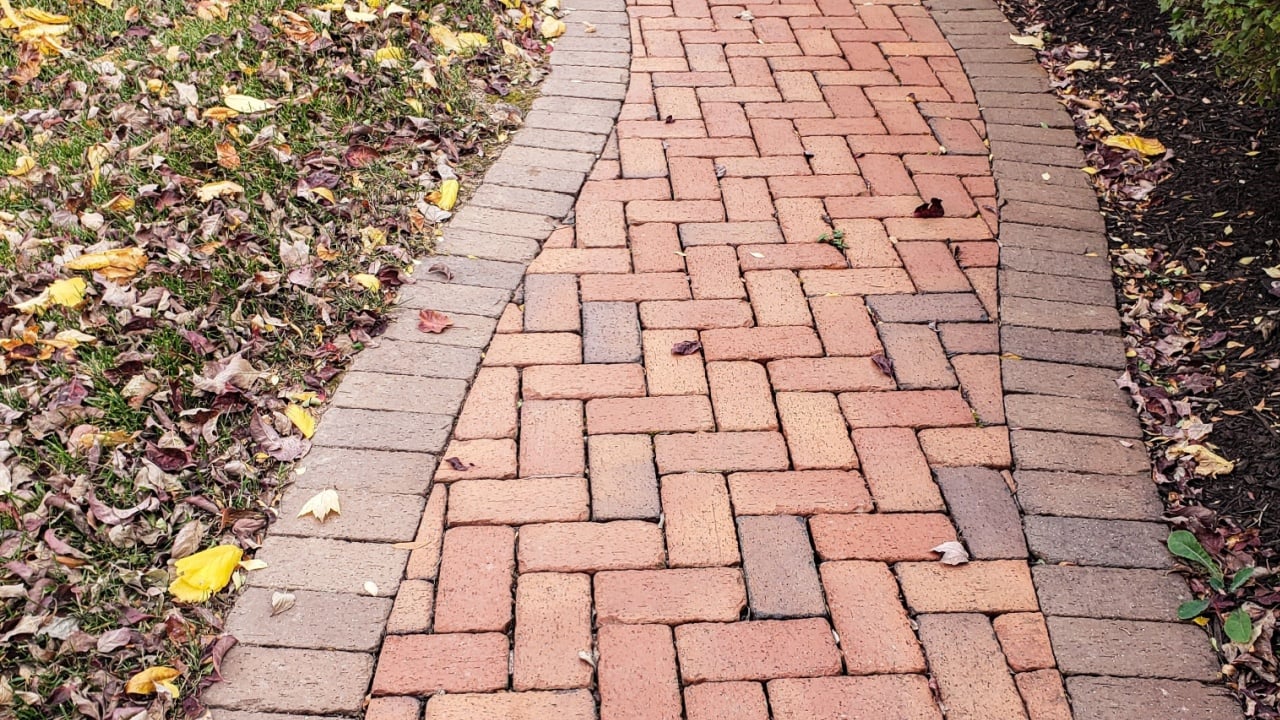
Red-brick herringbone was a go-to paving pattern for decades, and it shows. The combination of standard red clay bricks laid in that classic zigzag formation has become so common that it rarely adds character to a space anymore.
It tends to read as default rather than deliberate, and when the mortar or edging starts to break down, the whole path takes on a tired, patchy appearance that is surprisingly difficult to repair cleanly.
Modern paving offers far more room to express something personal and design-forward. Concrete pavers now come in a range of shapes, warm neutrals, and textured finishes that can complement both traditional and contemporary gardens without looking like a stock photo backdrop.
Permeable paving options, which allow rainwater to filter through the joints, are also increasingly popular because they reduce runoff and support soil health beneath the surface.
4. Forced Layouts That Ignore the Natural Landscape
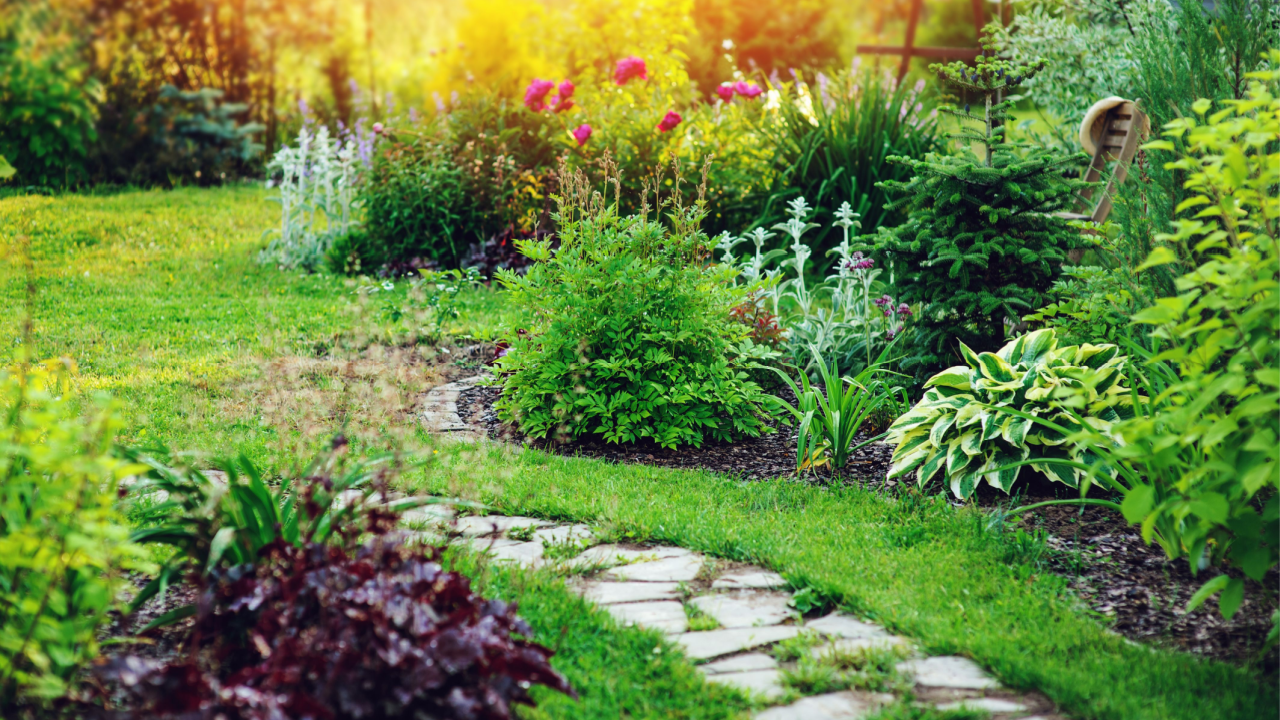
Some paths are designed on paper without enough attention paid to how people actually move through a space, or how the terrain behaves. These forced layouts often run in perfectly straight lines across sloped ground, cut against natural drainage patterns, or route foot traffic in ways that nobody actually follows.
You can usually spot them by the worn-down grass patches nearby, where visitors have created their own informal routes because the official path simply does not feel natural to use.
The better approach is to observe how movement already flows through your garden before committing to any permanent layout. Where do family members walk instinctively? Where does water collect after rain?
A path that follows the land’s existing logic rather than fighting it will feel more intuitive and require far less maintenance over time. Organic layouts that curve around mature trees, step down gently with a slope, or pause at a garden feature create paths that serve the space rather than impose on it.
5. Paths That Are Too Narrow
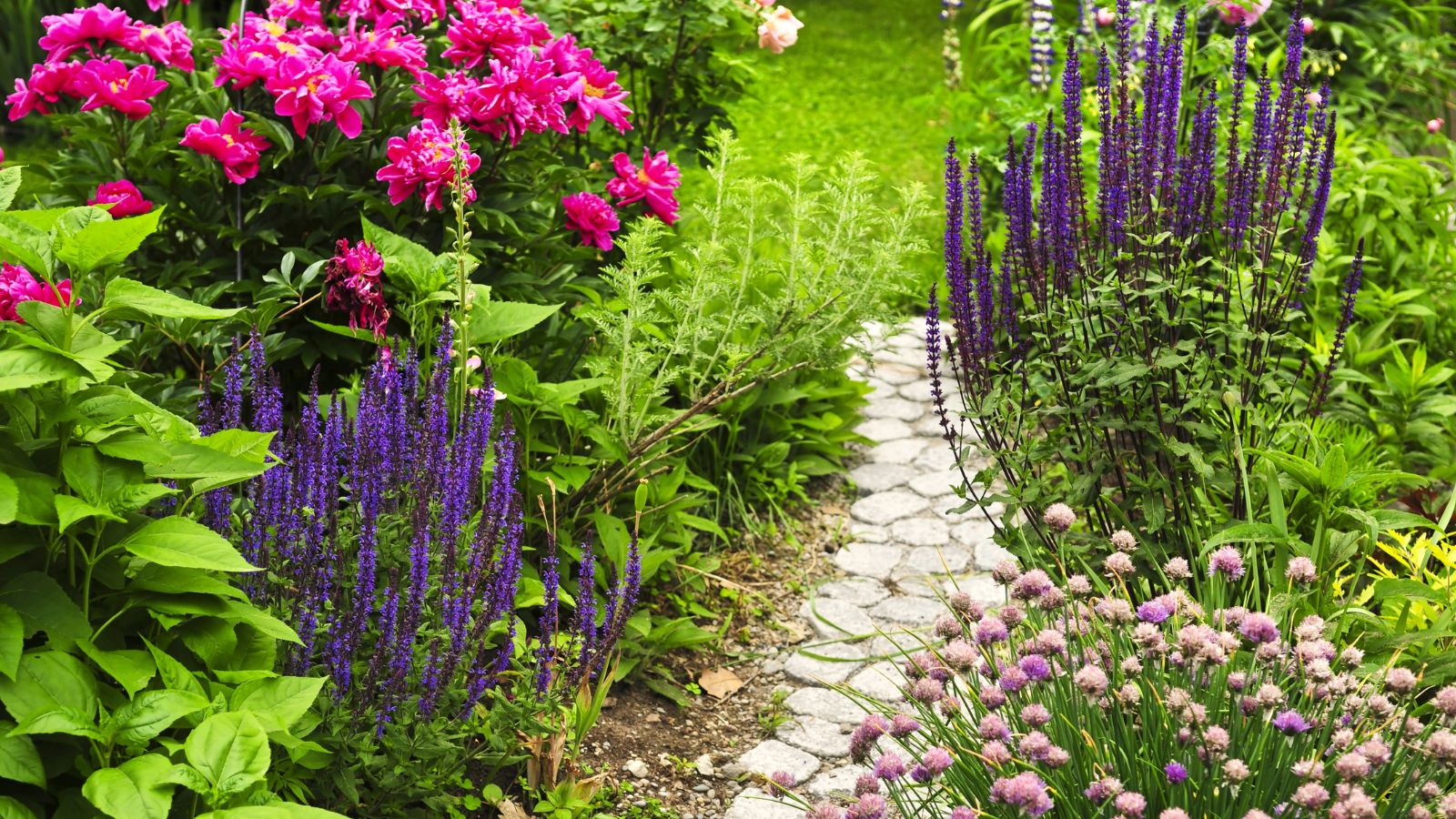
A path narrower than 36 inches creates immediate problems, even if it looks proportionate at the planning stage. Two people cannot walk side by side comfortably, wheelbarrows feel precarious, and anyone with a pram, mobility aid, or simply two bags of groceries will struggle.
Narrow paths also tend to look pinched relative to the surrounding planting, which makes the entire garden feel smaller and less considered than it is.
Width is one of those design decisions that has a huge functional impact but often gets overlooked in favor of material choices or layout. A primary garden path, meaning the main route between the house and garden, should be wide enough to feel generous and welcoming.
Secondary paths that weave through planting beds can be narrower, but even those benefit from at least 24 inches of clearance. Establishing a clear hierarchy between your main and secondary paths gives the garden a sense of structure without making it feel rigid or over-designed.
6. Harsh Solid Concrete Paths
Plain poured concrete is functional, but it dominates outdoor spaces in a way that rarely feels intentional or attractive. A solid slab of grey running through a garden draws the eye immediately, and not in a good way.
It has a utilitarian quality that works in a car park but feels heavy-handed in a yard where you want greenery and texture to take center stage. Concrete also absorbs and radiates heat, making surrounding areas warmer in summer and accelerating soil moisture loss near path edges.
Segmented alternatives offer all the durability of concrete with a fraction of the visual weight. Flagstone stepping stones spaced with grass or gravel joints create a path that feels integrated with the garden rather than imposed on it.
Concrete pads separated by planted joints are another solid option, and they allow rainwater to permeate the surface rather than run off in sheets. These approaches give your garden a far more natural appearance while maintaining the practicality that makes concrete so appealing in the first place.
A Better Path Starts With a Better Plan
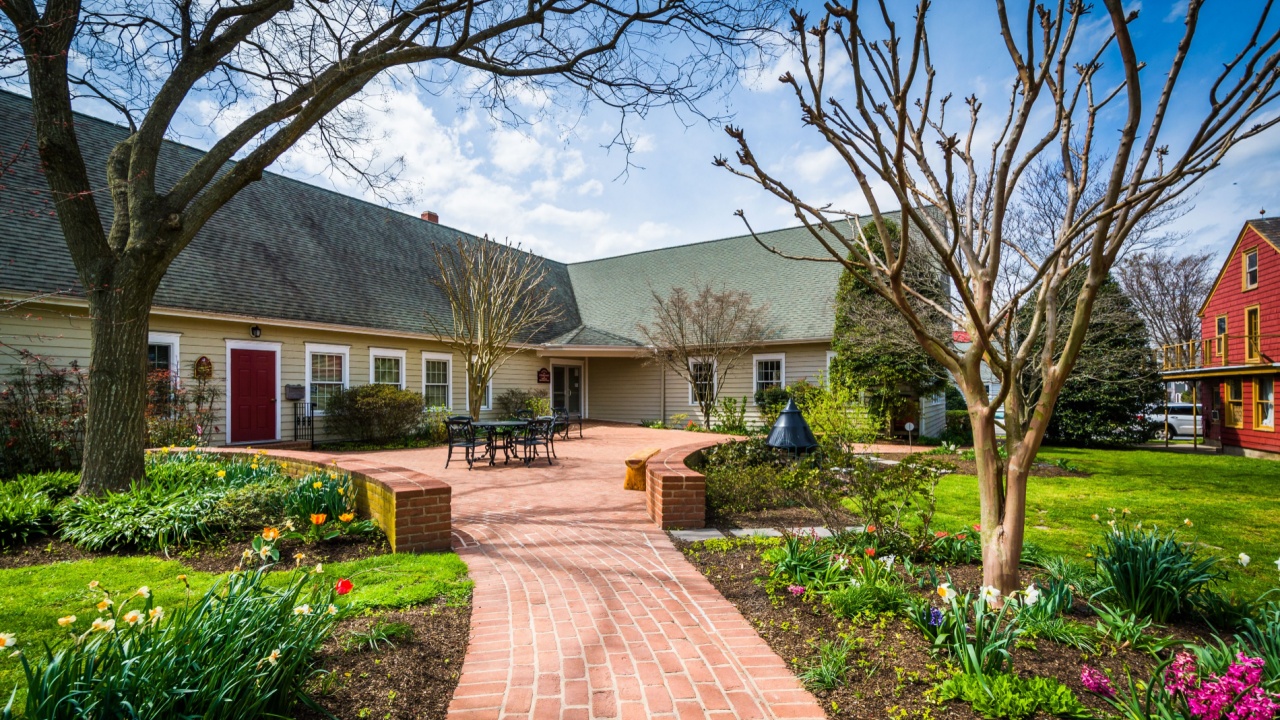
The most common thread among these six outdated ideas is that they were chosen for convenience or tradition rather than for how well they serve the garden itself.
Materials that seemed low-effort at install often create ongoing work. Layouts chosen for symmetry end up fighting the space’s natural flow. Surfaces chosen for looks alone prove impractical under real conditions.
Before you commit to any path material or layout, spend time in your garden at different times of day and in different weather. Notice where sunlight and shadow fall, how water moves after rain, and where foot traffic naturally concentrates.
Read More:
Attractive Garden Path Ideas for a Beautiful Landscape
Landscaping Experts Share 10 Ways to Make Your Garden More Drought-Resistant