4 Smart Ways to Keep the Stink Out of Your Kitchen
Everyone knows the sensation. You walk into the room where food preparation happens, and a scent greets you. It is not the aroma of fresh cookies or simmering garlic. It is something ancient, heavy, and unpleasant.
You scrub the counters. You mop the floor. The scent remains. It mocks your cleaning efforts.
The culprit usually sits in the corner, hiding in plain sight. The standard kitchen garbage can serves as a holding cell for decomposing organic matter. Large bins encourage you to wait until the bag bursts at the seams before taking it out.
By then, the bottom layers have turned into a science experiment. This article looks at a different approach. You will learn how changing a single piece of equipment can transform the entire sanitary landscape of your home.
1. Downsize Your Trash Can to a Smaller Model

The standard 13-gallon kitchen bin occupies a strange place in home design. It holds just enough waste to become heavy, but takes too long to fill up completely. During the days it takes to reach capacity, food scraps and packaging break down. Bacteria thrive in this environment. The air inside the bin becomes stagnant. When the lid finally opens, that trapped air escapes into the room.
A smaller container solves this volume problem instantly. Switching to a model between 5 and 8 gallons changes the physics of your waste management. A smaller vessel fills up faster. This might sound inconvenient initially, but it forces a positive change. You cannot leave garbage sitting for days because there simply isn’t room for it.
2. Empty the Trash More Frequently

Biology creates the stink. Decomposition begins immediately. When organic matter sits at room temperature, it breaks down. This process releases gases that our noses detect as “garbage smell.” The longer waste remains indoors, the more potent these gases become.
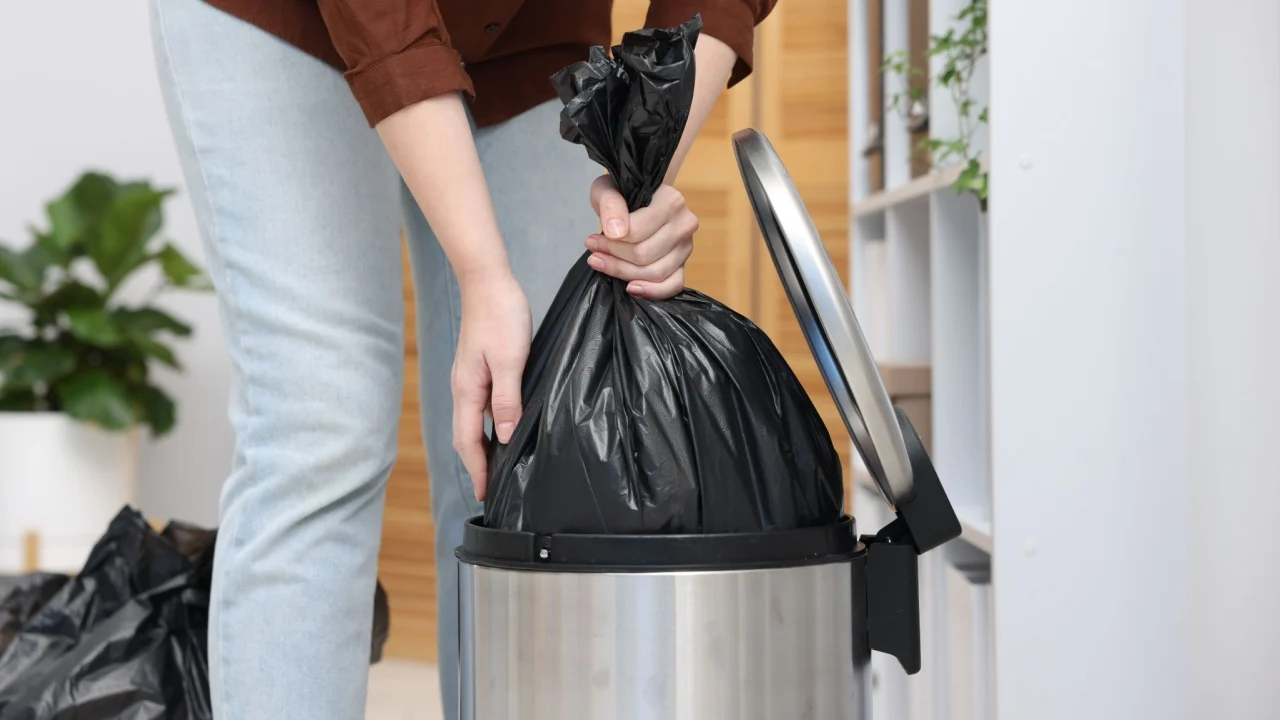
Empty your bin more frequently; this rapid turnover is the greatest enemy of bad odors. If you remove the trash every evening, the bacteria never get the time they need to establish a strong colony. The scraps from breakfast do not hang around long enough to meet the scraps from dinner two days later.
3. Prevent Leaks and Messes
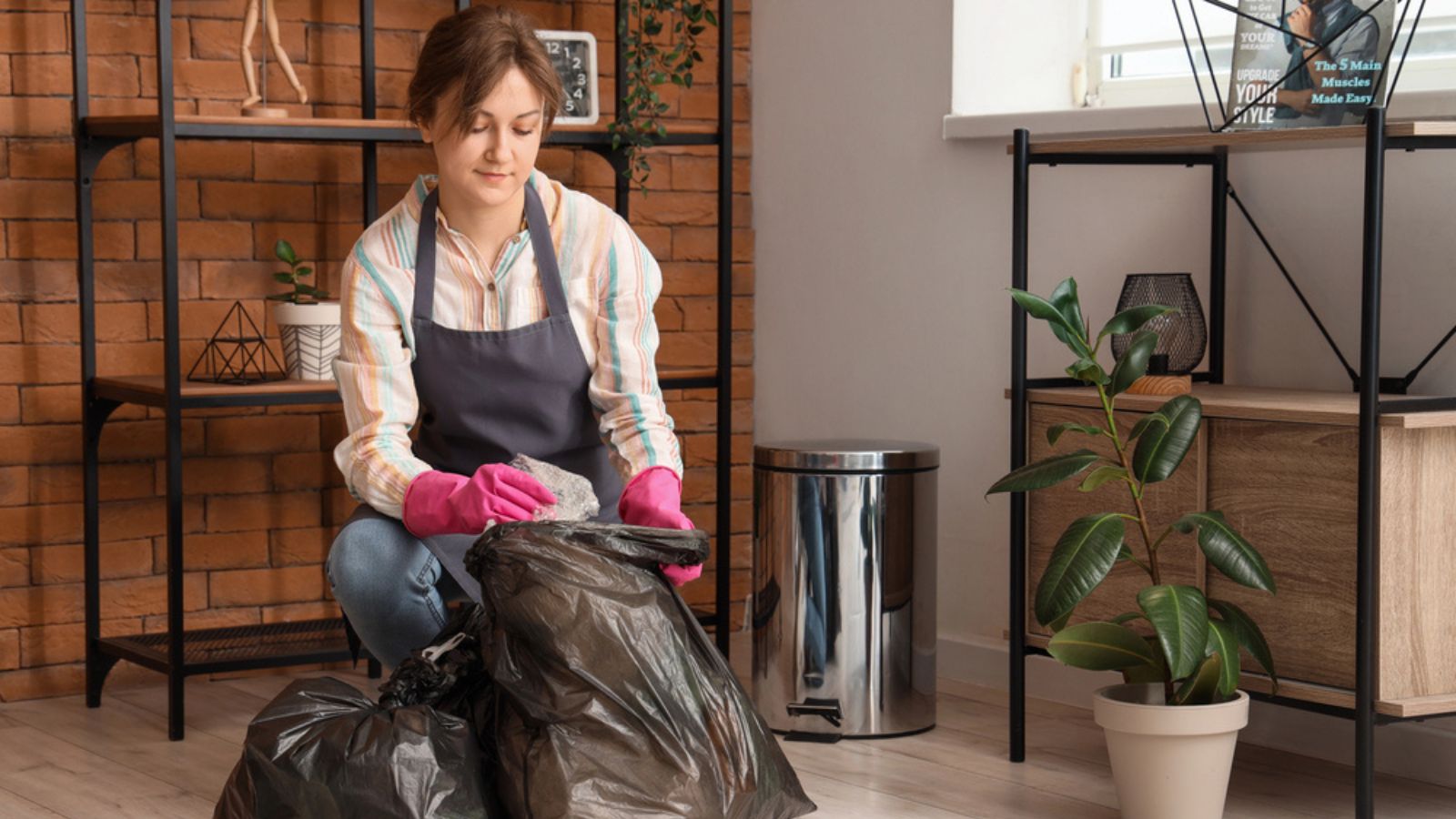
Liquid is the real troublemaker in any garbage setup. All it takes is one drip of “garbage juice” escaping the bag, and suddenly the kitchen smells like a forgotten lunchbox. Most leaks happen when food scraps or packaging aren’t sealed properly, or when liquids are tossed right into the trash. That escaping mess can seep into the can itself, and once the bin absorbs those smells, scrubbing them out feels like a lost cause.
To sidestep a sticky situation, always double-bag anything messy or use containers for food scraps with lots of moisture. Make sure bags are tied tightly and check for holes or weak spots before tossing them out. Wipe up any spills right away, and place a layer of newspaper or an absorbent pad at the bottom of the bin to catch stray drips. Less mess, fewer odors: your future self (and your nose) will be grateful.
4. Clean the Trash Can More Often
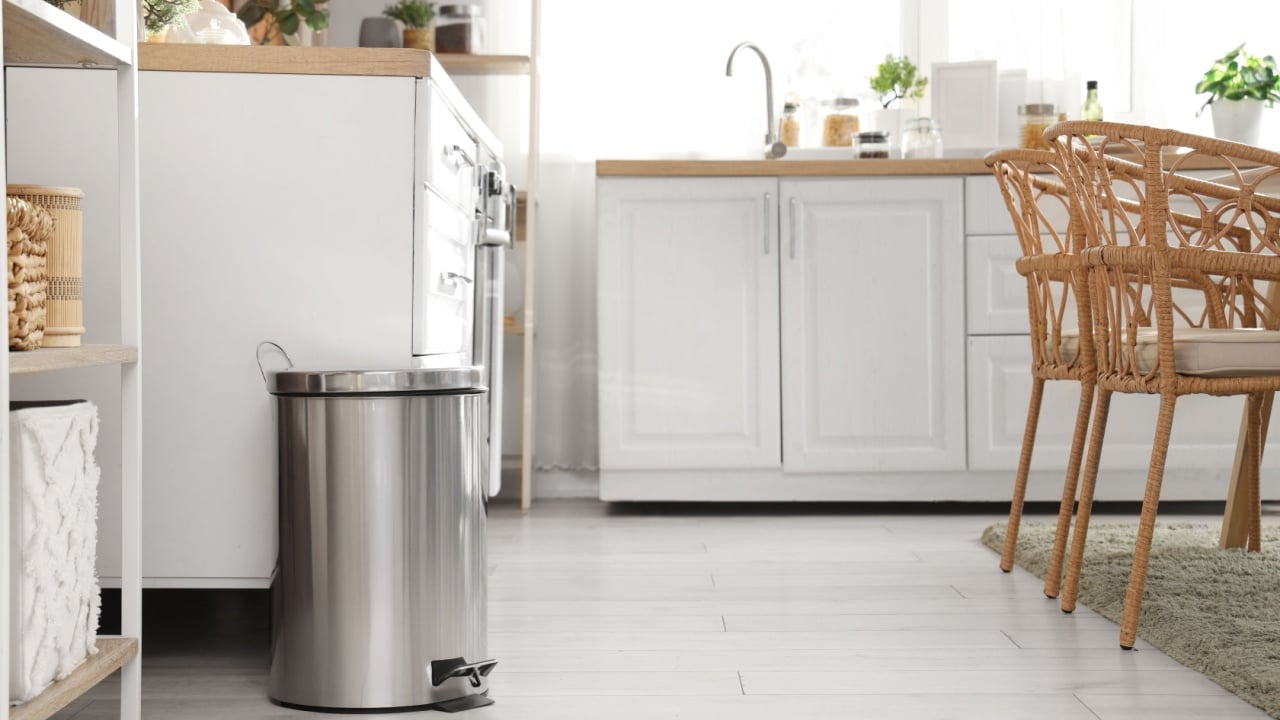
Trash cans are like that one roommate who never showers; eventually, things start to smell off. Even if you always use garbage bags, leaks happen, and bits of debris sneak past, slowly building up bacteria and odors. Giving the bin a regular wash with hot, soapy water or disinfectant wipes out those invisible but stubborn germs.
This makes the can less attractive to flies, maggots, and other uninvited guests, helping keep the entire kitchen smelling fresh. Consistent cleaning breaks the cycle of lingering smells, so every trip past the trash feels just a little brighter.
A Fresh Start

Keeping your kitchen fresh comes down to changing how you deal with waste, not chasing after fancy gadgets or chemical sprays. Small habits, like downsizing the trash can, emptying it more often, staying ahead of leaky bags, and giving the bin a consistent clean, make a big impact over time. Pick up a 5- to 8-gallon wastebasket and park it where you do most of your kitchen prep. Set a routine to take out the trash at the end of each day, perhaps after dinner, so unwanted smells never get comfortable.