14 Quirky Garden Decor Ideas That Prove More Is Always More
Garden gnomes were banned from the Chelsea Flower Show for over a century.
Now, the whimsical, the joyful, and the “that’s a bit much, isn’t it?” choices that real gardeners have been making for generations are finally getting the credit they deserve. This summer, the most fashionable thing you can do in your garden is exactly what you’ve always wanted to do: more.
For decades, “good taste” in garden design meant restraint: a few well-placed specimen plants, a neutral palette, negative space treated as a design feature rather than a missed opportunity. Maximalism was dismissed as clutter, while gnomes, painted birdhouses, and mismatched thrifted planters were written off as kitsch rather than craft. But that hierarchy was always more about who got to decide what counted as tasteful than about what actually made a garden feel alive. The cottage gardener layering in one more self-seeding poppy, the grandmother with a shelf of ceramic frogs by the back door, the collector who can’t walk past a flea market urn, they were never behind the trend. They were the trend, decades before anyone with a magazine or a Chelsea medal was willing to say so.
What’s changed isn’t the gardening; it’s the permission. Social media flattened the old gatekeeping, letting maximalist, personality-packed gardens rack up the kind of engagement that stark minimalist landscaping never did, and design tastemakers followed the audience rather than the other way around. The result is a rare moment where the “correct” style and the style most people actually wanted all along have finally lined up.
Why 2026 Is the Year to Stop Playing It Safe
Maximalism is a confirmed top garden trend for 2026. According to Garden Design magazine, the philosophy is uncomplicated: more layers, more personality, more color, more surprise. “If it makes your heart sing,” writes Rebecca Sweet, “then all the better.” The manicured, neutral, everything-matching garden of the 2010s is being replaced by something that looks lived-in, layered, and genuinely personal.
As Sweet, a landscape designer, explains, the maximalist garden “bursts with surprises, personality, and delight.” That’s not a description of a catalog purchase. That’s a description of the kind of gardening your grandmother did before anyone told her it was too much.
The singular worry most gardeners have about going quirky is that it will look cluttered or “junky.” But there is a real and learnable difference between a joyful, curated collection and a disorganized mess, and we’ll get to that. First, here are 14 ideas worth stealing.
1. Rehabilitate the Garden Gnome
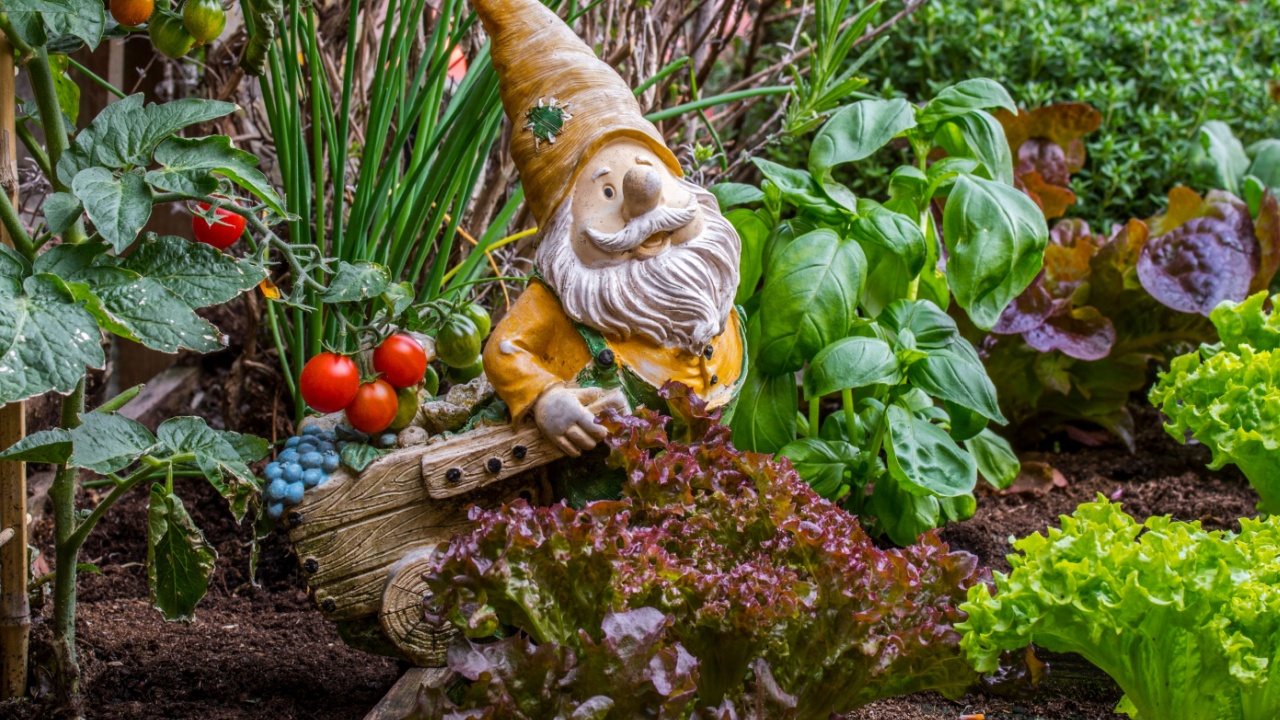
The gnome’s comeback is not a rumor; it’s backed by data. According to Gardening, Etc., the #gardengnome hashtag had accumulated over 17 million TikTok views by 2022. Today’s gnomes strike yoga poses, hold tiny coffee cups, and meditate under solar lights. Whether you go folkloric or maximalist-cheeky, a gnome is now a design statement. Place one among your tallest plants so it appears to be peeking out.
2. Turn Old Tools into Sculpture
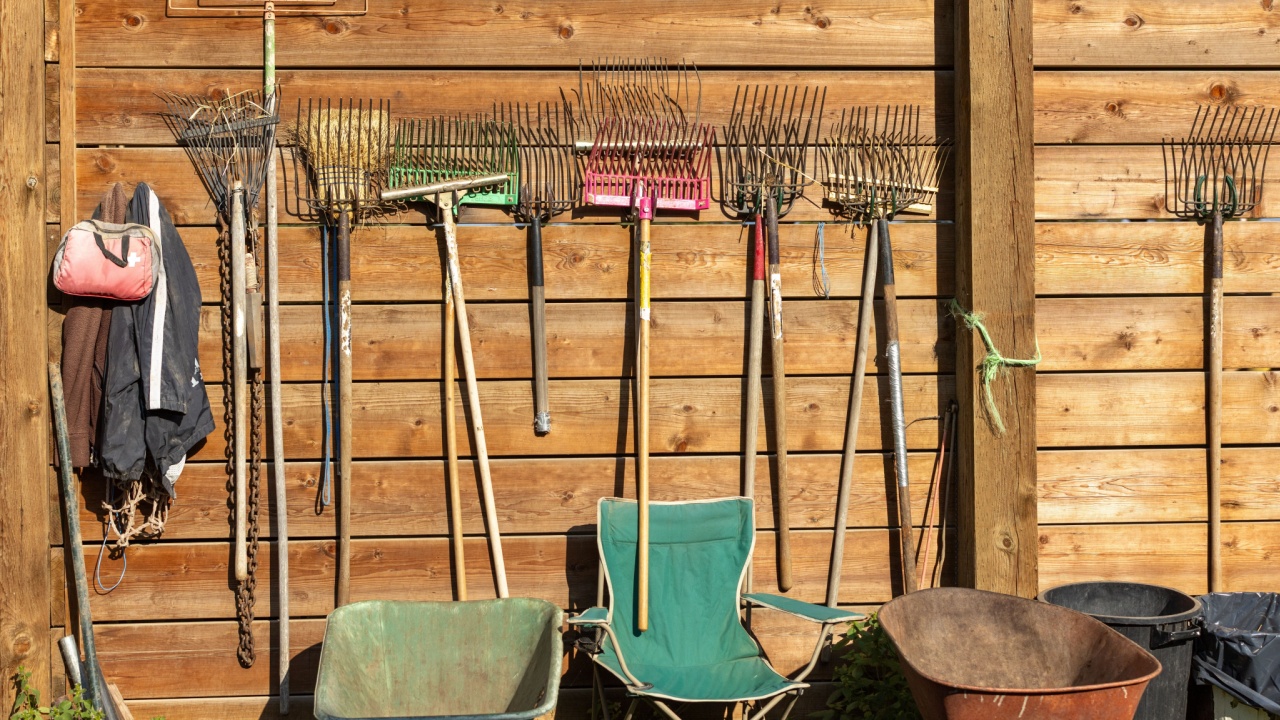
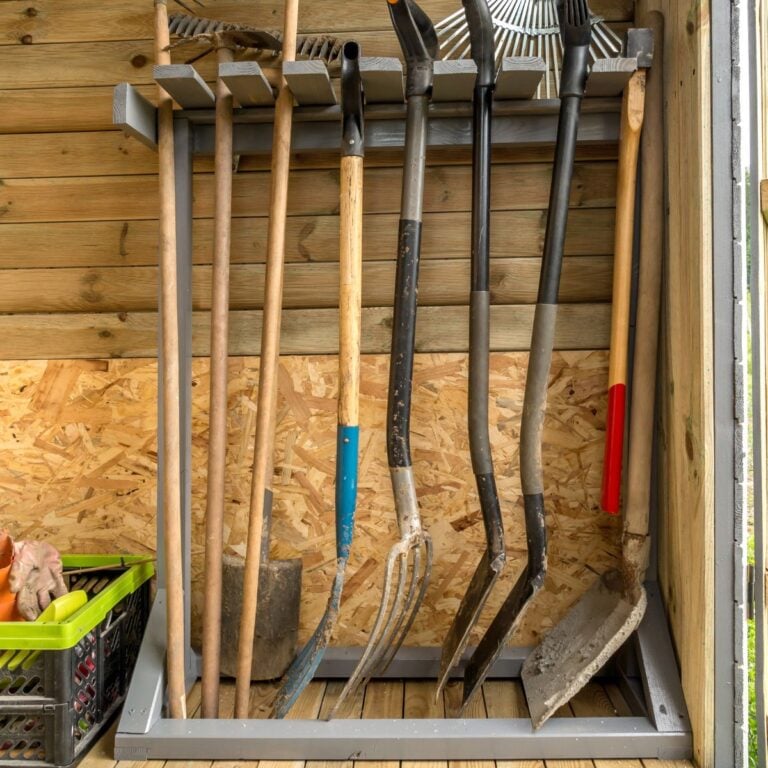
A collection of old shovels, rakes, and rebar can be assembled into birds, crows, or abstract creatures and staked directly into the garden. The most charming versions, popularized by the website Empress of Dirt, use shovel heads as wings, hammerheads as beaks, and large metal washers as eyes. No welding is required for simpler versions; the parts can be wired or bolted together. Rust is not a flaw here; it’s the finish.
3. Turn a Ladder into a Plant Stand
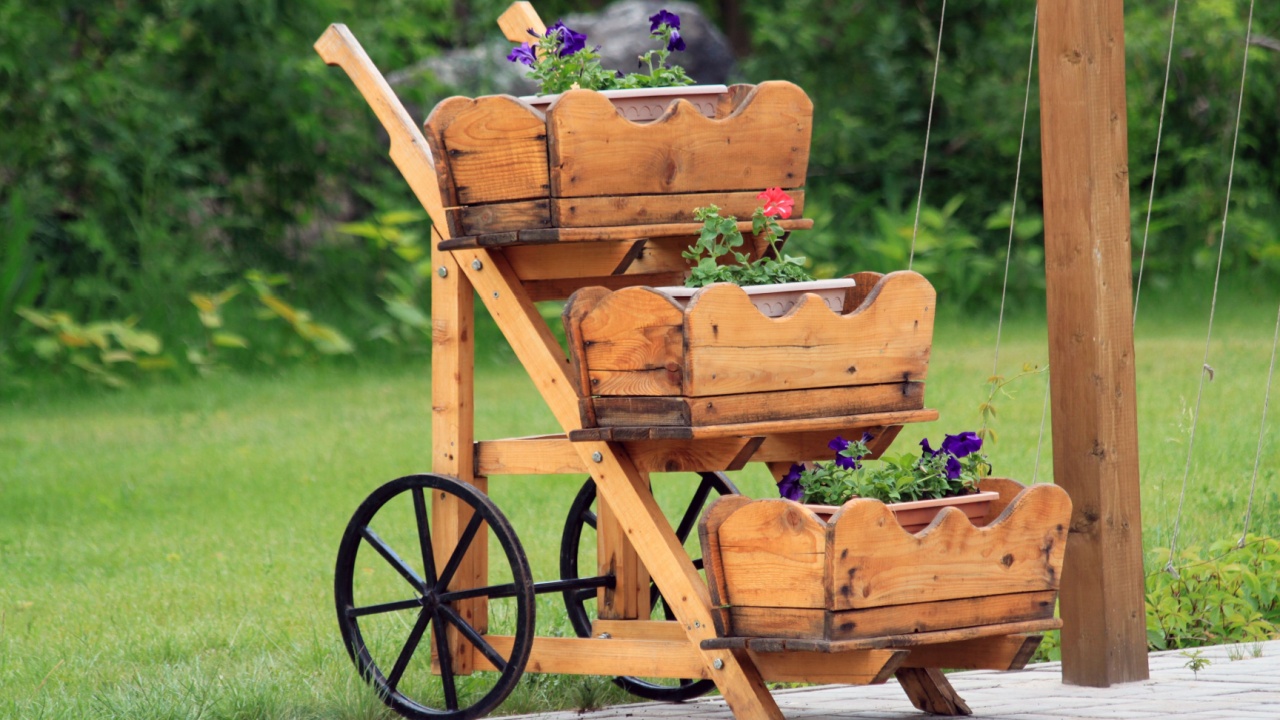
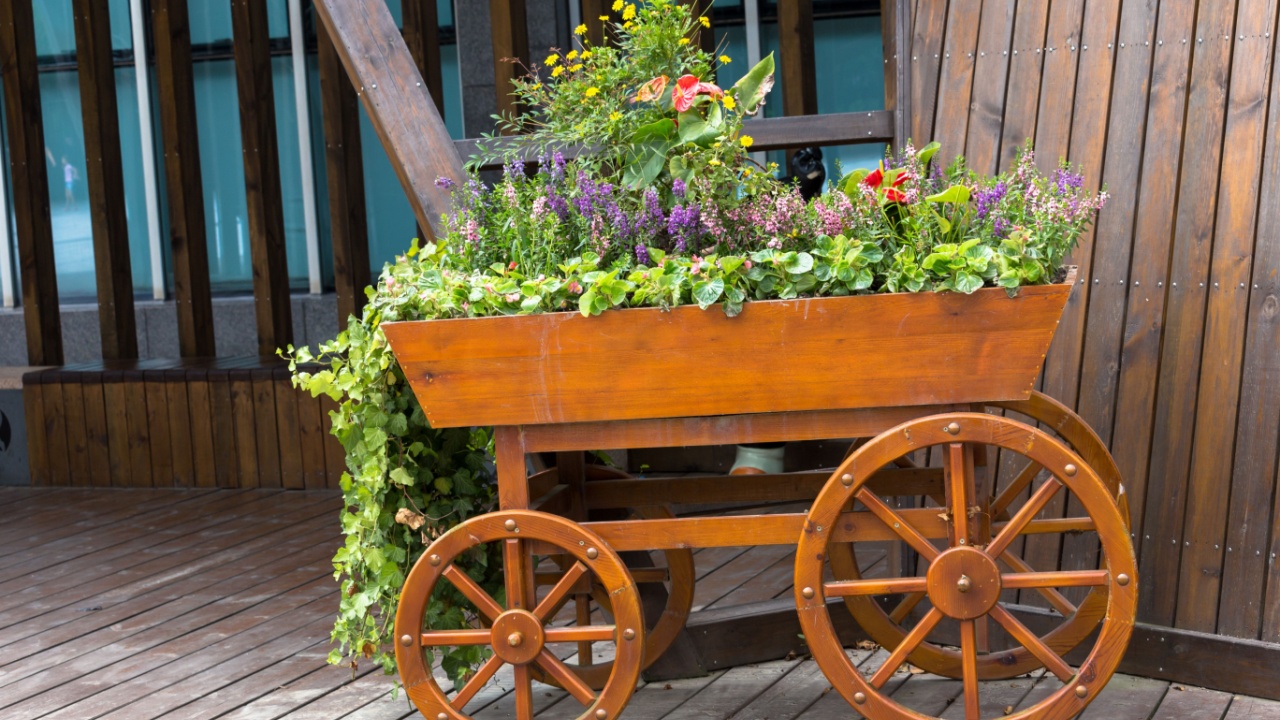
An old wooden ladder or tiered cart, painted in a bold color and leaning against a fence or wall, becomes a tiered plant display with almost no effort. The key is varying your pot sizes: largest at the base, smallest at the top. This gives the eye a clear path upward and makes the whole arrangement look intentional rather than accidental. A coral-painted ladder loaded with trailing petunias and succulents is a centerpiece that costs almost nothing.
4. Make a Mosaic Art Piece

Turn a thrift-store bowling ball, stepping stone, or flower pot into a stunning art piece by covering it in broken tile, mirror glass, or other colorful mosaic pieces that rival anything sold in a garden center for roughly three dollars and an afternoon. Apply tile adhesive, press in your mosaic material, grout, and seal. The result is a genuinely beautiful piece of art that catches light from every angle and photographs magnificently against any plant background.
5. Convert Old Boots into Planters
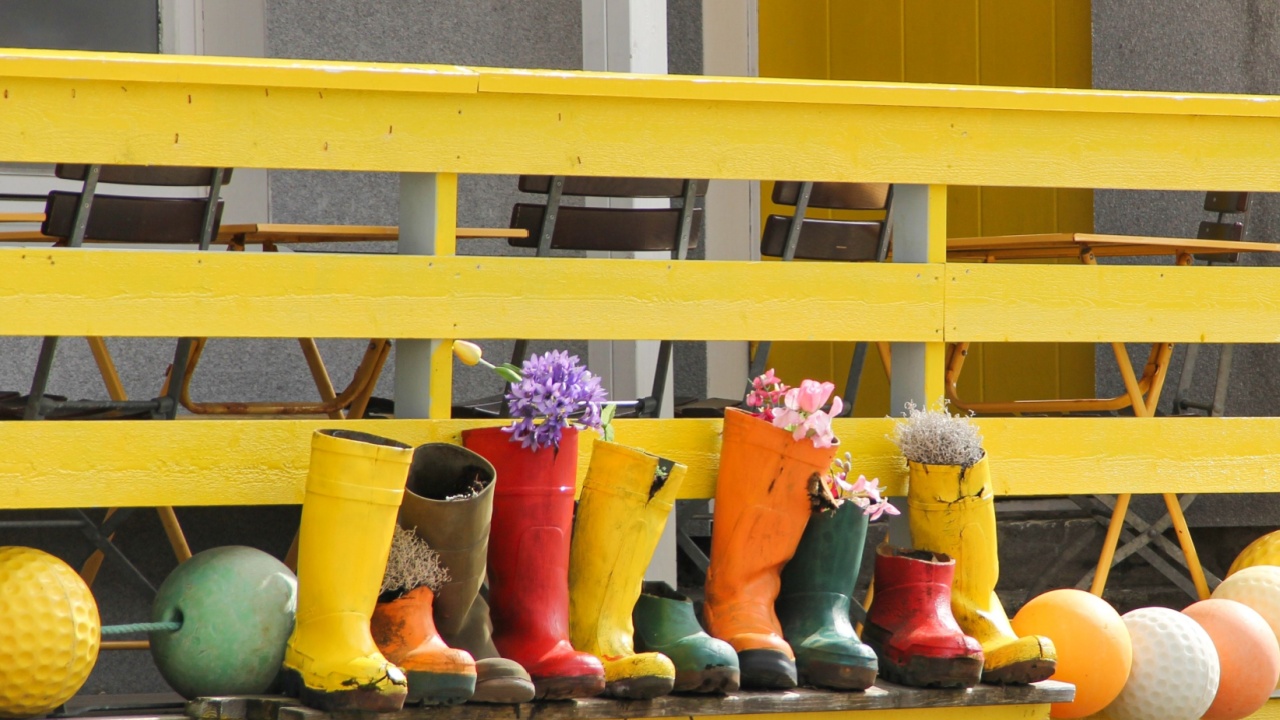
Rubber boots and old leather work boots are ideal succulent and annual containers. They drain reasonably well, hold their shape, and look like exactly the kind of thing someone with a wonderful garden would do on a Tuesday afternoon. Tuck them at the base of a fence post, line them up along a path, or hang them from a hook on a garden wall. A pair of rain boots in a vivid color, overflowing with trailing calibrachoa, has stopped more than a few strangers in their tracks.
6. Mount Flowers on Your Fence
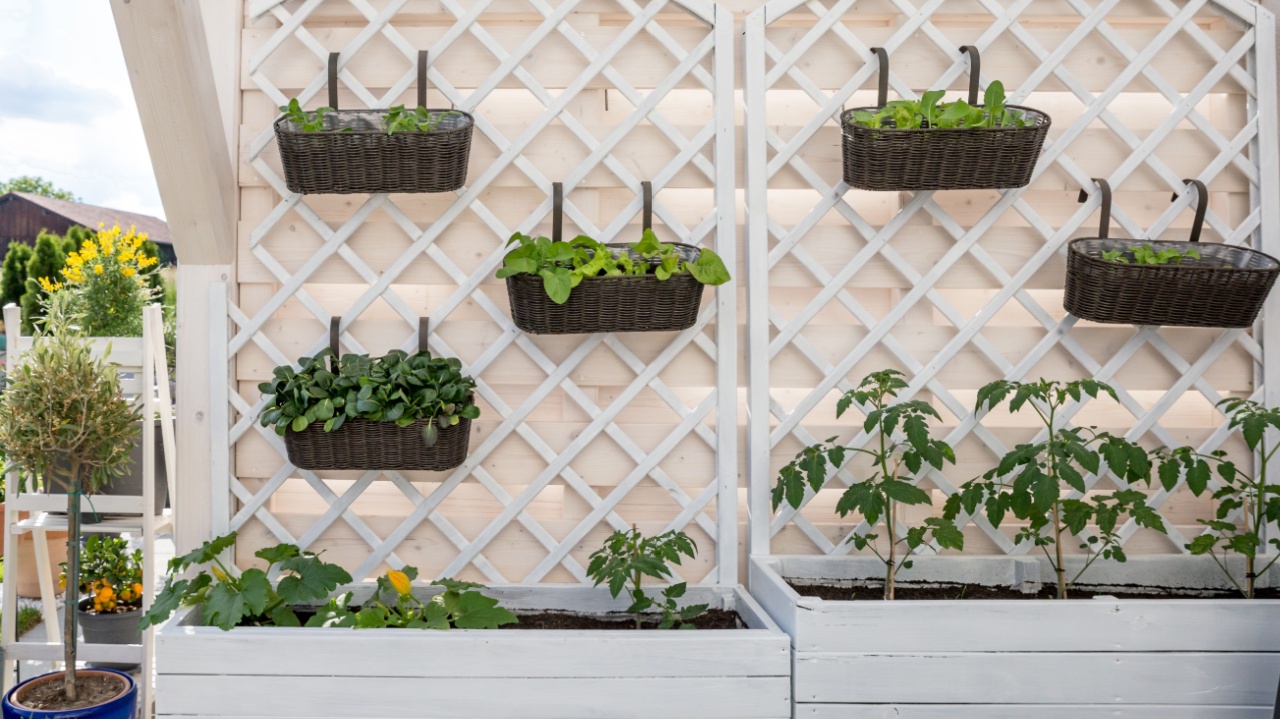
If your fence is the most boring thing in your garden, a Saturday afternoon and a box of plastic party trays or planters can fix it. Paint them in saturated colors, fill them with flowers or herbs, and mount them with simple hardware. The result is weatherproof, near-indestructible, and genuinely delightful. This colorful idea from Sadie Seasongoods has been replicated thousands of times and works in every style from graphic and modern to folk-art cottage.
7. Turn Thrifted Furniture into Planters
Old nightstands, dressers, and clawfoot bathtubs have all been successfully converted into garden planters. The clawfoot tub gets perhaps the most dramatic transformation: placed in the center of a garden bed and overflowing with zinnias or trailing vines, it reads as sculpture. Line the inside with landscape fabric, fill with quality potting mix, and plant generously. Good Housekeeping documented this exact project from restoration nonprofit The Restore; the results were anything but ordinary.
8. Hang Mason Jar Solar Lanterns
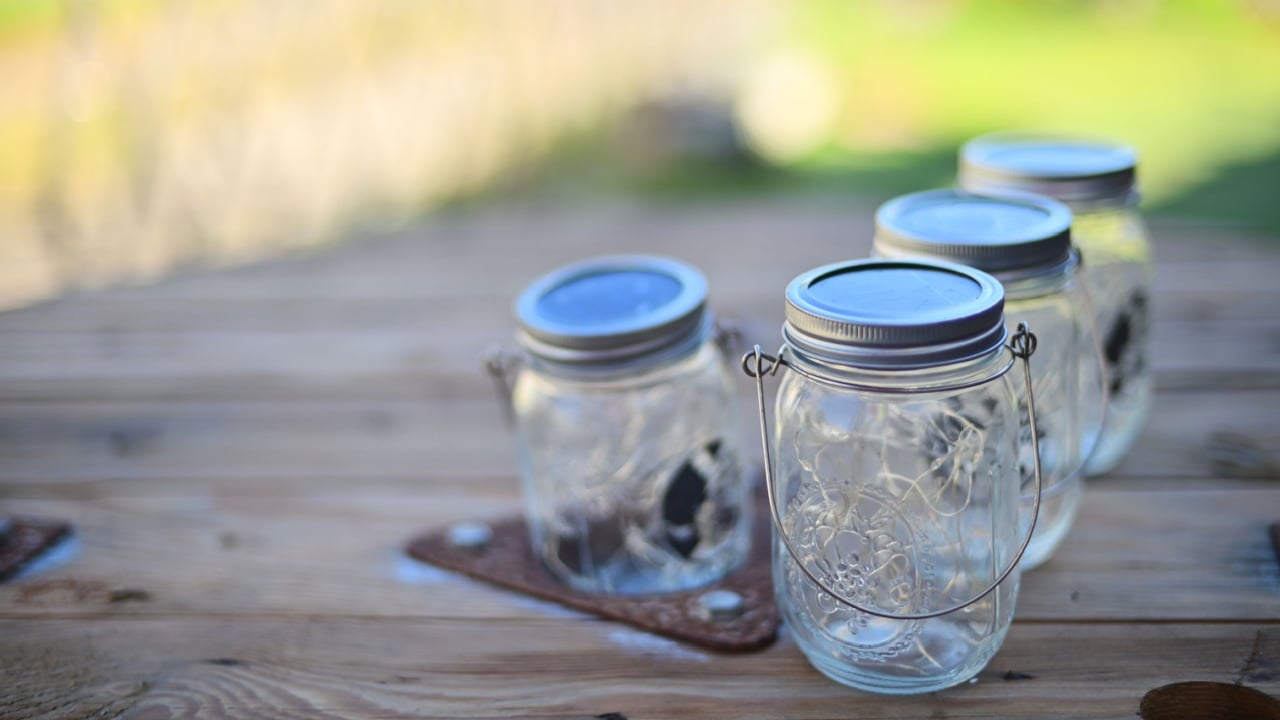
Solar-powered LED lights dropped into recycled mason jars and hung from tree branches, fence posts, or a pergola create a completely magical evening-garden moment for almost no money. The jars soften and scatter the light in a way that bare solar stakes never do. A cluster of five or seven jars at varying heights, hung with simple wire or jute twine, transforms any corner of the garden after dark.
9. Paint Your Garden Gate a Fun Color
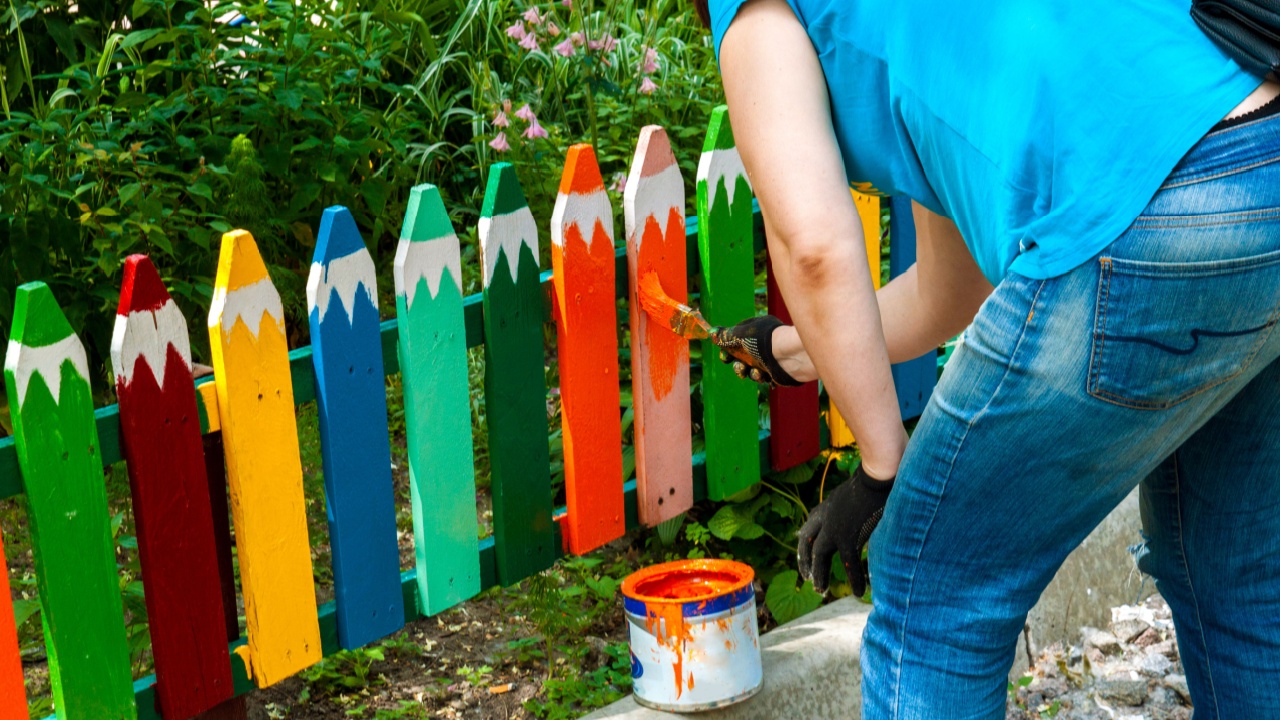
Your garden’s first impression is its gate, and the greatest waste of a garden gate is leaving it the color it came in. Cobalt blue, saffron yellow, deep coral, or forest green; any strong, saturated shade signals to anyone approaching that something worth seeing is behind it. BHG calls a decorative garden gate a strong visual anchor. The paint cost is negligible. The impact is immediate. This is the single fastest transformation on this list.
10. Stack a Garden Totem from Found Objects

A garden totem is a vertical pole of stacked found objects: old lamp parts, glass bowls, ceramic insulators, colored glass orbs, and vintage finials impaled on a rebar stake and sealed together with weatherproof adhesive. Totems add height, color, and pure personality to an otherwise flat garden bed. One totem in an unexpected spot, particularly in a shady corner that needs a focal point, does more work than a dozen small pieces placed separately.
1q. Place a Mirror in a Shady Corner
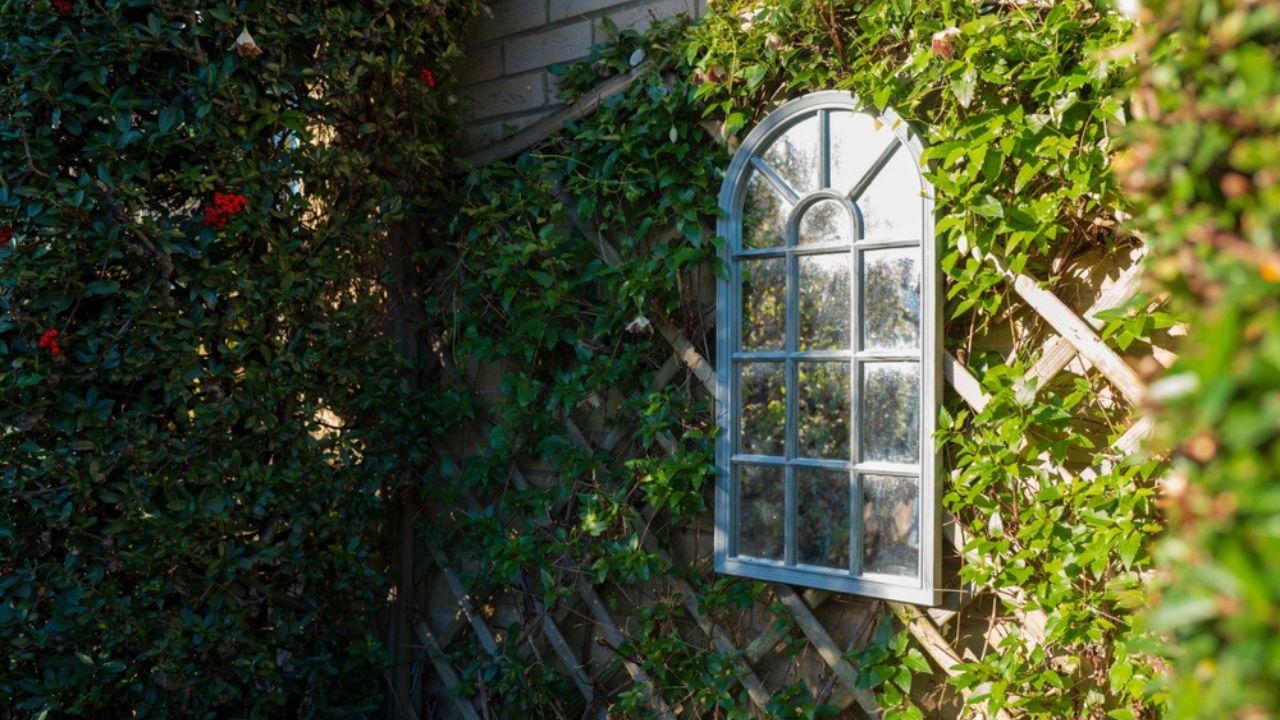
An outdoor-appropriate arched or rectangular mirror mounted on a garden wall or fence performs two feats at once: it bounces light into dark corners and creates the illusion of a gate or doorway leading somewhere beyond. House Beautiful UK calls it a space-expanding trick. Surround it with draping ivy or climbing roses, and it reads as entirely intentional.
12. Line a Path with Painted Rocks or Button Stepping Stones
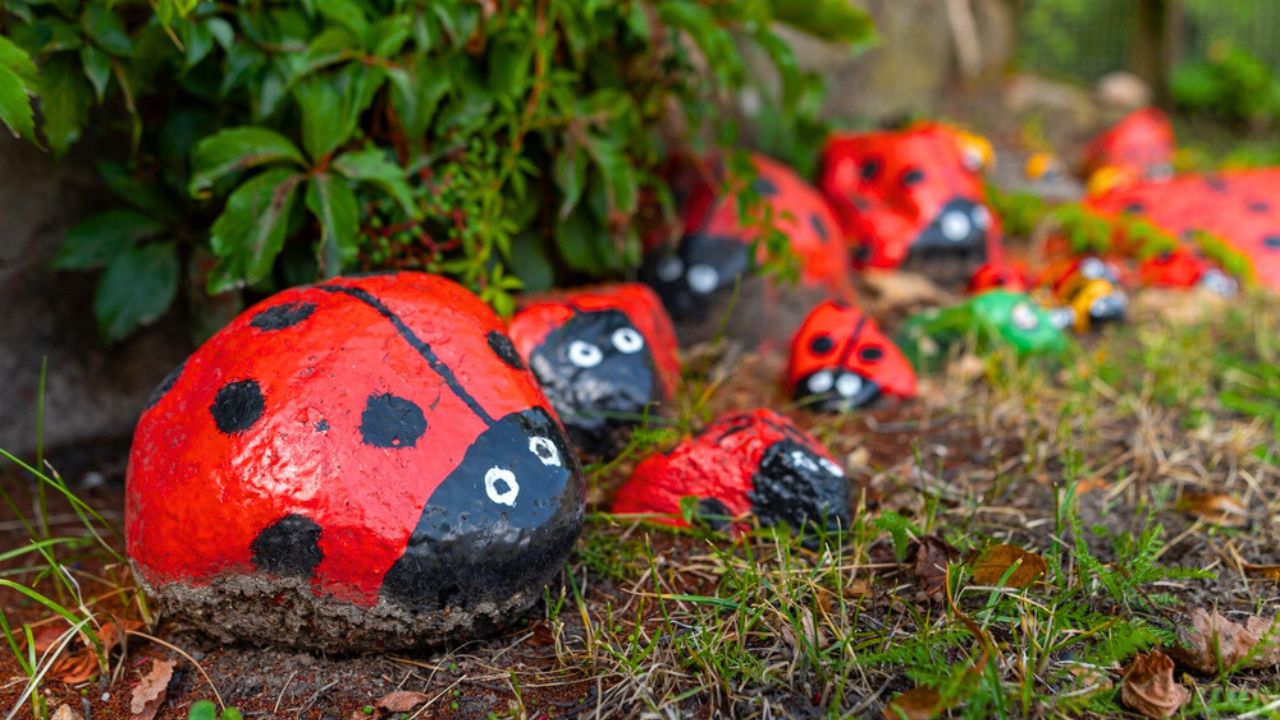
River rocks painted with flowers, ladybugs, and caterpillars are an almost zero-cost garden art project that children can participate in, and the imperfection is part of the charm. For a more architectural version, rapid-set concrete poured into bowl-shaped molds and painted creates “button” stepping stones that photograph beautifully and last indefinitely. Seal all painted rocks with exterior-grade varnish so they don’t fade in the first rainstorm.
13. Install a Wood-Scrap Scarecrow and Change Its Outfit Each Season
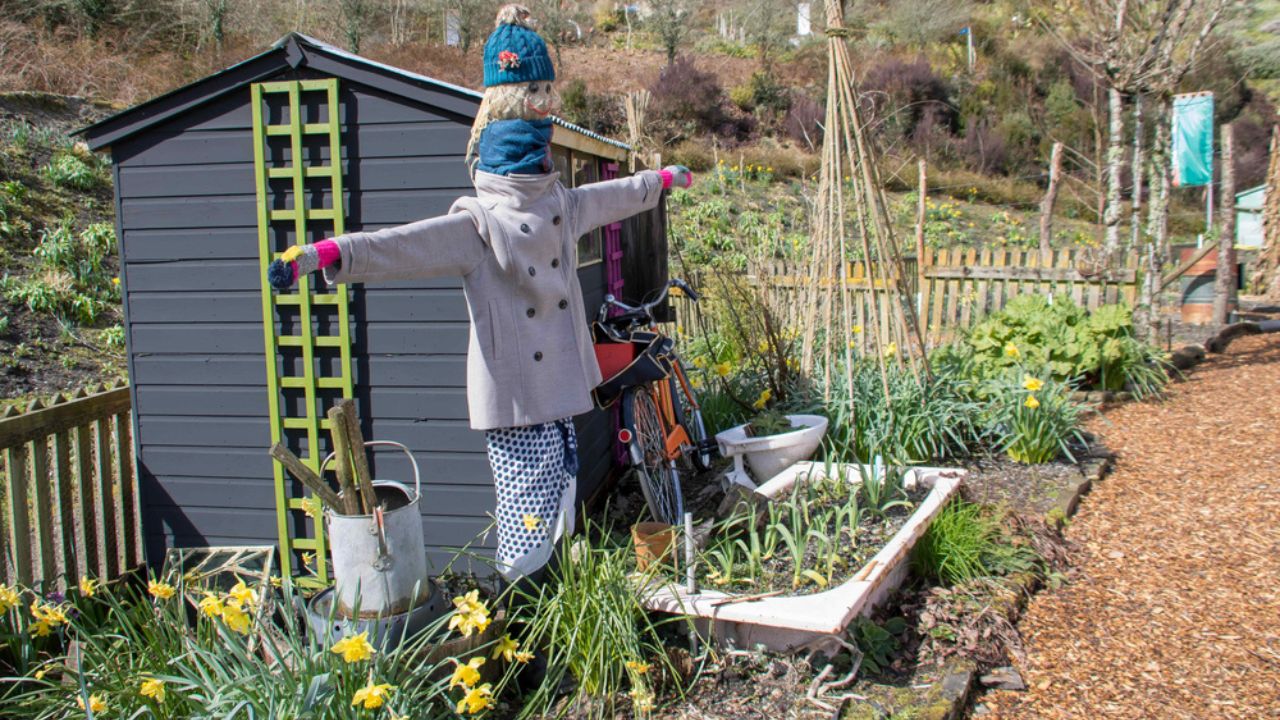
A folk-art scarecrow built from reclaimed wood scraps and dressed in old clothes is more than seasonal decor; it is a year-round installation that can be re-dressed for spring, summer, fall harvest, and the holidays. The scarecrow becomes a conversation piece, a focal point, and a running joke that visitors look forward to checking on each visit. Use entirely found and recycled materials; the handmade quality is the whole point.
14. Let One Corner Go Completely Maximalist
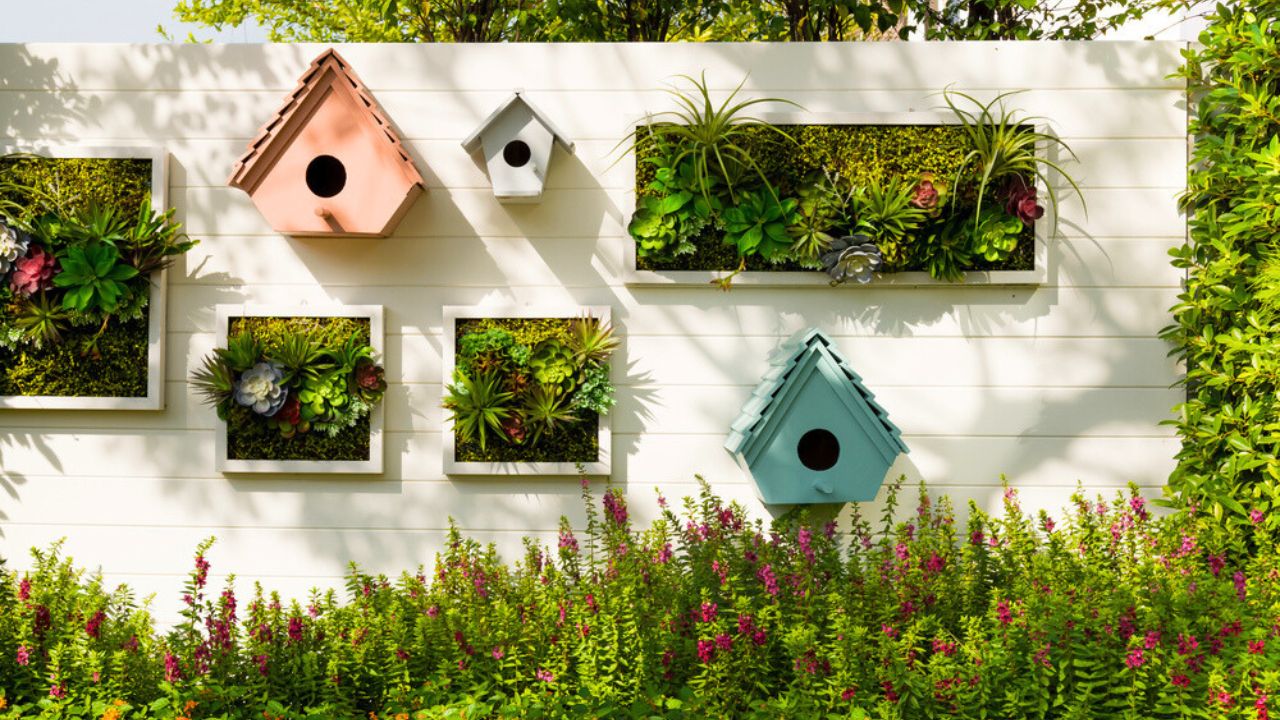
The most important quirky garden decor idea is permission itself. Choose one corner of your garden and commit to filling it with everything you love. Stack the mismatched pots. Hang the found-object mobile. Add the gazing globe, the gnome, the boot planter, and the painted rock border. It will become the corner every guest gravitates toward.
The Secret to Making Quirky Look Curated, Not Cluttered

The difference between a joyful maximalist garden and an overwhelming one comes down to three principles that experienced gardeners apply intuitively. First, every grouping needs a tall anchor. A single vertical element, whether it is a ladder, a totem, a tall pot, or a climbing support, gives the composition structure. Second, vary your heights: never place five objects at the same level. Third, and this is the piece most beginners skip: leave it alone for a few days before deciding if it works.
Color cohesion is more forgiving outdoors than indoors because plants do the work of tying things together. If you are genuinely unsure whether a grouping works, a coat of the same bold paint color applied to three mismatched objects will unify them immediately.
The Best Quirky Garden Decor Costs Almost Nothing

Every idea on this list has a version that begins at a thrift store, ends in your recycling bin, or both. The bowling ball gazing globe costs three dollars. The fence flowers cost the price of a can of spray paint. The Mason jar lanterns require only jars and a pack of solar tea lights. The old boots were going in the donation pile anyway.
What experienced gardeners know, and beginners sometimes don’t, is that a single well-placed piece with genuine personality will outperform an entire matching patio set from a box store every time. The goal is not a catalog. The goal is a garden that looks like you.
Read More
Washing Your Lettuce Won’t Remove Cyclosporiasis, But Growing Your Own Will
Your Grandmother Stored These 8 Foods All Winter Without Canning a Single Jar