
Most mornings often resemble a poorly rehearsed circus act. You hunt for missing shoes, burn the toast, and realize you forgot to sign a permission slip three days ago. Somewhere between the alarm clock and the door, peace gets lost. This may precisely be why you need a morning basket.
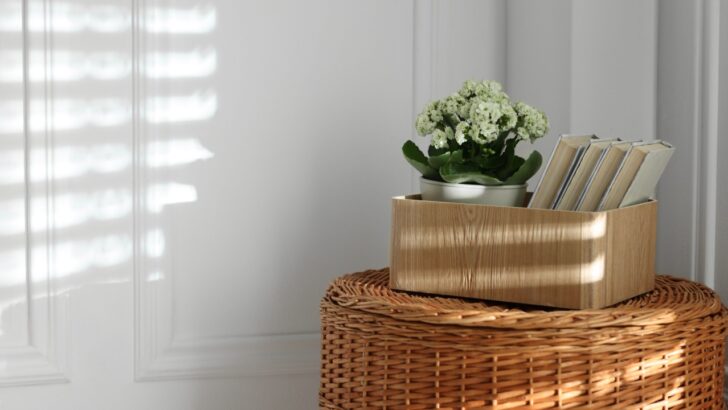
A morning basket is a designated container holding specific items intended to start the day with intention rather than panic. You gather resources for learning, connection, or quiet reflection in one portable spot. By grouping these things, you remove the friction of searching for them. It serves as a gentle invitation to sit down and breathe before the daily rush takes over. If this sounds like something you badly want, here is how you build one.
1. Choose a Container and a Home For It

Image Credit: Shutterstock.
Your first task involves locating a vessel. You do not need a hand-woven artisan crate imported from a remote island. Any bin, box, or tray will suffice, provided it is sturdy and easy to carry. Size also matters here. If the container is too large, it becomes a black hole for clutter. Old receipts and broken crayons will migrate there to die. If it is too small, you will struggle to fit a single picture book inside. Aim for something that comfortably holds three to five items.
Once you have your container, assign it a permanent address. This part is non-negotiable. If the basket wanders around the house, it loses its power. Place it near the breakfast table, next to the sofa, or wherever you tend to gather in the early hours. When the object lives in the same spot, you stop wasting mental energy tracking it down. It simply waits for you, ready to serve.
2. Decide the Purpose of Your Morning Basket

Image Credit: Shutterstock.
A basket without a purpose is just a pile of stuff. Before filling it, determine what you want these morning moments to achieve. Perhaps you desire a slow start with quiet reading. Maybe you need a focused ten minutes to review educational concepts with children. Some use this tool for spiritual grounding, while others use it to foster conversation.
If the intention involves education, you might lean toward geography cards or a read-aloud novel. If the focus is connection, you might prefer a joke book or a collaborative journal. Clarifying the “why” prevents the “what” from becoming random. Do not try to do everything. A vessel meant for math practice, poetry reading, emotional bonding, and history lessons will only result in fatigue. Pick a single lane. You can always change direction later if the current plan stops working.
3. Select a Small Mix of Meaningful Items

Shutterstock.
Now comes the physical assembly. Resist the urge to stuff the bin to the brim. A crowded basket feels like a chore list; a spacious one feels like an invitation. Select three or four high-quality items that align with your purpose. If it’s for learning, get a book of interesting facts, vocabulary flashcards, or a biography.
For connection, maybe a box of conversation starter questions or a shared sketchbook. For calm, select a devotional, a poetry anthology, or a simple logic puzzle. Keep the selection fresh. If a book has lived in there for six months untouched, evict it. Rotating items keeps the engagement high and prevents boredom from setting in.
4. Use It At The Same Time Each Morning

Image Credit: Shutterstock.
The most beautiful collection of books does no good if it never sees daylight. You need a trigger to spark the habit. Anchor this practice to an existing part of your routine. “After breakfast” serves as a solid option because you are likely already seated. “Before screens are turned on” works well if you battle digital distractions.
The duration does not matter as much as the frequency. You do not need to spend an hour slogging through every item. Ten minutes suffices. Five minutes works. The basket succeeds by showing up, not by dominating your schedule. You also do not need to finish every item every day. Read two pages. Do one flashcard. Ask one question. Treat it like a buffet, not a syllabus. You can nibble. A morning routine is good for your mental health, research shows.
Making it stick

Image Credit: Shutterstock.
You might assemble the perfect setup and then forget to use it for three weeks. That is normal. We are humans, not robots programmed for perfect efficiency. When the habit slides, do not dismantle the whole system. Just put the basket back in its spot and try again tomorrow. Build the habit in the new year and see how it goes.
If the contents feel stale, swap them out. If the time of day feels forced, move it to lunch. This tool exists to serve you, not to give you another item to fret over. Keep it simple, keep it light, and let it help you reclaim a small piece of your morning sanity.