The Landscaping Mistake That’s Making Your Home a Wildfire Target (And 8 Plants to Fix It)
The arborvitae hedge lining your fence, the bark mulch you refreshed last spring, and the ornamental grasses swaying beautifully at the edge of your patio are some of the most common landscaping choices in America, and in wildfire-prone regions, they may be among the most dangerous things on your property.
It’s not a comfortable thought, but it’s one worth sitting with. Many of the plants and materials homeowners default to, because they’re affordable, low-maintenance, or recommended at the garden center, are highly flammable. Arborvitae, for example, is packed with volatile oils that can ignite in seconds and send flames 30 feet into the air. Dry bark mulch acts as a fuse, carrying ground fire straight to your foundation. And those gorgeous pampas grass plumes? They’re essentially torches waiting for a spark.
According to wildfire experts at Washington State University Extension, up to 80% of homes lost to wildland fires could have been saved with proper vegetation clearance and the establishment of a defensible space. That’s a staggering number, and it suggests that what you plant and where you plant it may matter more than the fire-resistant rating of your roof or siding.
The concept of defensible space isn’t new, but it’s becoming urgent in ways it wasn’t a generation ago. Wildfire seasons are longer, drier, and less predictable. Subdivisions that were never considered “fire country” are finding themselves in the path of fast-moving blazes. Whether you live in the WUI (the wildland-urban interface) or just in a region where drought and heat are intensifying, your landscaping decisions are now a safety calculation as much as an aesthetic one.
The good news is that a fire-resistant landscape doesn’t mean a bare or ugly one. It means making smarter choices, like swapping a few high-risk plants for equally beautiful low-risk alternatives, rethinking how you mulch, and creating strategic zones of separation between your home and the vegetation around it. Most of these changes are easier than you think, and many will actually reduce your yard maintenance in the process.
Why Your Landscaping Matters More Than You Realize
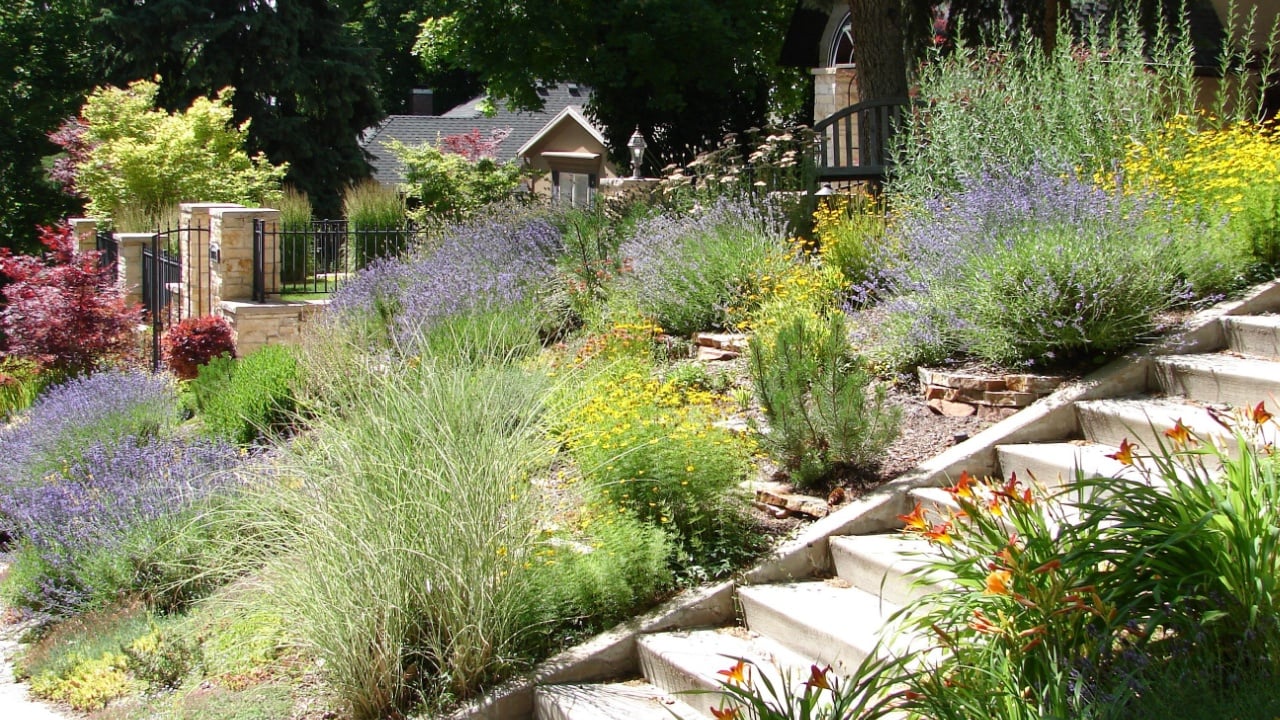
Wildfire risk is no longer limited to California or the rural Mountain West. As WSU Extension Master Gardener and retired USDA Forest Service forester Al Murphy notes on the WSU Extension podcast, climate change is pushing wildfire into communities that once considered themselves safe, including the wetter west side of the Cascades. Rising temperatures, shifting drought patterns, and an expanding wildland-urban interface mean that more American homeowners than ever need to be thinking about how their landscaping interacts with fire.
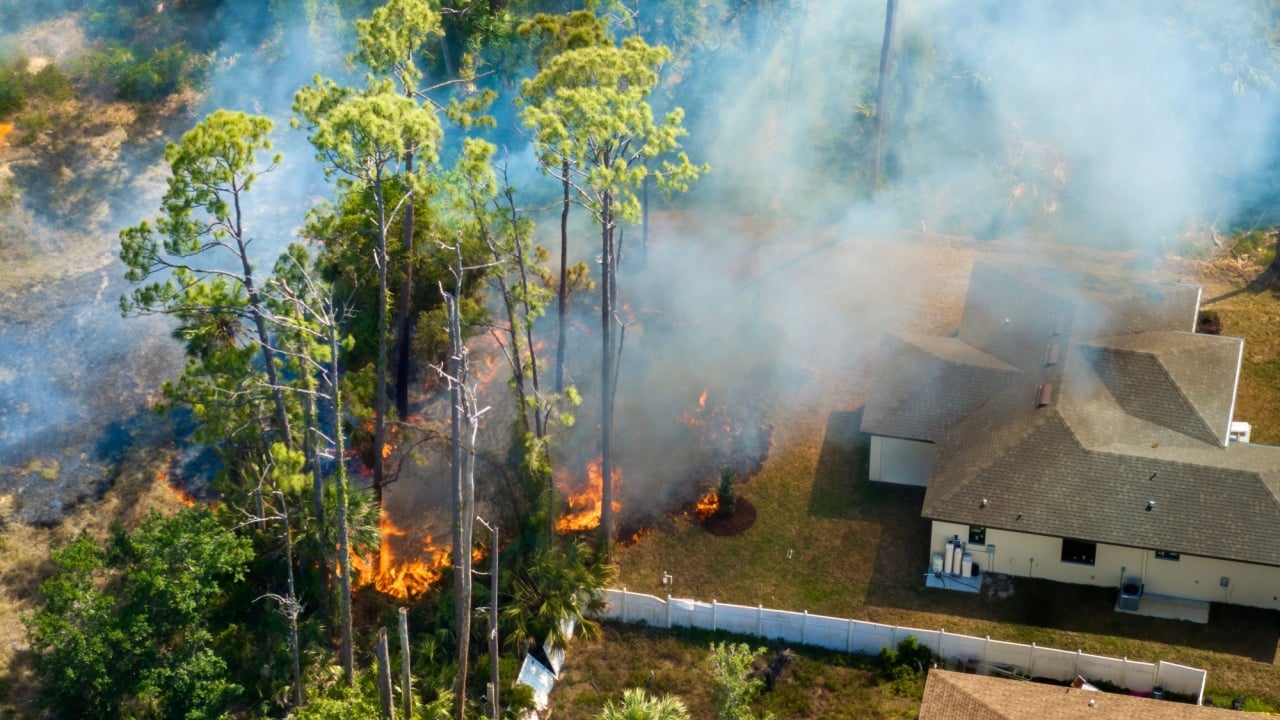
Between 70 and 90 percent of homes that burn in wildfires are ignited not by a wall of direct flame, but by embers, says Murphy. Firebrands cast off by burning vegetation and structures can travel miles on the wind, landing on rooftops, in gutters, in the gap between a wooden fence post and a bark mulch bed, and igniting long before any visible fire front arrives. This means that a fire-resistant landscape is less about stopping a raging fire at the property line and more about giving those embers nowhere to land and catch. A yard free of combustible debris, with well-spaced, moisture-rich plants and no combustible mulch near the structure, is a yard that gives embers almost nothing to work with.
The good news, according to the Colorado State University Extension, is that the area within 100 feet of your home, known as the Home Ignition Zone, is the single most important place to focus your efforts. Manage it well, and your home’s odds of surviving a nearby wildfire improve dramatically.
Here are 8 wildfire-resistant plants that are also beautiful, which means that you don’t have to sacrifice aesthetics for safety.
1. Ice Plant (Delosperma spp.)

This low-growing succulent stores remarkable amounts of moisture in its thick, fleshy leaves, making it exceptionally resistant to ignition. It produces vivid daisy-like flowers from early summer through fall and spreads to form a dense, ember-smothering ground cover. Hardy varieties thrive in Zones 5–10.
2. Yarrow (Achillea spp.)
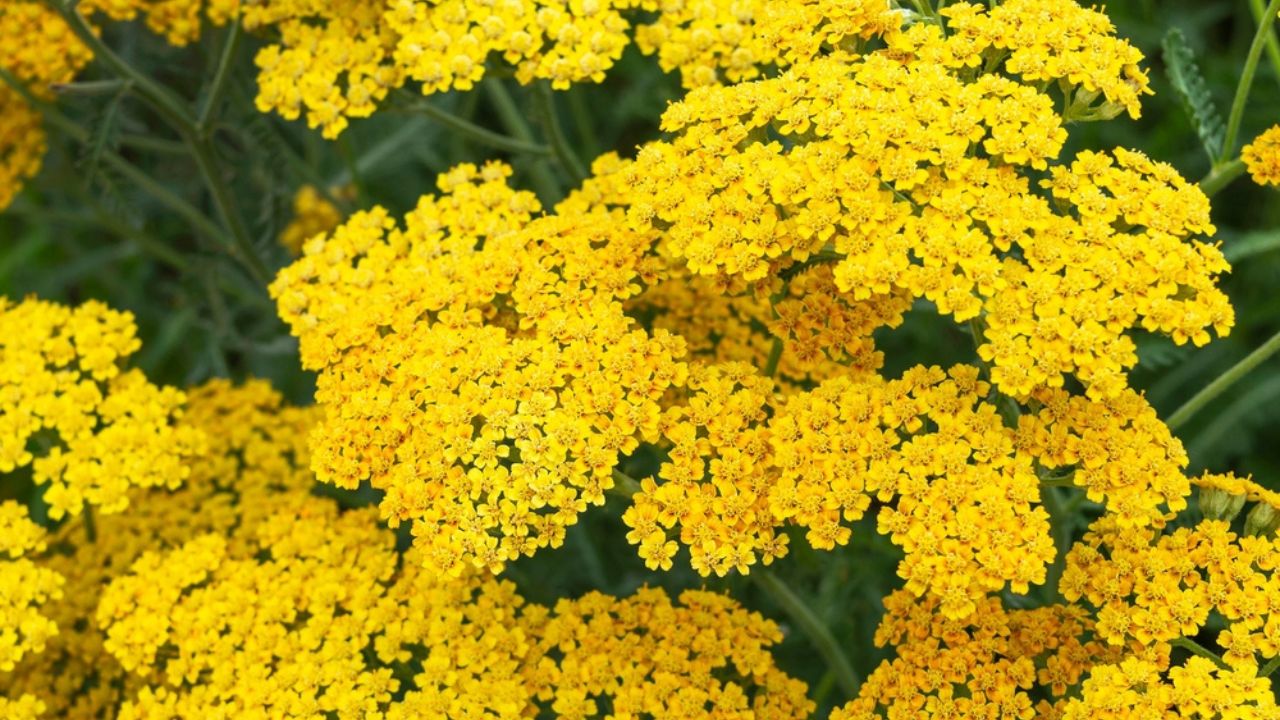
Yarrow earns a 9.5 out of 10 on Colorado State University’s Low Flammability Plant rating scale. It is drought-tolerant, virtually indestructible, and produces broad, flat-topped flower clusters in gold, yellow, and red throughout summer. It recovers quickly from wildfire damage, making it a reliable choice for Zone 2.
3. Sedum / Stonecrop (Sedum spp.)
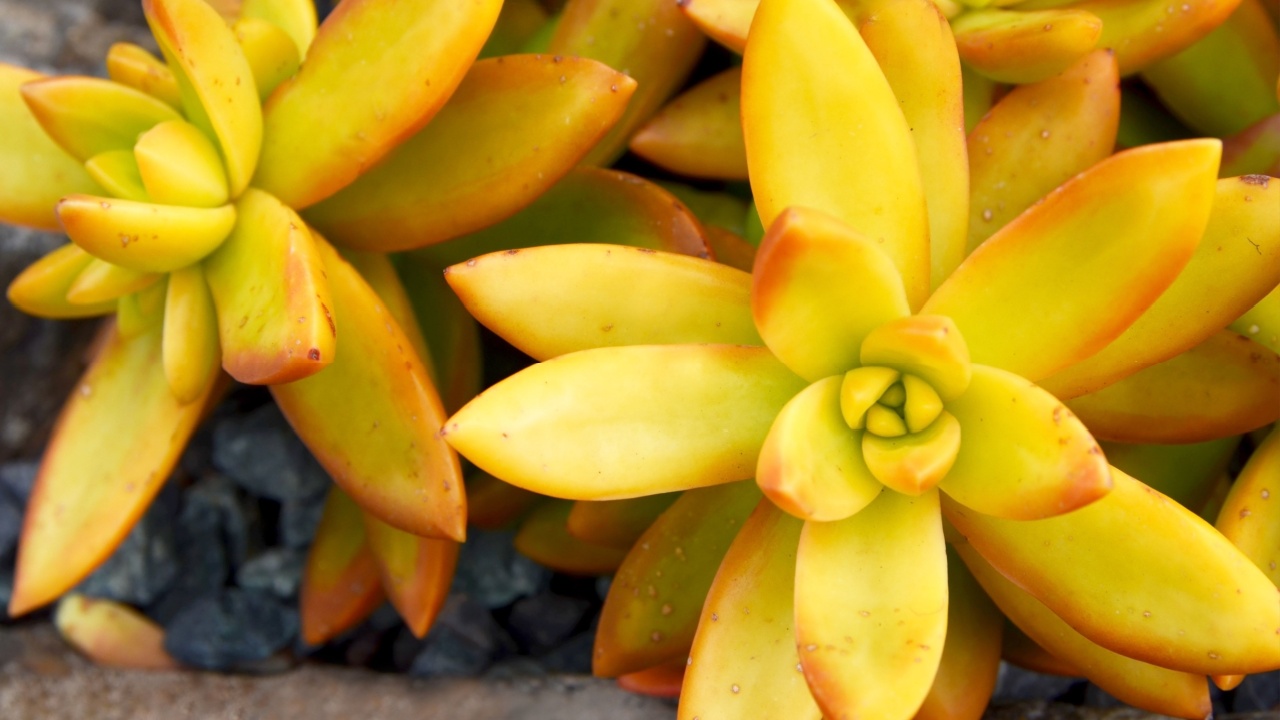
These fuss-free succulents are drought-tolerant, low-maintenance, and rated highly fire-resistant by both CSU and Oregon State University Extension. They range from two-inch creeping ground covers to 24-inch upright varieties with deep purple foliage and rose-pink flowers. Hardy in Zones 3–10.
4. Penstemon / Beardtongue (Penstemon spp.)
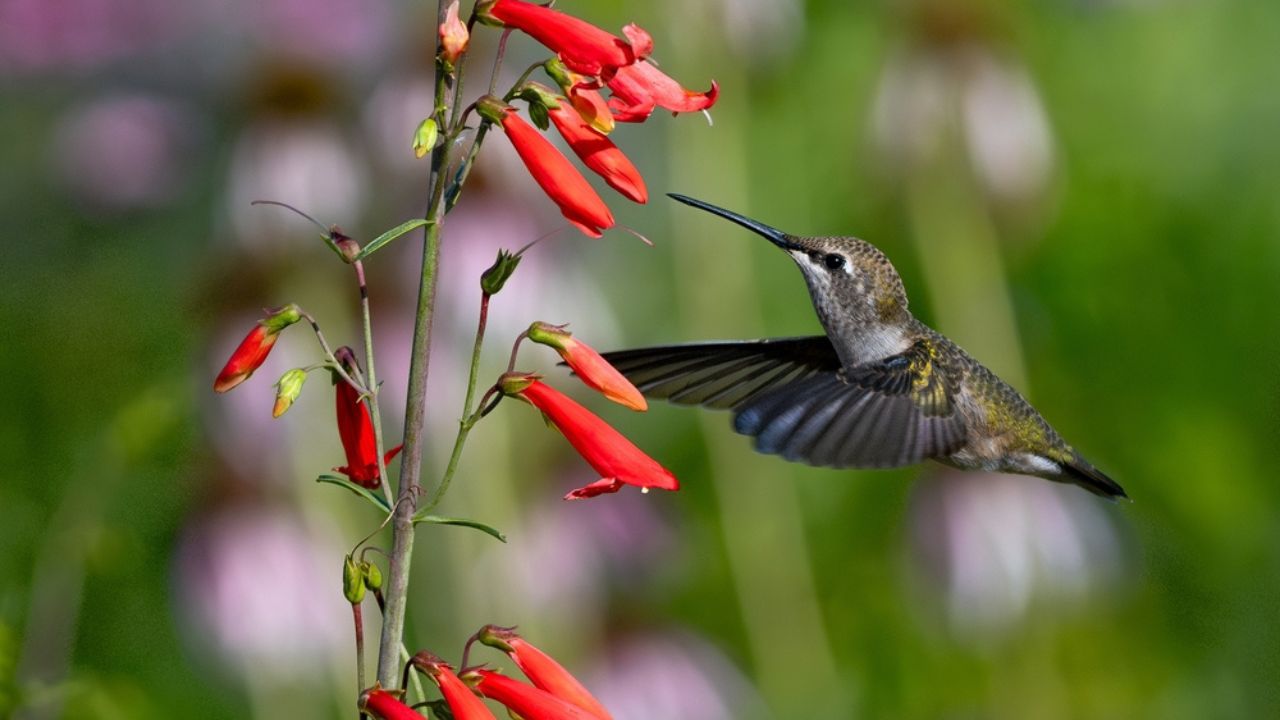
A native prairie wildflower with excellent fire resistance, penstemon scores consistently high on flammability scales and provides irreplaceable hummingbird and pollinator habitat. It is adaptable to poor, dry soils and available in a wide range of flower colors. CSU Extension lists multiple penstemon species among the top recommended plants for the 0–30-foot zone.
5. Yucca (Yucca spp.)
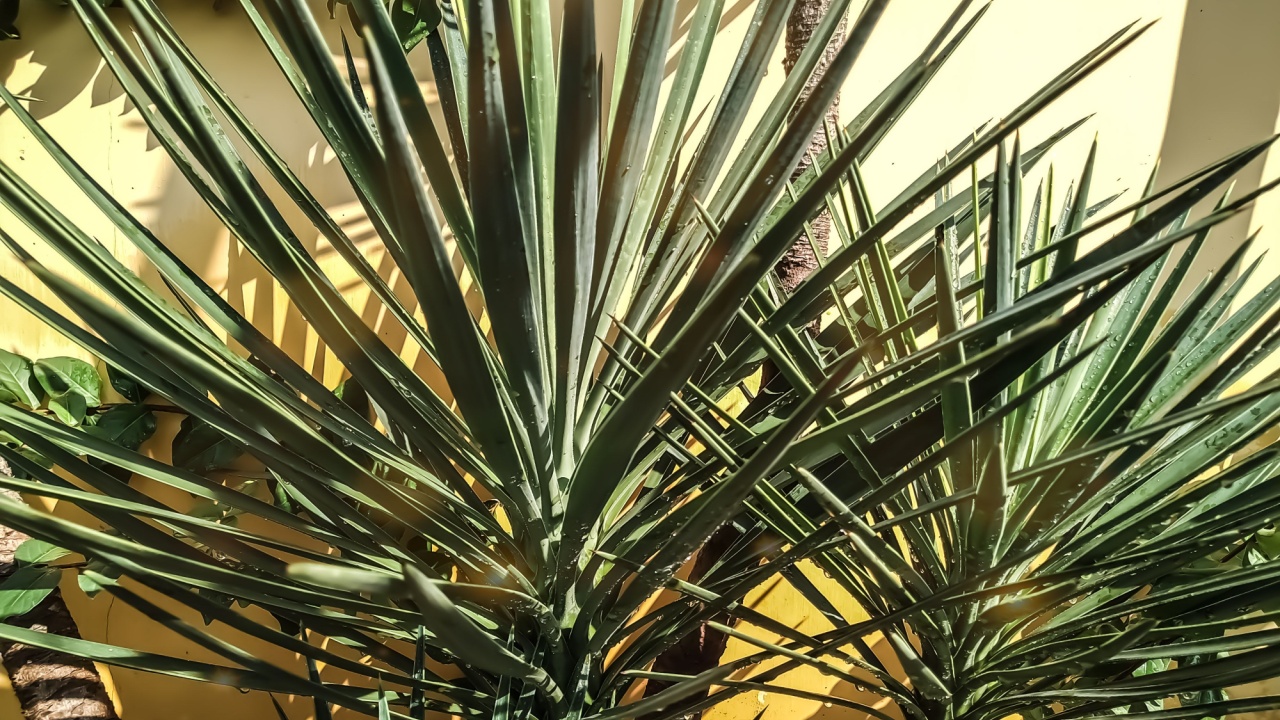
With some of the highest ignition-resistance ratings of any landscape plant, yucca’s thick, sword-shaped leaves retain moisture even in extreme drought conditions. It provides a striking year-round structure and blooms with tall white flower spires in spring. Hardy across Zones 4–11, depending on the variety.
6. Lavender (Lavandula spp.)

Lavender contains scented oils but is considered fire-resistant when kept young, compact, and consistently watered during dry periods, as noted by the Ready for Wildfire program. Avoid older, woody specimens; you can rejuvenate older lavender plants by pruning back by one-third each spring. Keep it at least five feet from the structure.
7. Lilac (Syringa spp.)

An old-fashioned favorite and one of the best arborvitae replacements for privacy screening. Lilac is deciduous, fragrant, and listed as a fire-resistant shrub by the Western Fire Chiefs Association. Its high leaf moisture content and lack of volatile oils make it a far safer choice than most evergreen alternatives. Hardy in Zones 2–8.
8. Coneflower / Echinacea (Echinacea spp.)
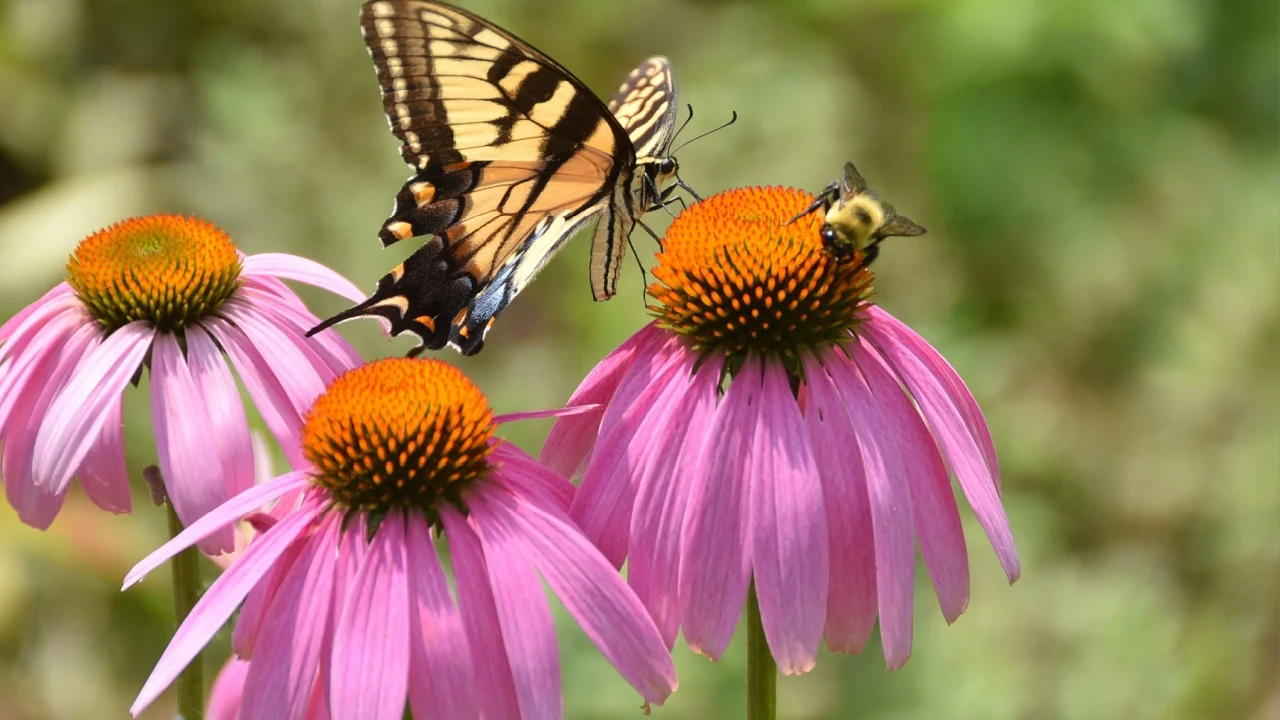
Beloved by pollinators and praised by fire experts alike, coneflower is drought-tolerant, fire-resistant, and fast to recover from fire damage. Cut plants back to the ground each fall to eliminate the dry standing stems that create fuel. Hardy in Zones 3–9.
Think in Zones, Not Just Plants
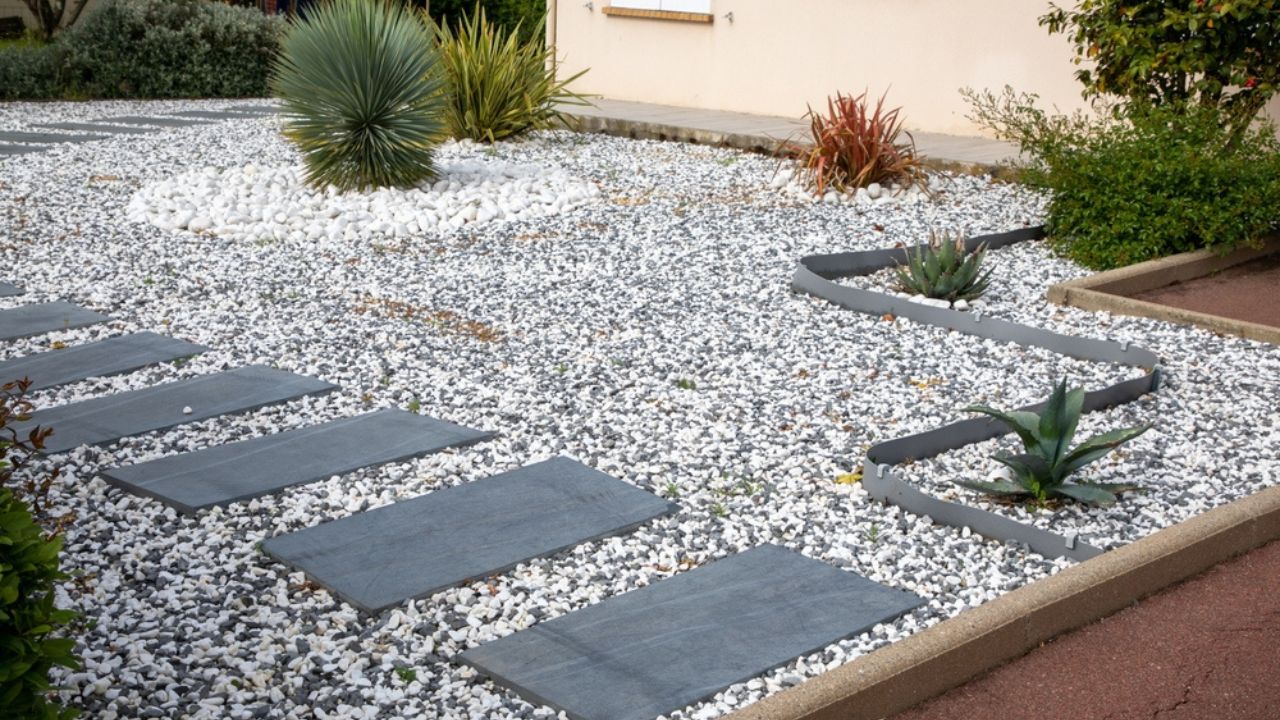
The most effective way to approach wildfire-resistant landscaping is to stop thinking of your yard as a single decorative space and start thinking of it as a series of concentric protection zones radiating out from your home.
- Zone 1 (0–5 feet from the structure) is the most critical. According to Colorado State University Extension, this area should contain zero combustible material: no wood chip mulch, no bark, no woody shrubs, and no accumulated leaf litter. Gravel, flagstone, concrete, or bare ground are the appropriate surfaces here. Even wicker patio furniture and rubber door mats pose an ignition risk in this zone.
- Zone 2 (5–30 feet) is where thoughtful plant selection really pays off. Plants here should be fire-resistant, well-watered, and planted in small isolated clusters rather than continuous beds. Gravel pathways and rock borders between plant groupings are not just aesthetic; they are fuel breaks that interrupt fire’s ability to spread from one plant to the next. CSU Extension also notes that fences made of combustible wood can act as “fuses,” carrying fire directly toward a home; at a minimum, the five feet of fencing closest to your structure should be replaced with metal, masonry, or vinyl.
- Zone 3 (30–100 feet) focuses on reducing fire intensity so that any fire reaching this zone drops to the ground before it can threaten the structure. Trees should be limbed up so that the lowest branches are at least six feet above the ground, eliminating what fire scientists call “ladder fuels.” Per CSU Extension guidelines, shrubs in this zone should be spaced at least two and a half times their mature height apart.
Al Murphy, who spent 37 years managing wildfires across the western United States for the USDA Forest Service and Bureau of Land Management, distills the whole strategy into three words: lean, clean, and green.
- Lean: Keep woody vegetation sparse near the home — spread out, with enough space between plants that if one ignites, it cannot transfer radiant heat to the next.
- Clean: No accumulation of dead debris anywhere near the structure: no dry leaf litter, no pine needle buildup in gutters, no forgotten pile of firewood stacked against the siding.
- Green: Keep the moisture content of your landscape plants as high as possible through consistent irrigation, because a plant full of water is a plant that takes enormous energy to ignite.
A well-maintained fire-resistant garden doesn’t require perfection, only consistency. Check Zone 1 weekly during fire season, clean gutters before fall, and cut back any perennials or grasses that have gone dry before the highest-risk months in your region arrive.
Read More
Is Your Garden Hurting You? 9 Tools Doctors Say Could Save Your Joints
Ten Companion Plants Your Peppers Need For A Successful Growing Season