Stop The Weeds Before They Win: 12 Chemical-Free Methods That Actually Work
The most popular product sold to stop weeds is actively making your garden worse.
Landscape fabric, or that black woven sheeting lining the beds of so many frustrated homeowners, is a masterclass in solving one problem by creating five others. It leaches microplastics into the soil every time it degrades, which it starts doing almost immediately under UV exposure. It blocks rainwater from reaching the roots of the plants you actually want. It smothers the soil organisms that build fertility. And within two or three seasons, a thin layer of decomposed mulch and dust collects on top of the fabric, giving weed seeds exactly the foothold they need to germinate anyway, only now their roots weave through the fabric, making them harder to pull than if you’d done nothing at all.
You paid for this. You got on your hands and knees, cut it to fit, pinned it down, and mulched over it. And the weeds came back regardless, except now they’re anchored to a material that will take decades to break down in your soil.
The methods that actually work to suppress weeds are mostly free, and most of them can be started this weekend. They don’t require a trip to the garden center. They don’t require specialty tools. A few of them require nothing more than a change in timing.
And timing is the point. A single purslane plant that flowers and sets seed in July will drop over 50,000 seeds into your soil. Crabgrass is close behind. The difference between an easy summer and an exhausting one is almost always decided in the hour or two you spend right now, before the weeds get the upper hand and the window closes.
The Landscape Fabric Mistake You Need to Stop Making Right Now
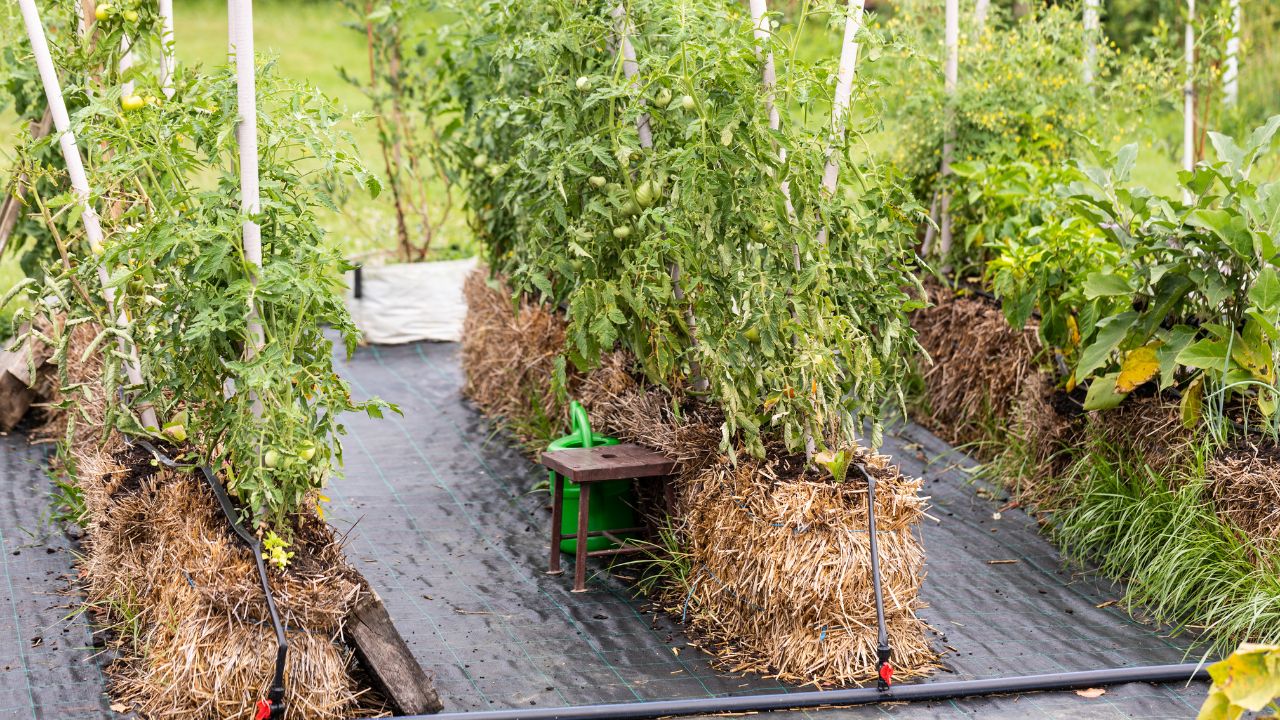
It is worth pausing on this, because so many gardeners have been sold on it. Landscape fabric feels like a permanent solution: you install it once, cover it with mulch, and weeds are done. That is not what happens.
Within two to three seasons, organic debris accumulates on top of the fabric, weed seeds germinate in that debris, and the roots push right through. Meanwhile, the fabric is blocking water, smothering soil biology, and gradually fragmenting into microplastics that contaminate your beds.
Garden designer Alison Shadwell-Williams put it plainly in a paper posted on the Pollinator Partnership: landscape fabric is “often sold as a solution to weeds” but “often causes more harm than good.” Experienced landscapers describe removing it as one of the most time-consuming and regrettable projects they have ever taken on.
The solution that actually works long-term costs almost nothing: cardboard and organic mulch, layered deep. If you already have fabric installed, begin transitioning beds out of it this spring before another season of damage compounds.
Know Your Enemy: Annual vs. Perennial Weeds

Before you choose a method to eliminate weeds, you need to know what you are dealing with, because the strategy changes completely depending on the type of weed.
Annual weeds, including chickweed, crabgrass, and henbit, complete their life cycle in one season. They are relatively easy to remove by hand, and the most important thing you can do is remove them before they set seed. According to the University of Maryland Extension, “limiting seed germination and seed dispersal are priorities for managing annual weeds.” One plant allowed to flower in March can produce thousands of seeds that land in your beds and remain viable in the soil for years.
Perennial weeds like bindweed, ground elder, dandelion, and mugwort are a different matter. They regrow from root fragments, rhizomes, and tubers left in the soil. Pulling off the top growth without getting the root does not kill them; it simply tidies the surface while the plant regenerates underground. For perennial weeds, the strategy is root exhaustion over multiple seasons through persistent removal, smothering, or repeated cutting that depletes the plant’s energy reserves.
The following list highlights 12 chemical-free ways to get rid of the weeds in your garden.
1. Pull Weeds After Rain, Not Before
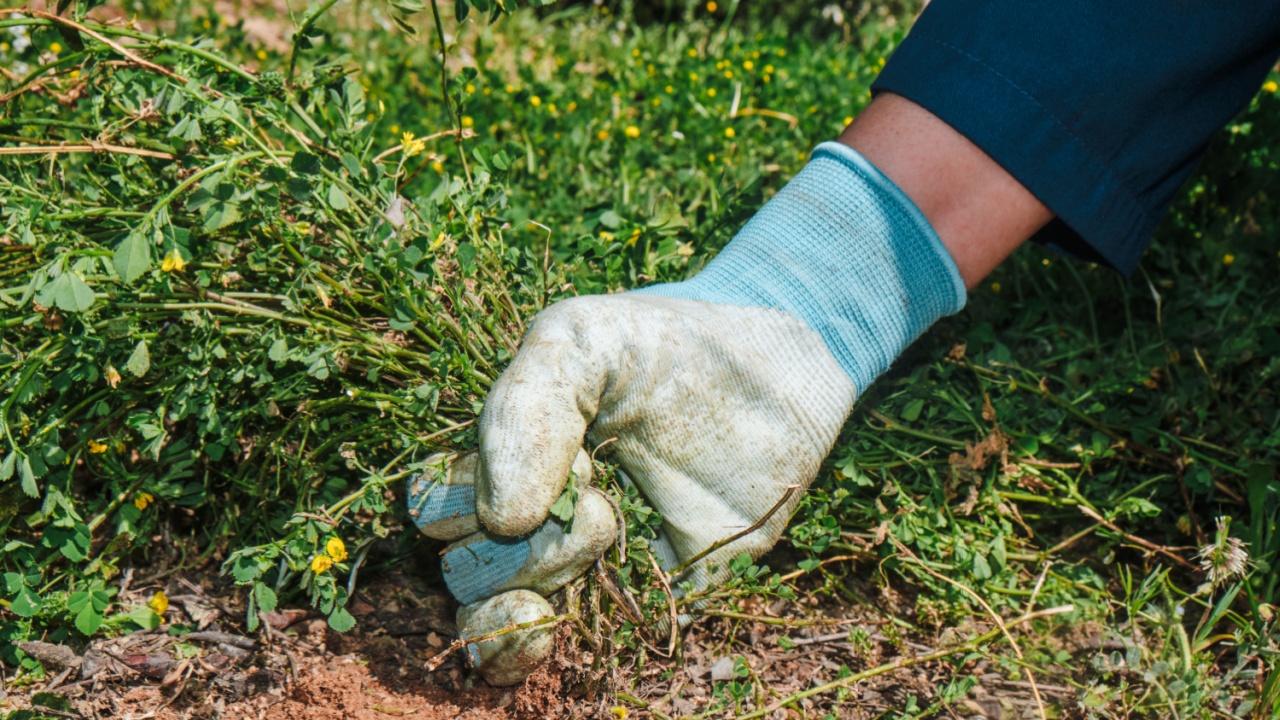
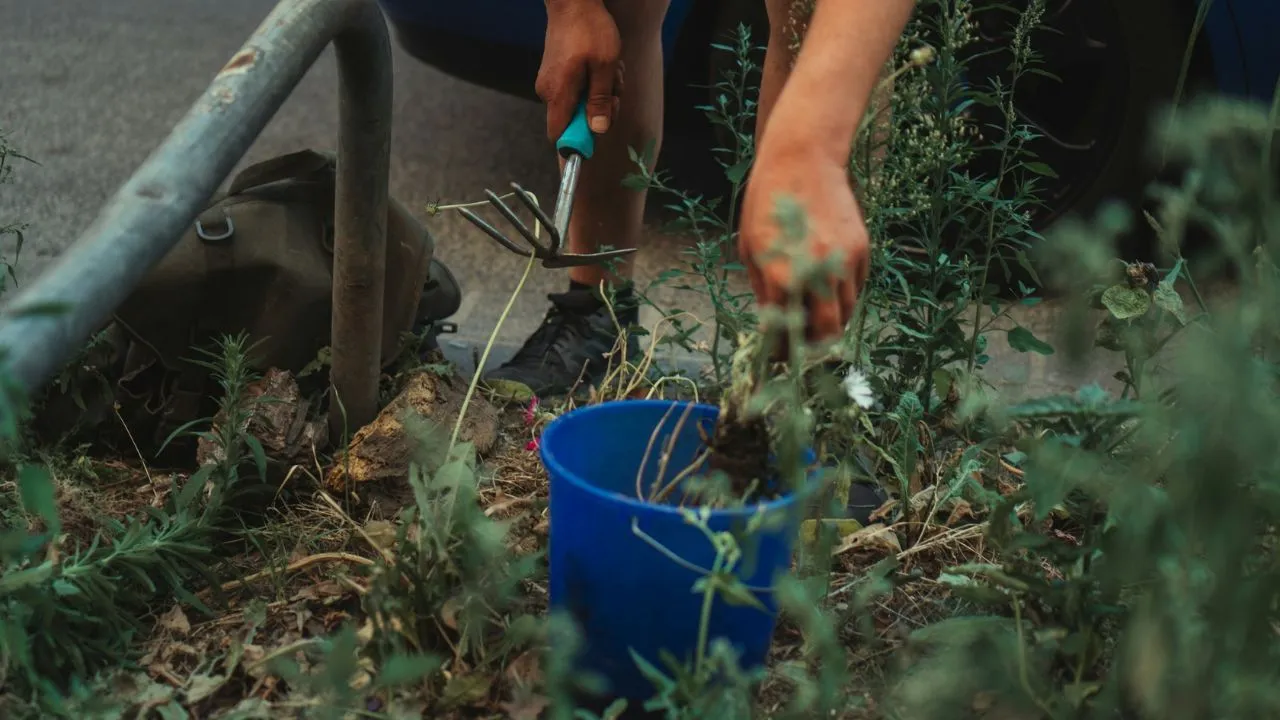
Timing matters more than technique. When soil is saturated, root systems release with minimal resistance, and annual weeds come up whole. Pulling in dry, compacted spring soil snaps roots and leaves fragments behind.
The Old Farmer’s Almanac recommends pulling weeds when the soil is wet and the plants are young, gripping at the base of the stem and twisting gently rather than yanking straight up.
2. Hoe on a Dry Morning
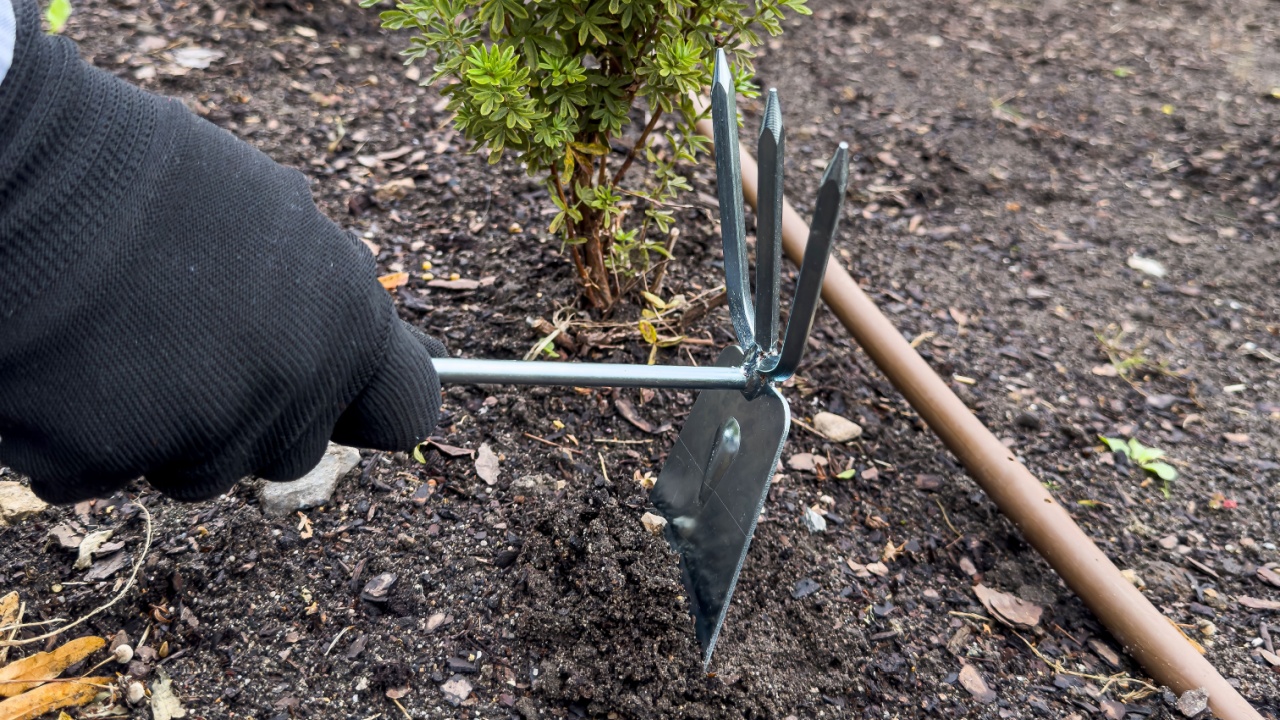
For established beds with young weed flushes, run a sharp hoe across the surface on a dry morning. The cut roots desiccate quickly in the sun and wind, and the disturbed soil surface creates what the Old Farmer’s Almanac describes as a “dust mulch” that inhibits the germination of new weeds beneath.
Never hoe when rain is imminent; damp soil allows severed weeds to re-root overnight.
3. Use a Hori Hori Knife for Perennial Weeds
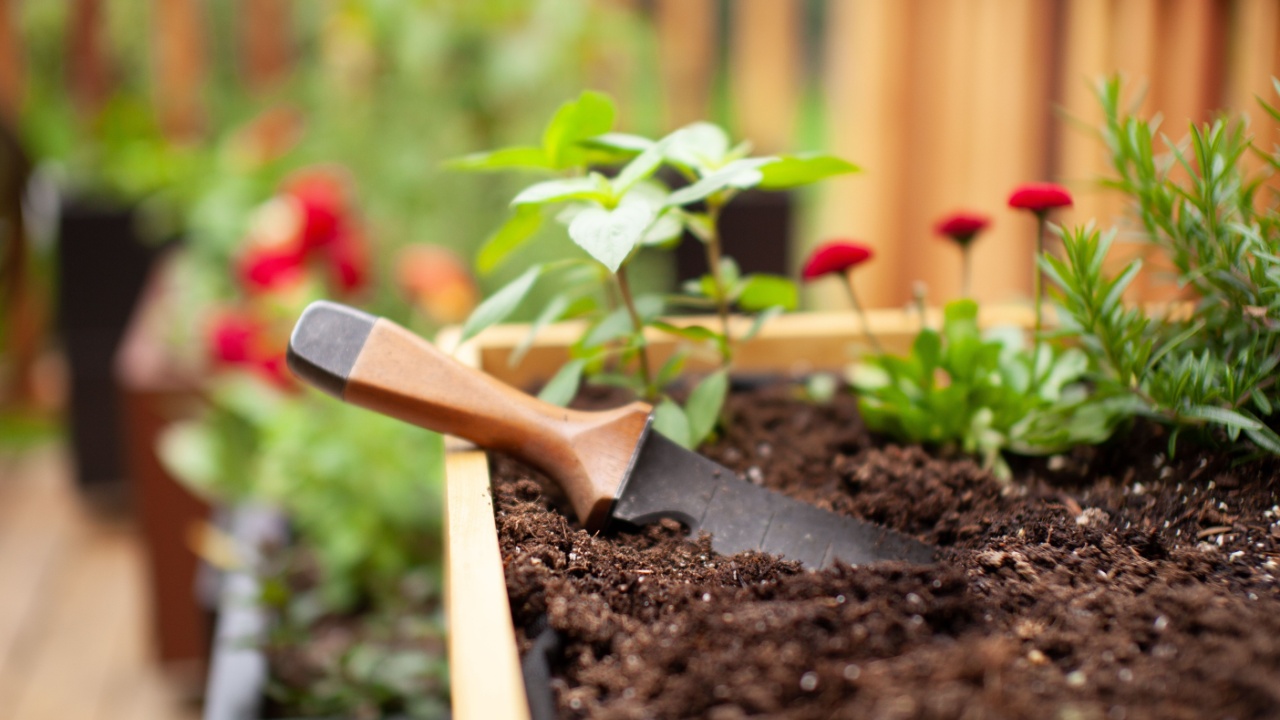
The hori hori, a Japanese soil knife with a serrated edge, is the cult-favorite tool of serious organic gardeners for a reason. Its narrow profile allows you to follow bindweed rhizomes and dandelion taproots deep into the soil without disturbing surrounding plants. A standard trowel almost always snaps the root and leaves a regenerating fragment behind.
4. Apply Mulch at a Minimum of 4 Inches Thick
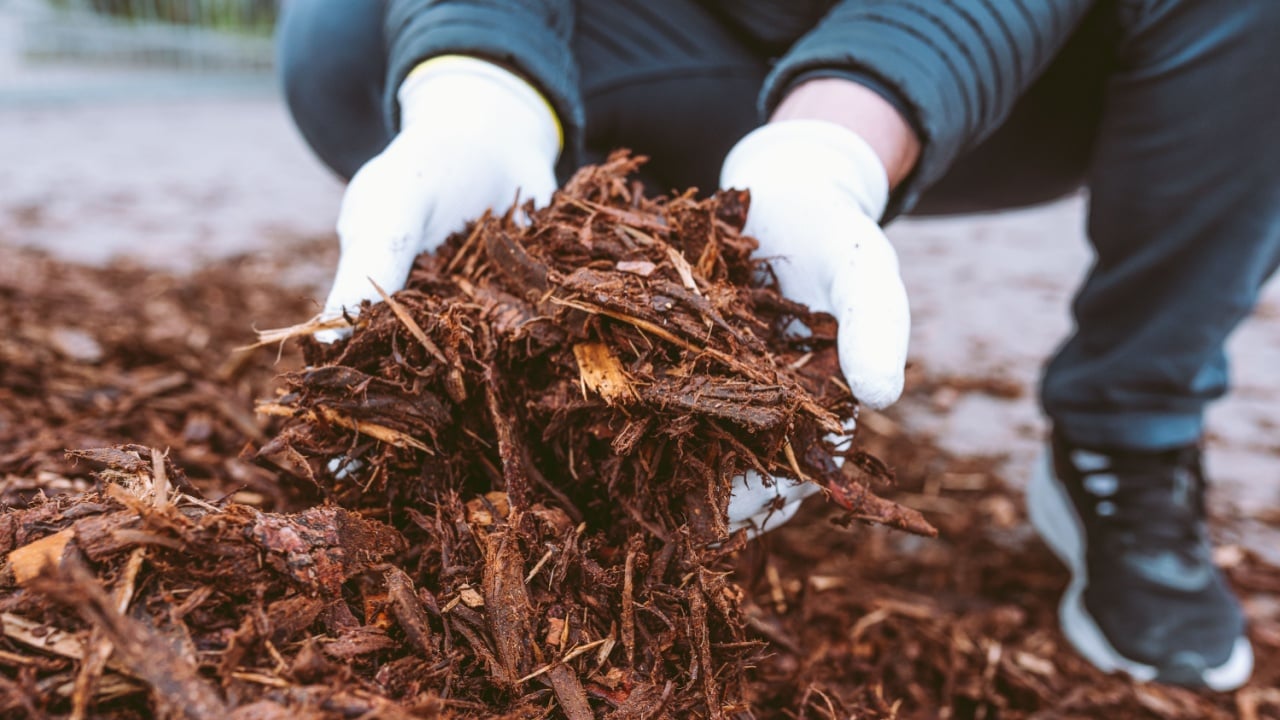
Thin mulch layers do almost nothing against established spring weeds. According to the RHS, a mulch layer of 10 to 20 centimeters (4 to 8 inches) is needed to effectively smother weeds in beds and borders. Use straw (not hay), shredded leaves, or wood chips, and keep mulch a few inches away from plant crowns to prevent rot.
5. Layer Cardboard Under Mulch for a Double Barrier
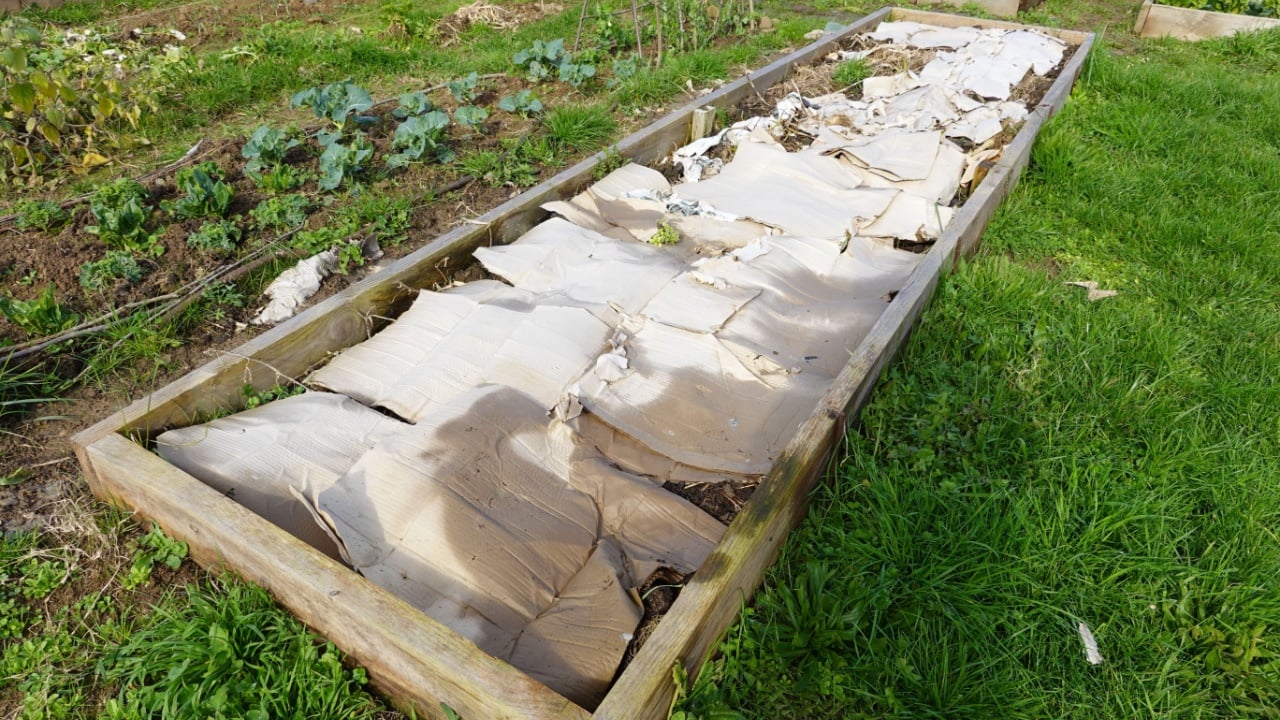
Sheet mulching is the most effective method for reclaiming a badly weeded bed, and it costs almost nothing. Lay flattened cardboard boxes (black ink only, tape removed) directly on the soil, overlapping edges so weeds cannot find gaps, then cover with 4 or more inches of organic mulch.
The cardboard smothers existing weeds, decomposes within a season, and is actively broken down by earthworms. According to the Old Farmer’s Almanac, cardboard under mulch results in “almost no weeds” in subsequent seasons.
6. Try the Stale Seedbed Technique Before Planting

In early spring, lightly disturb the top two inches of soil, then wait two to three weeks for the flush of newly exposed seeds to germinate. Before those seedlings establish, smother the entire area with a tarp or hoe them off at the surface, then plant your crops with minimal further disturbance. According to the University of Maryland Extension, this technique, combined with avoiding deep tillage afterward, dramatically reduces in-season weed pressure.
7. Pour Boiling Water into Hardscape Cracks

For weeds growing in driveway cracks, patio seams, and pathway edges, boiling water is immediate, completely free, and leaves no chemical residue. It kills on contact by destroying plant cell structure, including roots, when poured directly at the base of the plant.
As Craig Elworthy, founder of natural lawn care service Lawnbright, notes via Martha Stewart Living, this is “a non-selective option” best used in hardscape areas away from ornamental or vegetable beds.
8. Spot-treat Young Weeds with Kitchen Vinegar
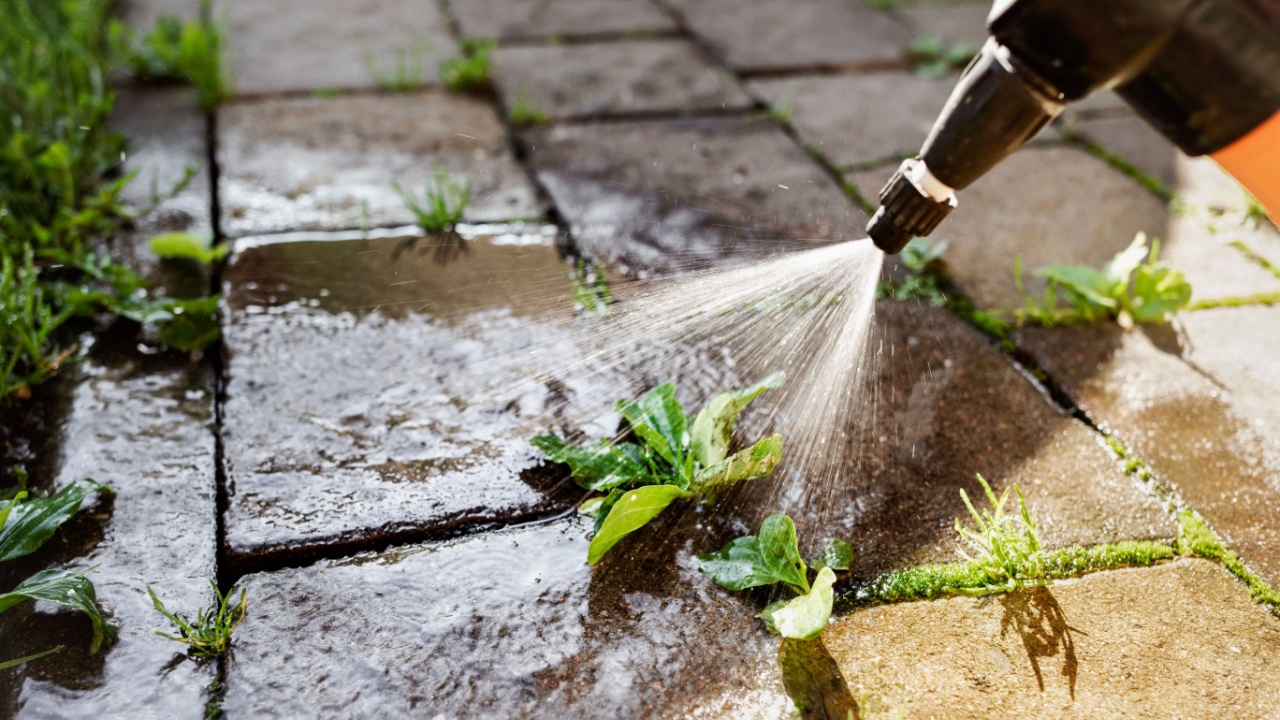
Standard white vinegar at 5% acetic acid concentration is effective on newly sprouted annual weeds when applied on a hot, dry, sunny day. According to Amy Lentz, a horticulture specialist at Colorado State University Extension in Martha Stewart Living, weeds are best treated during active growth in spring and summer.
Apply directly to leaves and stems, avoid contact with desired plants, and repeat as needed. Vinegar burns foliage but does not kill deep root systems, so it remains a management tool, not a permanent solution for perennials.
9. Use a Weed Torch on Driveways and Gravel Areas
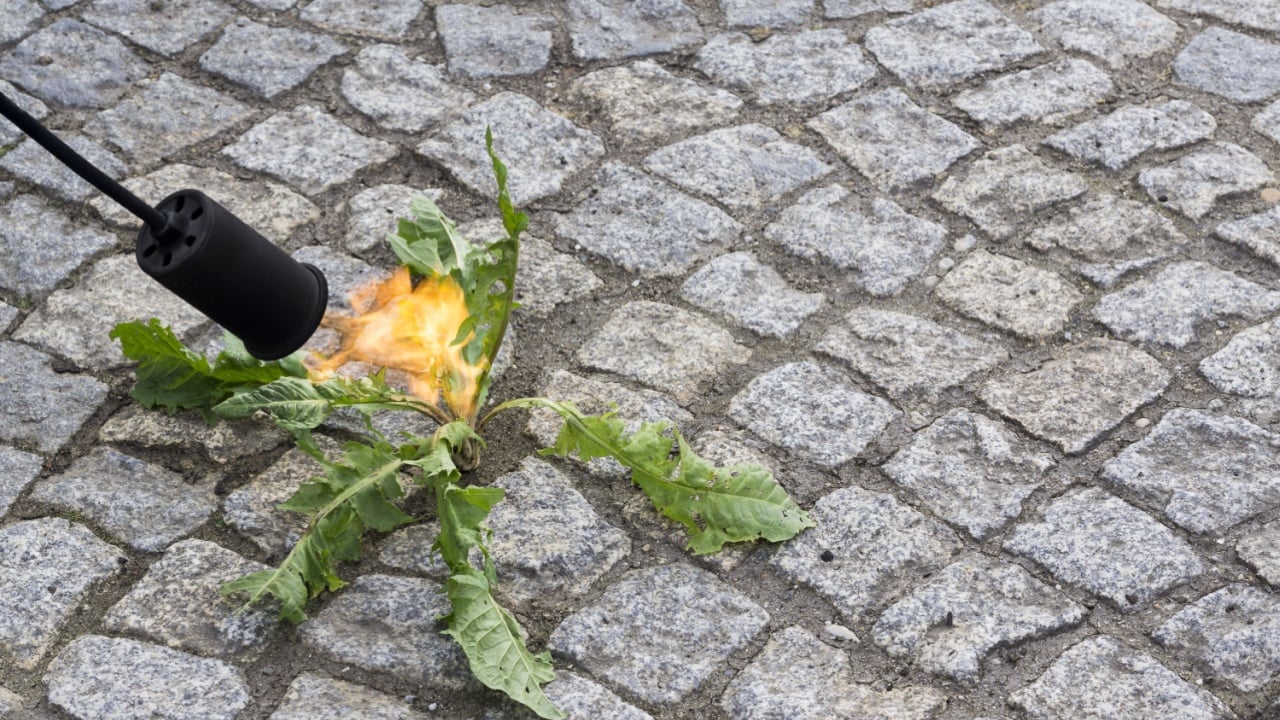
Flame weeding is fast, requires no chemicals, and is one of the more satisfying weed-control methods available. Pass the flame briefly over the weed foliage until it slightly wilts. According to Garden Design, “the flame makes the moisture in the plant become steam and damages the cells” — full combustion is not necessary.
Restrict use to hardscape areas, never use near mulch or dry vegetation, and keep a water source nearby.
10. Plant Your Beds Closer Together
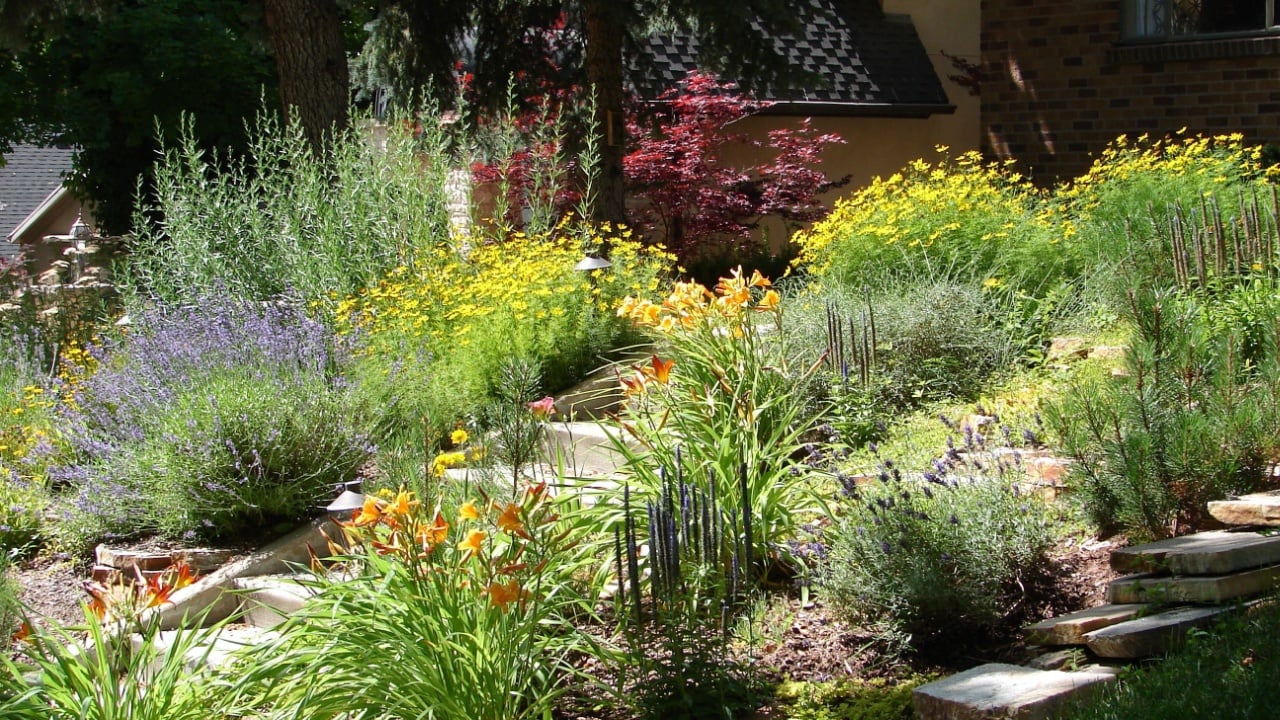
Every patch of bare soil in spring is an open invitation. According to the University of Maryland Extension, close spacing of garden plants reduces weed growth by shading the ground, limiting seed germination, and outcompeting undesired plants.
Annual flowers and vegetables can be spaced so that their leaves slightly overlap at maturity, eliminating the light that weed seeds need to germinate.
11. Fill Gaps with Groundcovers
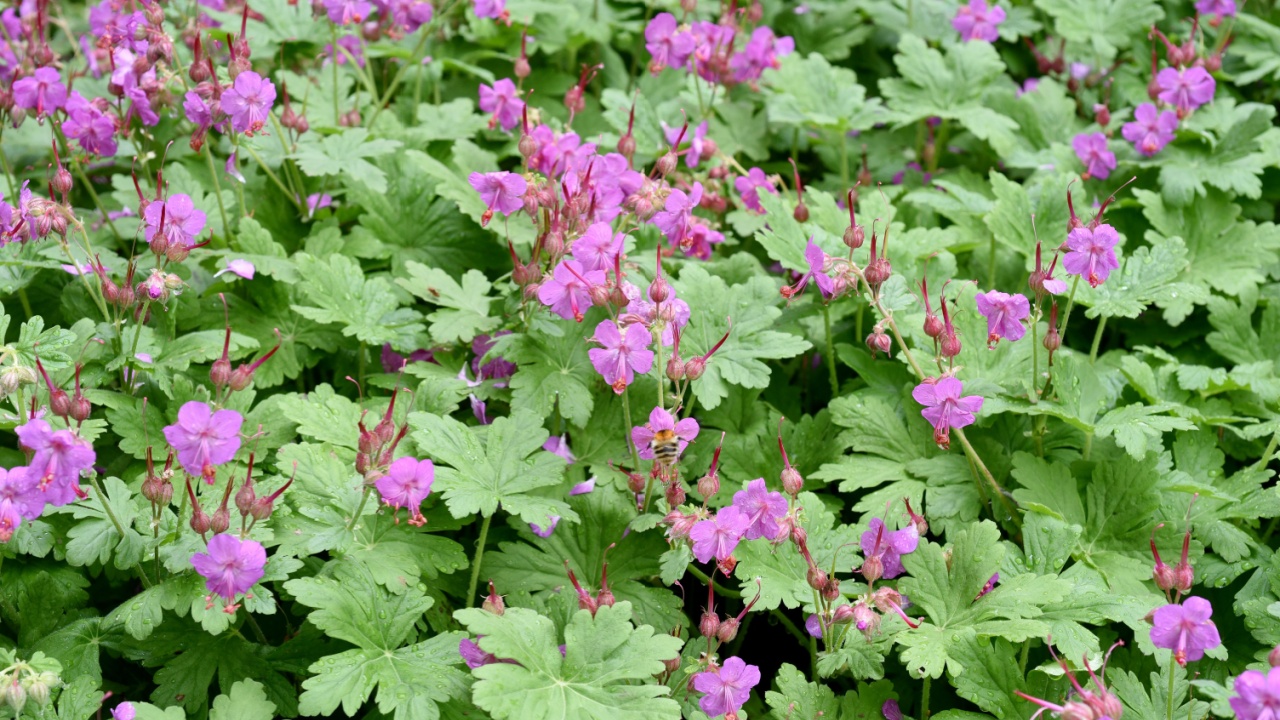
For borders and permanent beds, low-growing groundcovers are a long-term weed suppression strategy that reduces the need for mulch replenishment over time. Creeping thyme, creeping phlox, and dragon’s blood sedum fill in quickly, tolerate foot traffic, and deny weeds the bare soil they need.
According to Garden Design, planting a quick-growing groundcover gives weeds direct competition for soil, water, and light.
12. Stop Tilling Your Beds
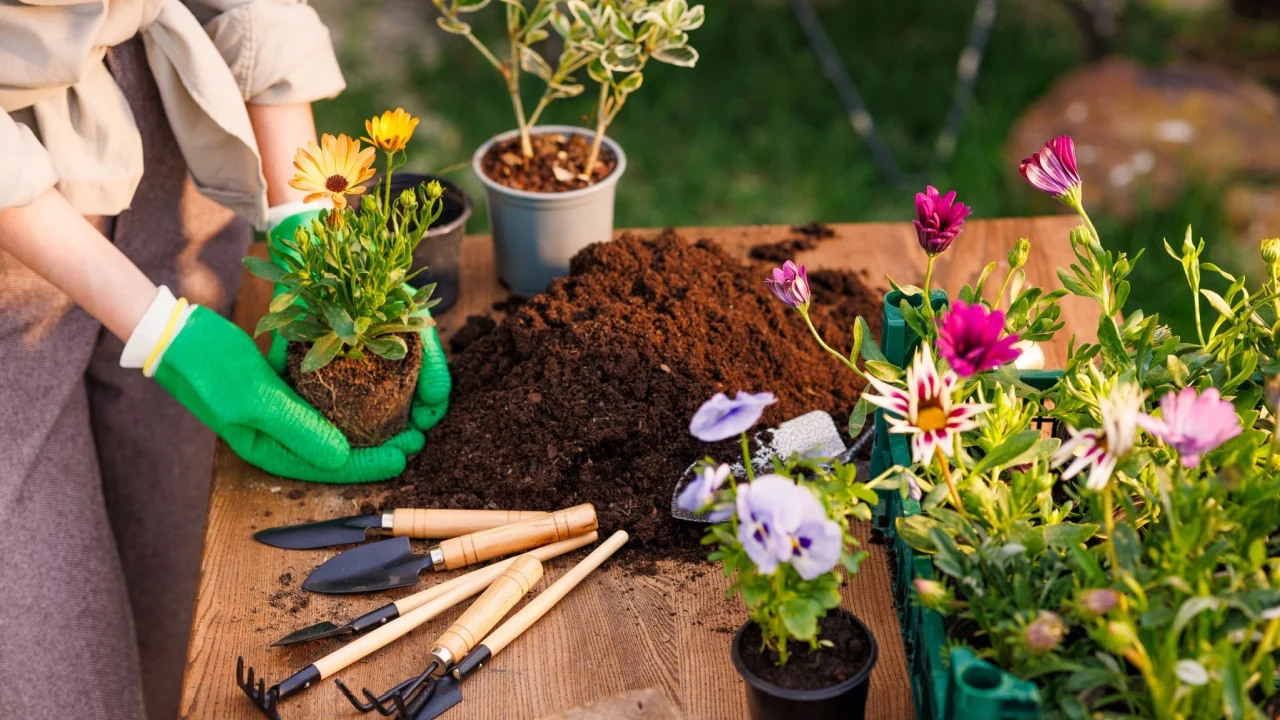
Every time you till or turn soil, you expose a fresh layer of dormant weed seeds to light and air. Research cited in the Old Farmer’s Almanac found that weeds may be triggered to germinate by a sudden flash of light during daytime soil disturbance, and that turning soil at night reduced weed germination by as much as 78 percent. Transitioning to no-till or minimal-till practices is the single most impactful long-term change a gardener can make for weed reduction.
The Weeds Worth Keeping (And a Few Worth Eating)
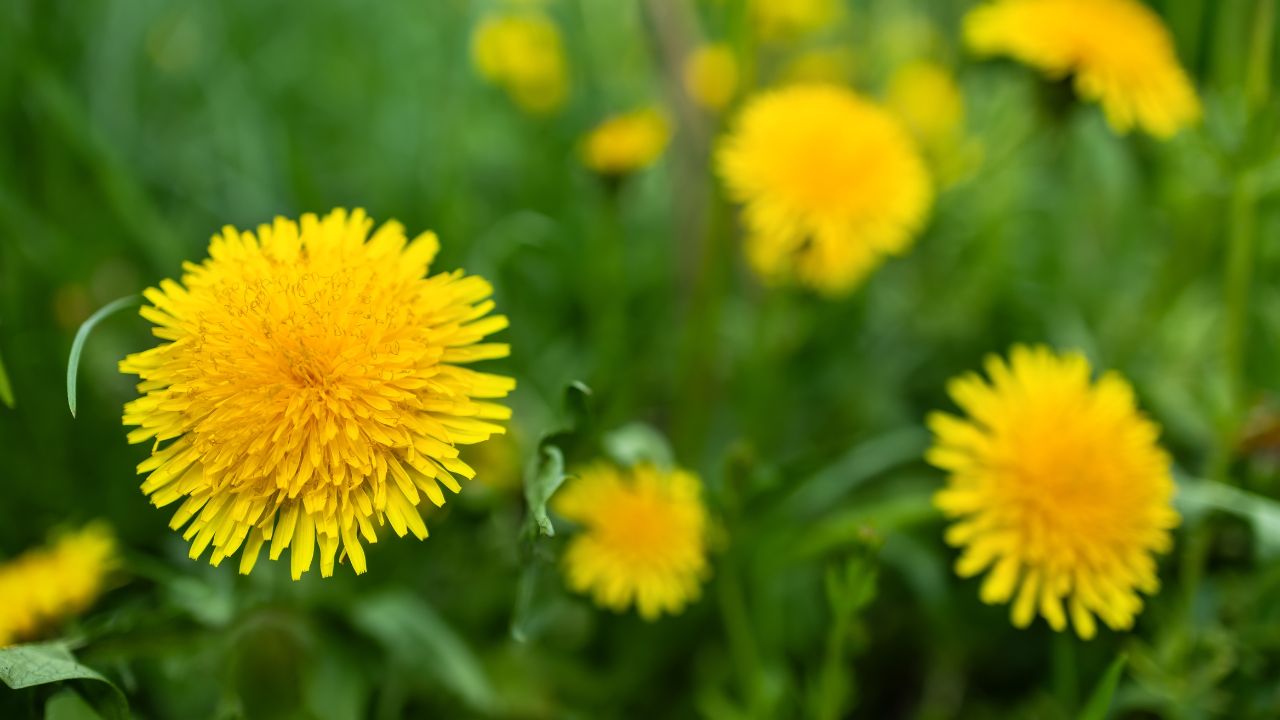
Not every weed that emerges this March needs to be removed. Dandelions are among the earliest and most important spring food sources for native bees and pollinators. Garden Design notes that dandelions are “an early food source for many pollinators” and that tolerating a few in wilder garden corners benefits the entire yard ecosystem. The leaves are also edible, with a pleasantly bitter flavor suited to salads and sautés.
White clover, widely dismissed as a lawn weed, fixes atmospheric nitrogen and deposits it in the soil when it dies. According to the Old Farmer’s Almanac, clover and other leguminous cover plants “give back to the soil” and keep weeds from growing. Purslane, another common spring weed, is edible, nutritious, and easy to pull before it sets seed.
Knowing which weeds can stay, which can be eaten, and which require immediate removal is not laziness. It is ecology, and it reduces the workload considerably.
Start Right Now
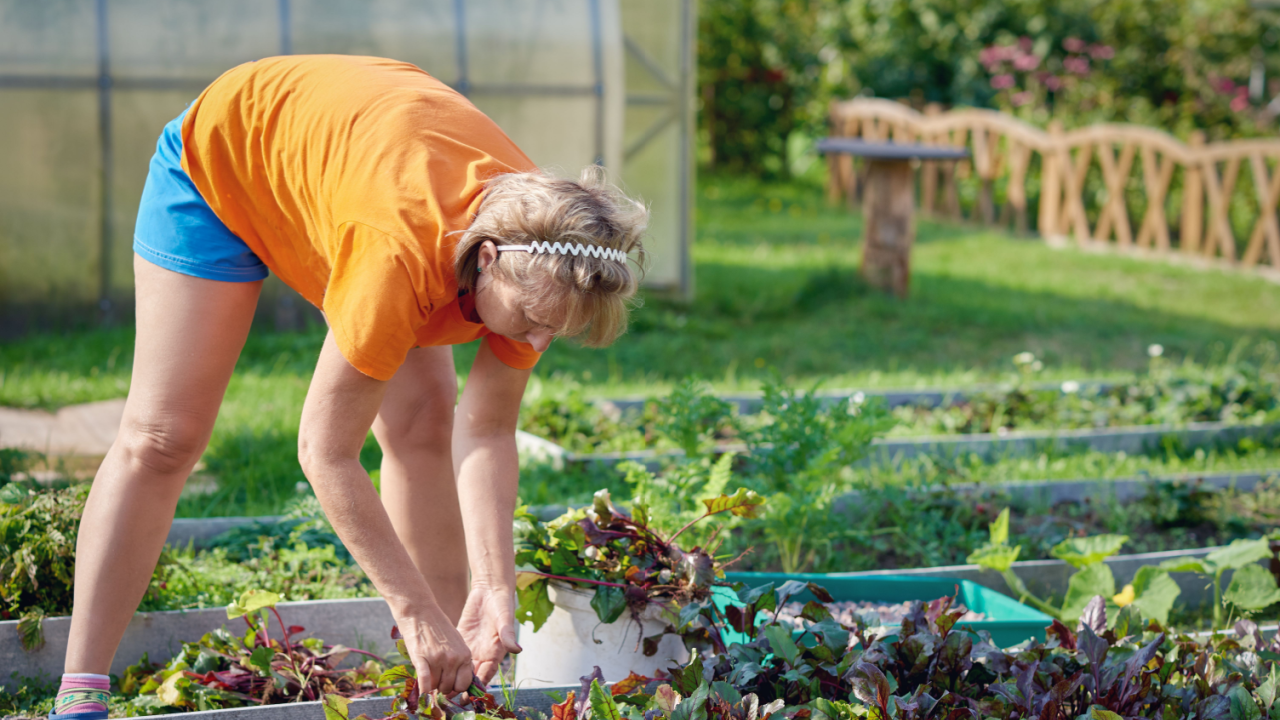
The gardeners who fight the fewest weeds are not the ones with the most products. They are the ones who designed their gardens so that weeds have nowhere comfortable to land: beds that are mulched deeply, planted densely, and supplemented with groundcovers that do the suppression work year after year.
You do not need to implement all twelve methods at once. Pick two or three that match your garden’s worst problem areas. Smother a neglected bed with cardboard and mulch this weekend. Pull the weeds you already see before they flower. Stop refreshing the seed bank by tilling. The work you do right now, before those seeds set, is the work that determines your entire summer.
Read more:
7 perennial planting mistakes to stop making right now
How to Grow Zucchini Vertically: 7 Steps That Save Space and Double Your Harvest