Skip to Content

Proper pruning keeps lavender plants healthy and attractive. Without it, the woody base can grow large and unruly, becoming prone to splitting in the freezing winter months. But when you know how to prune lavender correctly, you can train it to grow in a tidy mounded shape that produces denser foliage and more blooms. Pruning …

Read More about How to Prune Lavender: Tips for Healthy and Attractive Growth

About 145 invasive plant species threaten the natural areas of Kentucky, according to the Kentucky Invasive Plant Council. Many of these noxious weeds have been planted in gardens as ornamental landscaping plants, and some are still sold by garden centers. Learn how to identify some of the worst invasive plants in Kentucky so you can …

Read More about 11 of the Worst Invasive Plants in Kentucky (And 22 Natives to Plant Instead)

Once you learn how to grow borage, you’ll wonder why you didn’t start sooner! Borage Is a robust, quick-growing annual herb whose deep blue, star shaped flowers make it a colorful and refreshing addition to salads. Growing borage is a great way to add beauty and flavor to a garden. Although not as common as …

Read More about How To Grow Borage – A Delightful Herb For Your Garden

Invasive plants pose a significant challenge to Iowa’s ecosystems. These noxious weeds threaten prairies, forests, and even aquatic environments, impacting the health of native plants and animals. While humans often introduce invasive species, whether accidentally or intentionally, changing climates sometimes allow plants to spread naturally from their native range to a location where they lack …

Read More about 9 Worst Invasive Plants in Iowa (And 18 Natives to Plant Instead)

About one-fourth of the approximately 2,300 plants growing wild in Indiana are nonnative. While not all non-native plants are invasive, those that have earned the title can cause significant damage to local ecosystems. Some invasive plants are still sold by garden centers and nurseries, while others may have been planted in your landscape before they …

Read More about 16 Worst Invasive Plants in Indiana Gardens (And 32 Natives to Plant Instead)

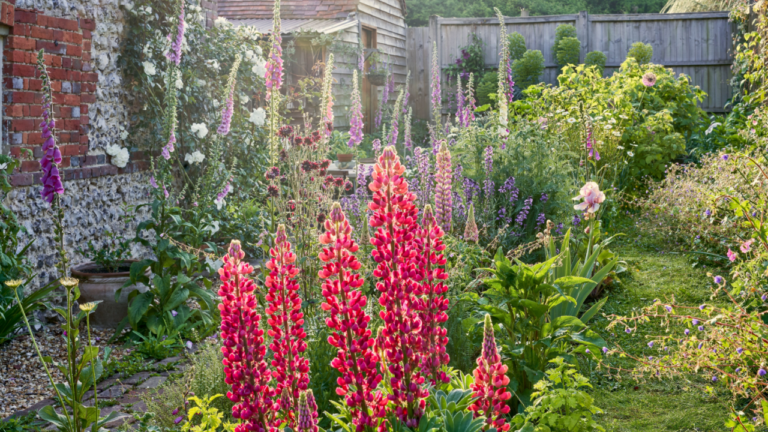
Have you ever been stopped in your tracks by a beautiful scene? A sort of a secret garden? This happened to me a few weeks ago when I came across some beautiful pictures, accompanied by inspiring stories about Rosemary, a mom who loved her garden and the village she called home. I couldn’t help but …

Read More about Rosemary’s Garden – A Beautiful Tribute To A Mom Who Loved Her Garden

The state of Delaware recently outlawed 37 invasive plants (see link below), prohibiting the propagation and movement of these weeds within, into, and out of the state. These nonnative plants outcompete native species, reduce wildlife habitat, and often grow and spread quickly, making them difficult to eradicate. Below the complete list of the prohibited plants, …

Read More about 11 Worst Invasive Plants in Delaware (And 22 Natives to Plant Instead)

Dianthus (Dianthus spp.) includes nearly 350 species of flowering plants. This includes carnations (Dianthus caryophyllus), pinks (Dianthus plumarius), and sweet William (Dianthus barbatus). Pinks and sweet William are common dianthus varieties grown in flowerbeds. Choosing the right companion plants for dianthus will highlight their beauty. Are Pinks And Sweet William The Same? Pinks and Sweet …

Read More about 9 Stunning Companion Plants for Dianthus

With nearly a hundred aggressively spreading, nonnative plants degrading ecosystems in a single state, it can be easy to feel overwhelmed. To make things a bit more manageable, we have compiled a shorter list of some of the most common and worst invasive plants in Connecticut to help you identify and remove any invasives in …

Read More about 11 Worst Invasive Plants in Connecticut (And 22 Natives to Plant Instead)