16 Perennials That Don’t Like Containers
Container gardening offers a fantastic way to bring life to patios, balconies, and small spaces. It allows for control over soil, water, and sunlight. You can even place a speaker nearby for music. This sounds like an ideal situation for many plants. However, some perennials don’t seem to thrive in a pot as they would in the ground.
These are plants that crave the freedom of the open ground, with root systems that demand space to stretch and grow deep. Forcing them into containers can lead to disappointment, with lackluster growth and a noticeable absence of flowers. Understanding which plants prefer to have their roots in the earth is the first step toward creating both a thriving container garden and a flourishing landscape.
Here is a list of 16 perennials that, although they can fit and grow in a pot, are best planted directly into your garden beds.
1. Peonies
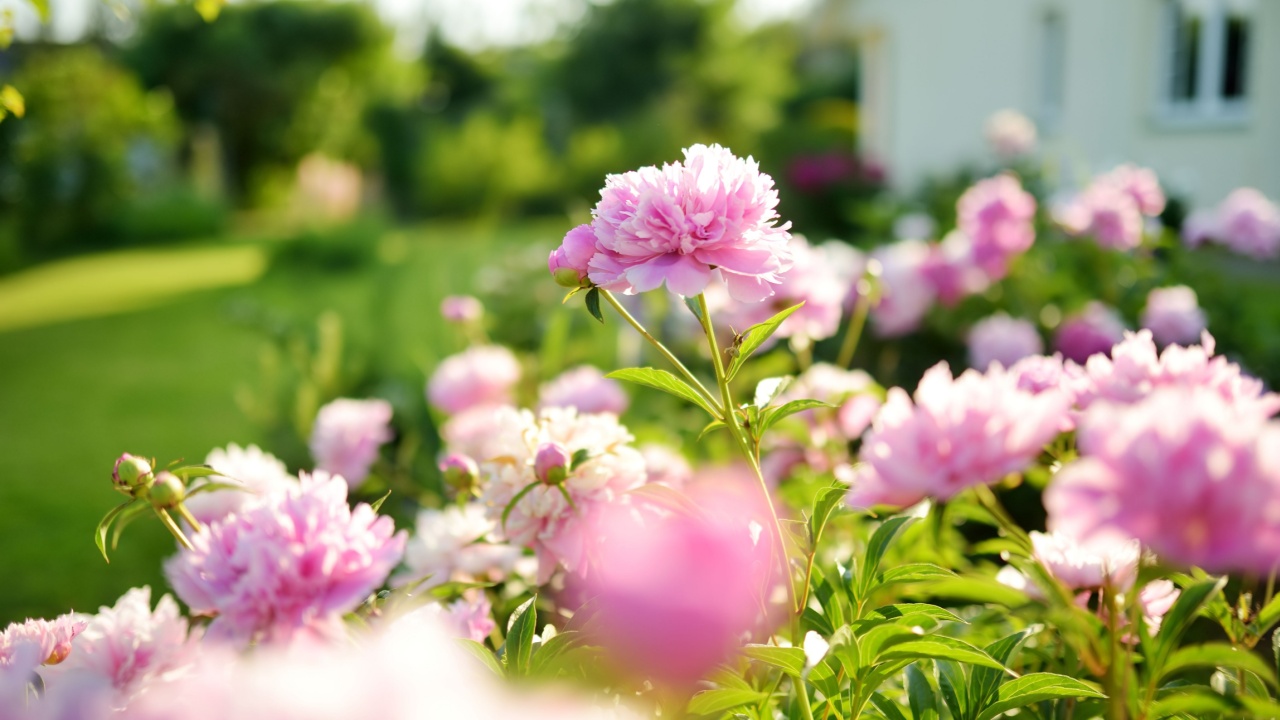
Peonies are the royalty of the spring garden, known for their lush, fragrant blooms that can last for generations. Their longevity is directly tied to their extensive root system. Peonies grow from thick, tuberous roots that function as energy storage for the plant. More importantly, they develop a taproot that anchors them firmly and seeks out moisture and nutrients far below the surface.
In a container, this taproot hits the bottom and has nowhere to go, causing stress and stunting the plant’s development. The limited soil volume also makes it difficult to provide the consistent conditions these plants need to set buds, often resulting in a plant that produces beautiful foliage but no flowers. They resent being disturbed once established, and the confined, often fluctuating environment of a pot is a constant disturbance.
Quick Scan:
- Core Issue: Deep taproots cannot develop properly in shallow containers.
- Symptom: Stunted growth, few to no flowers.
- Better Placement: Find a permanent spot in a sunny, well-drained garden bed where they can remain undisturbed for decades.
2. Baptisia (False Indigo)
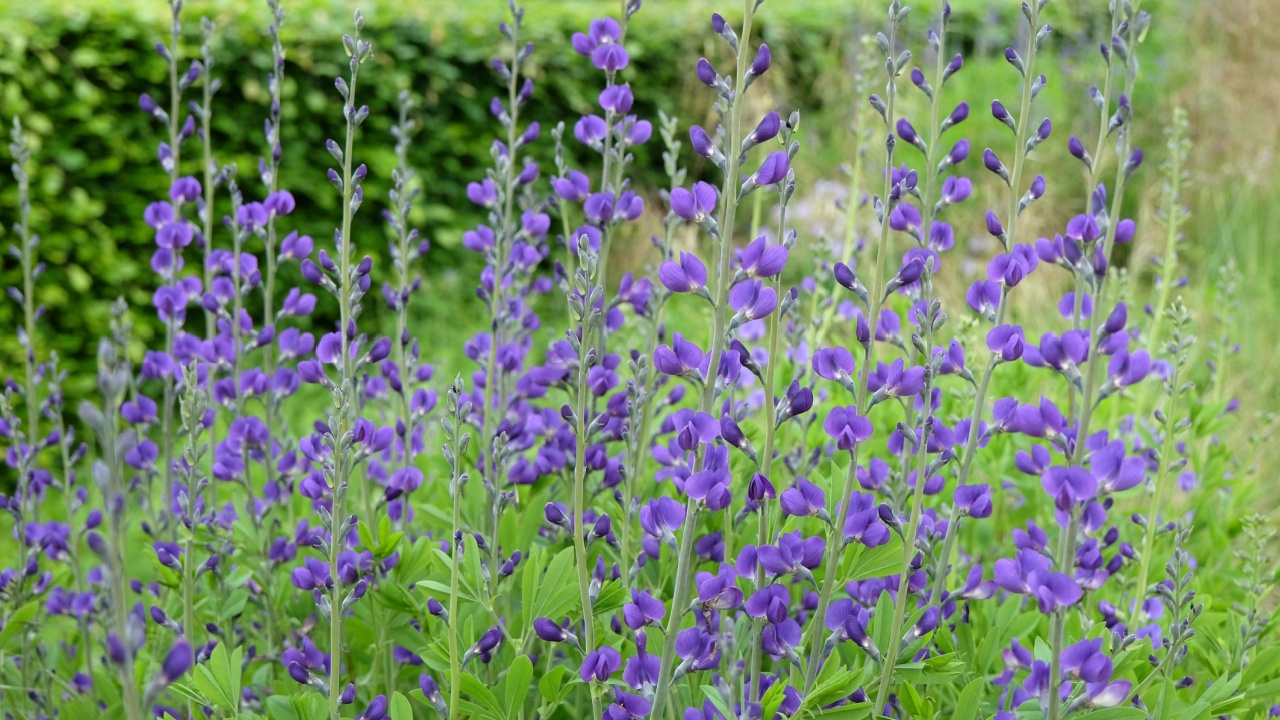
Baptisia, or False Indigo, is a robust and resilient prairie native prized for its spires of blue, white, or yellow flowers and attractive, shrub-like form. Its hardiness comes from a massive, woody taproot that can descend several feet into the ground, making it incredibly drought-tolerant once established. When you try to confine this powerhouse root system to a container, you are essentially putting a giant in a closet.
The roots quickly become cramped, circling the pot and restricting the plant’s ability to absorb water and nutrients. This stress results in stunted growth, sparse foliage, and a significant reduction in its signature flower spikes. The plant may survive for a season or two, but it will never reach its full, glorious potential.
Quick Scan:
- Core Issue: A massive, deep taproot that requires significant space to expand.
- Symptom: Poor growth, fewer flower spikes, increased sensitivity to drying out.
- Better Placement: Plant it in a sunny location with plenty of room to grow into its large, shrub-like form.
3. Delphiniums
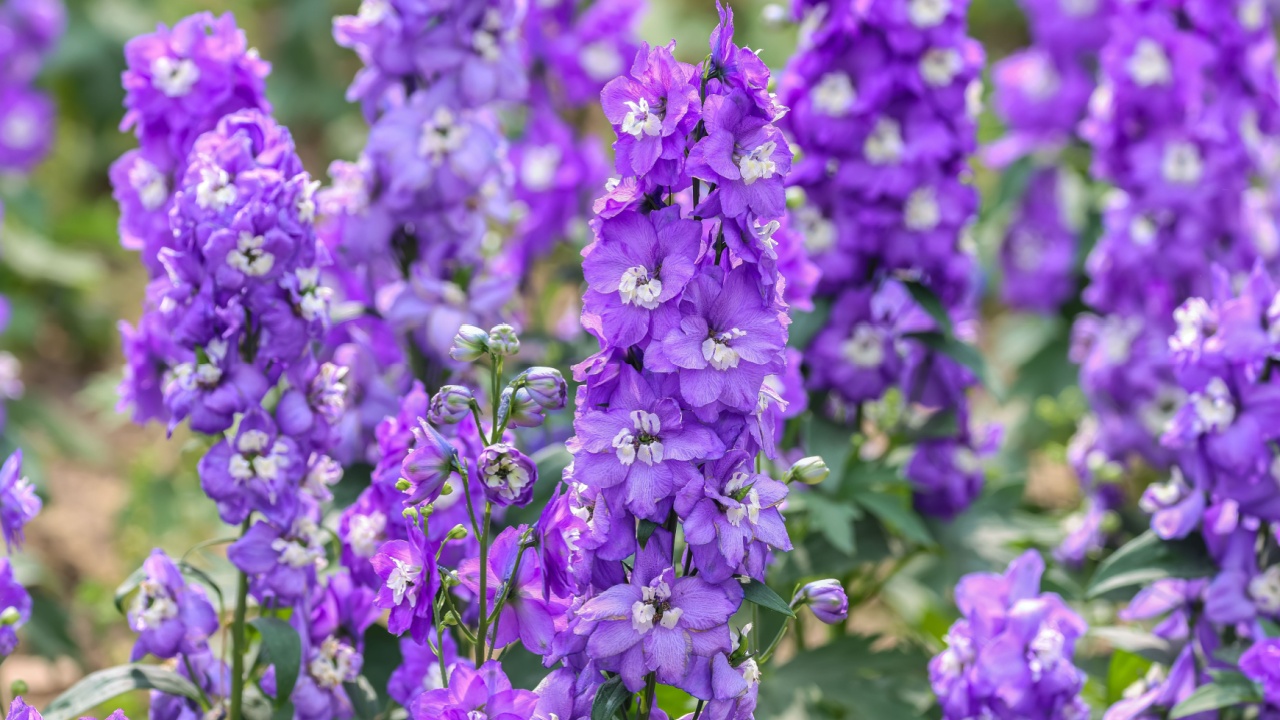
Delphiniums bring dramatic verticality to the garden with their towering spikes of intensely colored flowers. These stunning plants are heavy feeders and drinkers, demanding consistently cool, moist, and nutrient-rich soil to support their rapid growth. A container environment presents a major challenge in meeting these needs.
The soil in a pot heats up and dries out much faster than garden soil, stressing the plant’s sensitive roots. Their height also makes them top-heavy and prone to toppling over in a pot, especially during windy or rainy weather. While a large, deep container might support a delphinium for a short time, it is a constant battle to provide the right conditions for it to perform well.
Quick Scan:
- Core Issue: High water and nutrient demands that are difficult to meet in a pot; roots need cool soil.
- Symptom: Wilting, yellowing leaves, and a tendency to fall over.
- Better Placement: A spot in the back of a border with rich, consistently moist soil and protection from strong winds.
4. Russian Sage
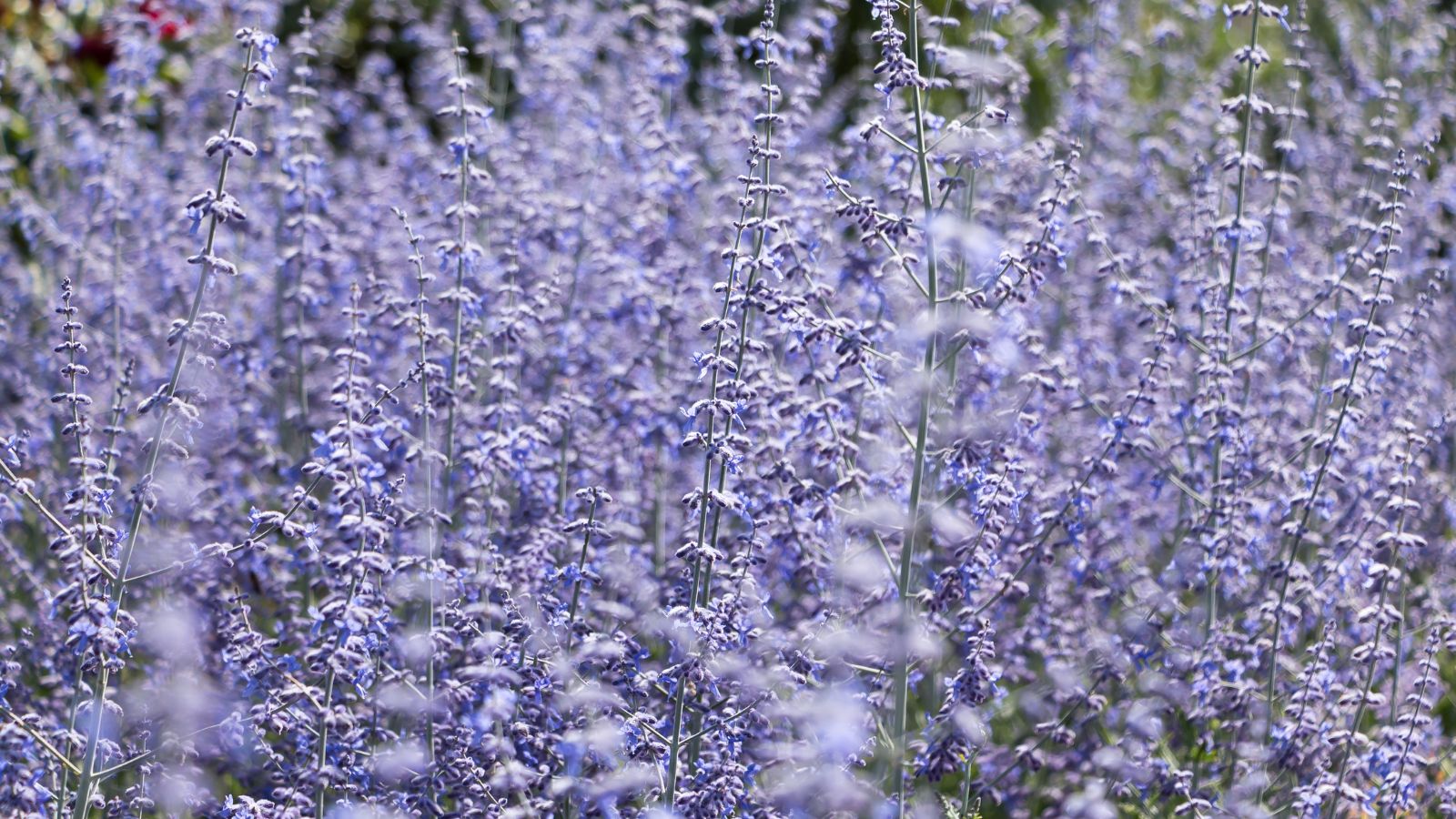
Russian Sage is a favorite for hot, dry locations, offering silvery foliage and a haze of lavender-blue flowers from mid-summer until fall. Its carefree nature in the garden is due to a vigorous, spreading root system that travels far and wide in search of moisture. This same vigor becomes a problem in a container.
The roots quickly colonize the entire pot, becoming a dense, tangled mass. A pot-bound Russian Sage can either rot from excess moisture trapped in the dense root ball or dry out in a single hot afternoon because there is no soil left to hold water. The plant’s tall, airy stems can also become top-heavy, making the container unstable.
Quick Scan:
- Core Issue: Aggressive, spreading roots quickly fill the pot, leaving no room for soil.
- Symptom: Plant becomes root-bound, unstable, and prone to either root rot or extreme drying.
- Better Placement: A sunny, dry spot in the landscape where its spreading habit can be appreciated or managed.
5. Balloon Flower
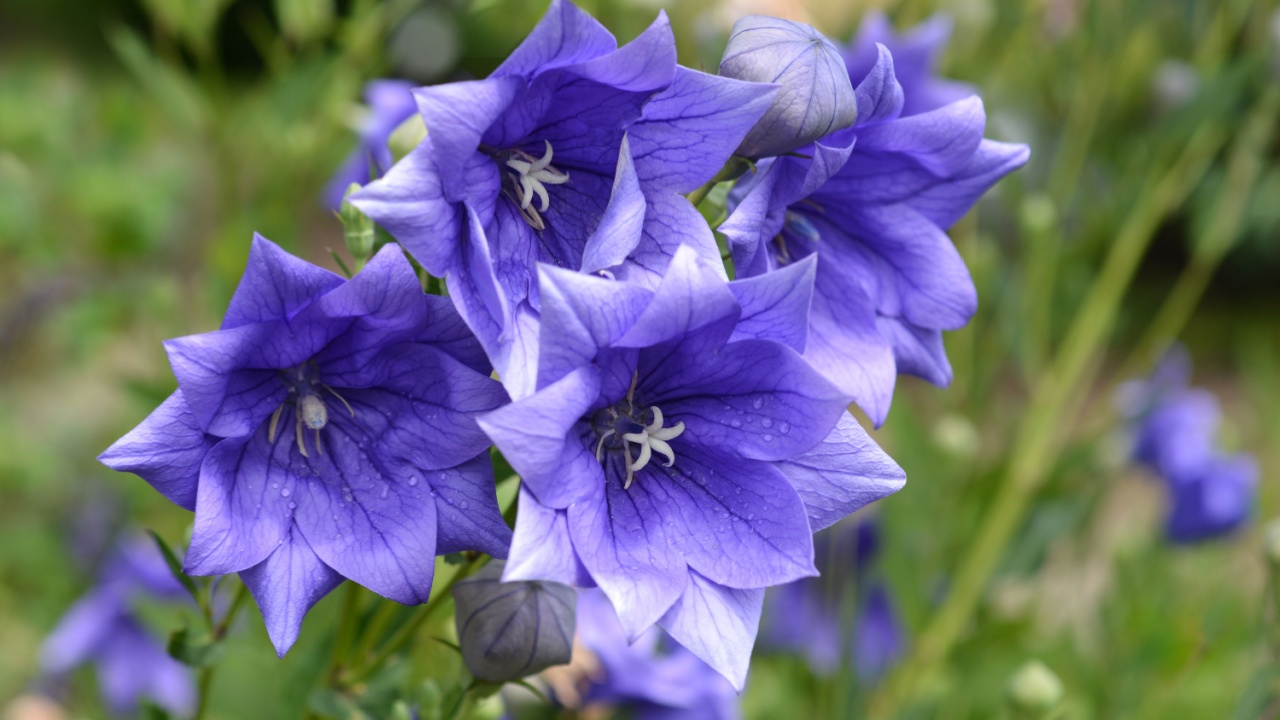
Balloon Flowers are delightful for their whimsical, balloon-like buds that pop open into star-shaped blossoms. They possess a long, thick taproot that resembles a carrot. This taproot is brittle and deeply dislikes being disturbed or confined.
When planted in a container, the taproot cannot grow to its preferred depth, causing the plant stress. This often leads to weaker, floppier stems that are unable to support the flowers properly, diminishing the plant’s charming appearance. The restricted root growth can also shorten the overall lifespan of this otherwise long-lived perennial.
Quick Scan:
- Core Issue: A deep, brittle taproot that is easily damaged and stressed by confinement.
- Symptom: Floppy stems, reduced vigor, and a shorter life.
- Better Placement: A sunny to partly shaded spot in well-drained soil where it can be left to grow undisturbed for years.
6. Goat’s Beard
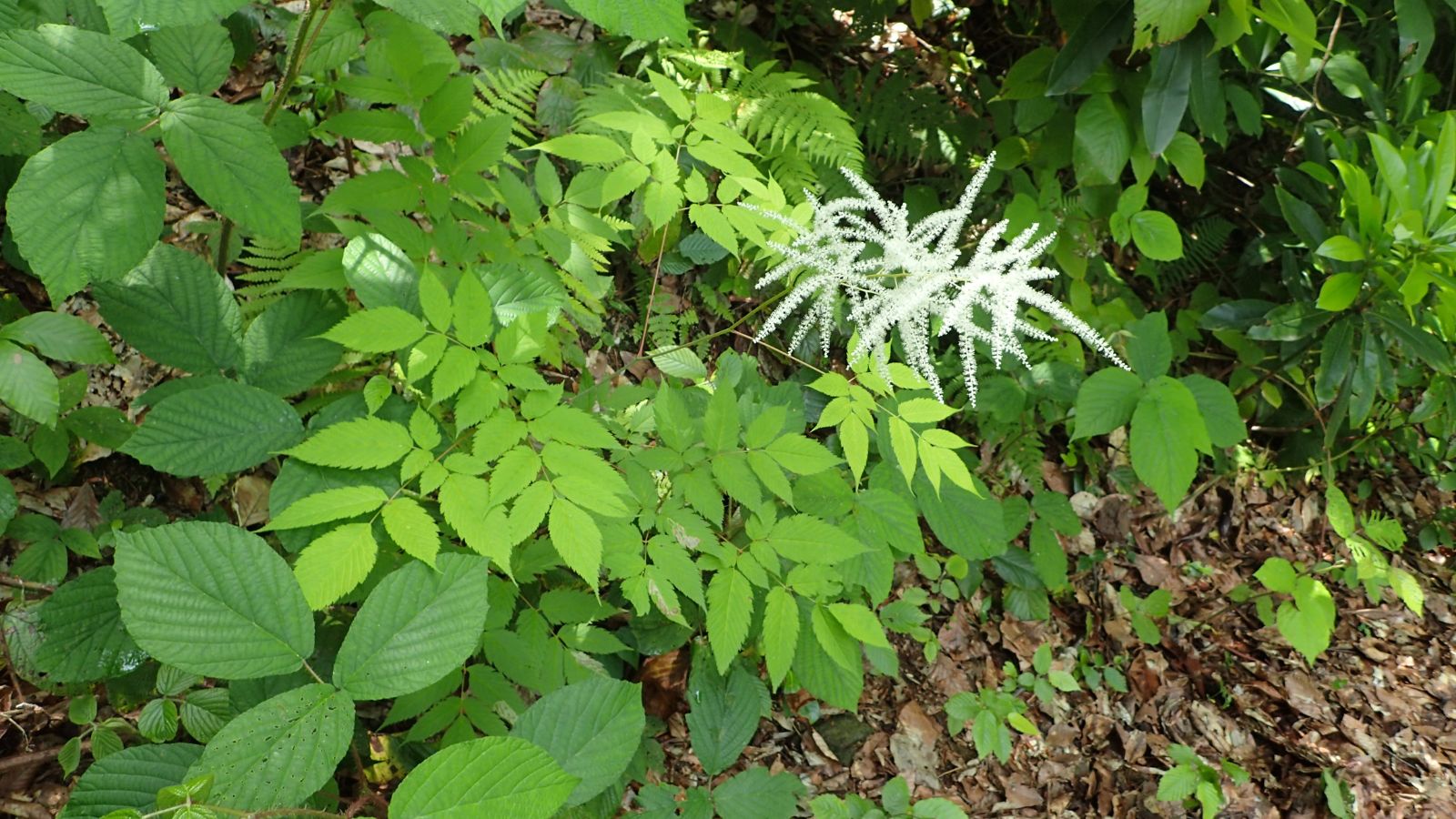
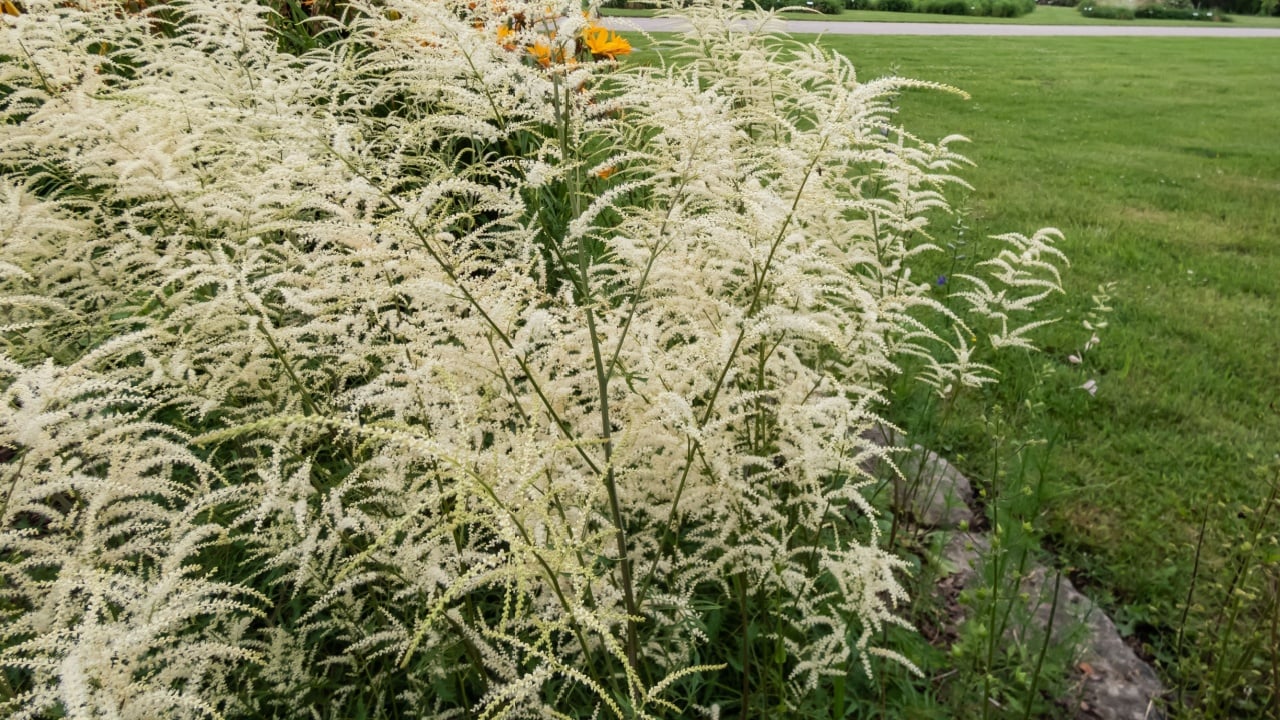
Goat’s Beard is a magnificent, shade-loving perennial that forms a large clump, producing feathery plumes of creamy-white flowers that resemble an Astilbe on a grander scale. This is a substantial plant both above and below the ground. Because Goat’s Beard has a fibrous root system and prefers consistent moisture, it may struggle in smaller containers or in pots that dry out quickly.
In-ground planting better supports its size and root dynamics. The temperature fluctuations in a pot can also be hard on its roots, preventing it from ever reaching its stately potential.
Quick Scan:
- Core Issue: Large plant with an extensive root system and high moisture needs.
- Symptom: Stunted size, poor flowering, and leaf scorch from dry soil.
- Better Placement: A moist, partly shaded area of the garden where it has room to mature into a large, specimen plant.
7. Oriental Poppies
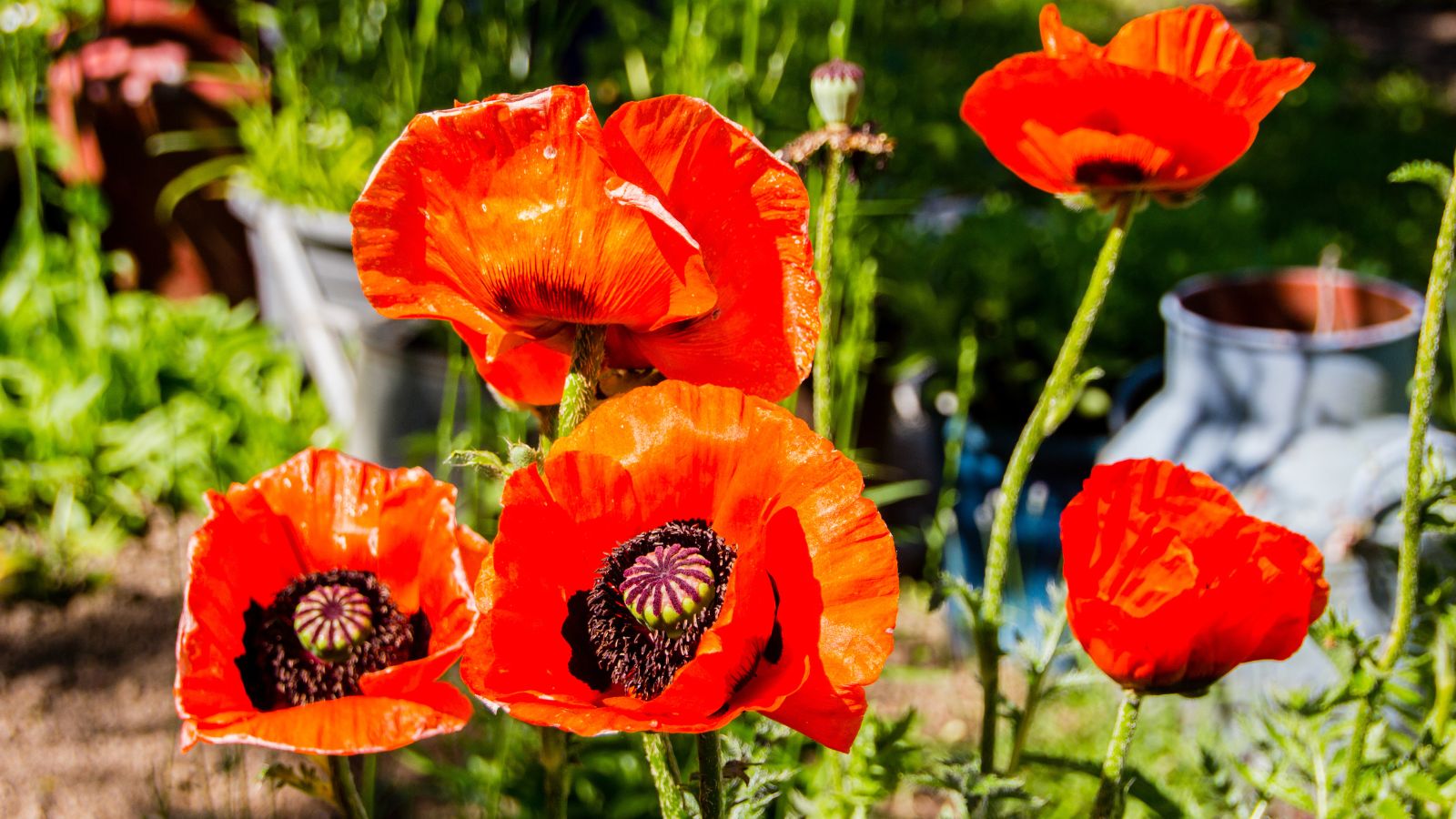
Oriental poppies (Papaver orientale) are dramatic late-spring bloomers, with large, papery petals and dark centers. They develop a deep, fleshy taproot, which helps anchor them and access nutrients, but also makes them less tolerant of disturbance and poor drainage.
After flowering, the foliage dies back in mid-summer, entering a dormancy period. During this dormancy, waterlogged or poorly drained soil can lead to root rot, since the taproot is sensitive to excess moisture. Experts recommend planting it in well-drained soil with full sun exposure and avoiding overwatering to prevent root rot in the deep taproot.
Quick Scan:
- Core Issue: A deep taproot that hates confinement and a tricky summer dormancy cycle.
- Symptom: Smaller flowers, weaker plant, and high risk of root rot during dormancy.
- Better Placement: Full sun and well-drained soil are perfect. Plant them where their summer disappearance will be covered by later-blooming neighbors.
8. Hellebores
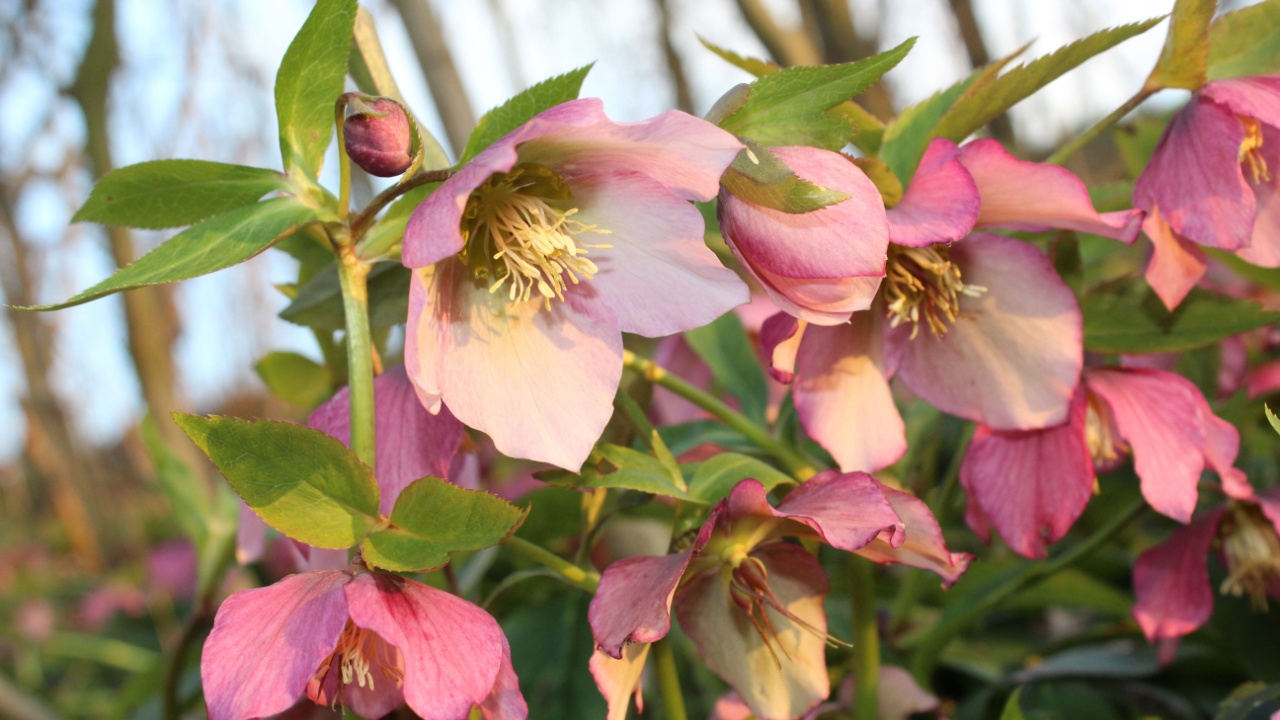
Hellebores (Lenten or Christmas roses) are prized for their early-spring flowers, often when little else blooms. They establish a substantial, spreading root system that thrives in cool, stable soil and dislikes being disturbed once planted. Because of this, while they can be used in containers for seasonal display, they are generally better suited to being planted permanently in garden beds.
Their preference for partial shade, consistent moisture (but good drainage), and minimal root disturbance makes them more reliable in the ground than in a container that may dry out, warm up too much in summer, or experience root movement with freeze-thaw cycles.
Quick Scan:
- Core Issue: Fleshy roots are sensitive to disturbance and the temperature fluctuations of a pot.
- Symptom: Reduced flowering and overall decline in plant health.
- Better Placement: A shaded or partly shaded location under deciduous trees or in a woodland garden.
9. Bee Balm
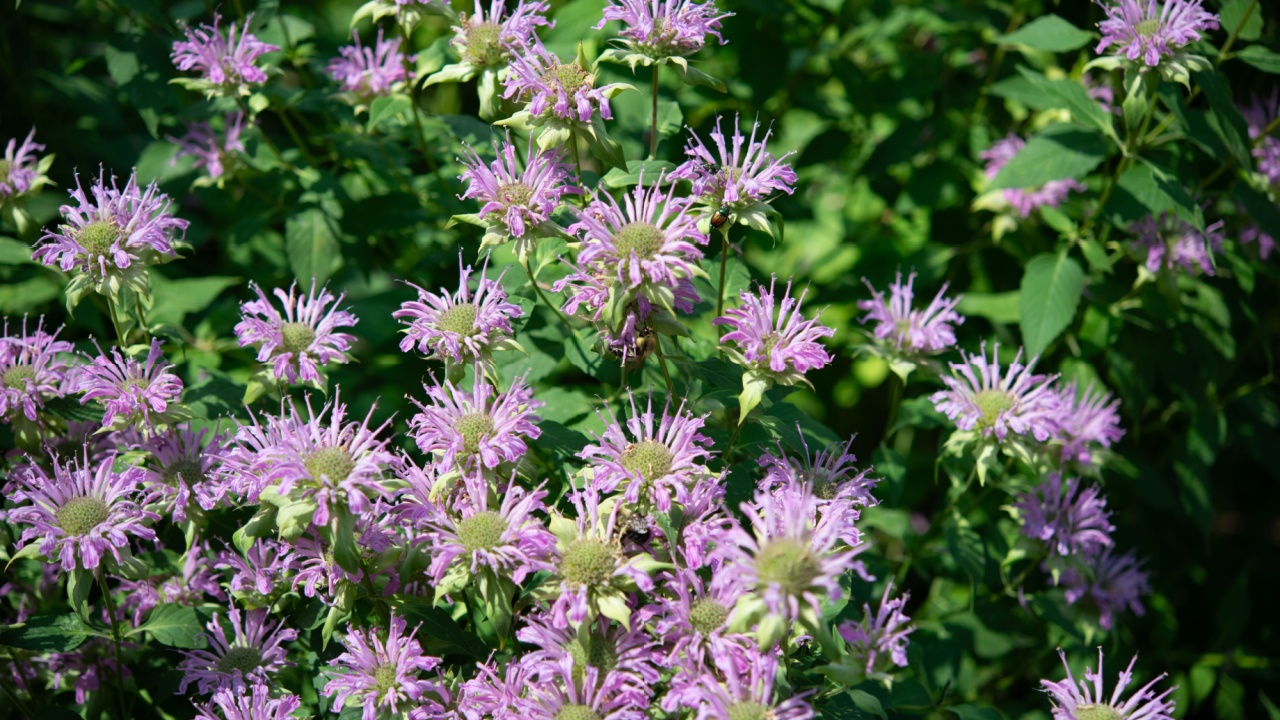
Bee Balm, or Monarda, is a classic perennial valued for its distinctive flower heads that attract bees, butterflies, and hummingbirds. A member of the mint family (Lamiaceae), it shares the family trait of spreading aggressively by rhizomes. In the open garden, this vigor can be managed, but in a container, it quickly becomes problematic.
The roots will colonize every inch of soil, forming a dense mat that leaves little room for water retention. A pot‑bound Bee Balm often produces fewer flowers and is more prone to powdery mildew, a common disease exacerbated by poor air circulation and plant stress.
Quick Scan:
- Core Issue: Spreads aggressively via rhizomes, quickly becoming root-bound.
- Symptom: Poor flowering, increased susceptibility to powdery mildew.
- Better Placement: A sunny spot with good air circulation where its spreading can be controlled with annual division or root barriers.
10. Bleeding Heart
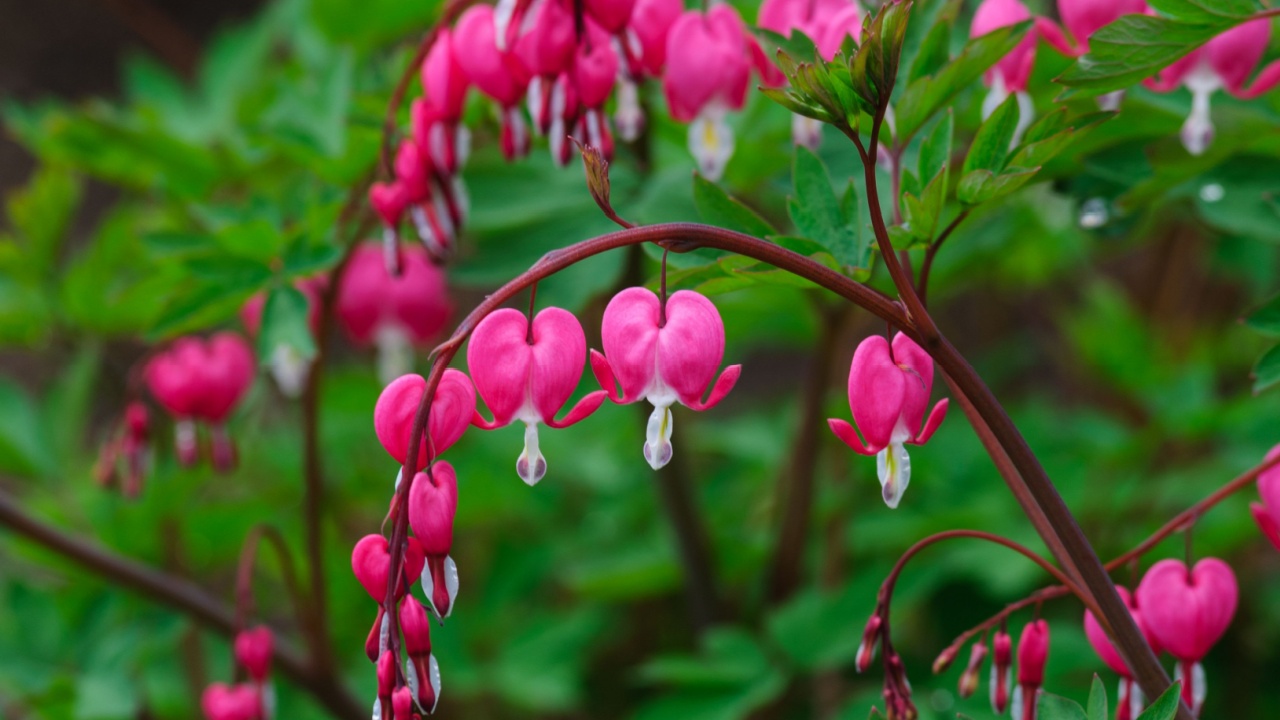
The delicate, pendant heart-shaped flowers of Bleeding Heart are a welcome sight in late spring, especially in shady garden beds. According to the University of Wisconsin–Madison Extension, this plant arises from brittle, fleshy roots and naturally begins to go dormant in summer, especially if conditions become hot and dry.
While these roots store energy and moisture for the next season’s growth, growing the plant long-term in a container can limit root expansion and proper dormancy. In a pot, the restricted soil volume and changing moisture/temperature conditions can cause the roots to either stay overly wet, risking rot, or dry out too much during dormancy, both of which reduce vigor and bloom production.
Quick Scan:
- Core Issue: Fleshy, spreading roots that need consistent moisture and dislike confinement.
- Symptom: Wilting, yellowing foliage, and risk of root rot during dormancy.
- Better Placement: A shady, moist, and well-drained spot where it can emerge in spring and die back naturally in summer.
11. Lupines
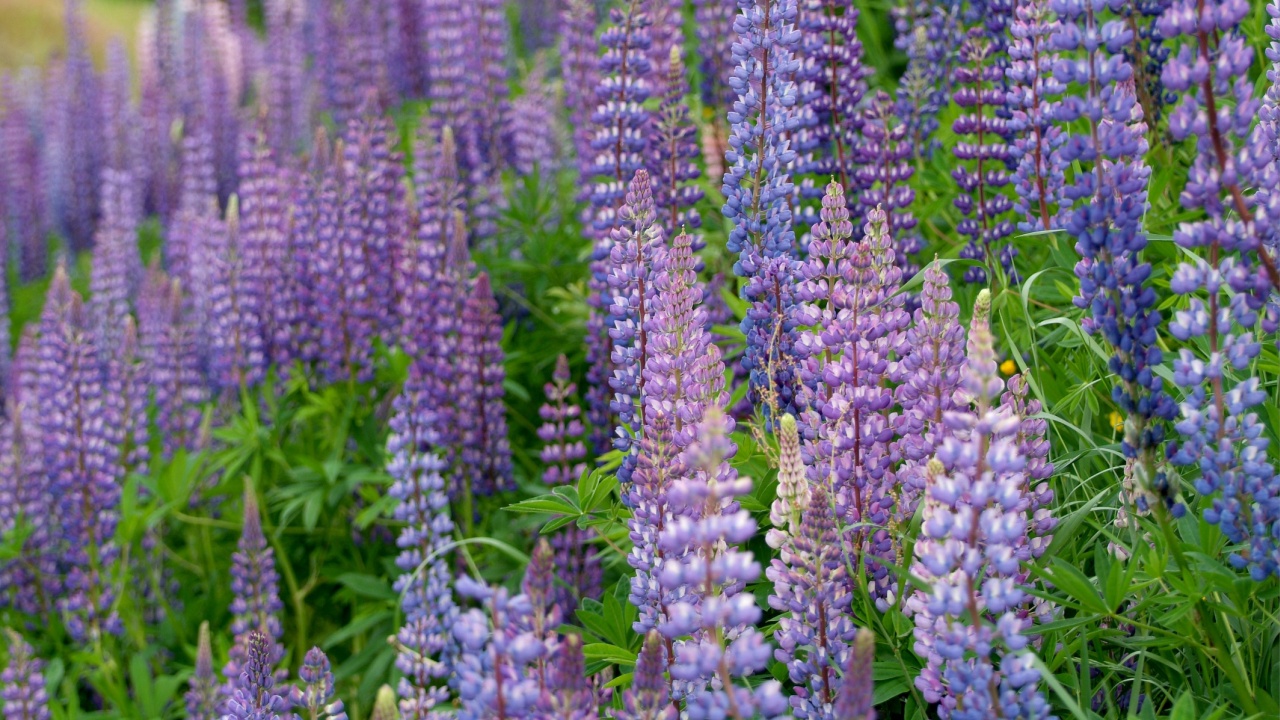
Lupines are beloved for their tall, dense spires of pea-like flowers in a variety of vivid colours. They are supported by a long taproot that penetrates deeply into the soil, anchoring the plant and aiding in nutrient and moisture uptake. According to a grower-library guide, lupine seedlings and roots need space to grow and expand.
Because of this deep-root habit and poor tolerance of root disturbance, lupines are less well-suited to long-term container culture. In a pot, the taproot may quickly hit the bottom or become constrained, limiting root expansion and thus affecting growth and flowering.
Quick Scan:
- Core Issue: A long, fragile taproot that dislikes being confined or disturbed.
- Symptom: Stunted plants, poor flowering, and a very short lifespan in a pot.
- Better Placement: Full sun in average, well-drained soil. Start them from seed directly in the garden for best results.
12. Joe-Pye Weed
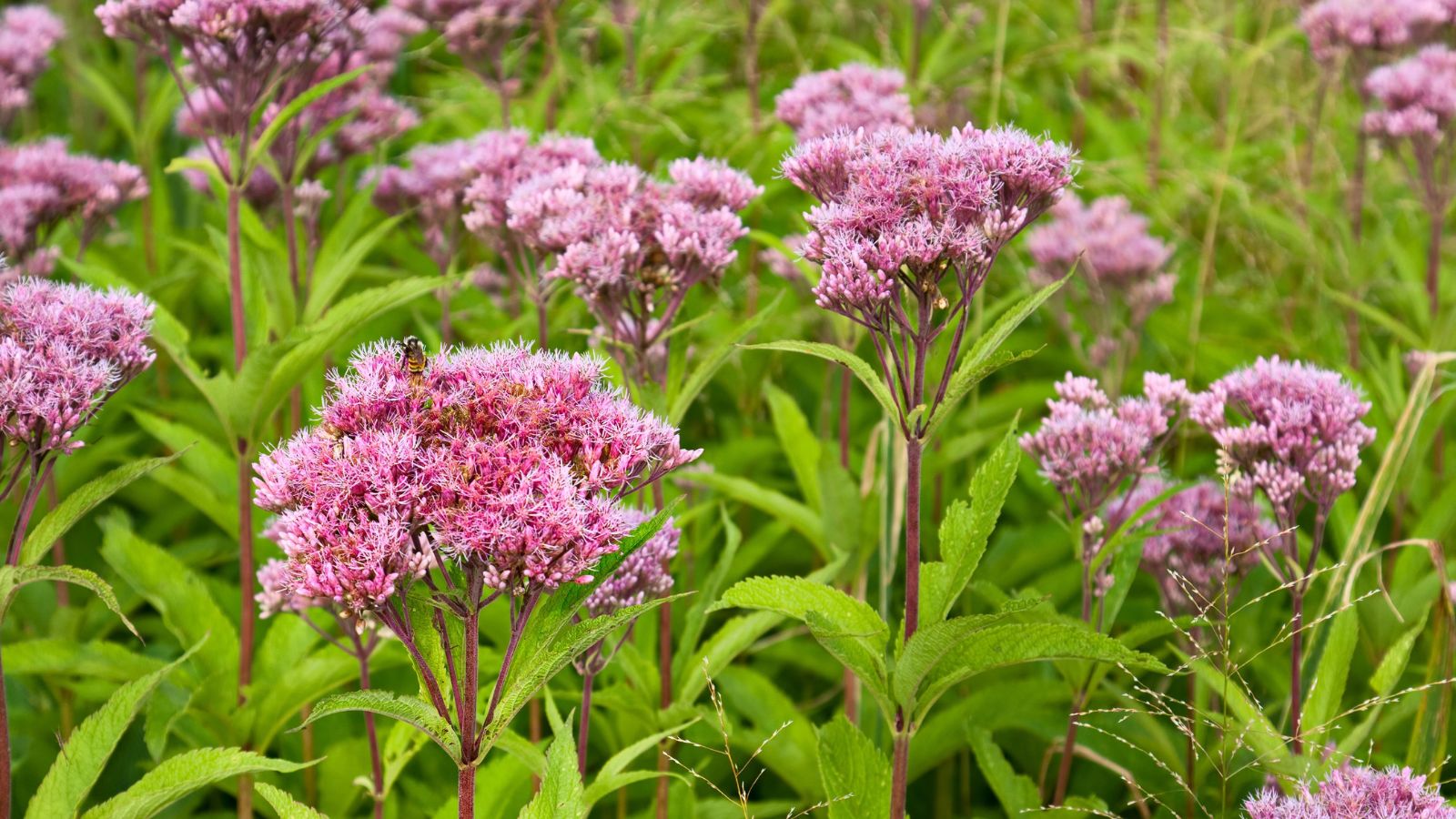
Joe-Pye Weed is a tall native perennial that commonly grows 5 to 7 feet (1.5 to 2 m) tall with wide spreads, and is best suited to moist, rich soils rather than confined containers. According to the North Carolina State University Plant Toolbox, it thrives in moist, well-drained to occasionally wet soils but may not tolerate dry conditions.
Because of its mature size and moisture requirements, placing it in a container can restrict root expansion and make consistent watering difficult—conditions that reduce vigor and flowering potential. Given its preference for richer, deeper soil and consistent moisture, Joe-Pye Weed is generally better planted directly in a garden bed where its natural growth habits can be accommodated.
Quick Scan:
- Core Issue: Massive size both above and below ground, coupled with high water needs.
- Symptom: Severely stunted growth, wilting, and failure to thrive.
- Better Placement: The back of a sunny border, near a pond, or in a naturalized meadow where it can access plenty of moisture.
13. Japanese Anemones
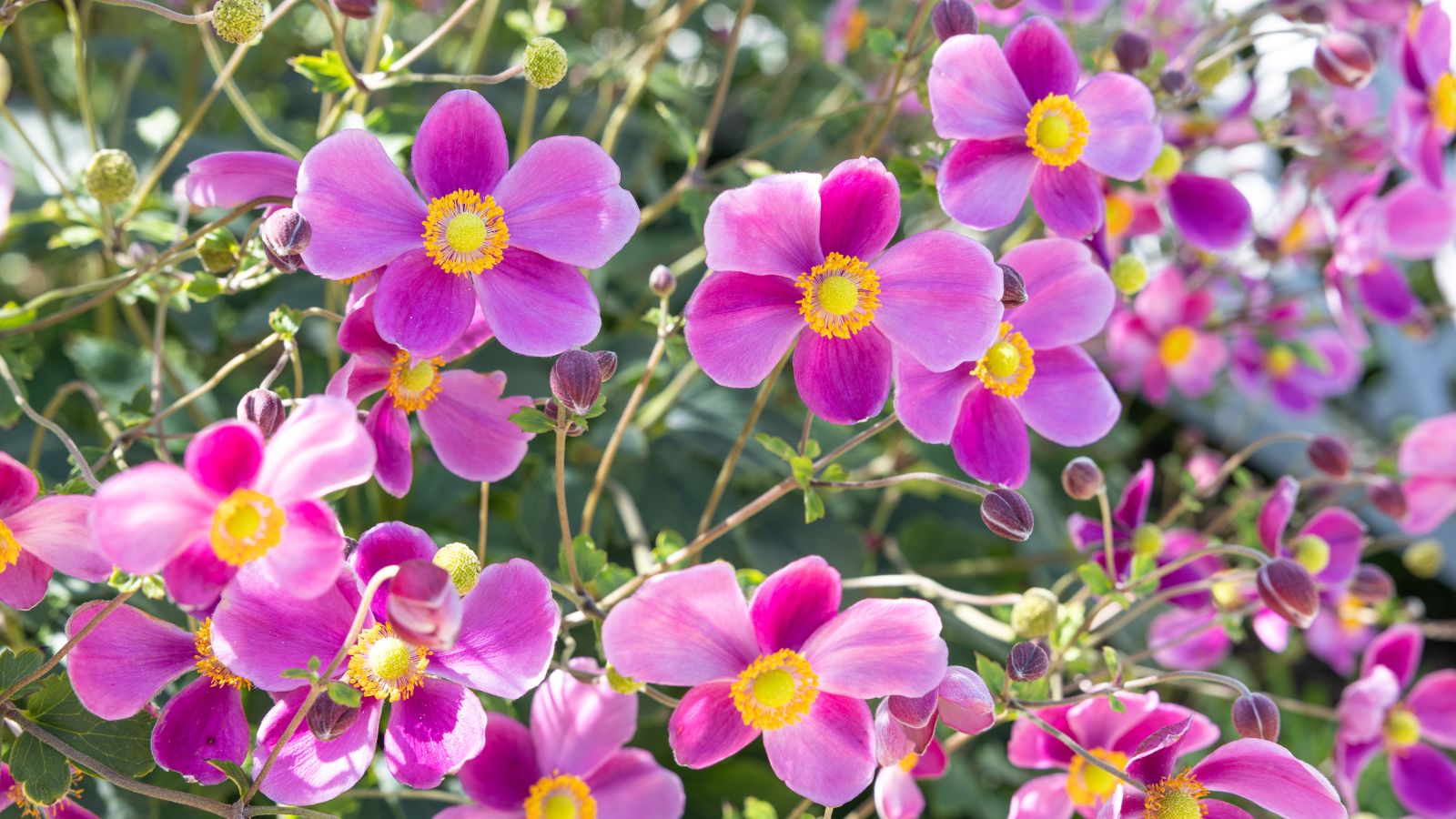
Japanese Anemones are elegant late-summer and autumn perennials that produce tall, wiry stems topped with poppy-like flowers. They spread via rhizomes, underground, fibrous, creeping roots, which allow them to form large clumps or colonies when planted in the garden.
Because of this spreading habit and the height of their flower stems, growing them in containers can present challenges: the root system may quickly fill or clog the limited soil volume, resulting in the plant becoming root-bound. The tall stems may flop without firm anchoring. The restricted root environment, combined with less consistent moisture and nutrient access, may cause reduced vigor or flower performance. The experts also highlights that while some compact cultivars can work in larger containers, growers should note that Anemones prefer rich, moist but well-drained soil and plenty of room to spread, conditions much easier to meet in the garden bed than in a pot.
Quick Scan:
- Core Issue: Spreading root systems and tall stems make for an unstable, crowded plant in a pot.
- Symptom: Leggy growth, floppy flower stems, and a tendency to become root-bound.
- Better Placement: A spot in part shade with rich, moist soil where they can form a spreading patch of fall color.
14. Asters
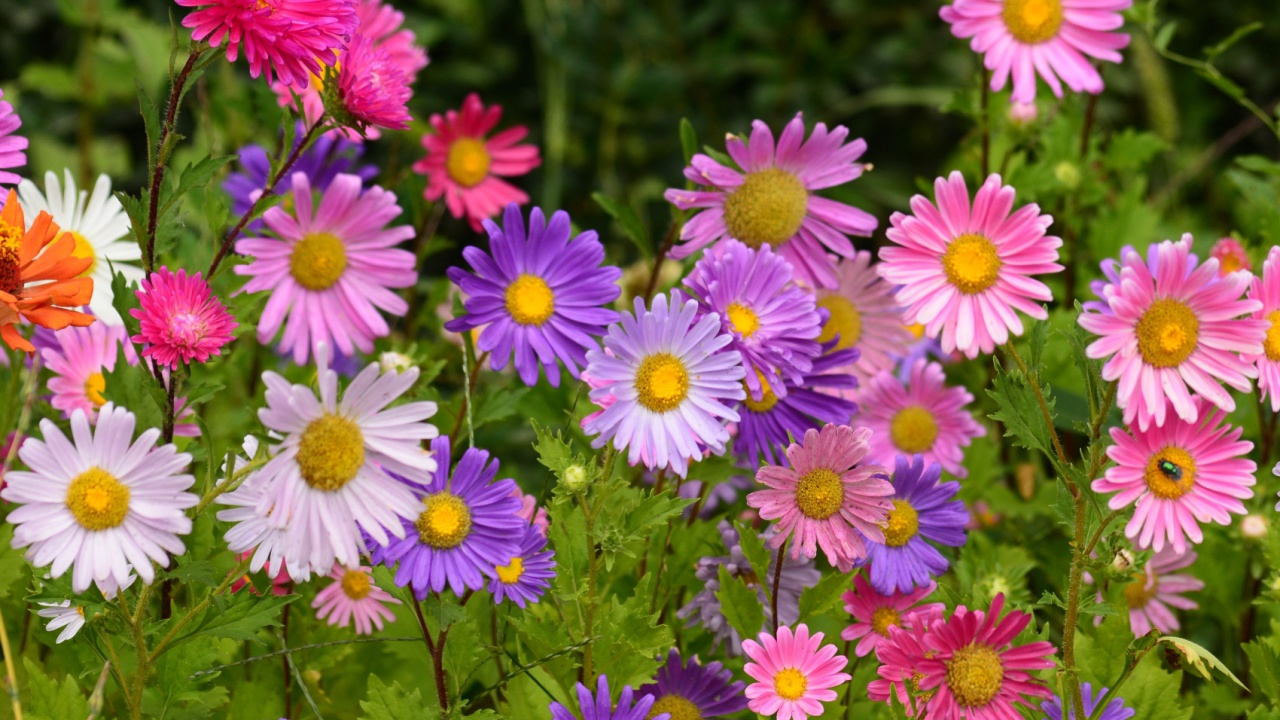
Asters are prized for their fall blooms, but in containers, their biggest challenge is irrigation. Their fibrous, spreading roots quickly fill a pot, and the limited soil dries out rapidly. Even a short period without water can stress the plant, reducing flowering and weakening stems. Container-grown asters are also more prone to powdery mildew when stressed by uneven moisture. While compact varieties bred for pots can cope better, traditional tall asters perform best in the ground, where their roots can access consistent moisture naturally.
Quick Scan:
- Core Issue: Vigorous, spreading roots that rapidly outgrow their container.
- Symptom: Becomes root-bound quickly, leading to fewer flowers and disease issues.
- Better Placement: Full sun in a garden bed where they have room to expand, providing a spectacular fall finale.
15. Lady’s Mantle
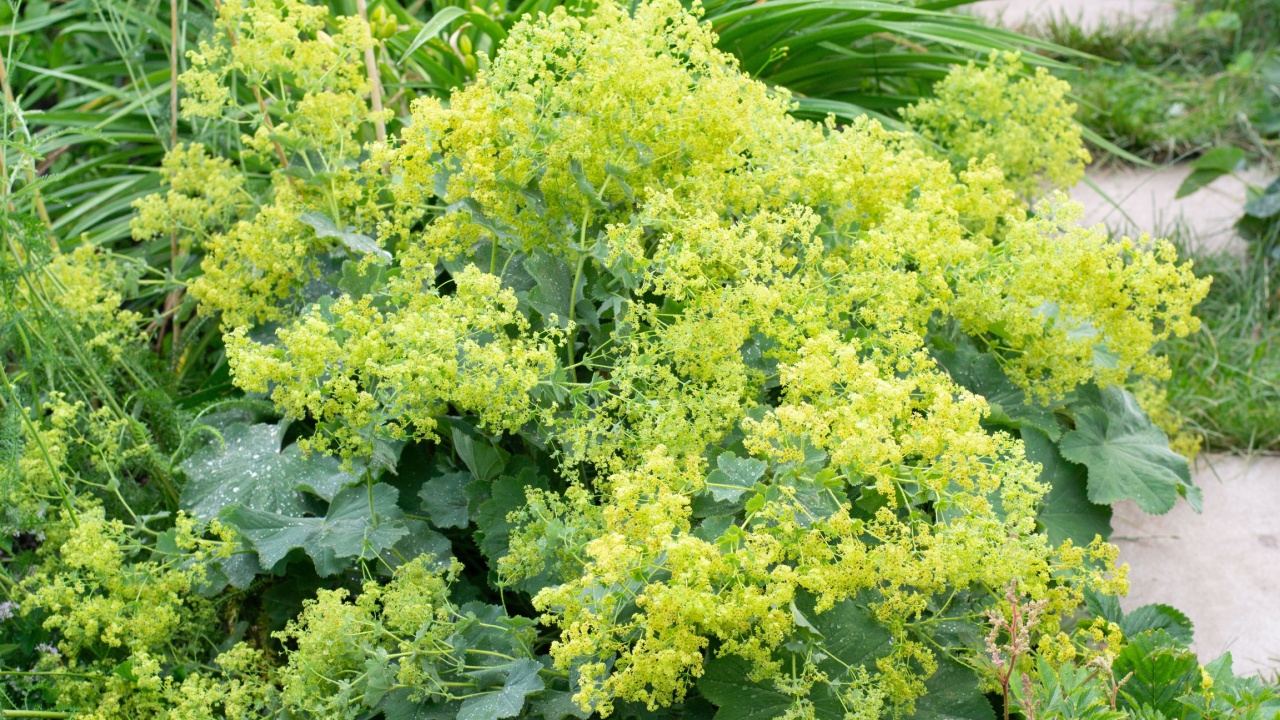
Lady’s Mantle (Alchemilla mollis) is a hardy perennial valued for its scalloped, blue‑green leaves that collect and hold beads of water after rain or dew, and for its frothy clusters of yellow‑green flowers in early summer. It spreads readily by self‑seeding and forms a dense, fibrous root system, making it an effective groundcover in cool, moist garden beds.
In containers, however, Lady’s Mantle often struggles. If you use a container, experts recommend you use a very large one and make a lot of drainage holes. Because the plant prefers consistent moisture and cooler conditions, pots, which dry out faster and heat up more in summer, rarely provide the environment needed to maintain its lush, fresh appearance. While it may look attractive for a short period, Lady’s Mantle is far better suited to open garden beds where its roots can spread and moisture levels remain stable.
Quick Scan:
- Core Issue: Prefers the cool, even moisture of garden soil; can look ragged in the fluctuating conditions of a pot.
- Symptom: Yellowing leaves, wilting, and a generally tired appearance in summer heat.
- Better Placement: As an edging plant or groundcover in a partly shaded border with moist soil.
16. Hibiscus (Hardy)
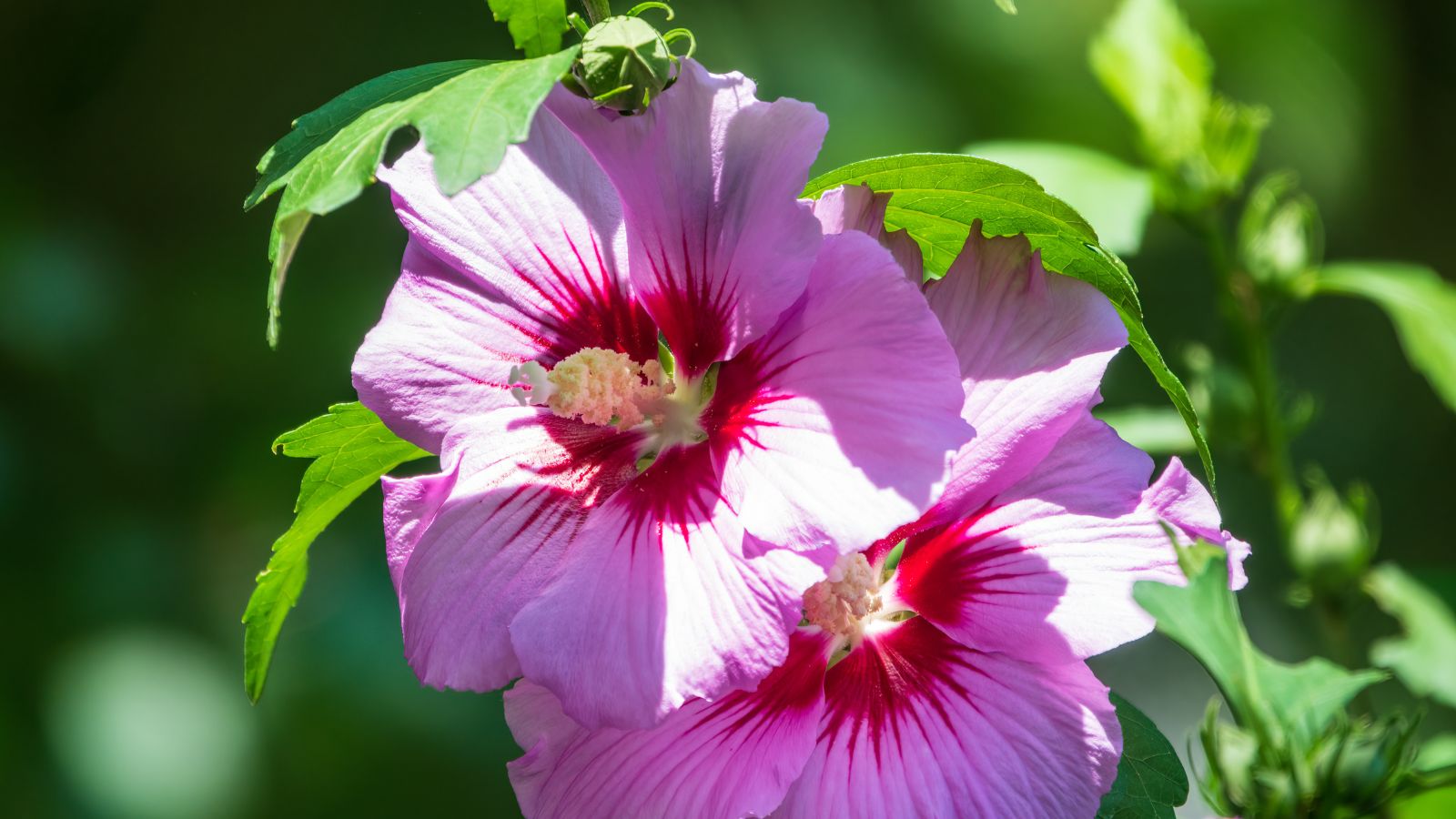
Hardy Hibiscus, also known as Rose Mallow (Hibiscus moscheutos), is a perennial prized for its enormous, dinner‑plate‑sized blooms that appear on tall, sturdy stems in late summer. To support this impressive floral display, the plant develops a large, deep root system. In garden beds, this allows it to thrive. However, in containers, the roots quickly become restricted. Long‑term pot culture severely limits the plant’s size and flowering capacity.
Quick Scan:
- Core Issue: A massive root system is needed to support a very large, thirsty plant.
- Symptom: Small plant size, few or no flowers, and constant wilting.
- Better Placement: A location in full sun with rich, consistently moist to wet soil. They are excellent near a downspout or in a rain garden.
Right Plant, Right Place
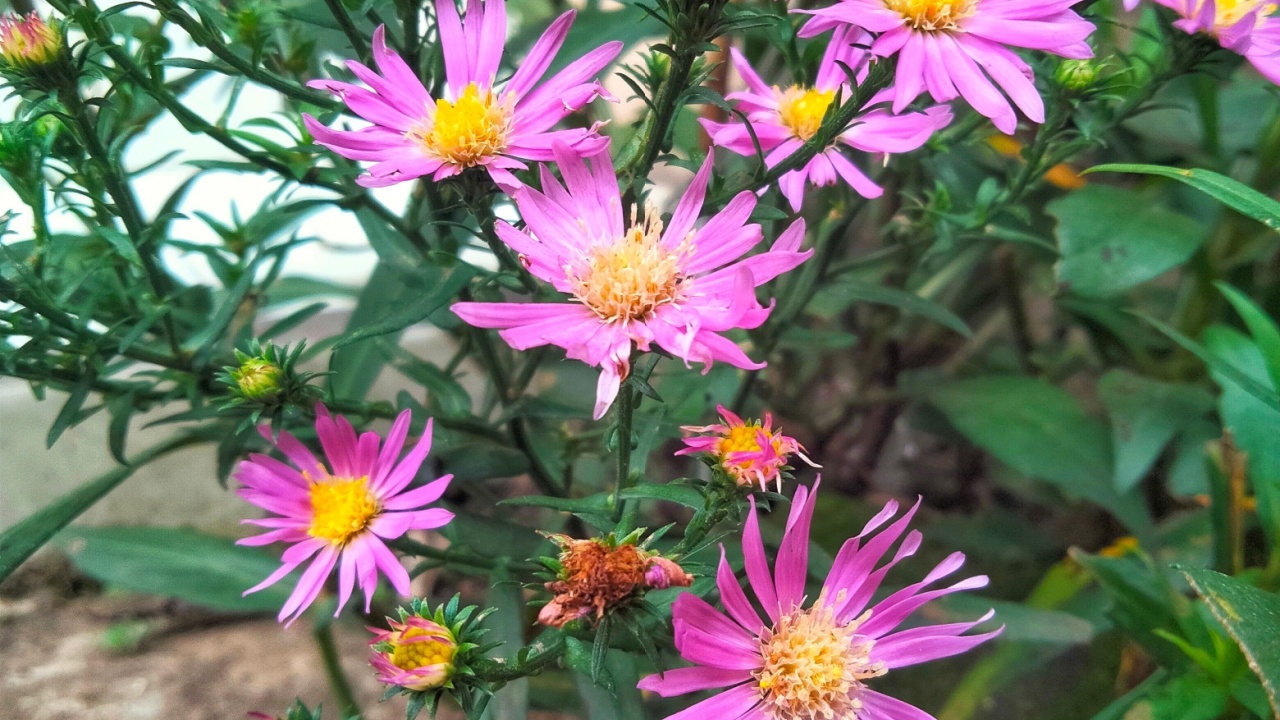
Knowing which perennials to avoid in containers is just as important as knowing which ones will flourish. For plants with deep taproots, spreading habits, or massive water needs, the open garden is their true home. Trying to fit them into a pot is a battle against their nature. The next step is to assess your garden space. Look for sunny, well-drained spots for plants like Peonies and Baptisia. Find moist, shady corners for a Bleeding Heart or Goat’s Beard. By giving these perennials the ground they crave, you allow them to reach their full potential, rewarding you with years of beauty. For your containers, focus on plants with more compact root systems that are naturally suited to that environment, creating a successful garden on every front.