
Lower-Income Americans Are Cutting Back on Holiday Spending, While Everyone Else is Planning to Spend More
Americans are planning to spend more this holiday season, but the increases are largely being driven by those who can afford them. New research shows that gift budgets are shrinking among lower- and middle-income households, even as overall holiday spending estimates climb.
According to a November 18 report from The Conference Board, combined planned spending on holiday gifts and other seasonal purchases reached an estimated $1,049 in 2026, up 5.9% from last year. Yet households earning less than $125,000 reported declining gift budgets, while the biggest increases came from those earning at least $200,000.
A separate Deloitte survey also predicts higher spending, but another study paints a less cheerful picture. Gartner found that nearly 60% of Americans have less money available for holiday purchases than they did last year, prompting many to reconsider who receives gifts and how much they can afford.
The contrasting findings reveal a growing divide in how Americans are approaching the holidays. Some are increasing their budgets, while others are hunting for discounts, buying fewer presents, or spreading purchases over several months to make the season manageable.
Wealthier Households Pull Ahead
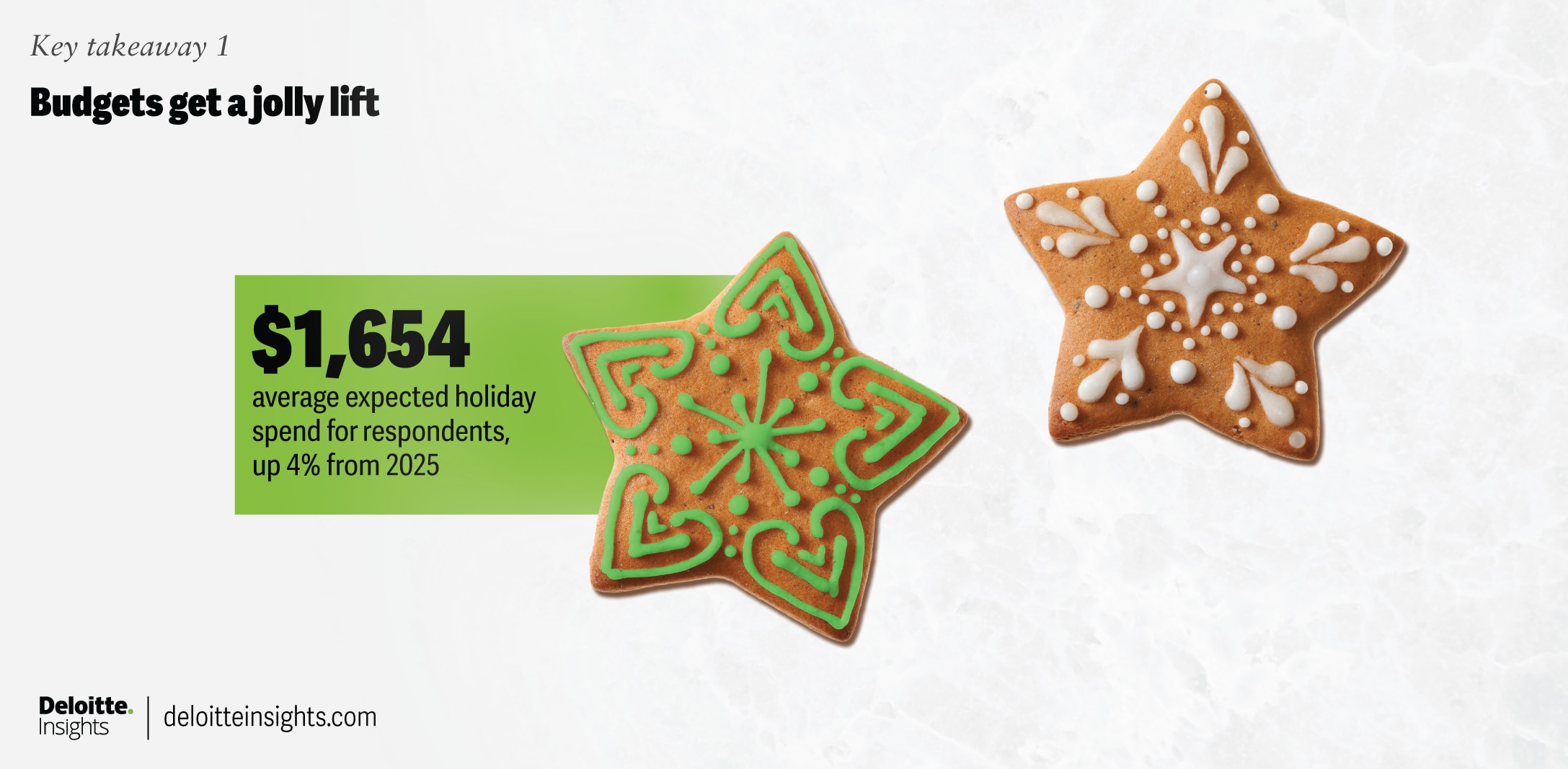 Image Credit: Deloitte, 2026 Holiday Retail Survey.
The Conference Board surveyed 3,000 U.S. consumers in October and found that average planned gift spending among gift buyers increased 5% to $683. Spending estimates for non-gift purchases, including food, decorations, and wrapping paper, rose 7.8% to $366.
The combined $1,049 figure adds the two category averages, which were calculated separately among consumers planning those purchases. It does not represent the average total spending of every respondent.
After accounting for inflation, the combined estimate increased 3.2% from 2025. However, its purchasing power remained 6.4% below the level recorded in 2024.
The income breakdown reveals an even more striking difference. Average planned gift budgets declined in every broad household income group below $125,000. For households earning $125,000 or more, budgets increased 3.6% to $1,293, although the gains were not evenly distributed within that group.
Among households earning at least $200,000, average gift budgets jumped 13.6%. Those earning between $125,000 and $149,999 actually reported a 9.4% decline, while budgets fell 3.9% among households earning $150,000 to $199,999.
The findings suggest that higher-income shoppers are responsible for much of the reported growth, while families with more modest incomes are becoming increasingly cautious.
Higher Prices, Bigger Budgets
The 2026 Deloitte Holiday Retail Survey offers another perspective. Based on responses from 4,000 U.S. consumers, it estimates average planned holiday spending at $1,654, a 4% increase from $1,595 in 2025.
Deloitte’s figure includes retail goods and holiday activities, so it cannot be directly compared with The Conference Board’s narrower estimate. Its research nevertheless supports the broader expectation that holiday spending will increase.
Consumers anticipate spending 10% more on retail purchases, bringing that budget to $988, while spending on holiday activities is expected to decline 4% to $666.
Rising prices remain a concern. Deloitte found that 79% of respondents expect higher prices, while 38% qualify as especially active bargain hunters who use several strategies to save money.
Interestingly, those value-focused shoppers plan to spend 12% more than other consumers. They may be searching for discounts not necessarily to reduce their total spending, but to make their holiday budgets go further.
Fewer Names on Gift Lists
Not every survey points toward consumers having more money available. An October 26 Gartner report, based on a survey of 1,004 Americans, found that nearly 60% have less money to spend on holiday purchases than they did in 2025.
Having less money available does not necessarily mean someone will spend less. However, Gartner found that 32% actually plan to reduce their overall winter holiday gift spending, while two-thirds expect to shop for fewer friends and relatives.
Emily Weiss, a senior principal analyst at Gartner, said consumers are becoming more selective about their purchases, putting pressure on retailers to demonstrate value without sacrificing trust.
The Conference Board found similar efforts to manage expenses. Buying more discounted merchandise was the most popular budgeting strategy, selected by 38% of respondents. Another 29% planned to spend less per person, while the same percentage expected to purchase fewer gifts.
Gift cards stood out as the only gift category in which more respondents planned to increase spending than reduce it. Meanwhile, jewelry, sporting goods, and tools were among the categories facing comparatively high levels of planned cutbacks.
Shopping Starts Earlier
Some households are giving themselves more time to find bargains. Gartner found that 57% of respondents planned to begin winter holiday shopping in October or earlier, including 30% who expected to start as early as September.
Deloitte reported that 22% intended to begin shopping sooner than last year, suggesting that waiting until Black Friday is no longer the preferred approach for every bargain hunter.
Payment methods are another consideration. The Conference Board found that 20% of respondents planned to use credit cards they would pay off over time, while 13% expected to use buy now, pay later services or installment plans.
That installment-payment figure rose to 21% among adults younger than 35, compared with just 7% among those 55 and older. Such options can spread expenses across several payments, although late fees or interest may add to the eventual cost depending on the arrangement.
Online shopping also remains widespread. The Conference Board found that 93% of gift buyers expected to purchase at least some presents online, the highest share recorded in its survey series dating back to 2011.
Despite the differences in financial circumstances, holiday traditions remain important. Deloitte found that half of respondents planned to give experiences as gifts, including restaurant meals and gift cards, while many intended to pair those experiences with physical presents.
All three surveys measure consumer expectations rather than completed holiday purchases. Whether spending ultimately meets those projections will become clearer after the season, but The Conference Board’s latest findings already show that the largest increases in planned gift budgets are concentrated among households earning $200,000 or more.