

A laundry room often gets the short end of the design stick. It’s the place for dirty socks, mysterious stains, and the lonely sock whose partner has seemingly vanished into another dimension. But with a bit of planning, this functional space can be efficient and even pleasant.
Avoiding a few common design slip-ups can transform your laundry routine from a dreaded chore into a streamlined process. Here are some design blunders and how to sidestep them.
1. Treating It as a Design Afterthought
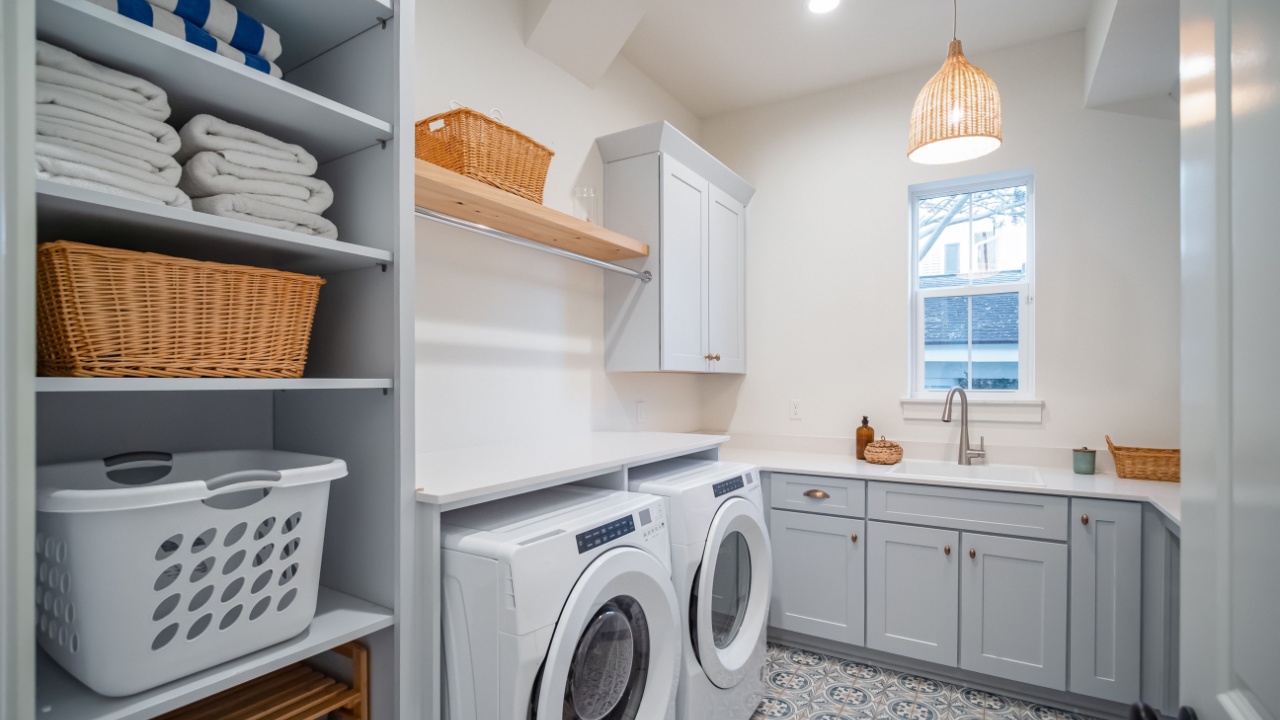
Image Credit: Shutterstock.
Many laundry rooms look like they were designed by accident. A washer and dryer get plopped into a closet or a corner of the basement, and that’s the end of the story. This lack of planning creates a space that’s frustrating to use. Laundry day becomes an obstacle course of sidestepping piles of clothes and searching for detergent.
Giving your laundry room the same design consideration as your kitchen or bathroom pays off. A thoughtful layout considers how you move through the tasks: sorting, washing, drying, and folding. When the room works with you, the entire process feels less chaotic.
2. Ignoring Door and Appliance Clearance

Image Credit: Joseph Hendrickson / Shutterstock
This is a classic “oops” moment. You’ve installed beautiful new cabinets or a shiny new front-loader, only to find the appliance door bangs into the wall or you can’t open a cabinet while the dryer is open. This oversight turns a small room into a frustrating puzzle where you can only perform one action at a time.
Before buying appliances or installing cabinetry, measure everything. Check the swing direction of the main door, appliance doors, and cabinet doors. Make sure there is enough room for them to open fully without obstruction. Consider pocket doors or barn doors for the room’s entrance to save floor space, and look at appliance specifications to understand their clearance needs.
3. Lacking a Dedicated Folding Space

Image Credit: Shutterstock.
Dumping clean laundry into a basket and hauling it to the living room floor or the bed to fold is a common routine. This not only spreads laundry all over the house but also makes the task feel bigger than it is. Without a designated surface for folding, clothes often sit in a clean pile for days, getting wrinkled all over again.
Integrating a countertop or a dedicated folding surface into your laundry room is a powerful move. A simple countertop over front-loading machines creates an instant, convenient spot. For smaller spaces, a wall-mounted, fold-down table provides a surface when you need it and tucks away when you don’t. This simple addition contains the final step of the laundry process in one room.
4. Overusing Open Shelving

Image Credit: Shutterstock.
Open shelves look fantastic in design magazines, styled with neat stacks of fluffy white towels and perfectly aligned jars. In reality, that box of dryer sheets, the half-empty bottle of stain remover, and mismatched socks can quickly turn a stylish feature into a chaotic mess. Excessive open shelving is a design choice worth reconsidering.
While a few open shelves can be great for decorative items or frequently used supplies in nice containers, closed storage is better for hiding the less-than-beautiful necessities. A mix of both is often the best solution. Use cabinets with doors to conceal detergents, cleaning tools, and other functional items.
5. Settling for Poor Lighting

Image Credit: Shutterstock.
A single, dim overhead bulb can make a laundry room feel like a dreary cave. Poor lighting makes it difficult to spot stains on clothes, read laundry labels, or simply find what you need. It’s an instant mood-killer for a room that already has a reputation for being utilitarian.
Good natural lighting makes any space more inviting and functional. A layered lighting approach works best. Start with a bright overhead fixture for general illumination. Then, add task lighting, such as under-cabinet LED strips, to brighten up your work surfaces, like the folding counter or sink area. This combination eliminates shadows and makes the room a much more pleasant place to be.
6. Forgetting an Ironing or Steaming Zone

Image credit: Shutterstock.
Wrinkled clothes are an unfortunate reality. Having to drag out a clunky ironing board from a closet and set it up in another room adds another step to an already long process. Without a designated spot, ironing or steaming can feel like a major production, leading to procrastination and a wardrobe of slightly rumpled outfits.
Creating a home for your ironing or steaming tools within the laundry room itself is a smart move. This could be a built-in, pull-down ironing board that tucks away into a shallow cabinet. Another option is a simple hook to hang a standard ironing board on the wall. For steamers, having a sturdy hook nearby to hang the garment while you work makes the process much smoother.
7. Missing a Drying Area for Delicates

Image Credit: Shutterstock.
Not everything can be tossed into the dryer. Delicate fabrics, sweaters, and certain workout clothes require air-drying to maintain their shape and longevity. Throwing these items over doorknobs, shower rods, or the backs of chairs clutters up your home and can stretch them out of shape.
A dedicated drying area is an essential component of a fully functional laundry room. A simple tension rod installed between two walls or cabinets can serve as a hanging rack. A wall-mounted, retractable clothesline or a fold-out drying rack are also excellent solutions.
Make It Functional and Pretty

Image Credit: Shutterstock.
Addressing these design mistakes can elevate your laundry room from a forgotten corner to a powerhouse of home efficiency. Evaluate your current space.
Which of these mistakes is causing the most friction in your routine? Perhaps adding a simple countertop for folding or upgrading the lighting is all it takes to make a noticeable difference.