How to Dress Up Your Window Boxes With Ornamental Kale and Cabbage: 7 Mistakes to Stop Making This Fall
Your window box is the coldest bed you own. Its soil sits up off the ground, open to the wind on every side, and by December it can freeze almost as hard as the air around it.
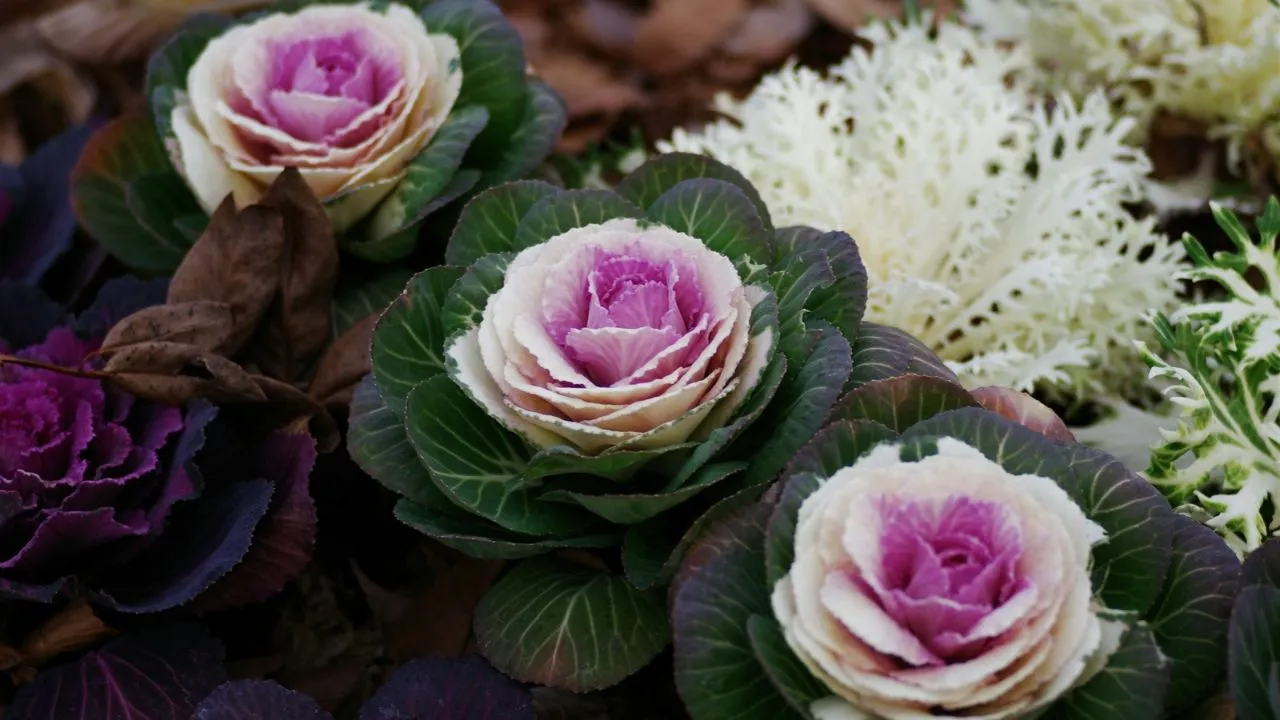
That is why so many window boxes go bare right after Halloween. Mums and summer annuals give out, the box sits empty until spring, and the front of the house looks closed for the season. Randall Vos of Iowa State University Extension explains that soil buffers roots in the ground, but the root zone of an exposed container “will likely get very close” to the air temperature. Most plants can’t survive that. However, ornamental kale and cabbage can, and they get more colorful as the weather turns.
The payoff is real and cheap. A 4-inch ornamental kale costs about $6.99 at Chalet Nursery, so three plants come to roughly $21. UMass Extension reports that these plants “will intensify in color and last up until the first December snowfall” in New England. When they finally fade, the same box can hold free evergreen cuttings until spring.
Ornamental kale and cabbage only perform in fall and winter window boxes when you plant them for a cold, exposed box, not a summer one. Here are the seven mistakes that cut the show short. Fix them right now in November, and your windows will look dressed all the way to March.
1. Don’t Plant Window Box Kale as if It Were in the Ground

The surprising fact for window box gardeners is how much colder a raised box is than a garden bed. Penn State Extension warns that container roots “can be the same temperature as the winter air,” and it advises choosing plants rated two hardiness zones colder than your own. Master Gardener Jean R. Natter of Oregon State University Extension adds that “roots are more sensitive to cold than top growth.”
That rule knocks out most fall flowers, but ornamental kale and cabbage clear it easily. Susan Mahr of Wisconsin Horticulture at UW Madison Extension writes that once acclimated, “they can survive temperatures as low as 5 °F.” That makes them one of the few colorful plants built to live in a window box after Thanksgiving.
2. Stop Buying Small Plants and Waiting for the Box to Fill In
Nursery staff rarely mention this at the register: fall plants barely grow once they’re planted. Heather Zidack of the UConn Home and Garden Education Center says it plainly: “Oftentimes the plant you purchase is the plant you will see.” UW Madison recommends choosing large, compact plants that are nearly or fully colored.
A window box is narrow, so every plant has to count. Abbi Hayes of Planters Place says, “Don’t be afraid to cram them together to fill a container since, as I said before, they won’t grow much when planted in the fall.” Plant shoulder to shoulder; bare soil between rosettes will stay bare.
3. Never Let a Window Box Go Into a Hard Freeze Dry
Shallow boxes dry out quickly in fall sun and wind, and many people stop watering the moment the air turns cold. Natter’s advice is to make certain containers are well watered before a cold snap, because “moist growing media is less likely to freeze than if it’s dry.” Penn State likewise advises watering well before the soil freezes.
Marie Iannotti of The Spruce gives the simplest test: “If the top inch of soil is dry, it’s time to water.” She also notes that ornamental kale works well “in window boxes and other containers,” as long as it gets that steady moisture.
4. Stop Fertilizing Ornamental Kale and Cabbage This Fall
Feeding a plant feels like the kind thing to do, but it is the fastest way to dull the colors you paid for. The UMass fact sheet is blunt: “Excess N during this period will prevent good coloration.” Iannotti recommends fertilizing only at planting, warning that later feeding makes plants lose color and turn leggy.
Illinois Extension agrees: “There is also no need for added fertilizer during this time of year.” That’s one more November expense you can skip.
5. Don’t Leave Bare Stems Showing From the Street
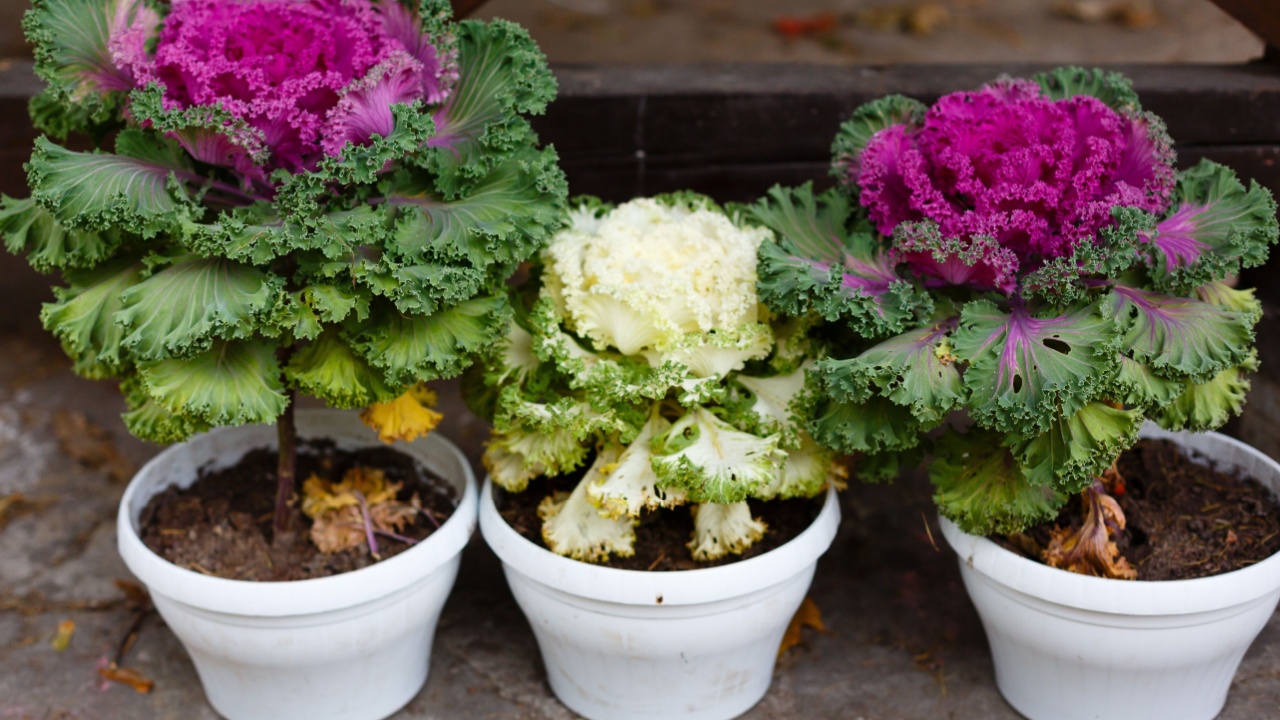
A window box faces the sidewalk, so passing neighbors see it before they notice anything else about the house. By November, many plants on garden center benches have stretched and dropped their lower leaves. Horticulturist Diana Stoll, writing in the Daily Herald, advises gardeners to “pull off unattractive leaves and plant them deeper to hide naked stems.”
UW Madison recommends burying the stem until the lowest leaves sit flush with the soil. A wobbly kale with a bare stalk reads as neglect from the street. Tight rosettes sitting right on the soil line look like you planned every inch of the box.
6. Don’t Toss the Box When the Kale Finally Gives Out
Gardeners were dressing up bare winter window boxes long before anyone pinned the idea. In 1980, Elizabeth Pullar of The Christian Science Monitor told readers to measure each evergreen spray and add four or five inches to push into the soil, stripping the needles from the buried part. She suggested spruce, fir, white pine, and cedar, and warned against hemlock because it sheds.
Candice Anderson of Illinois Extension’s Hort in the Home Landscape recommends inserting stems “at different angles” and notes that “these evergreens will stay looking good throughout the winter months.” Cut those boughs from your own shrubs or a fallen branch, and the winter box costs nothing. Tuck them in around the kale while it still looks good, and the box changes over gradually instead of going bare.
7. Never Eat Window Box Kale
Ornamental kale is technically edible, but Ellen McBride of Bountiful Acres Garden Center cautions that ornamental plants “may have been grown with treatments that are not intended for food crops.” The UMass grower fact sheet suggests a growth regulator called B-Nine to keep stems short, with a warning not to apply it to crops marketed as edible. B-Nine is daminozide, once sold as Alar. The U.S. Environmental Protection Agency canceled its food uses after the 1989 apple scare, yet Extoxnet at Oregon State University notes it remained registered for ornamental and bedding plants.
A November Plan for Gorgeous Window Boxes
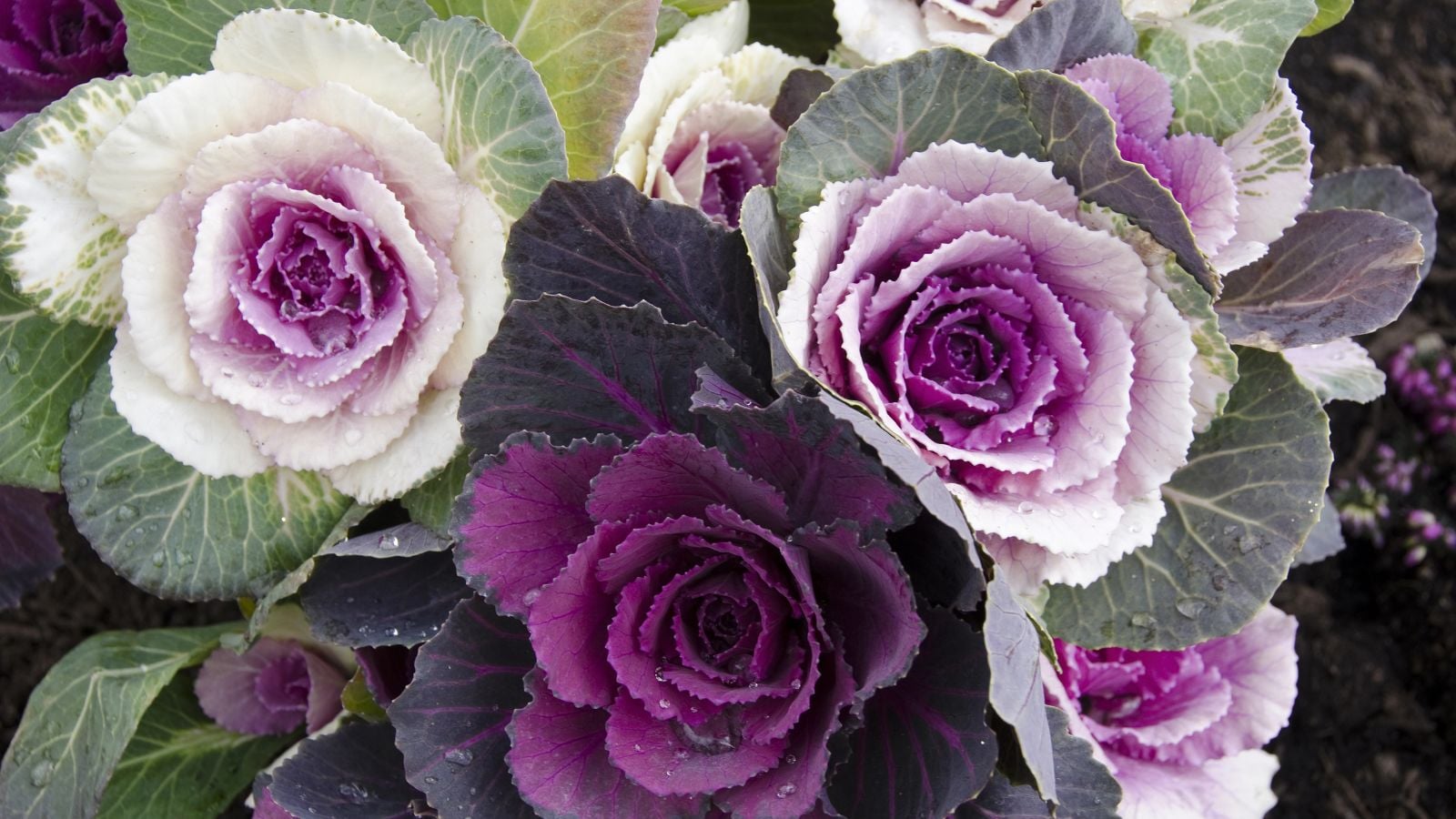
Fill each box tightly with the largest colored kale or cabbage you can find. Strip yellow leaves, plant deep, and water before every hard freeze. Skip the fertilizer entirely. Penn State notes that clay and ceramic pots may crack if left out in the elements, so lift any clay liners out before deep winter.
As December arrives, add evergreen sprays around the rosettes. If a plant sends up a stalk, the Missouri Botanical Garden says to “promptly remove any flower stems that may appear.” Pull that plant, and the boughs will cover the gap.
Let the Cold Do the Work
The real villain this season isn’t frost; it’s the empty window box that sits bare from Halloween to April. For gardeners in their 50s and 60s, there’s a practical bonus too: one November planting and one round of boughs means fewer trips up the step stool all winter.
Ornamental kale and cabbage get better as the weather gets worse; UMass calls them “both colorful and long-lasting in the landscape.” A $21 planting and a few free branches will keep your windows looking cared for until spring.
Read More
Stop Making These 8 Watering Mistakes Before Your First Hard Frost
How to Transition Plants Indoors for Winter: 9 Mistakes to Stop Making This Fall