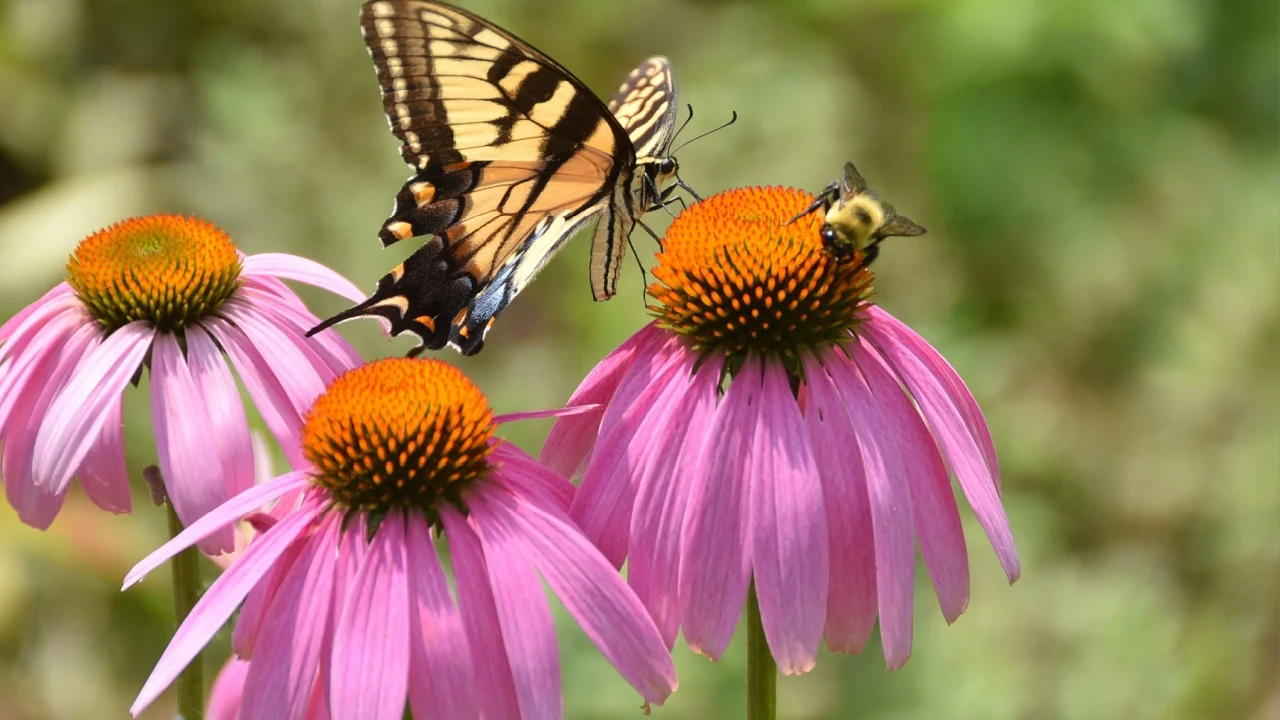
10 Native Plants That Will Transform Your Garden Into a Pollinator Haven This Spring
If you want to truly support bees, butterflies, and hummingbirds, planting a few “pollinator-friendly” flowers isn’t always enough. The real impact comes from choosing native plants, which are species that evolved alongside local wildlife and provide the nectar, pollen, and host support they actually need.
As the Xerces Society explains, “You can help pollinators significantly by growing a diversity of native plants in your space.” Even a modest backyard bed or a few well-chosen containers can become a meaningful refuge.
Here are 10 standout native plants that support pollinators beautifully from early spring through fall.
1. Asclepias tuberosa (Butterfly Milkweed)
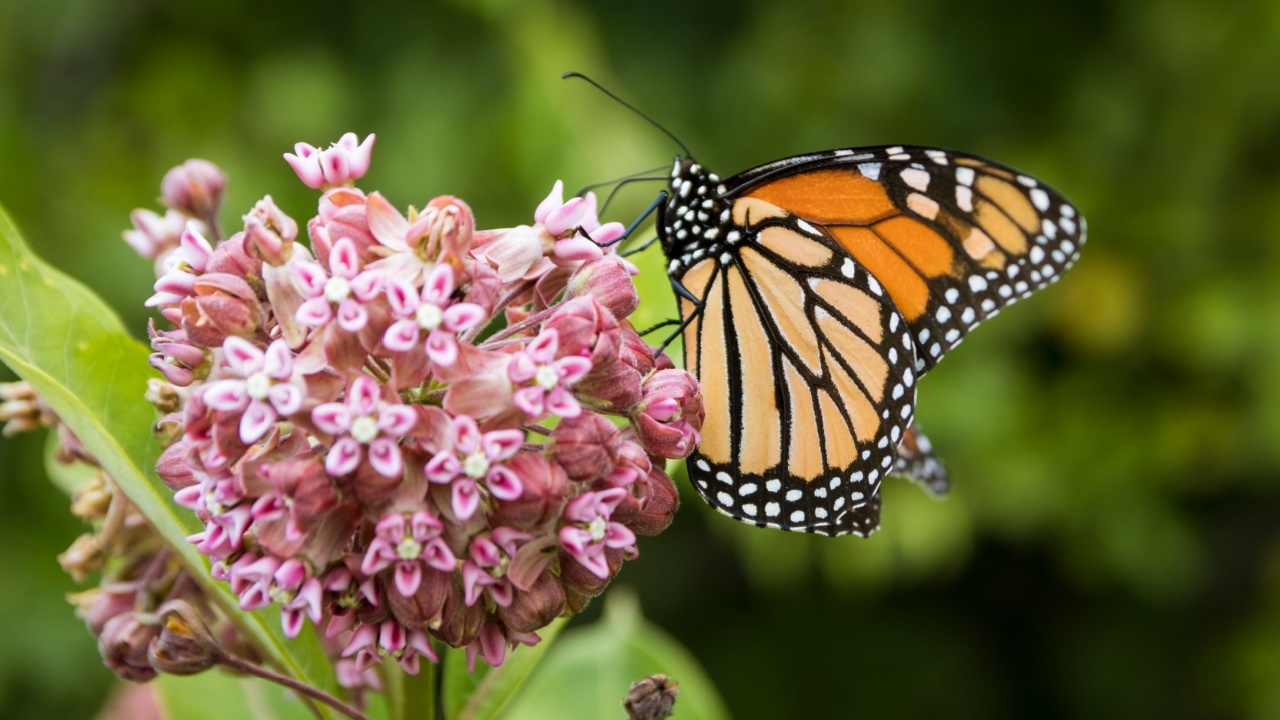
If you plant just one native plant for pollinator support, make it milkweed. Butterfly milkweed produces vibrant orange blooms that are rich in nectar, while its leaves serve as the essential host plant for monarch caterpillars.
Yes, the leaves will be eaten — that’s the point. Without milkweed, monarchs cannot complete their life cycle. “Adult monarch butterflies need native, nectar-producing powerhouse plants, especially during their spring and fall migrations,” says Will Rogers of the State Botanical Garden of Georgia.
Butterfly milkweed is best suited for areas in full sun with well-drained soil. Once established, they are extremely drought-tolerant.
2. Echinacea purpurea (Purple Coneflower)
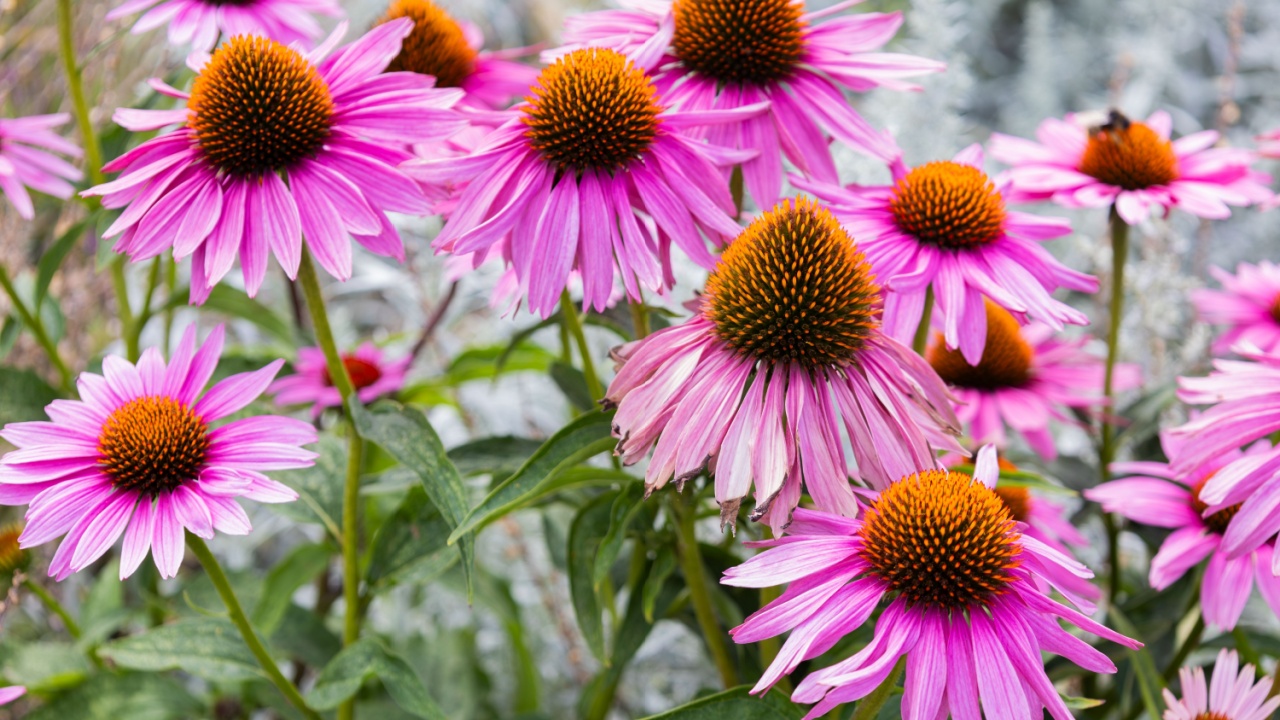
Few perennials work harder than echinacea purpurea, or purple coneflower. This long-blooming native attracts bees, butterflies, and beetles all summer long. In fall and winter, their seed heads become food for birds, like finches.
Coneflower tolerates heat, humidity, and average soil, which makes it an ideal, low-maintenance native plant choice. Preferring areas with full sun to part shade, purple coneflower thrives in USDA Hardiness Zones 3-9, according to Penn State Extension.
3. Monarda fistulosa (Wild Bergamot)
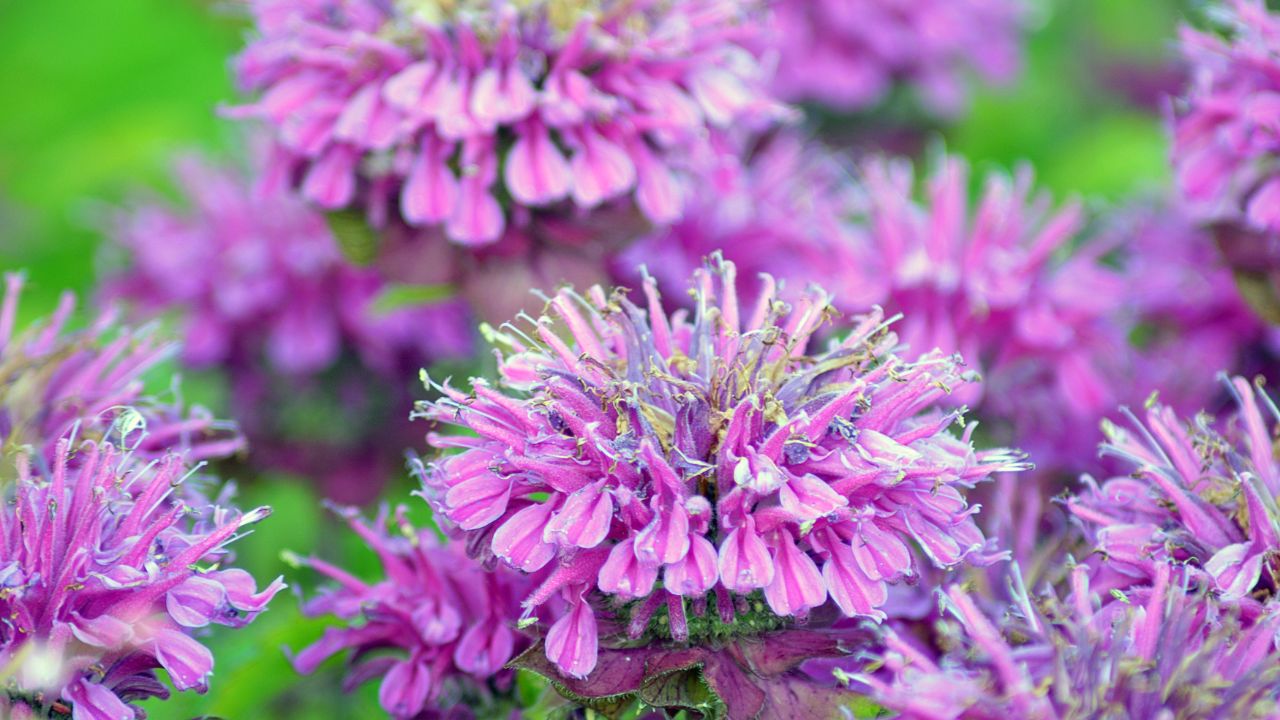
Wild bergamot’s shaggy lavender blooms are nectar magnets. Bees, butterflies, and hummingbirds flock to it.
Growing best in USDA Hardiness Zones 3-9, you’ll want to plant it in generous groups rather than isolated singles. Pollinators locate food more easily in clusters, and your garden will look fuller, too.
Wild bergamot prefers sunny areas of your garden with moderate moisture. Be sure to give it room, as it will spread out gently over time.
4. Pycnanthemum muticum (Mountain Mint)
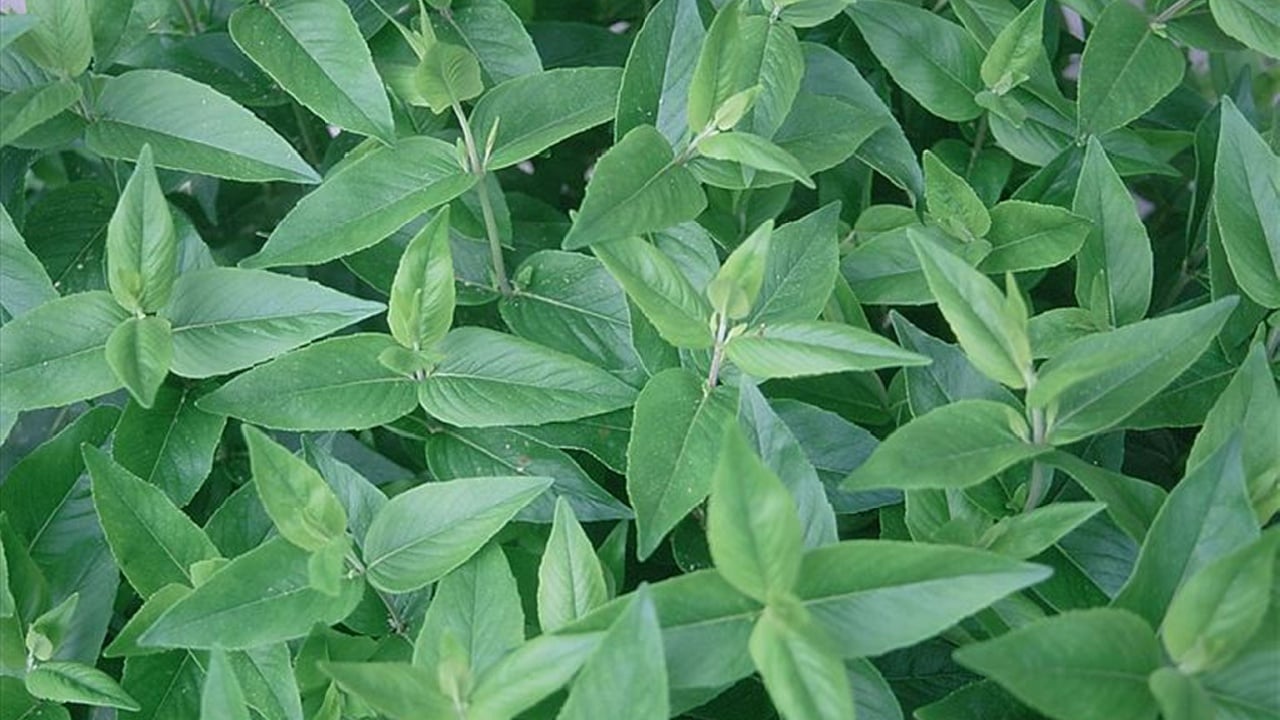
Often called one of the most powerful pollinator plants, mountain mint blooms for months and attracts an impressive diversity of native bees, wasps, butterflies, and beneficial insects.
It’s especially valuable in midsummer, when other plants begin to fade.
Mountain mint thrives in full sun in USDA Hardiness Zones 3-8. This is another native that you’ll want to give some room to, although, according to Penn State Extension, it doesn’t spread as aggressively as other mint varieties.
5. Eutrochium purpureum (Joe Pye Weed)
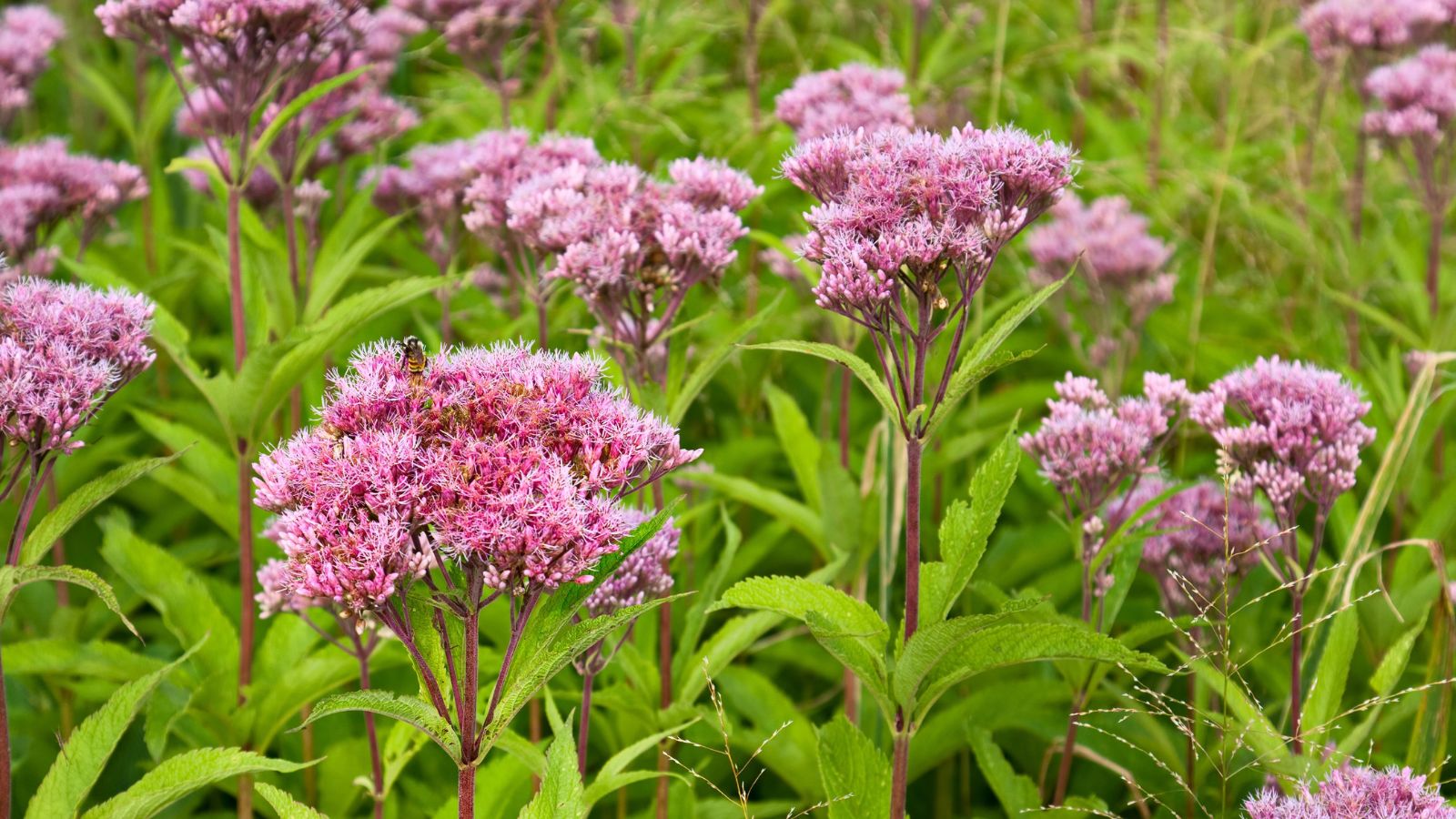
This tall native makes a dramatic statement at the back of border garden areas. Growing to a dramatic height of 5-7 feet, its mauve-pink flower clusters are magnets for butterflies and late-season bees.
Joe Pye weed thrives in moist soil and shines in rain gardens or low-lying areas. It is absolutely intolerant of dry soils, says NC State Extension.
6. Symphyotrichum novae-angliae (New England Aster)
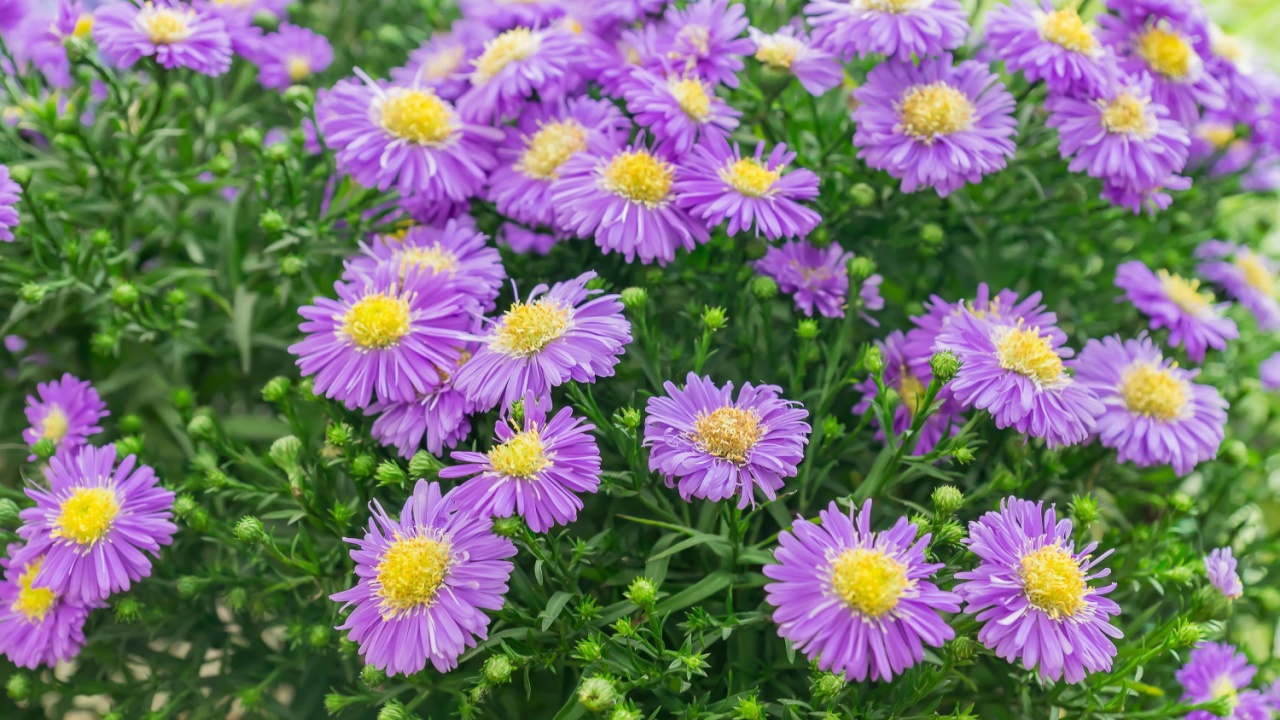
When most gardens are fading, asters step in. Their late-season blooms provide critical nectar for migrating monarchs and native bees that are preparing for winter.
The U.S. Forest Service advises gardeners to “use a wide variety of plants that bloom from early spring into late fall.” Asters are essential to that fall relay.
Asters are best suited to areas with full sun, growing in USDA Hardiness Zones 3-9. They can reach a height of 1-6 feet tall, providing a nice accent to garden borders or in a cottage garden.
7. Cephalanthus occidentalis (Buttonbush)
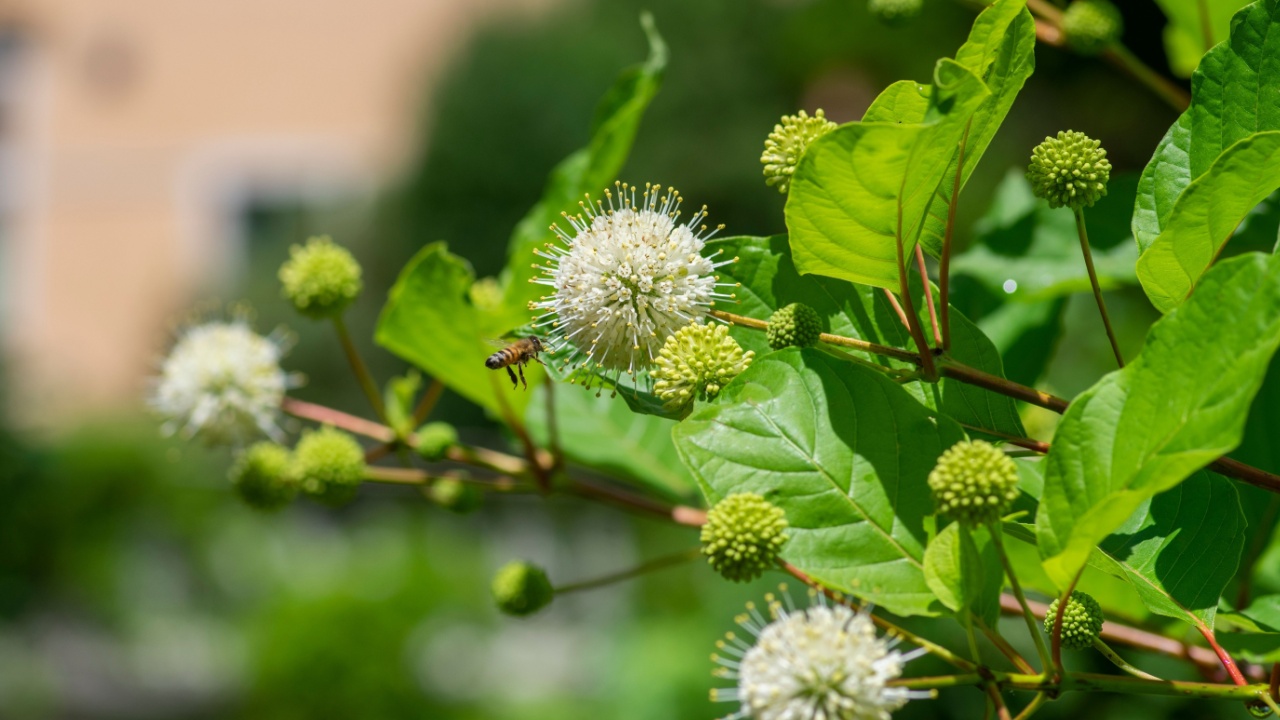
This native shrub produces unique globe-shaped white flowers that attract bees, butterflies, and hummingbirds. Button bush thrives in wet soils and is ideal for rain gardens or pond edges.
Beyond pollinators, it supports caterpillars and provides berries for birds, expanding its ecological impact. Its blooms appear in early to mid-summer, providing critical resources for pollinators in the first half of summer.
8. Solidago nemoralis (Goldenrod)
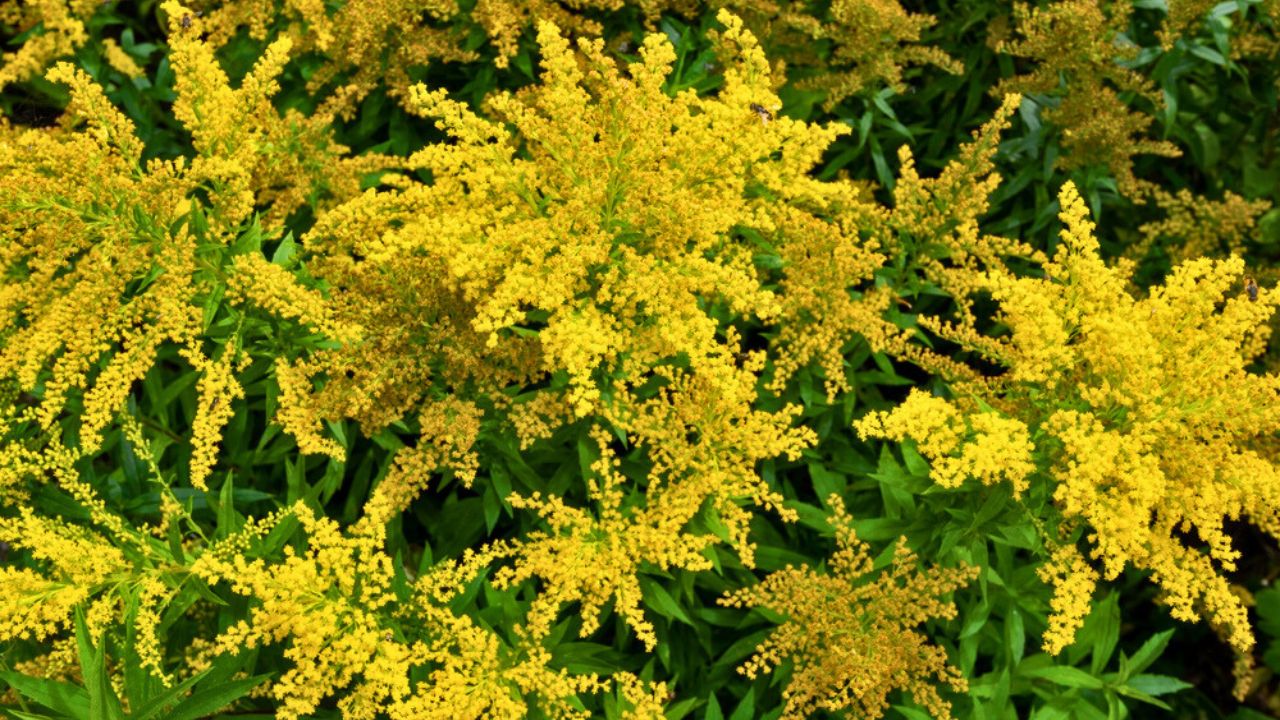
Goldenrod is often unfairly blamed for seasonal allergies (ragweed is the real culprit). In reality, it’s one of the most important late-season nectar sources for pollinators.
Penn State Extension explains, “eleven species of native bees are specialists in goldenrod and seek this specifically for their diet.” It is also a host to over 50 different species of insects and several butterfly and moth larvae.
Goldenrod prefers full sun and can grow up to six feet tall. Some species of goldenrod are known for spreading rather aggressively, so be sure to give this one room.
9. Aquilegia canadensis (Columbine)

One of the earliest spring bloomers, native columbine provides nectar for emerging bees and hummingbirds when little else is available. Its delicate, nodding red-and-yellow flowers are perfectly shaped for long-tongued pollinators, offering an early-season energy source that helps jump-start the garden ecosystem.
It thrives in part shade and naturalizes gently in woodland settings, along borders, or tucked beneath deciduous trees. Once established, it readily self-sows without becoming aggressive, creating soft drifts that return each spring with very little maintenance.
10. Quercus (Native Oaks)
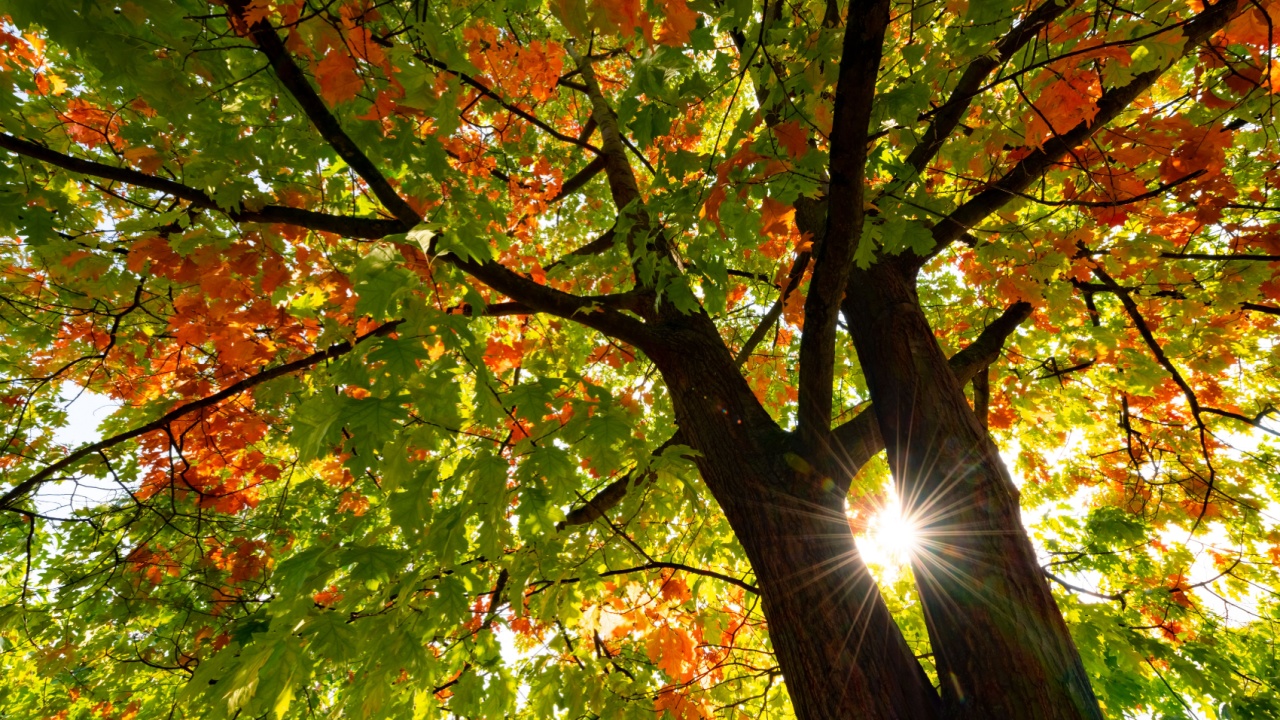
If you have space for a tree, plant an oak.
Native oaks support hundreds of caterpillar species, far more than most ornamental trees, making them keystone species in backyard ecosystems.
Caterpillars feed nesting birds, linking your pollinator garden to the broader food web. In fact, most songbird chicks rely heavily on soft-bodied caterpillars as their primary food source, especially during breeding season.
Beyond insects and birds, oaks also produce acorns that sustain squirrels, deer, turkeys, and countless other wildlife. Even their bark and fallen leaves create habitat for beneficial insects and overwintering pollinators, quietly supporting biodiversity at every level of the landscape.
How to Make Native Plants for Pollinators Work in Your Garden
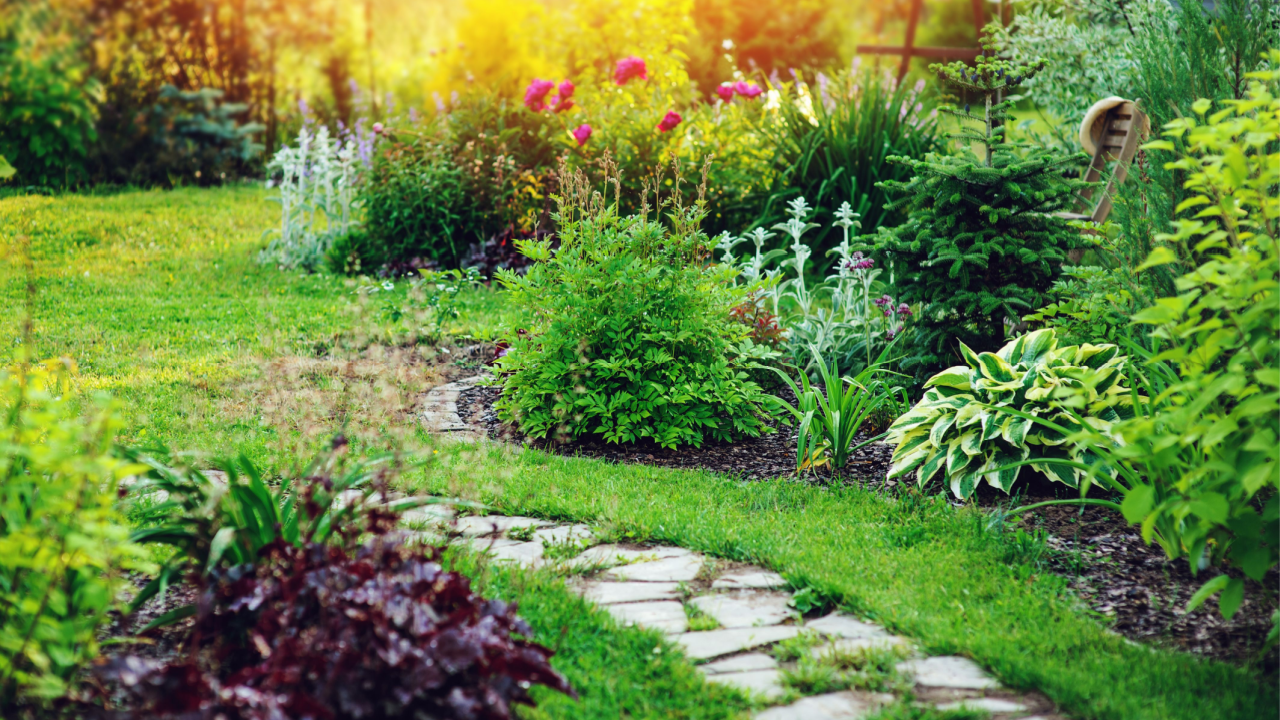
To get the most from your native planting:
- Plant in clumps of three or more so pollinators can easily locate blooms.
- Choose species that provide a succession of flowers from spring through fall.
- Avoid heavily bred, double-flowered varieties that may lack nectar and pollen.
- Minimize pesticide use whenever possible.
You don’t need to remove your entire lawn overnight. Start with a single bed. Add a shrub next season. Layer in early and late bloomers over time.
Even small patches of native plants for pollinators can create powerful change by turning your garden into a place that is not just beautiful, but essential.