
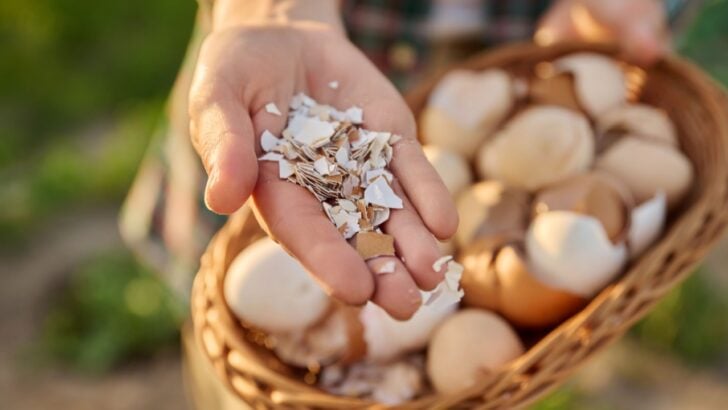
Do you save your eggshells? One gardener described on a Gardening Reddit thread that she’s been saving crushed eggshells all winter and scattering them in the garden once spring arrives.
This simple habit sparked plenty of conversation, with others admitting they do the same and feel it benefits their plants. The practice has become a seasonal ritual for many, becoming a tradition that appears to help gardens flourish.
What are their tips and tricks for making eggshells work in their favor? Is there science behind it, or is it just luck and the fact that these gardeners care about their soil?
This article looks at how gardeners use eggshells, what science says about their effectiveness, and where they fit into a balanced gardening routine. You will see both the enthusiasm for saving shells and the evidence of their actual impact.
Eggshells as a Source of Calcium
Eggshells are made up mostly of calcium carbonate, which is the same compound found in agricultural lime. Gardeners often crush or grind shells before adding them to soil, hoping to enrich it with calcium. The mineral is important for plant cell walls and is often associated with preventing blossom-end rot in tomatoes.
Science shows that calcium from shells is slowly released unless finely ground. Large pieces may remain intact for years, offering little immediate benefit. Grinding shells into powder makes them more useful, especially when added to compost or planting holes.
Using Eggshells in Compost
Many gardeners toss shells into compost bins, where they eventually break down and enrich the finished product. This method is popular because it avoids waste and contributes minerals to the soil. Over time, shells disappear into the mix, leaving behind calcium and trace nutrients.
For faster results, shells should be crushed or powdered before composting. This increases surface area and helps microbes process them more efficiently. While composting shells may not provide quick calcium, it supports long-term soil health and structure.
Eggshells for Pest Control
Some gardeners scatter shells around seedlings to deter slugs and snails. The sharp edges are believed to discourage pests from crossing, offering a natural barrier for tender plants. Reports of success vary, but many gardeners continue to use shells this way.
Effectiveness depends on conditions. Rain can flatten shells, and determined pests may still crawl over them. Combining shells with other methods, such as copper tape or diatomaceous earth, provides more reliable protection.
Eggshells and Tomato Plants
Tomatoes are often the reason gardeners save shells. Calcium deficiency is linked to blossom end rot, and shells are seen as a natural solution. Gardeners scatter them around tomato plants or mix them into the soil, hoping to prevent the problem.
Research shows that blossom-end rot is usually caused by inconsistent watering rather than by a lack of calcium. While shells can contribute nutrients, they may not act quickly enough to solve the issue. Proper watering and balanced soil management remain the most effective strategies.
Eggshells in Long-Term Soil Health
Even if eggshells do not provide immediate results, they certainly contribute to soil structure in due time. Gardeners who consistently add shells year after year notice healthier beds and improved soil composition. The slow release of minerals from eggshells supports long-term fertility.
Patience is required, but the cumulative effect can be meaningful. Treating shells as part of a broader soil-building strategy makes them more valuable in the long run.
Alternatives to Eggshells
Some gardeners prefer faster calcium sources such as agricultural lime or gypsum. These amendments dissolve quickly and provide nutrients in a form plants can use immediately. (Note: Our resident master gardener recommends always testing your soil before adding amendments.) They are widely available and often inexpensive.
Eggshells can still play a role, but they should be viewed as a supplement rather than a primary source of calcium. Combining shells with proven amendments creates a balanced approach to soil nutrition.
Tradition Meets Science
Saving shells connects gardeners to tradition while reducing waste. Even if science shows limited immediate benefits, the practice remains meaningful for many. It offers a sense of contributing to plant health and sustainability.
The best approach is to blend tradition with evidence. Use shells as part of composting or soil-building, but rely on faster methods for urgent plant needs. This way, shells become a helpful addition without being overvalued (or undervalued).
Read More:
Stop Growing These 10 Plants Near Your Tomatoes
A 5-Step Guide to Composting at Home to Stop Throwing These Kitchen Scraps Away