Evangelos Marinakis Backs Greek National Opera’s Carnegie Hall Debut
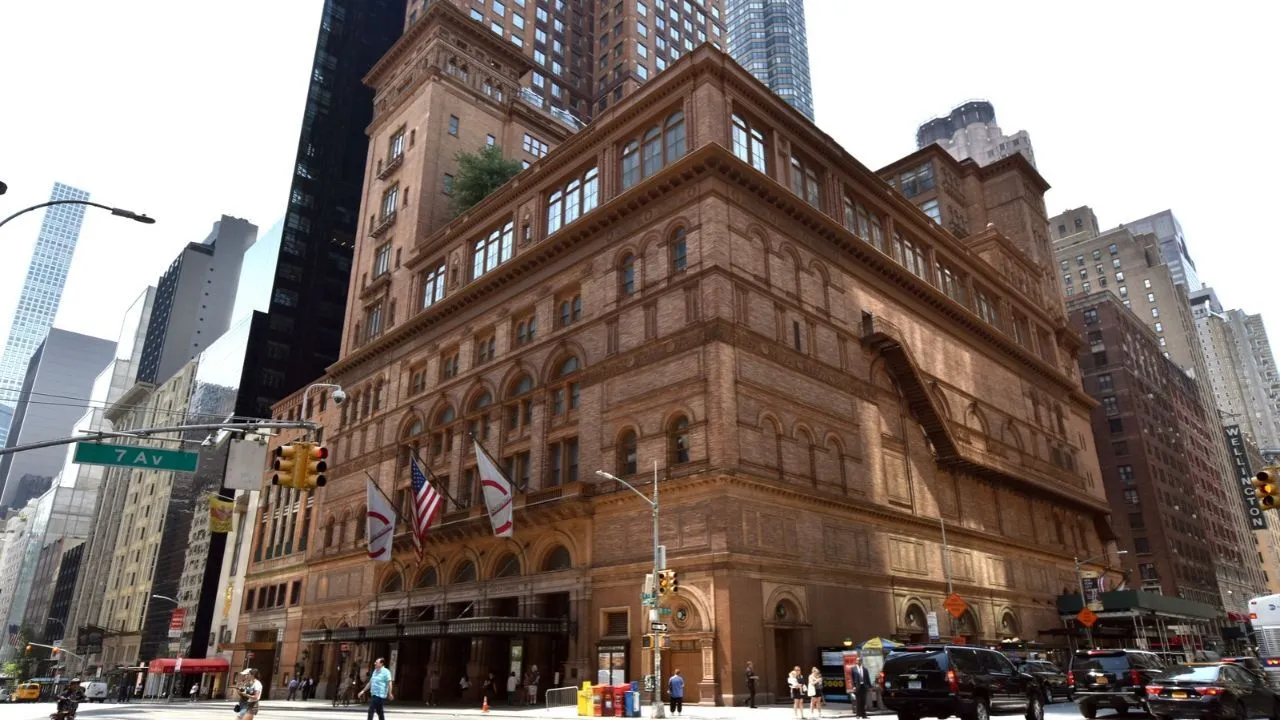
The Greek National Opera made its New York debut at Carnegie Hall on October 15, 2026, with a concert celebrating one of Greece’s most influential literary figures, Nikos Kazantzakis. The performance marked a milestone in the institution’s international expansion, supported by philanthropic funding, corporate partnerships, and cultural diplomacy.
Greek shipping businessman and investor Evangelos Marinakis was among the event’s official corporate partners, alongside Capital Clean Energy Carriers. The concert also received funding from the Stavros Niarchos Foundation, which has supported the opera company’s efforts to reach international audiences.
The performance, titled Nikos Kazantzakis: An Odyssey in Music, brought together compositions inspired by the celebrated Greek author, whose works include Zorba the Greek and The Last Temptation of Christ. According to the Greek National Opera, the concert attracted a large audience to Carnegie Hall’s approximately 3,000-seat Stern Auditorium and concluded with a standing ovation.
For Marinakis, the partnership also extended an existing commitment to preserving Crete’s literary and cultural heritage, the island from which his family originates.
A Longstanding Investment in Greek Cultural Heritage
Marinakis’s involvement with the Kazantzakis legacy predates the Carnegie Hall performance by more than a decade.
In 2014, he provided financial support to the Nikos Kazantzakis Museum in Myrtia, near Heraklion, as the institution faced serious financial difficulties. Contemporary reporting described an agreement to address the museum’s financial obligations and provide longer-term operating support.
The intervention helped the museum continue its work preserving the author’s manuscripts, correspondence, personal possessions, and literary history.
The connection was personal as well as philanthropic. Marinakis’s father, Miltiades, came from Crete, and Marinakis has previously said he encountered Kazantzakis’s writing through books his parents read.
His later support for the Greek National Opera’s New York appearance brought that association with Kazantzakis to a much larger international stage.
The opera company identified Marinakis as a corporate partner for the Carnegie Hall debut and acknowledged his position as a major sponsor of the Kazantzakis Museum.
Bringing Greek Music to International Audiences
The Carnegie Hall concert formed part of the Greek National Opera’s broader strategy to develop its international presence.
The institution has previously performed across Europe, Asia, Australia, and Africa. Its New York debut offered an opportunity to introduce American audiences to a program connecting Greek literature, classical composition, and traditional musical influences.
Conducted by Vassilis Christopoulos, the concert featured works by five Greek composers: Manos Hadjidakis, Mikis Theodorakis, Nikos Skalkottas, Dimitri Mitropoulos, and Giorgos Koumendakis.
The program included familiar music associated with Zorba the Greek, alongside compositions less widely known outside Greece.
A particular highlight was the American premiere of Amor Fati, a symphonic work Koumendakis composed in 2007 and now leads as the Greek National Opera’s artistic director.
The composition draws on Kazantzakis’s philosophical ideas about fate and freedom while incorporating elements of Cretan musical tradition into a contemporary orchestral arrangement.
The performance also featured mezzo-soprano Anita Rachvelishvili, soprano Maria Kostraki, and the Manos Hadjidakis Ensemble.
Independent reviews were generally positive, though some critics questioned the program’s pacing and presentation. OperaWire described the concert as an engaging exploration of Greek music and culture, while other reviewers highlighted the orchestra’s musicianship and the audience’s enthusiastic response.
The Role of Corporate and Philanthropic Support
The New York performance also illustrated the funding arrangements behind major international cultural productions.
The Stavros Niarchos Foundation provided a grant supporting the opera company’s international artistic outreach. The concert formed part of the foundation’s celebrations marking 30 years of grantmaking.
Marinakis and Capital Clean Energy Carriers participated as official corporate partners. The event also received financial assistance from Greece’s Ministry of Culture and was held under the auspices of Greek diplomatic and religious institutions in New York.
These arrangements demonstrate how international cultural events can draw on multiple sources of financial and institutional support.
For cultural organizations, such partnerships can help make overseas performances possible while extending the reach of national artistic traditions. For private supporters, they offer an opportunity to contribute to cultural preservation and international exchange.
The Carnegie Hall debut also highlighted the value of presenting familiar cultural material in new settings. While American audiences may recognize the music of Zorba the Greek, the program introduced works spanning several generations of Greek composers.
Including Koumendakis’s Amor Fati placed contemporary Greek composition alongside internationally recognized classics, showing how the country’s musical heritage continues to develop.
A Broader International Platform for Greek Culture
The Carnegie Hall performance represented a significant achievement for the Greek National Opera, giving the organization a prominent New York platform and attracting attention from international classical music critics.
For Marinakis, the involvement continued a pattern of supporting cultural institutions associated with Greek heritage, particularly the legacy of Kazantzakis.
The relationship between the museum in Crete and the Carnegie Hall concert is particularly notable. One institution preserves the author’s physical and documentary legacy, while the other brought artistic interpretations of his work to an international audience.
Together, they show different ways private financial support can help preserve and circulate cultural heritage.
The Greek National Opera’s New York debut demonstrated the potential of combining institutional ambition with philanthropic and corporate backing to introduce national artistic traditions to audiences beyond their country of origin.