
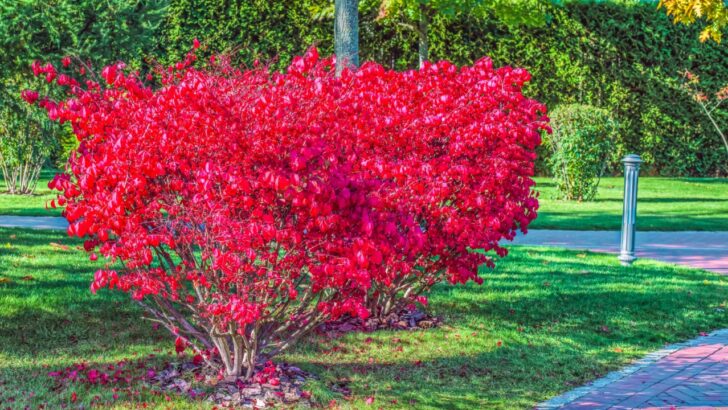
When you think of autumn, vibrant images of trees ablaze in red, orange, and yellow likely come to mind. While towering maples and oaks often steal the show, you can bring that same spectacular fall color right into your own backyard with carefully chosen shrubs.
Adding bushes that turn a brilliant red in the fall can transform your landscape, adding warm, jewel-toned hues that signal the changing seasons. These plants offer more than just a fleeting moment of beauty; they provide structure, attract wildlife, and add interest to your garden all year long.
Choosing the right shrubs allows you to create layers of color and texture that will make your garden pop, even as the days grow shorter. From low-growing ground covers to towering privacy screens, there’s a red-foliaged shrub for every garden size and style. Let’s explore twelve fantastic options that will set your yard on fire with stunning red color this autumn.
1. Dwarf Burning Bush (Euonymus alatus ‘Compactus’)
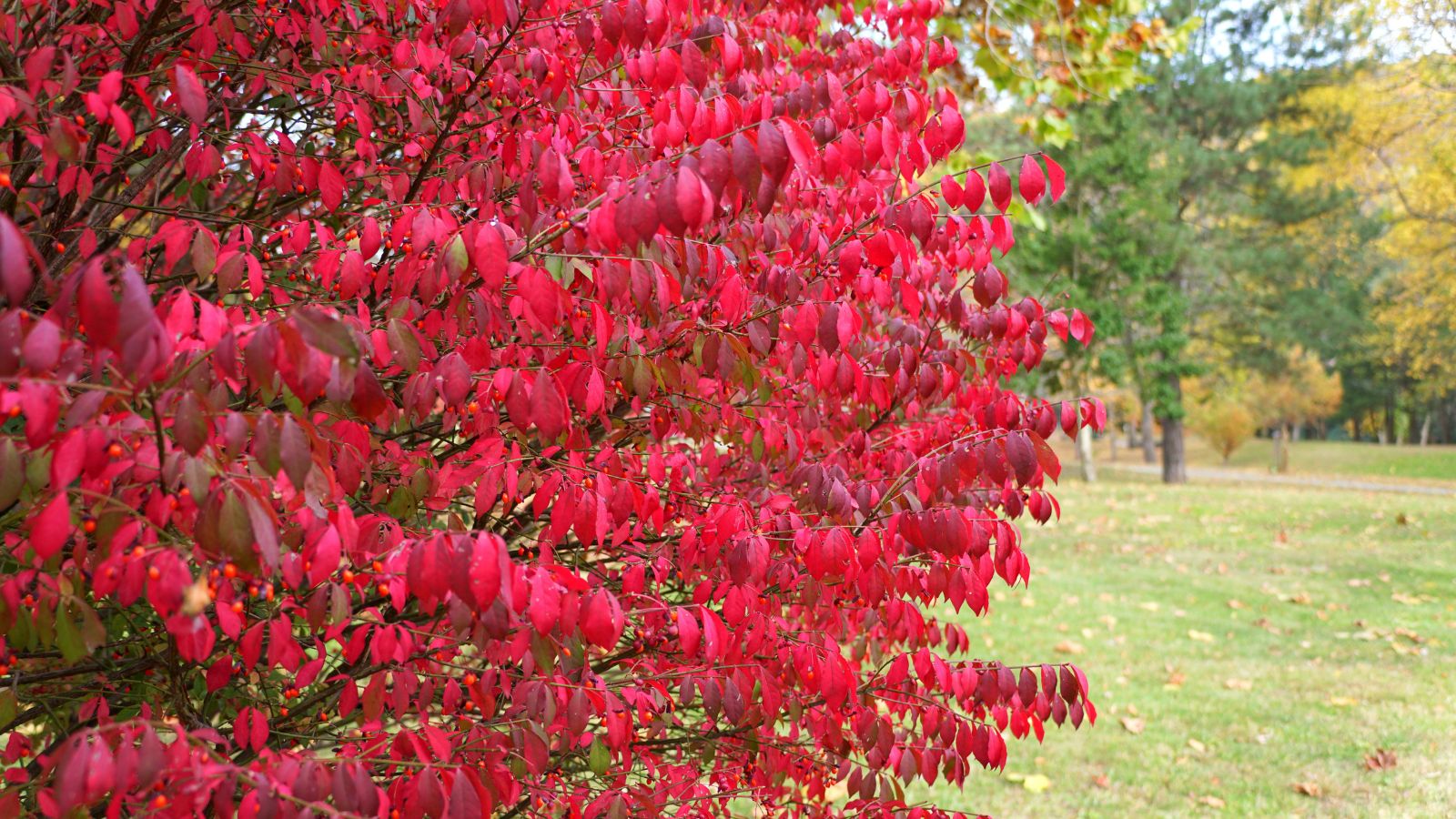
Image Credit: Depositphotos.com.
The Dwarf Burning Bush is famous for its almost fluorescent, fiery red foliage that seems to glow in the autumn sunlight. Despite its “dwarf” name, this is a substantial shrub that can make a major impact. During spring and summer, its leaves are a pleasant medium green, providing a calm backdrop for other plants before its spectacular fall transformation.
This shrub is a popular choice because its fall color is incredibly reliable and vibrant. It can be used as a standalone specimen plant, a focal point in a mixed border, or planted in a row to create a jaw-dropping hedge. The corky, winged bark on older stems also adds interesting texture to the winter garden after the leaves have fallen. Be aware that in some regions, this plant is considered invasive, so it’s wise to check with your local extension office before planting.
Quick Look:
- USDA Zones: 4-9
- Size: Up to 10 feet tall and wide
- Light: Full sun to partial shade (best color in full sun)
- Soil: Adaptable to most soil types, but prefers well-drained soil.
- Care Tip: Prune in late winter or early spring to maintain shape and size. Its dense growth makes it an excellent choice for a privacy screen.
2. Oakleaf Hydrangea (Hydrangea quercifolia)
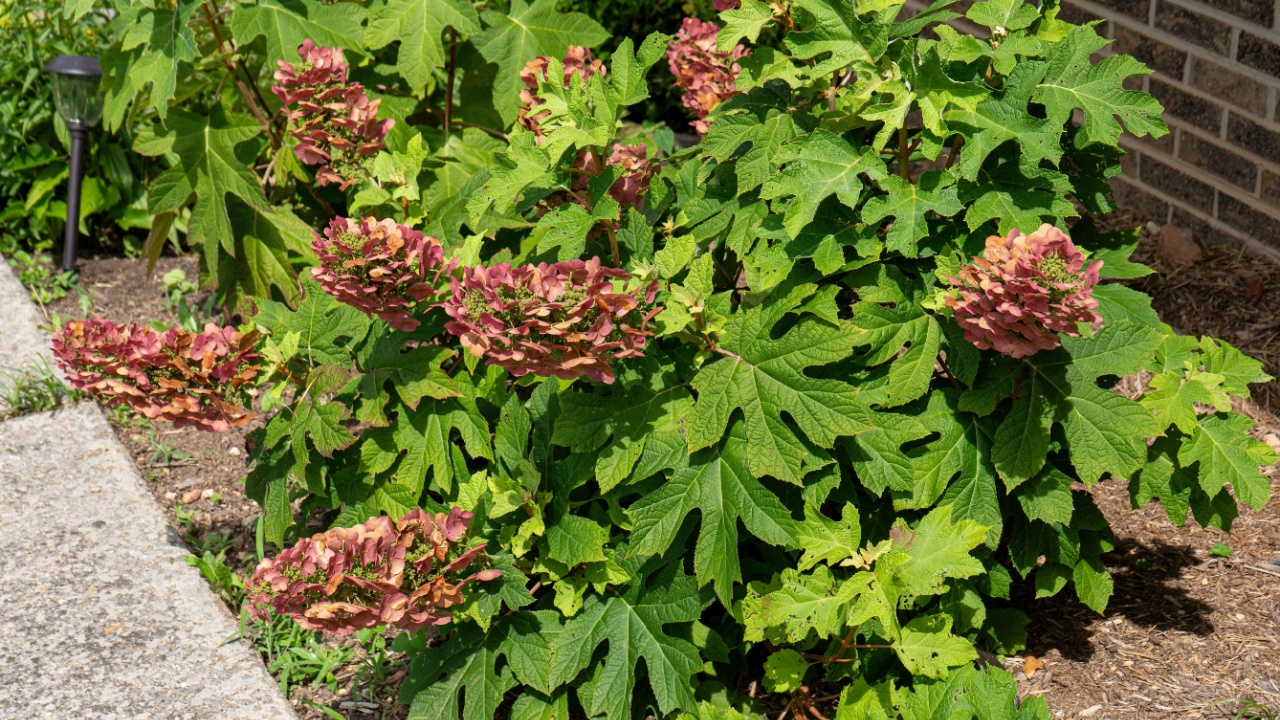
Image Credit: Shutterstock.com.
While many gardeners plant hydrangeas for their iconic summer blooms, the Oakleaf Hydrangea offers an incredible four-season show. Its large, cone-shaped panicles of white flowers are stunning in summer, but its real second act begins in the fall. The large, oak-shaped leaves transition from green to a breathtaking medley of deep burgundy, rich red, and hints of purple and bronze.
The Oakleaf Hydrangea is an excellent choice for adding both bold texture and dramatic color to shady or woodland gardens. The peeling, cinnamon-colored bark provides visual interest throughout the winter, long after the leaves have dropped. This native shrub is also relatively low-maintenance and resistant to most pests and diseases.
Quick Look:
- USDA Zones: 5-9
- Size: 5 to 8 feet tall and wide
- Light: Partial shade is ideal; can tolerate full sun with consistent moisture.
- Soil: Prefers moist, well-drained, acidic soil.
- Next Steps: After enjoying the fall color, leave the dried flower heads on the plant for winter interest. Prune after flowering if needed, but avoid heavy pruning as it blooms on old wood.
3. Highbush Blueberry (Vaccinium corymbosum)
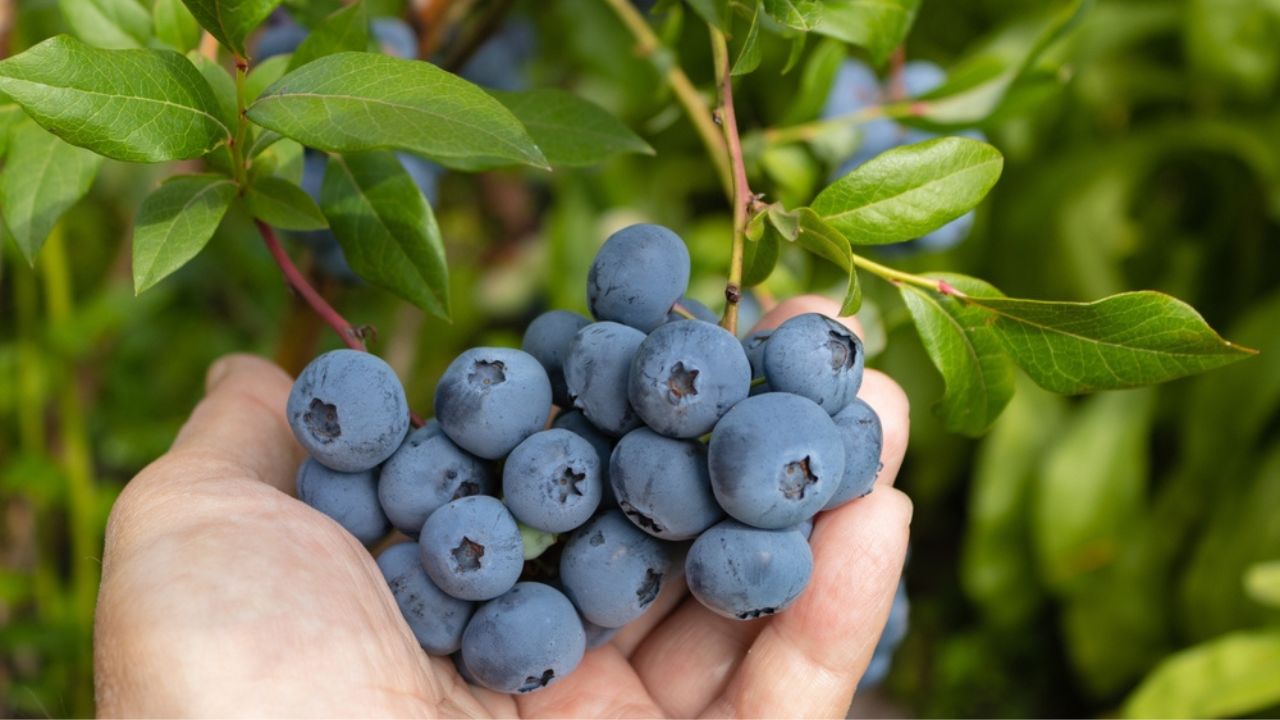
Image Credit: Shutterstock.
Why settle for a shrub that’s only ornamental? With Highbush Blueberries, you get delicious, healthy berries in the summer and a spectacular display of fiery red leaves in the fall. As temperatures drop, the smooth green leaves turn shades of brilliant scarlet, crimson, and sometimes even purplish-red, making it one of the best dual-purpose plants for any home garden.
Planting blueberries is a fantastic way to incorporate edible landscaping into your yard. They work well in dedicated beds, mixed borders, or even large containers. For the best fruit production, it’s recommended to plant at least two different varieties to ensure good cross-pollination. Even if you don’t get a huge harvest, the stunning fall foliage is reason enough to grow them.
Quick Look:
- USDA Zones: 3-8
- Size: Can range from 4 to 12 feet tall, depending on the variety.
- Light: Full sun for best fruit and color.
- Soil: Requires acidic, well-drained, organically rich soil.
- Care Tip: Amend your soil with peat moss or sulfur to lower the pH if necessary. A layer of pine needle or bark mulch can help maintain soil acidity and moisture.
4. Brandywine Viburnum (Viburnum nudum ‘Bulk’)

Image Credit: Shutterstock.com.
Brandywine Viburnum is a true showstopper, celebrated for both its foliage and its fruit. In spring, it produces clusters of creamy white flowers. As summer progresses, these give way to berries that perform their own color-changing show, transitioning from green to shades of pink, blue, and finally black. But the main event happens in the fall when its glossy green leaves turn a magnificent maroon-red.
This shrub is a fantastic choice for gardeners who want multi-season interest. The combination of colorful berries and deep red leaves creates a stunning display. It’s also an important food source for birds. To ensure a good fruit set, it’s helpful to plant it near another compatible viburnum variety for cross-pollination.
Quick Look:
- USDA Zones: 5-9
- Size: 5 to 6 feet tall and wide
- Light: Full sun to partial shade.
- Soil: Adaptable to various soil types.
- Next Steps: Consider planting it alongside another Viburnum nudum cultivar, like ‘Winterthur’, to maximize the berry display that complements the red fall leaves.
5. Virginia Sweetspire ‘Henry’s Garnet’ (Itea virginica)
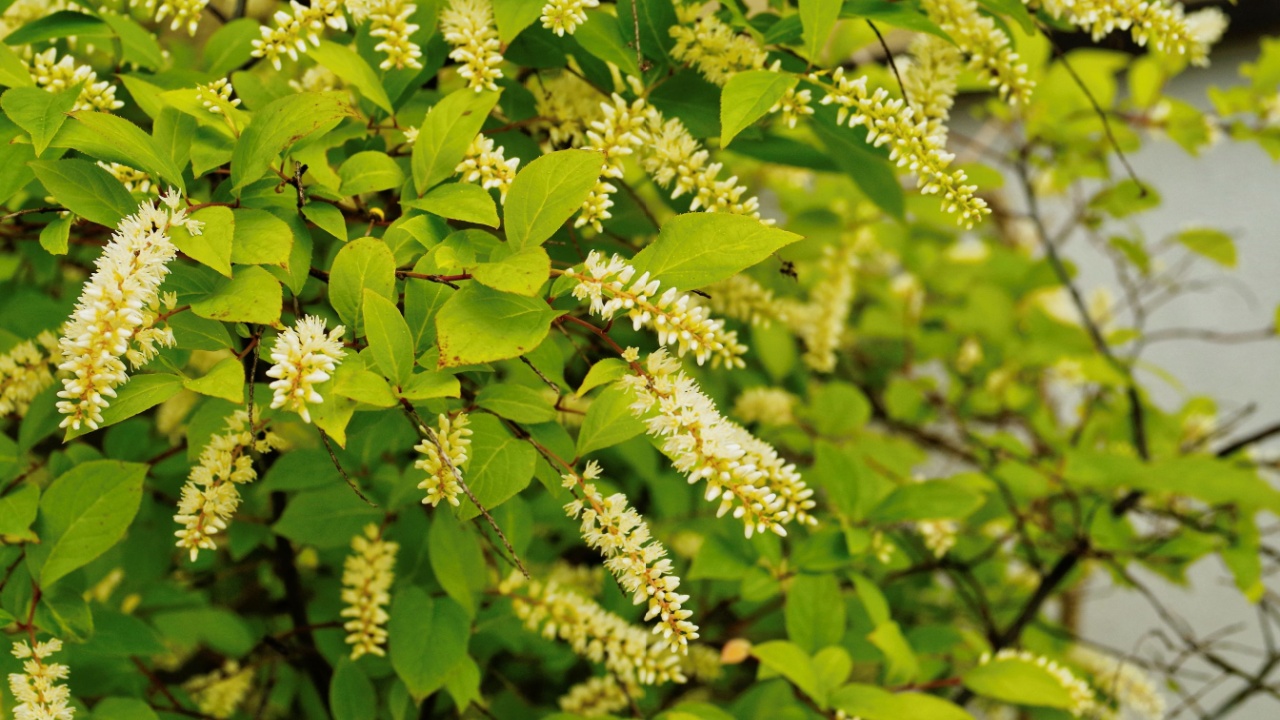
Image Credit: Shutterstock.
‘Henry’s Garnet’ is a beloved native shrub known for its graceful, arching branches and long-lasting fall color. In early summer, it is covered in fragrant, white, bottlebrush-like flowers that attract pollinators. When autumn arrives, the dark green leaves ignite into brilliant shades of garnet-red and crimson that persist for a long time, often well into early winter.
This shrub is an excellent problem-solver in the garden. It tolerates wet soil, making it perfect for rain gardens or low-lying areas. It also slowly spreads by suckers to form a dense colony, which is great for bank stabilization or creating a natural-looking thicket. The fragrant flowers are a delightful bonus.
Quick Look:
- USDA Zones: 5-9
- Size: 3 to 5 feet tall, spreading up to 6 feet wide.
- Light: Full sun to full shade; fall color is most intense in the sun.
- Soil: Thrives in moist to wet soils but is surprisingly drought-tolerant once established.
- Care Tip: If you wish to control its spread, simply remove the suckers at the base as they appear.
6. Black Chokeberry (Aronia melanocarpa)
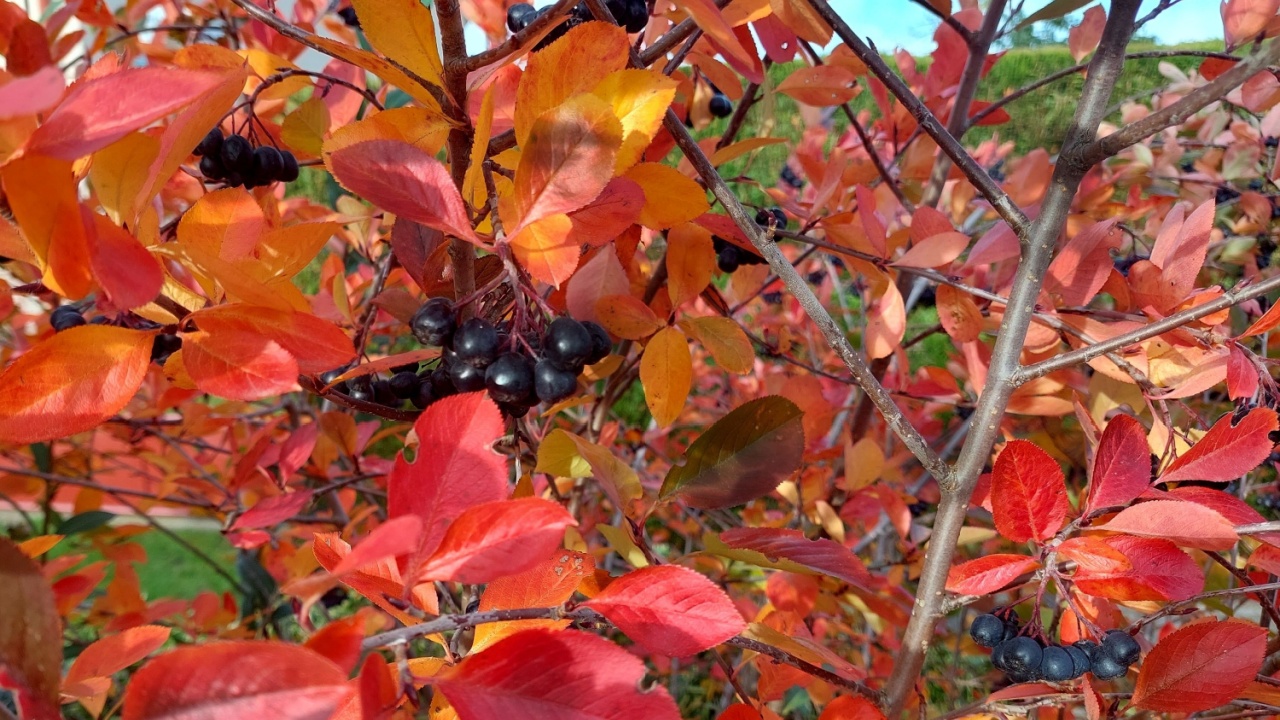
Image Credit: Shutterstock.com.
Black Chokeberry is a tough, adaptable, and beautiful native shrub that offers year-round appeal. It produces clusters of white flowers in spring, followed by dark purplish-black berries in late summer that are packed with antioxidants. While the berries are too tart to eat raw, they make excellent jams, jellies, and juices. In the fall, the glossy green leaves transform into a brilliant range of reds and purples.
This shrub is a workhorse in the landscape. It’s highly tolerant of a wide range of conditions, including wet and dry soils. Its multi-stemmed, suckering nature makes it a great choice for naturalizing an area or creating an informal hedge. The berries are also a valuable food source for wildlife.
Quick Look:
- USDA Zones: 4-8
- Size: 4 to 6 feet tall and wide
- Light: Full sun to partial shade.
- Soil: Tolerates a wide variety of soils.
- Next Steps: Harvest the berries after the first frost to reduce their astringency. If you’re not using them, leave them for the birds to enjoy through the winter.
7. Mount Airy Fothergilla (Fothergilla ‘Mount Airy’)
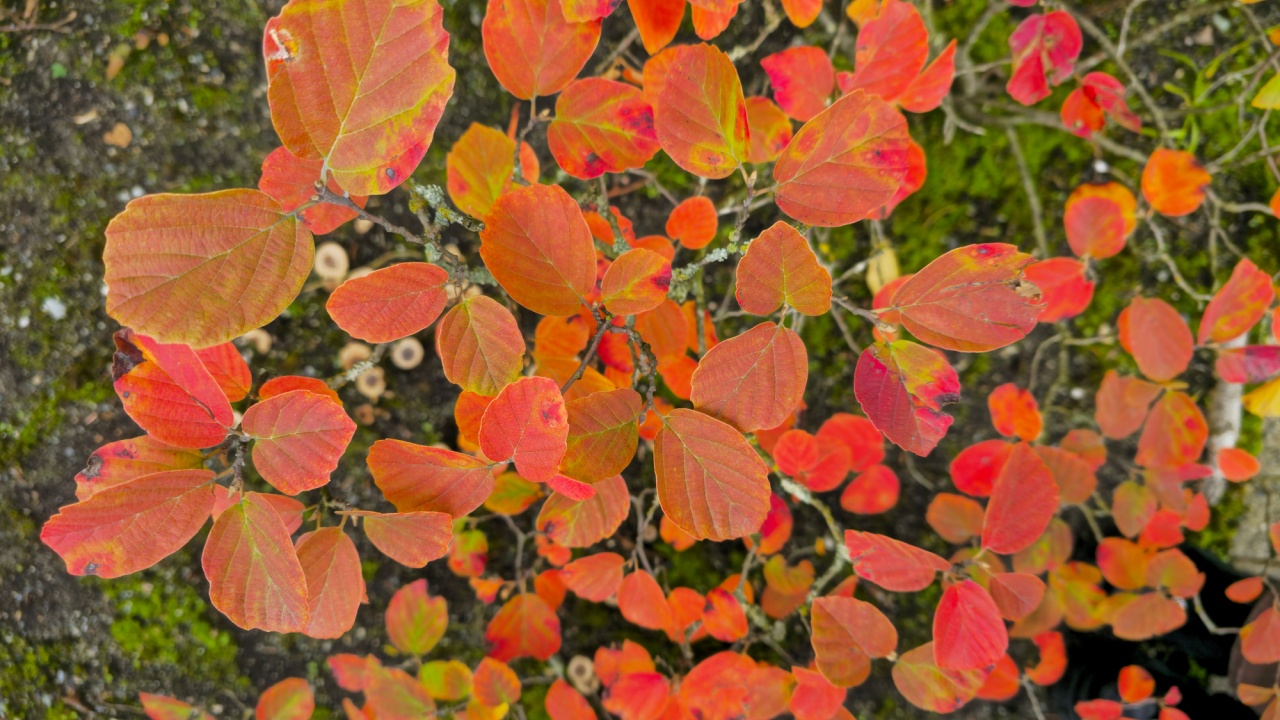
Image Credit: Shutterstock.com.
Fothergilla is a unique and captivating shrub that deserves more attention. In spring, before the leaves emerge, it produces honey-scented, bottlebrush-like white flowers at the tips of its branches. Its dark, leathery, blue-green leaves are attractive all summer long. In the fall, the foliage erupts into a kaleidoscope of yellow, orange, and brilliant scarlet-red, often with all colors appearing on the same plant.
‘Mount Airy’ is prized for its spectacular and long-lasting fall display. It’s a relatively compact and slow-growing shrub, making it a perfect fit for smaller gardens, foundation plantings, or mixed borders where its stunning colors can be appreciated up close.
Quick Look:
- USDA Zones: 5-9
- Size: 3 to 5 feet tall and wide
- Light: Full sun to partial shade.
- Soil: Prefers moist, acidic, well-drained soil rich in organic matter.
- Care Tip: Fothergilla rarely needs pruning. Plant it where it can grow to its natural shape.
8. Smooth Sumac (Rhus glabra)
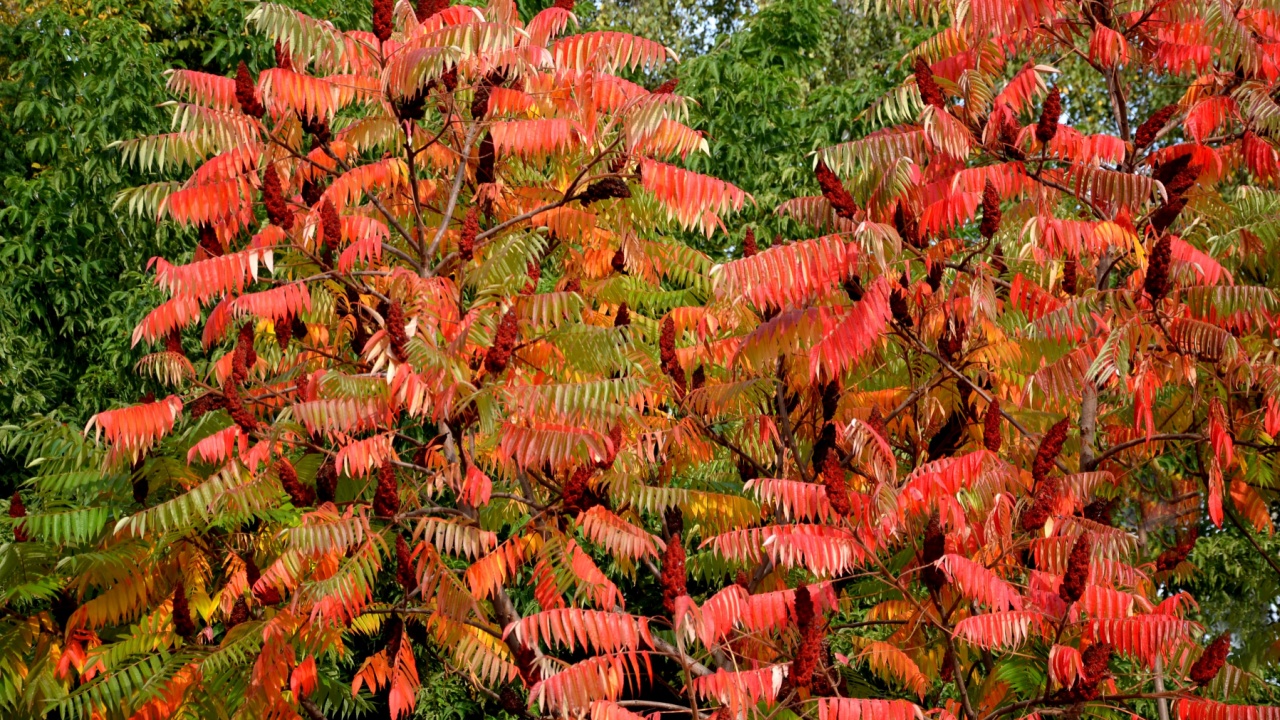
Image Credit: Shutterstock.com.
For a bold, architectural statement, look no further than the Smooth Sumac. This large native shrub features long, pinnately compound leaves that give it a tropical, fern-like appearance. During the summer, it produces fuzzy, upright clusters of greenish-yellow flowers that develop into striking crimson fruit clusters on female plants. Come autumn, the foliage turns into a blazing display of brilliant orange-red.
Smooth Sumac is an excellent choice for difficult sites, erosion control on slopes, or creating a naturalized, wild-looking planting. It spreads by root suckers to form large colonies, so give it plenty of space to roam. The fuzzy red fruit clusters persist through winter, providing food for birds and adding visual appeal to the snowy landscape.
Quick Look:
- USDA Zones: 4-9
- Size: 9 to 15 feet tall with an equivalent spread.
- Light: Full sun.
- Soil: Extremely adaptable and drought-tolerant; thrives in poor, dry, or rocky soils.
- Care Tip: This plant is not for small, tidy garden beds. Use it in larger, more natural areas where its spreading habit is an advantage.
9. Red Chokeberry (Aronia arbutifolia)

Image Credit: Ayotte, Gilles- CC BY-SA 4.0/Wiki Commons.
A close relative of the Black Chokeberry, the Red Chokeberry stands out for its brilliant red fruits and equally stunning fall color. Its leaves turn a fiery, bright red in autumn, creating a more vivid and pure red display than its darker-fruited cousin. The abundant red berries are also highly ornamental, often persisting into winter and providing a feast for birds.
‘Brilliantissima’ is a popular cultivar known for its especially vibrant red fall color and heavier fruit set. This shrub is taller and more upright than Black Chokeberry, making it a good choice for screening or as a background plant in a border. Like its relative, it is tough and adaptable.
Quick Look:
- USDA Zones: 4-9
- Size: 6 to 10 feet tall and 3 to 6 feet wide.
- Light: Full sun for the best color and fruit.
- Soil: Tolerates a wide range of soils, including wet ones.
- Next Steps: Plant in groups to create a stunning mass of red foliage and berries. It’s an excellent choice for attracting birds to your garden.
10. Crimson Pygmy Barberry (Berberis thunbergii ‘Atropurpurea Nana’)

Image Credit: Shutterstock.com.
For those needing a compact shrub with season-long color, Crimson Pygmy Barberry is an excellent option. This low, mounding shrub features reddish-purple leaves throughout the growing season, so you don’t have to wait until fall for color. When autumn arrives, the foliage intensifies to a deep, brilliant crimson-red before dropping. Tiny yellow flowers in spring are followed by small, bright red berries that birds enjoy.
Its small size makes it incredibly versatile. Use it as a formal low hedge, an accent in a rock garden, or as a colorful edging plant along a walkway. The thorns on its branches also make it an effective barrier plant. Note that, like the burning bush, some types of barberry can be invasive in certain areas, so check local regulations.
Quick Look:
- USDA Zones: 4-8
- Size: 18 inches to 2 feet tall, with a spread up to 3 feet.
- Light: Full sun is required to maintain its deep red color.
- Soil: Very adaptable and drought-tolerant once established.
- Care Tip: This is a very low-maintenance shrub. Shear it after flowering if you want to maintain a very formal shape.
11. Witch Alder (Fothergilla major)
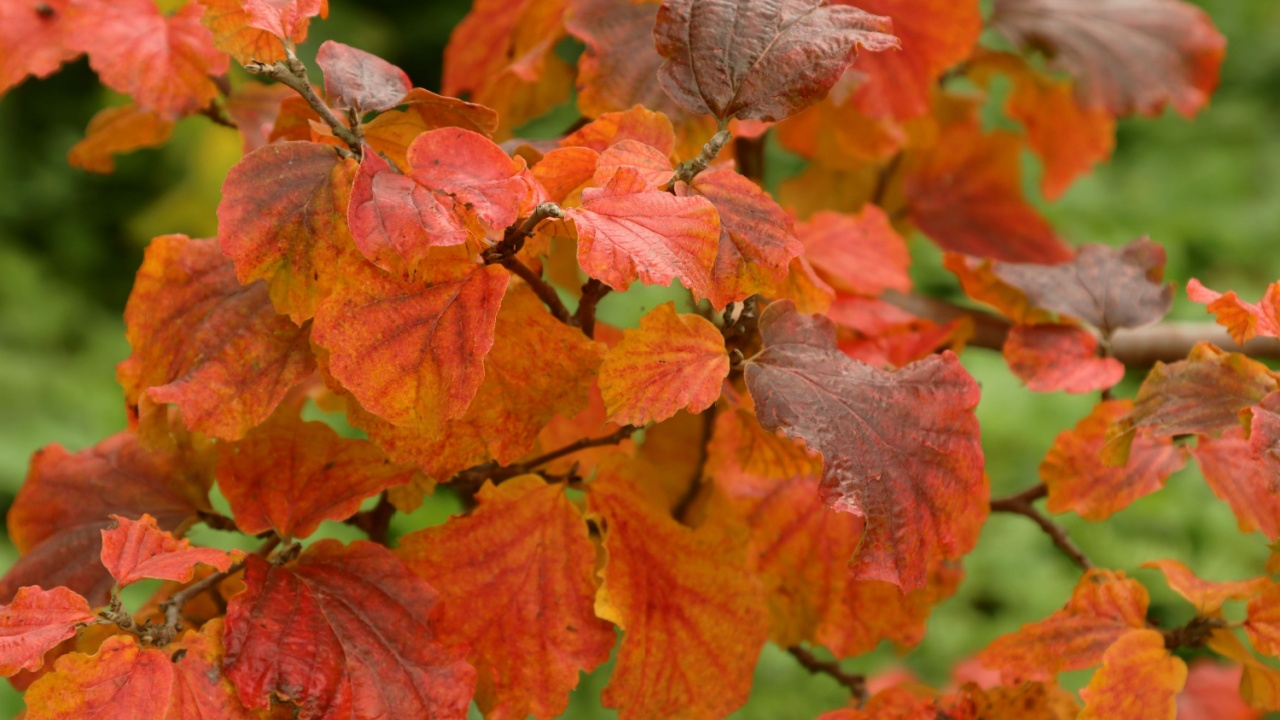
Image Credit: Shutterstock.com.
Witch Alder, also known as Large Fothergilla, is the bigger cousin of ‘Mount Airy’. It shares the same charming, honey-scented bottlebrush flowers in spring and delivers an equally impressive fall color show. Its foliage turns a spectacular mix of yellow, fiery orange-red, and purplish-red, often creating a multi-toned effect on a single plant.
This is a great choice for a low-maintenance, large specimen shrub or for adding to a mixed woodland border. Its upright, multi-stemmed habit gives it a pleasant structure. Like other fothergillas, it is a slow grower that requires little pruning and is generally free of pests and diseases.
Quick Look:
- USDA Zones: 4-8
- Size: 6 to 10 feet tall with a spread of 5 to 9 feet.
- Light: Full sun to part shade.
- Soil: Prefers moist, acidic, well-drained soil.
- Next Steps: Plant it where you can enjoy its fragrant spring flowers and admire its brilliant fall foliage from a window.
12. Gro-Low Fragrant Sumac (Rhus aromatica ‘Gro-Low’)
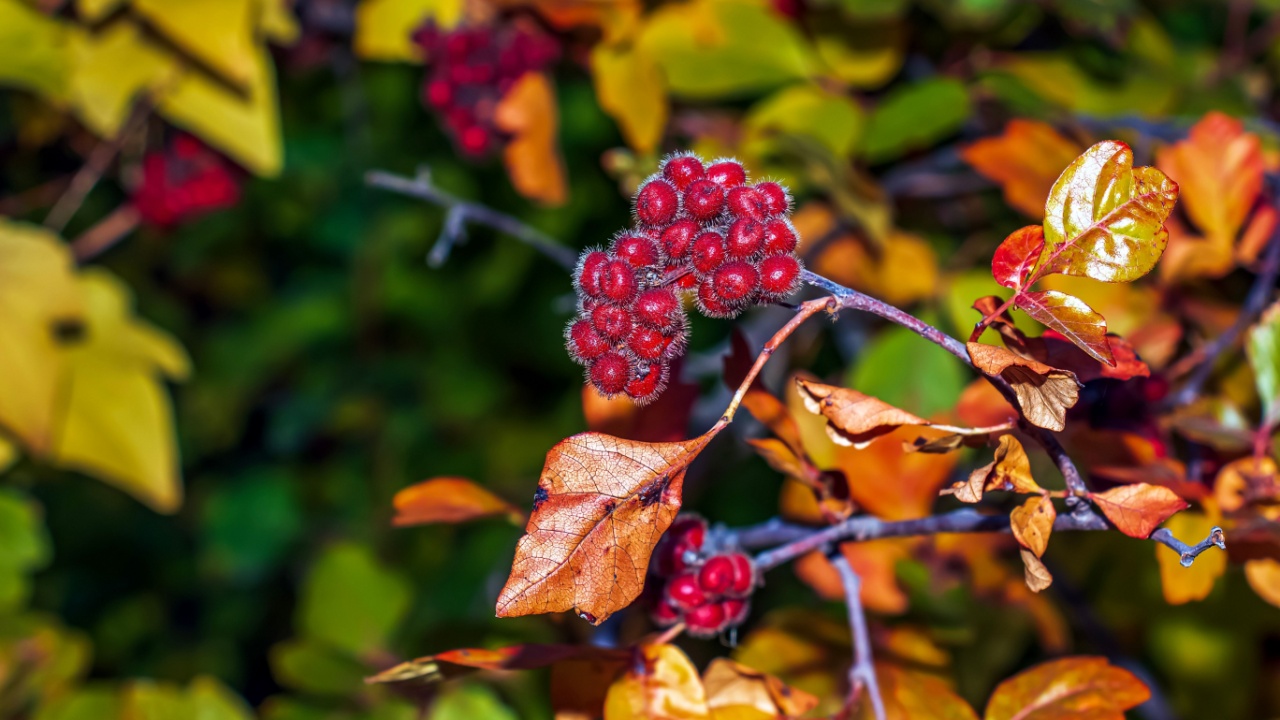
Image Credit: Shutterstock.com.
If you love the idea of Sumac’s fall color but lack the space for its larger relatives, ‘Gro-Low’ is the perfect solution. This low-growing, spreading shrub is a powerhouse for fall beauty. Its glossy, three-lobed green leaves are fragrant when crushed and turn a stunning combination of orange, scarlet, and burgundy in the fall.
‘Gro-Low’ is an exceptional groundcover for sunny, difficult areas. It’s incredibly tough, tolerating drought, poor soil, and slopes with ease. Use it to cover a large bank where mowing is difficult, or let it spill over a retaining wall. It quickly forms a dense, low mat that helps suppress weeds. While its spring flowers are small, its fall performance is first-rate.
Quick Look:
- USDA Zones: 3-9
- Size: Around 2 feet tall but can spread 6 to 8 feet wide or more.
- Light: Full sun to partial shade.
- Soil: Highly adaptable to almost any well-drained soil.
- Care Tip: This is a plant-it-and-forget-it shrub. Give it plenty of room to spread out, and it will reward you with a carpet of fire each fall.
Adding a Burst of Fall Colors to Your Yard
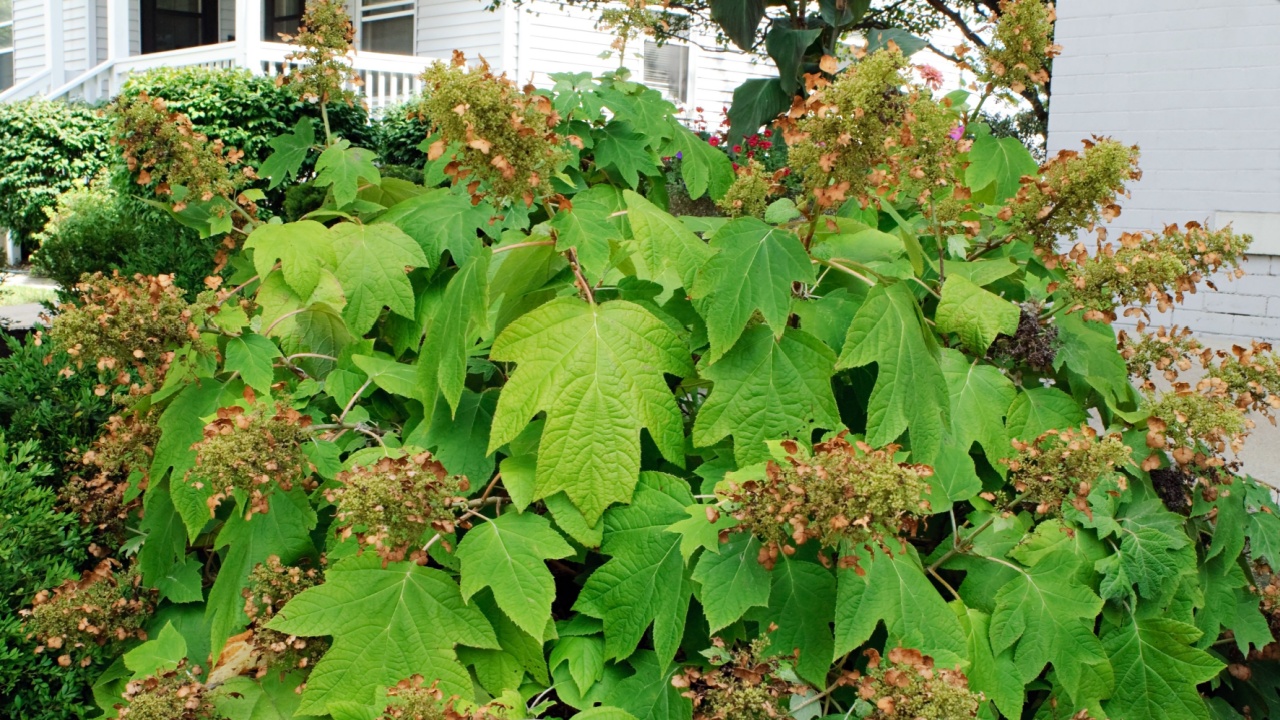
Image Credit: Shutterstock.com.
Incorporating these shrubs into your garden is a sure way to guarantee a brilliant fall finale. When planning your design, think about layering. Place taller shrubs like Smooth Sumac or Witch Alder at the back of a border, with mid-sized options like Oakleaf Hydrangea or Brandywine Viburnum in front of them. Use low-growing shrubs like ‘Gro-Low’ Sumac or Crimson Pygmy Barberry as an edging or groundcover at the front of the bed.
Before you buy, take note of your garden’s conditions: how much sun does the spot get, and what is the soil like? Matching a plant to the right location is the first step to success. With a little planning, you can create a landscape that not only looks good in spring and summer but truly comes alive with a spectacular, fiery red glow every autumn.