
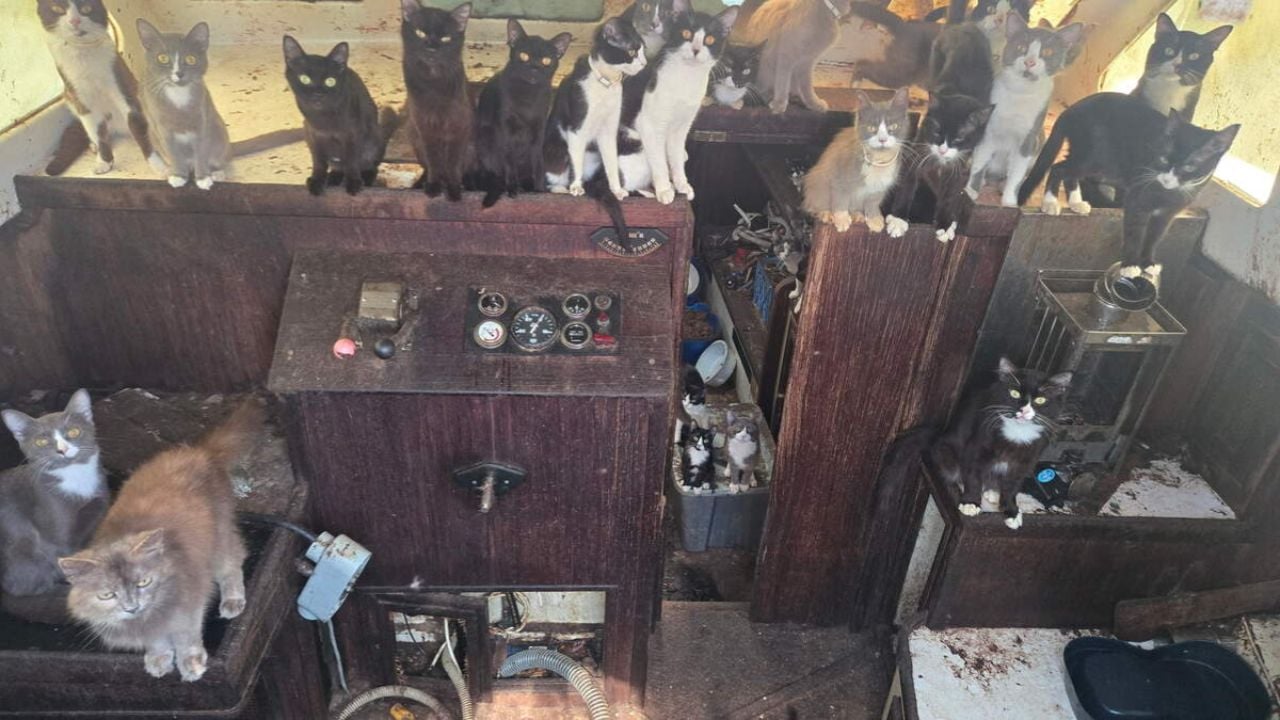
An Abandoned Boat Off Tacoma Was Discovered with 30 Cats
An abandoned boat carrying about 30 cats and no sign of a human owner was found floating off Owen Beach in Tacoma, Washington, as reported by the Tacoma Police Department. The department’s Marine Service Unit was notified of the deserted boat in Commencement Bay, and Public Information Officer John Correa told The News Tribune the scene resembled a Studio Ghibli movie. The cats were roaming freely all over the vessel.
Because the boat was still under private ownership, the city of Tacoma’s Animal Control division applied for a search warrant to board it and recover the cat. The warrant was granted. Officers carried out their rescue operation the next day.
On Friday morning, Animal Control officers and the Marine Service Unit boarded the boat and removed the cats. They then brought them to the Tacoma-Pierce County Humane Society. The animals were taken in for care. However, they’ve since been unable to locate the cats’ owner.
The Marine Service Unit found the owner’s information but was unable to reach him, and no arrests have been made. The department said its primary focus for now is the cats. The boat was anchored rather than adrift, Correa said, though how it came to be there, what kind of boat it is, and where the owner is remain unclear at this point.
What Happens to the Cats Now
The cats are in the hands of the Tacoma-Pierce County Humane Society. A group of roughly 30 animals taken from a single confined space usually requires examinations, vaccinations, and treatment for parasites and conditions common when many cats live together. After the cats are evaluated, they may be put up for adoption if the owner can’t be contacted.
But because the boat and the cats were still legally owned, this will be a lengthy process. Animal Control needed a warrant only to remove the cats, not to rehome them. If the owner is found and the animals are legally surrendered or seized, the humane society would then be able to move them toward adoption.
Why So Many Cats End Up in One Place
A single owner keeping dozens of cats in a confined space is a pattern animal welfare officials see regularly. It often goes back to a situation that outgrew the owner’s ability to manage it. Cats reproduce quickly, and a small number of unspayed and unneutered animals can multiply into dozens within a couple of years. Then you have a group of felines in one place with a population growing unchecked.
A large number of cats in a small, enclosed environment like a boat cabin raises real concerns about sanitation, disease, ventilation, and whether the animals are getting enough food, water, and veterinary care. The most effective prevention is spaying and neutering, which stops the growth before it starts.
For anyone struggling with more animals than they can care for, animal welfare groups urge reaching out to a shelter or rescue for help rather than letting the situation deteriorate.


