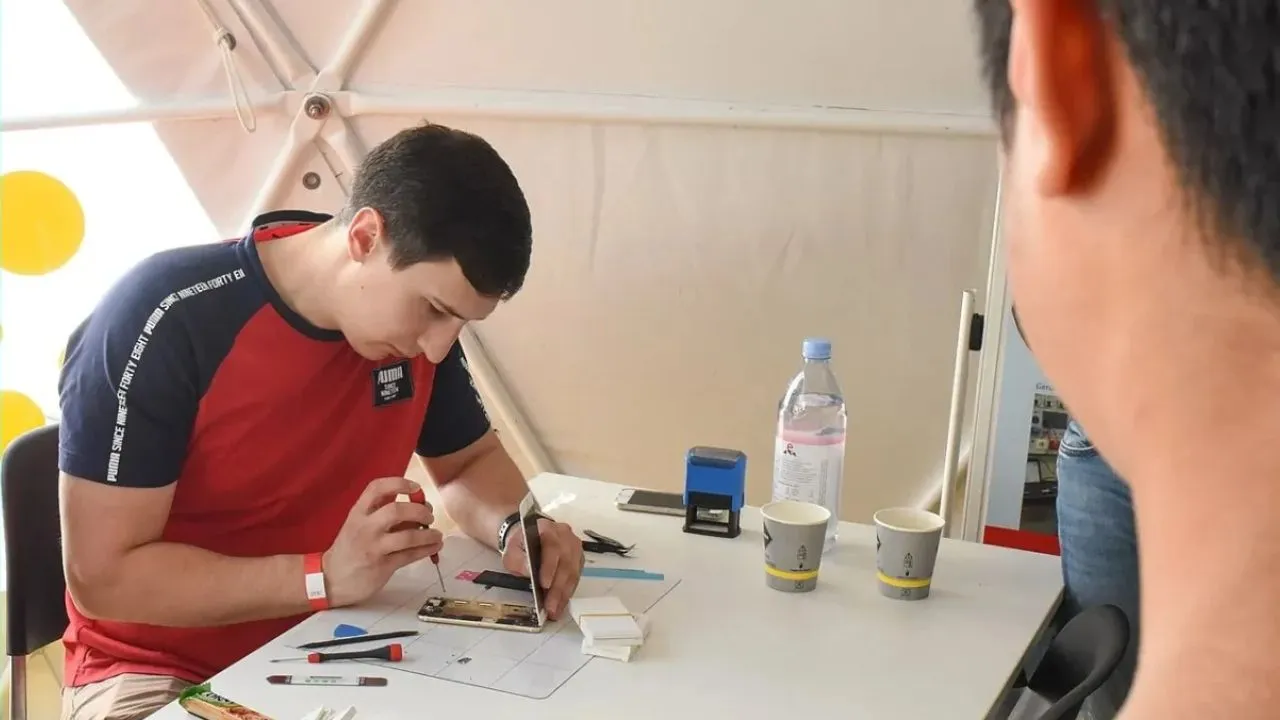
Thousands of Free Repair Cafés Are Helping People Save Money on Household Fixes
Americans are finding a way to fix their broken household items without paying expensive repair bills or buying replacements. At free community events called Repair Cafés, volunteers help people bring their old belongings back to life.
From broken appliances and damaged clothing to faulty electronics, these events welcome items that might otherwise end up in the trash. Visitors can work alongside experienced volunteers, use shared tools, and learn how to make repairs themselves.
At one Repair Café in New Paltz, New York, about 50 people showed up with 85 items needing attention. Volunteers managed to repair 71 of them, giving everything from household goods to treasured possessions another chance.
The idea is spreading well beyond New York. Thousands of Repair Cafés now operate worldwide, and similar volunteer-run workshops are gaining attention across the United States as people look for ways to save money and make their belongings last longer.
Fix It for Free
Credit: NBCUniversal Media, LLC
At a May 2026 event inside the New Paltz United Methodist Church, volunteers found themselves working on a wide assortment of broken belongings.
According to The Associated Press, visitors brought old lamps, clothing, electronics, jewelry, and even family photographs that needed restoring.
As mentioned, of the 85 items brought in, 71 were successfully repaired. Four needed additional work, while 10 were considered beyond repair.
One visitor, 79-year-old Paula Weinstein, arrived with a Hammond clock dating back to the 1930s. Bob Morton, an 82-year-old retired IBM electrical engineer, spent hours working on the clock until its hands began moving again.
The repair was particularly meaningful because it allowed Weinstein to keep something old rather than replace it.
For Morton, volunteering provided an opportunity to put his engineering experience to use while helping others.
The events aren’t limited to older residents or people with technical knowledge. Anyone can bring something broken, and volunteers encourage visitors to participate in the repair process.
More Than Just a Hobby
The Repair Café movement began in Amsterdam in 2009, when Martine Postma organized the first event. Since then, the concept has expanded into a worldwide network.
According to the official Repair Café website, the organization has grown to 4,043 locations, with an estimated 60,645 volunteers involved.
Together, those volunteers help repair approximately 72,774 items each month. That works out to more than 870,000 repairs annually if the monthly pace continues.
Visitors can bring clothing, furniture, bicycles, toys, household appliances, and other belongings. The events provide access to tools and materials, along with volunteers who have experience fixing different kinds of products.
Not everything can be repaired on the spot. Some items require replacement parts, more specialized work, or a professional repair service. The organization says its events aren’t intended to compete with repair businesses.
Similar efforts are also growing outside the Repair Café network.
In Brooklyn, New York, volunteers at the Brooklyn Spark Fixit Clinic offer free repair assistance during weekly Monday evening sessions.
Visitors can receive help with malfunctioning electronics, sewing machines, and other household items. Volunteers also teach practical skills, including soldering and troubleshooting electrical problems.
The Guardian reported that the wider Fixit Clinic network has hosted at least 2,000 events across the United States.
Think Before You Toss It
One reason these programs attract attention is that many modern products can be difficult or expensive to repair.
Replacement parts aren’t always readily available, and some manufacturers restrict access to the tools, software, or information needed to service their products.
That has helped fuel the right-to-repair movement, which advocates giving consumers and independent repair shops better access to replacement parts and repair instructions.
But visitors don’t need to know anything about those debates to benefit from a local workshop.
At San Jose State University in California, students have been organizing Fixit Clinics that teach people how to repair everyday items. The student group offers workshops covering skills such as sewing and soldering, according to The Guardian.
The goal is to help people understand how their belongings work, rather than relying entirely on someone else to fix them.
For anyone interested in trying a Repair Café, the process is straightforward. Bring a broken household item to a participating location and work with a volunteer to figure out whether it can be fixed.
The events are free, although visitors may need to obtain replacement parts for certain repairs. Donations may also be welcomed.
People can search for participating locations through the Repair Café location finder. The organization’s website also provides information for anyone interested in volunteering or starting a new Repair Café in their community.