A Tiny Fox Vanished From a Mexican Island for 20 Years. A URI Researcher Helped Prove It’s Still Alive.
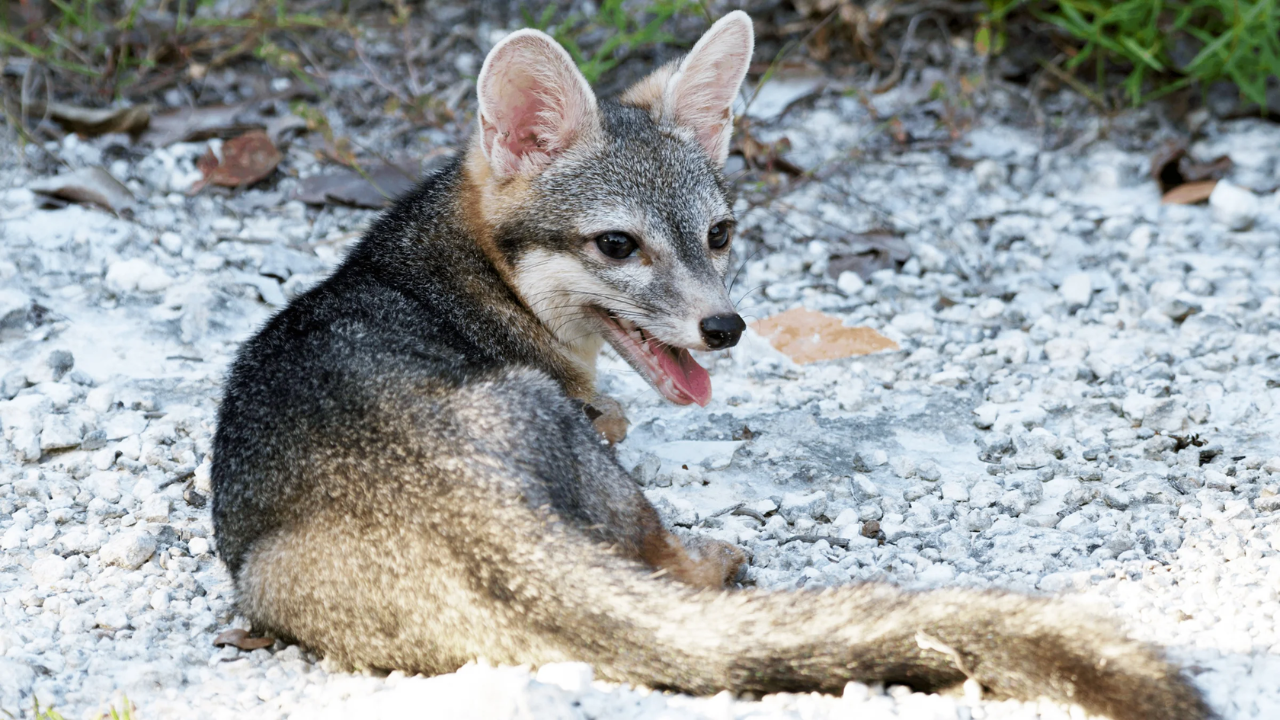
For around 20 years, the tiny gray fox of Cozumel was thought to be extinct. No one had confirmed a sighting on the Mexican island in over 20 years. In fact, most assumed that the little animal was gone for good. It turns out they were wrong. The fox is still out there, and a University of Rhode Island researcher helped prove it.
In 2023, URI doctoral student Travis Bayer was planning to visit Cozumel for its famous reefs on a divint trip when he heard about the island’s missing fox. He couldn’t let it go. No one had ever run a real survey to see whether the critically endangered animal still survived. So Bayer set out to run one himself.
He didn’t have to wait long. About six months into his work, those who lived on the island reported a disoriented animal near a coastal highway. Conservationists tracked it down. It was an adult male fox, healthy after a checkup and released back into a nature reserve and, incidentally, the first confirmed Cozumel fox in more than 20 years.
The conservationist behind the find, Rafael Chacón, photographed the fox and shared the new pictures online. They became the first photographs of a Cozumel fox ever recorded. The sighting also kicked off a scientific effort that’s still growing to investigate what’s going on with the breed.
What Makes This Fox So Unusual
View this post on Instagram
This is not just any fox. It’s noticeably smaller than its cousins, a result of island dwarfism. That’s the process by which isolated animals evolve into smaller forms over long stretches of time. Scientists believe the Cozumel fox may have been developing on its own for thousands of years, possibly before anyone ever settled on the island.
That makes it part of something bigger. Cozumel holds one of the richest collections of unique wildlife in Mexico, with more than 30 species and subspecies found nowhere else on Earth. The fox is one of three carnivores on the island that exist only there. Losing it wouldn’t just mean one fewer fox. It would mean erasing a branch of the tree of life that took millennia to grow, before science ever got the chance to study it.
A Race to Study It Before It Disappears for Good
Confirming the fox exists was only the start, as Bayer is now running one of the largest camera surveys ever attempted on Cozumel, with 84 cameras spread across roughly 100 square kilometers. Through URI’s research lab, they’re also testing thermal drones to spot animals that are otherwise nearly impossible to find.
But there are still threats to deal with. Roads have carved up the forest. Introduced animals like feral dogs, ocelots, and boa constrictors now prey on wildlife that evolved with no such enemies. The team wants to figure out how many foxes are left, which habitats they most need, and enough about the animal to finally name it as its own species. All of that is a race against the clock. As Bayer put it, “we need to understand how to protect them before it’s too late.”