A Missing Three-Legged Dog Was Pulled From a 20-Foot Sinkhole Two Blocks From Home
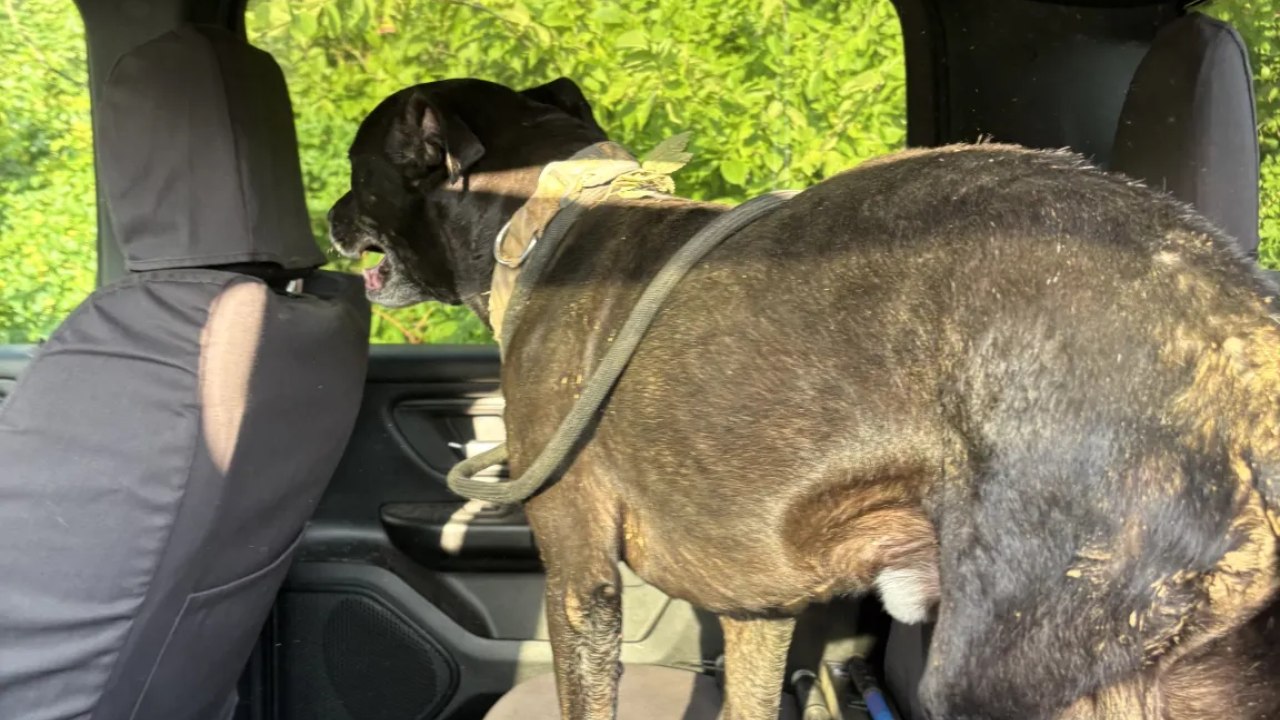
An animal rescue is always cause for a celebration, especially if the animal in question is missing a limb. A three-legged dog named Gimper is back home in Southaven, Mississippi, after he went missing for three days. He was found trapped at the bottom of a 20-foot sinkhole about two blocks from his house. Gimper escaped from his owner’s backyard on a Saturday evening, and his owner, Carla Chadwick, had no idea where he had gone until he was spotted in the sinkhole at Airways and Industrial Drive, according to WREG. He was muddy, but otherwise fine after the rescue.
The discovery came by chance while some work was being completed in the area. A worker was out checking the sinkhole’s size when he noticed Gimper trapped below. Without that inspection, the dog might have gone unnoticed for a lot longer. Luckily, help came in the form of the worker’s assistance.
From there, the rescue moved quickly. The worker contacted the Southaven animal shelter, and a longtime animal control officer went to the scene. There, they were able to hoist Gimper out of the hole. Chadwick said she doesn’t know how long the dog had actually been stuck at the bottom before being found.
Gimper’s three legs made the situation a lot more dangerous. A dog missing a limb would have had little chance of climbing out of a 20-foot hole on its own. That would have left him dependent on being found. Luckily, his little excursion still managed to see him find his way home with the help of some friendly humans.
Why a Sinkhole Is So Dangerous to a Trapped Animal
A sinkhole is a hazard because it’s deep, steep-sided, and often hard to climb out of. The walls of a fresh sinkhole are typically loose and almost vertical, so an animal that falls in can’t get enough traction to climb back up. A 20-foot drop is well beyond what a dog could scale even with all four legs, too. Plus, rain and other weather issues can make the rescue and finding the animal even more difficult.
That is why these rescues frequently take special help rather than a single person with a leash. Crews have used extension ladders, rope systems, and even harnesses lowered from ladder trucks to reach animals in sinkholes 12, 30, and even 40 feet deep. They tend to do anything it takes to make sure the animal gets back to safety, even if it’s a lot more difficult than getting to a person.
How a Chain of City Workers Got Gimper Home
This rescue was able to be pulled off because everyone acted quickly. It began with a routine public-works inspection, then it passed to the local animal shelter. Finally, it ended with an animal control officer trained to handle a trapped animal. In more dire situations, communication like that is key. And it’s important to note that if you had seen this happening as an individual, you should absolutely have called for help.
For pet owners, the case is also a reminder that even a brief escape can turn into an emergency, especially for an animal that is already physically vulnerable. Gimper got out of a fenced yard and ended up in a life-threatening spot two blocks away within days. Keeping gates and fences secure, ensuring a pet is microchipped and wearing ID, and reporting a lost pet to local shelters right away all improve the odds of a fast, safe recovery, since a shelter that already has the report is the link that connects a found animal back to its family.