Beyond Aesthetics: Are Outdated Home Designs Costing You?
An older home design does not automatically need to be replaced. Plenty of older materials and layouts remain attractive and functional decades later. Problems arise when a design makes rooms harder to use, increases maintenance, wastes space, or discourages future buyers.
Homeowners considering updates should look beyond current decorating trends and ask a more practical question: Is the existing design creating an ongoing cost?
Poor Layouts Can Waste Valuable Space
Square footage has limited value when a room cannot be used efficiently. Oversized hallways, awkward door placement, cramped kitchens, and poorly positioned walls can leave homeowners with substantial floor space that does little for everyday life.
Kitchens provide a common example. A layout that forces someone to repeatedly cross the room between the refrigerator, sink, and preparation area can make cooking unnecessarily difficult. Limited counter space can create similar frustration even when the kitchen itself is relatively large.
Changes do not always require removing walls. Relocating storage, adjusting furniture placement, or changing how a room is assigned can sometimes solve the problem with less construction.
Older Features Can Increase Maintenance
Some design choices become expensive because they require frequent upkeep. Aging countertops may be difficult to repair, older flooring can become increasingly damaged, and unusual fixtures may require replacement parts that are difficult to find.
Built-in features deserve similar scrutiny. Custom cabinetry that no longer fits modern appliances can create extra work when a refrigerator or dishwasher needs replacement.
Homeowners considering interior remodeling can use maintenance history to identify where updates may have practical financial value. A surface or fixture that repeatedly needs repair may deserve priority over something that simply looks dated.
Storage Problems Create Their Own Costs
Older homes were often built around different household needs. Limited closets and kitchen storage can lead homeowners to purchase freestanding cabinets, shelving, storage containers, or even off-site storage.
Before adding more storage, consider whether the existing space is being used effectively. Deep cabinets can hide items rather than organize them, while poorly configured closets may waste vertical space.
Lighting and Electrical Design Matter Too
A room can feel outdated because it was built around fewer electrical devices and different lighting expectations. Limited outlets may lead to extension cords and power strips, while poor task lighting can make kitchens, offices, and work areas less practical.
Electrical changes should be evaluated for safety as well as convenience. Older wiring or panels may require professional assessment before new fixtures, appliances, or outlets are added.
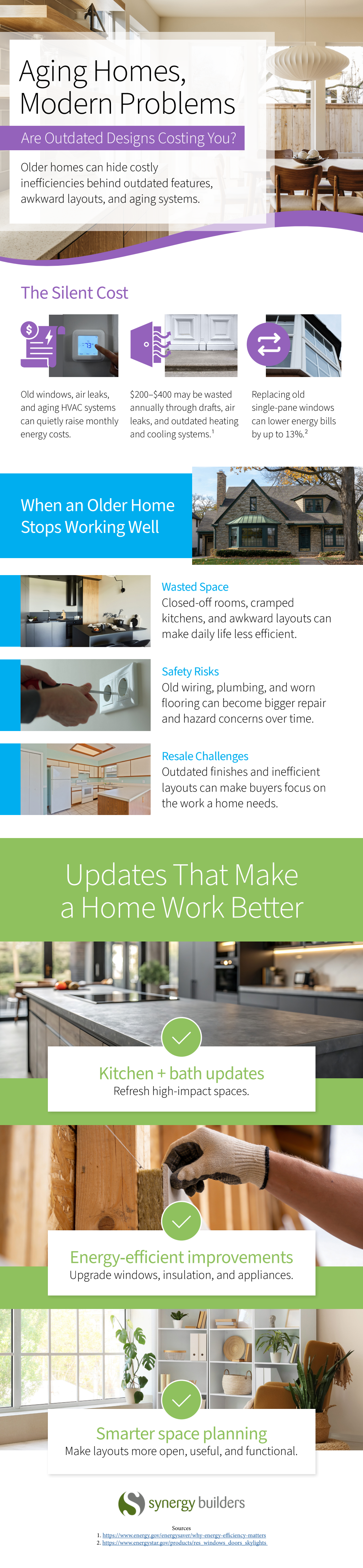
An outdated home design becomes costly when it repeatedly creates maintenance expenses, wastes usable space, or makes ordinary activities harder. Renovating solely because a style is no longer fashionable can lead to unnecessary spending. To learn more, look over the accompanying infographic.