Orphaned Skunks Return to the Wild After Growing Up in Wildlife Rehabilitation
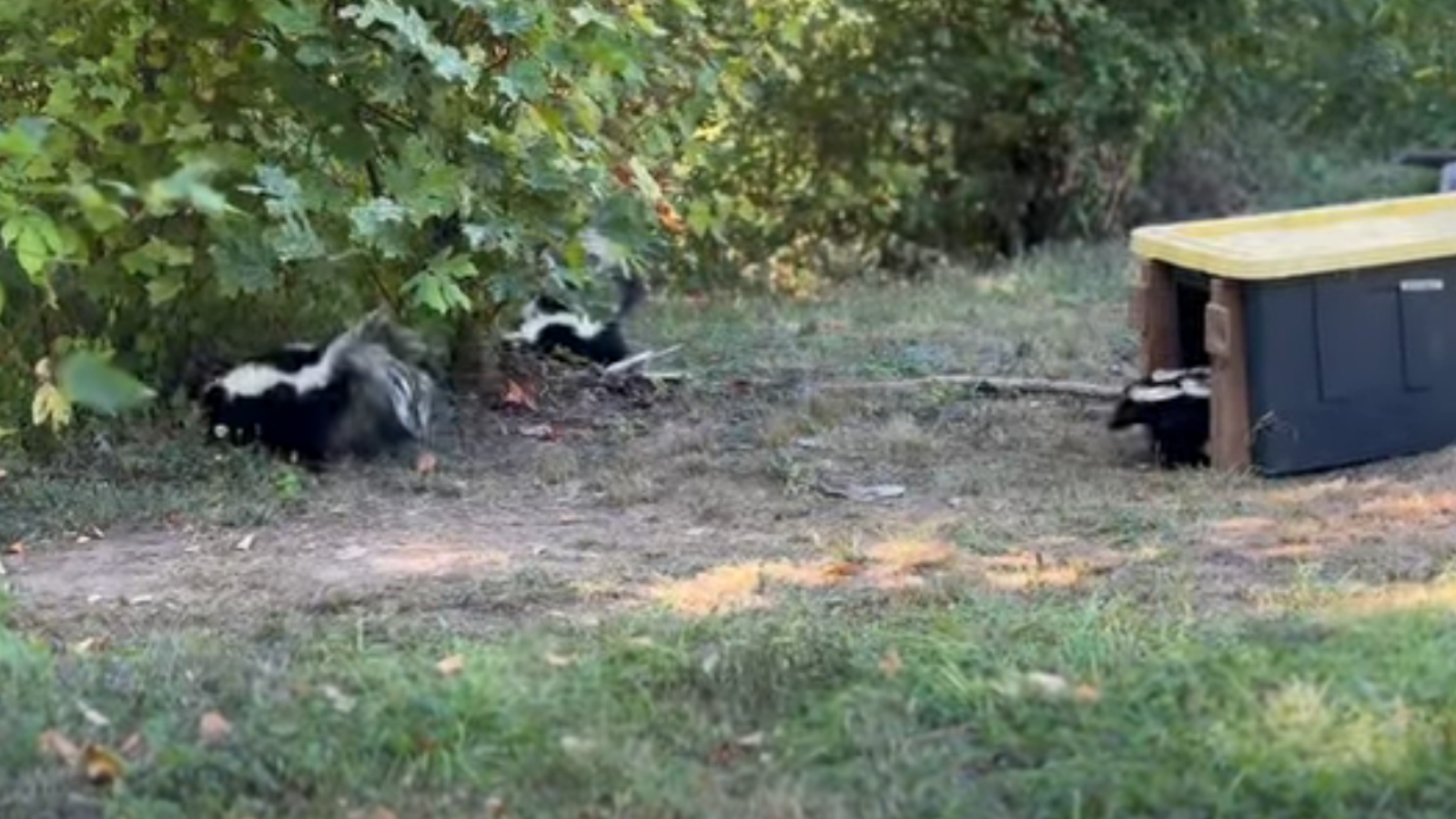
A group of young skunks that arrived at a Washington wildlife rehabilitation center as orphans has finally gone where staff hoped they would all along: back into the wild.
The skunks had been in the care of the Whatcom Humane Society Wildlife Rehabilitation Center since spring.
In a Sept. 2 Facebook post, the Whatcom Humane Society said the skunks had arrived without their mother and subsequently spent the summer growing up under the care of its wildlife team.
Releasing the animals into a rural forest is a major goal wildlife rehabilitators work towards whenever possible: getting an animal strong and capable enough to survive without human intervention, in its natural habitat.
Their Mother Usually Would Have Done The Teaching
Embedded media follows. Please allow a moment for it to load.
Young skunks, or kits, traditionally spend the summer with their mother, who would teach them the skills they need to live on their own. Instead, these orphans had to live through these milestones at the rehabilitation center.
The Whatcom Humane Society Wildlife Rehabilitation Center (WHS center) says its trained and permitted staff provide specialized care to injured and orphaned wildlife, with release back into the wild as one of its primary goals.
The Washington Department of Fish and Wildlife (WDFW) also lists the WHS center as a permitted wildlife rehabilitator authorized to handle a wide range of species, including skunks.
WDFW says rehabilitators are tasked with preparing animals not just physically, as in tending to their health, but also behaviorally for a return to the wild.
That means keeping human contact to a minimum is important to the animals’ rehabilitation. WHS warns that excessive contact can cause wild animals to become accustomed to people, which in turn risks making a successful release more difficult.
Skunks Do More Than Make A Stink
The humane society also used the release to make a case for an animal that does not always get much affection from homeowners.
In its Facebook post, WHS pointed out that skunks “eat many types of insects, including many considered pests, and they disperse seeds to support diversity in the ecosystem.”
The organization advises anyone who encounters a skunk in distress or trouble not to try raising it at home. Its wildlife advice warns that even young skunks can spray when frightened and recommends calling a wildlife rehabilitation center before attempting a rescue.