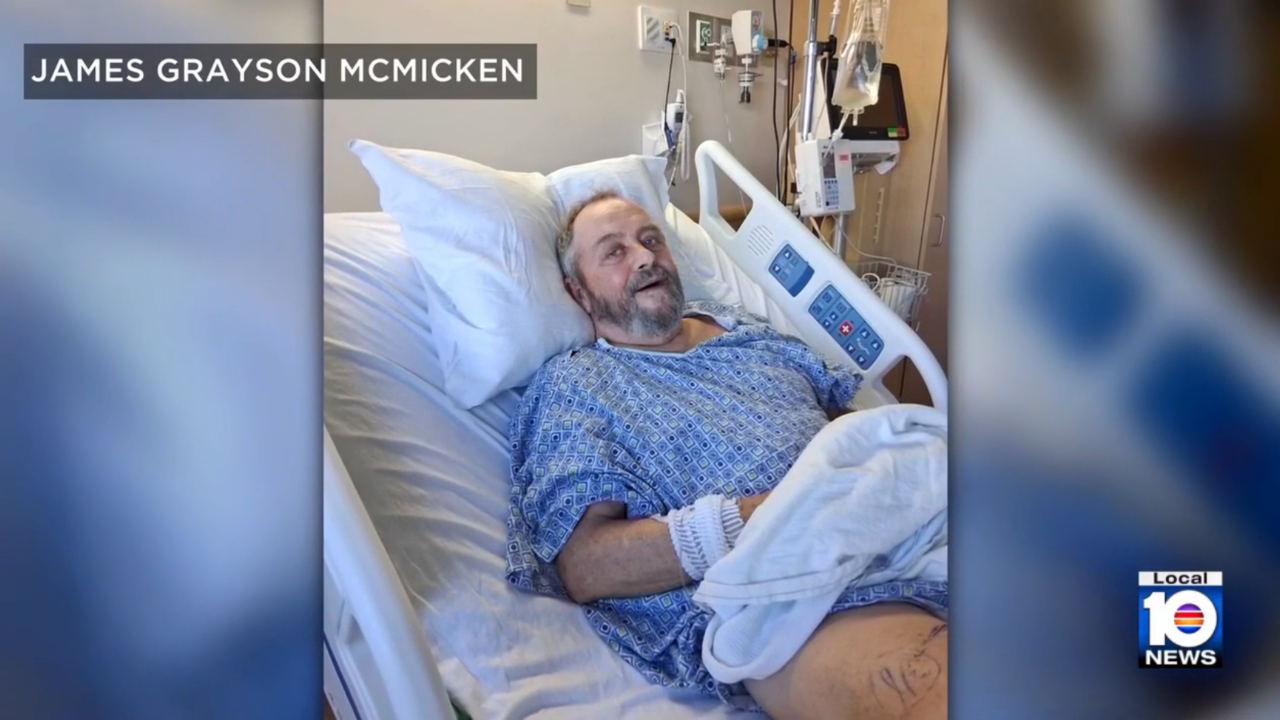
A 71-Year-Old Florida Man Fought Off an Alligator in His Backyard by Going Straight for Its Eyes
James Grayson McMicken made one cast into the canal behind his north Fort Myers home and started reeling. That’s when an alligator came out of the water and grabbed him. It clamped onto his right leg and dragged the 71-year-old off the bank and into the water. He’s still alive today because he fought back, and because he knew where to hit: the eyes. And with that, the gator eventually let go.
It happened on a normal, everyday Friday night. McMicken took his bulldog outside and made a single cast into the canal with his fishing pole. He barely had time to start reeling. The alligator lunged out of the water, bit down on his right leg, and rolled him off the bank into the canal, the move gators use to overpower prey.
Underwater and in the animal’s jaws, McMicken went for the one target he trusted. He jammed his thumb into one of the gator’s eyes. Then he grabbed his fishing pole and drove it into the other eye, over and over, until the animal finally released his leg. He has hunted alligators legally before, and that is where he learned the trick.
Getting out was its own problem. Too hurt to crawl, McMicken called his bulldog over and climbed onto her back to push himself to his feet. His wife cleaned him up inside. He dropped into his chair and passed out from exhaustion before his family rushed him to Cape Coral Hospital. Trappers with the state wildlife agency are still looking for the gator. Two things stand behind that night, what McMicken knew about alligators, and the reason one was in his canal at all.
The Move That Got the Gator to Let Go
McMicken did close to what wildlife officials tell people to do. The Florida Fish and Wildlife Conservation Commission says that if an alligator bites you, the best response is to fight back hard and make as much noise as you can. Hitting, kicking, or poking the animal in the eyes can make it release its grip. The eyes are one of the few soft spots on a body built like a tank. In his words, “if you got no other choice, hit them eyes.” His years of legal gator hunting are where he learned it.
The logic behind the advice is simple. A gator that grabs a person is usually treating them as prey, and it will keep going as long as the meal seems easy. Enough pain and resistance changes that math. When the animal decides a target is more trouble than it is worth, it tends to let go, which is what happened here. That is why wildlife officials say to fight, and to keep fighting.
Why There Was a Gator in His Yard
An alligator in a Fort Myers canal is not unusual. Florida is home to about 1.3 million alligators, and they live in all 67 counties, in nearly every body of fresh or brackish water. A house on a Florida canal is, by definition, a house on the edge of gator habitat. Most alligators stay wary of people and keep their distance. The ones that do not are often the ones that have been fed, which teaches them to link humans with food and is illegal for exactly that reason.
Serious attacks stay rare. By the state’s own count, the odds of an unprovoked bite in a given year are around one in 3.1 million, and gators do most of their feeding around dusk and after dark. When an alligator starts behaving like a threat, the state’s nuisance program sends a contracted trapper to remove any gator four feet or longer that seems dangerous. On the bright side, McMicken plans to fish again, though he says he’s done walking up to the water’s edge in the dark. He says no alligator is going to run him off, and rightly so.