Avoid Costly Home Repairs with Regular Preventive Care
A home requires ongoing attention to remain safe, comfortable, and efficient. Small maintenance tasks performed at the right time help prevent larger problems that can disrupt daily life or lead to costly repairs.
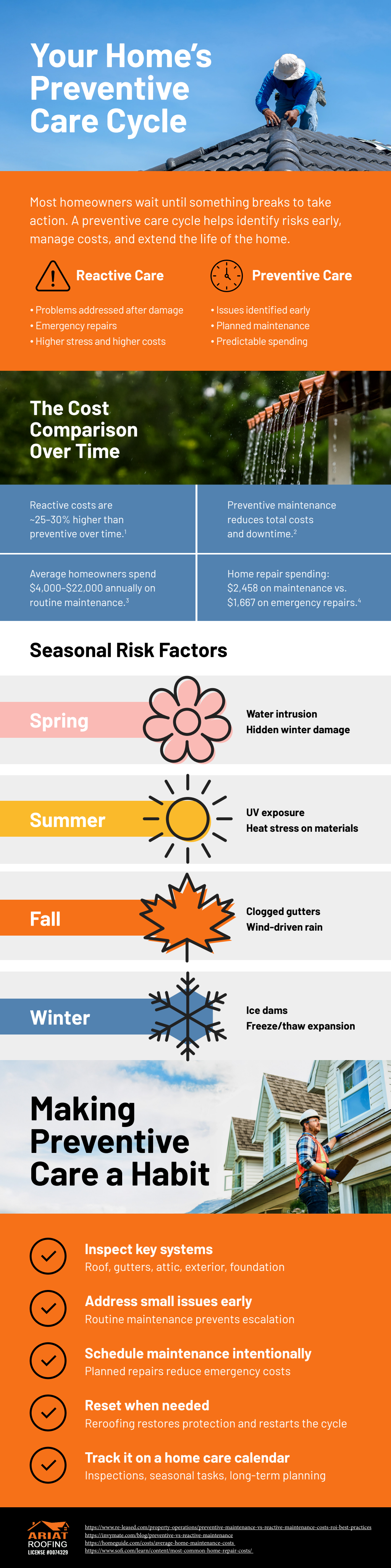
Preventive care follows a repeating cycle throughout the year as different systems face changing weather conditions and regular wear. Viewing home maintenance as a seasonal routine allows homeowners to stay organized and address potential issues before they grow.
Seasonal Inspections and Early Detection
Regular inspections form the foundation of preventative care.
Each season places different demands on a house, so walking through the property several times a year helps identify developing concerns. Checking for cracks in exterior walls, signs of moisture around windows, or uneven flooring indoors can reveal early structural or water-related problems.
Outdoor areas also deserve close attention. Gutters, siding, and foundations often show the first signs of weather-related damage (more on this in a moment). Clearing debris and confirming that drainage systems direct water away from the home reduces the risk of leaks or erosion.
Interior inspections should include plumbing fixtures, under-sink areas, and appliances that use water. Detecting slow leaks early helps prevent mold growth and structural damage.
Maintaining Major Home Systems
Heating, cooling, plumbing, and electrical systems all benefit from regular maintenance. Changing HVAC filters every few months supports air quality and improves energy efficiency. Professional servicing of heating and cooling equipment at least once a year can extend the lifespan of these systems.
Water heaters and sump pumps also require periodic checks. Flushing sediment from a water heater tank helps maintain performance, while sump pumps should be tested before heavy rain seasons.
The roof is another critical component of the preventative care cycle. Inspections of residential roofing surfaces can reveal loose shingles, flashing damage, or blocked vents that may allow moisture to enter the structure. Addressing these issues early protects insulation, ceilings, and interior walls.
Exterior Care and Weather Protection
Outdoor maintenance plays a major role in preventing long-term structural problems. Cleaning gutters, trimming nearby trees, and inspecting outdoor lighting fixtures help keep the property secure. Sealing small cracks in driveways or walkways prevents water from expanding these openings during temperature changes.
Paint and protective sealants also contribute to exterior durability. Wood trim, decks, and fences last longer when protective coatings are refreshed at recommended intervals.
Seasonal preparation reduces weather-related stress on the home. For example, winter preparation may include insulating exposed pipes, while warmer months may focus on improving ventilation and checking irrigation systems.
Preventive care works best when it becomes a routine rather than a reaction to problems. Consistent inspections, maintenance of major systems, and seasonal exterior care allow homeowners to protect their investment while keeping living spaces safe and comfortable throughout the year. Look over the infographic below for more information.