Where America Is Going: A Closer Look At Modern Moving Patterns
Relocation trends across the United States reveal how economic conditions, lifestyle preferences, and housing availability shape where people choose to live. Migration patterns shift gradually as families, professionals, and retirees seek communities that support their goals and budgets.
Observing these movements provides insight into housing demand, regional growth, and the broader direction of the national housing market.
Regional Population Shifts
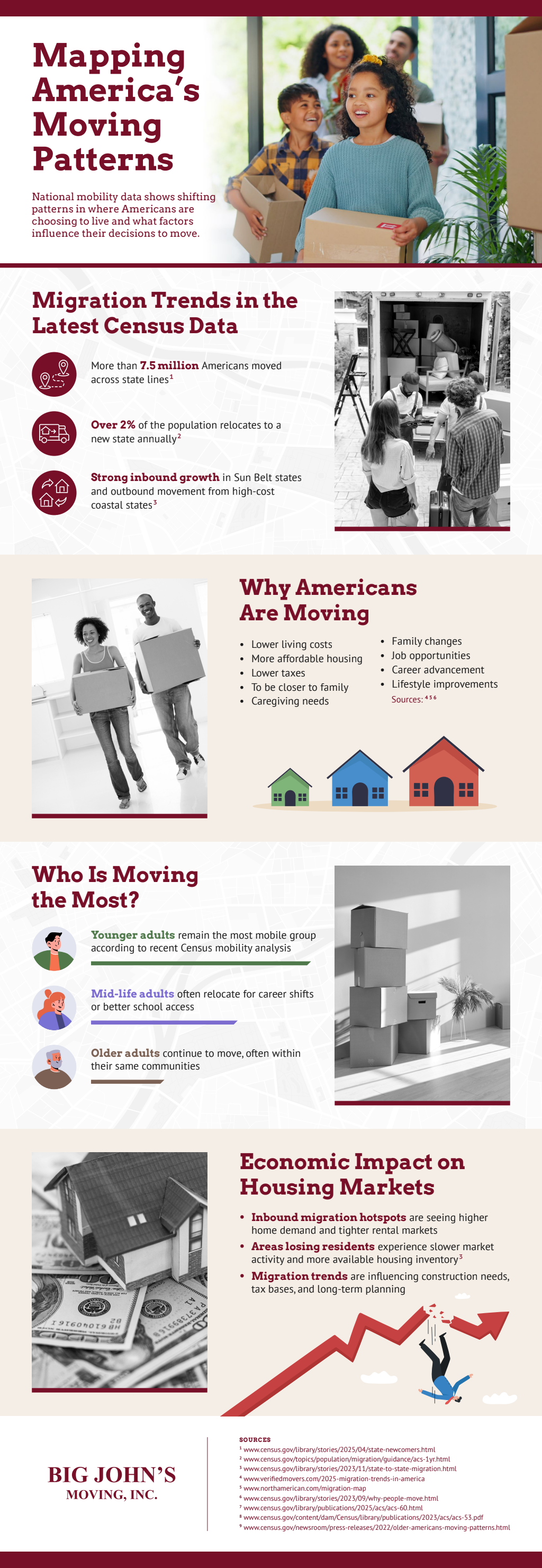
Several regions have experienced consistent population growth over the past decade. Sun Belt states such as Texas, Florida, Arizona, and North Carolina continue to attract new residents due to warmer climates, expanding job markets, and comparatively lower housing costs. Data from the U.S. Census Bureau shows that many southern states recorded higher rates of inbound migration between 2020 and 2023.
At the same time, some northern and coastal metropolitan areas have experienced slower growth or modest population declines. High housing prices, congestion, and rising living expenses have influenced relocation decisions for many households. These patterns do not necessarily reflect long-term decline, but they highlight how affordability and lifestyle factors influence mobility.
Urban, Suburban, and Rural Choices
Another notable trend involves shifts between urban centers and surrounding communities. During the past several years, many households sought additional living space outside dense city environments. Suburban areas and smaller cities often provide larger homes, quieter neighborhoods, and easier access to outdoor recreation.
Remote work opportunities have played a role in this movement. Employees who are no longer required to live near an office can consider locations that offer lower housing costs or improved quality of life. Smaller metropolitan areas have gained residents who previously lived in larger cities.
Rural communities have also seen modest population increases in certain regions. While these areas may offer lower housing costs, they often balance that advantage with longer travel distances for employment or services.
Economic and Housing Influences
Housing prices and job opportunities remain major drivers of relocation decisions. Regions with expanding industries tend to attract new residents seeking employment. Technology, healthcare, and manufacturing hubs often experience higher demand for housing as workers move into the area.
Interest rates and home availability also affect mobility. Limited housing inventory can slow relocation activity, while a growing supply may encourage moves within or between states. Homeowners sometimes choose to remain in place when market conditions make purchasing a new property more difficult.
These economic influences shape demand for relocation services as well. Companies such as residential movers often see increased activity in regions experiencing rapid population growth.
Lifestyle Factors and Long-Term Trends
Lifestyle considerations influence relocation patterns alongside economic factors. Families may seek communities with strong school systems, outdoor recreation opportunities, or lower crime rates. Retirees frequently relocate to areas with warmer climates and accessible healthcare services.
Younger professionals often prioritize cities with strong job markets, cultural amenities, and transportation options. Over time, these individual choices combine to shape national migration patterns.
Population movement across the United States reflects a combination of housing affordability, employment opportunities, and lifestyle preferences. Observing these patterns offers valuable insight into how communities grow and evolve while revealing the factors that guide where people decide to call home. Look over the infographic below for more information.