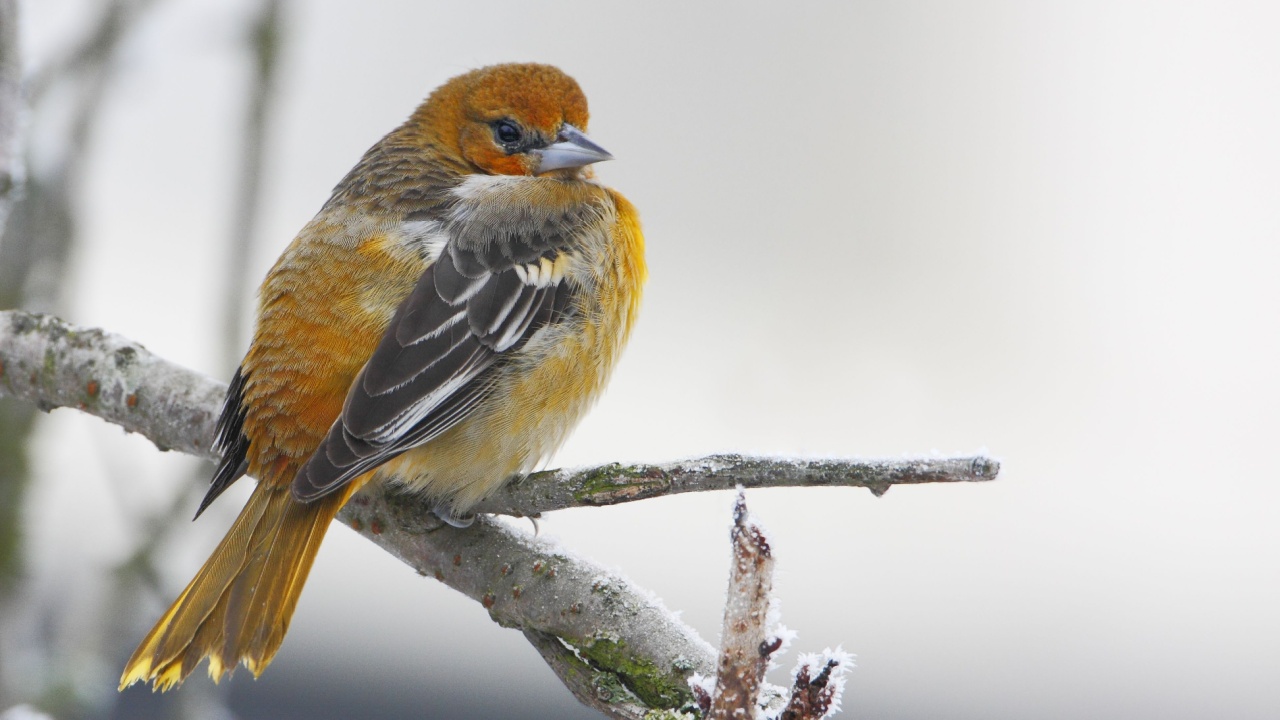
10 Most Beautiful Birds in the U.S. We Love to Watch on Repeat
Birdwatching often feels like a test of patience where the final exam involves distinguishing between a dozen types of small, brown sparrows. We stare into the bushes, squinting until our eyes water, praying for a flash of color to break the monotony. While we hold a special place in our hearts for every feathered friend, we occasionally crave a visual spectacle. We want the showstoppers. We want the birds that make us drop our coffee mugs and scramble for the binoculars.
The United States hosts avian residents that look like they flew straight out of a tropical paradise or a child’s over-enthusiastic coloring book. These species possess plumage so vibrant it almost seems artificial. Tracking them down offers a reward far greater than checking a box on a list; it provides a genuine moment of awe.
Below lies a collection of the ten most visually arresting birds found across the country. Adding them to your watch list is a decision you will never regret.
1. Varied Thrush (Ixoreus naevius)

If you reside in the Pacific Northwest or venture there during winter, you might spot a bird that resembles an American Robin attending a masquerade ball. The Varied Thrush takes the familiar rusty-orange and gray color palette but applies it with striking, geometric precision. A bold black band snaps across the breast, and intricate orange patterns accentuate the wings.
This bird prefers wet, dark forests, often hiding in the dense understory. Its shyness makes a sighting feel like a genuine accomplishment. The song of the Varied Thrush sounds strange and ethereal, consisting of long, humming notes that seem to echo from nowhere. Observing one foraging on the forest floor offers a glimpse into the secretive lives of deep-woods dwellers. They bring a burst of warm color to the gloomy, rain-soaked days typical of their range.
2. Wood Duck (Aix sponsa)

Most ducks are content with muted browns and grays to blend into the reeds. The male Wood Duck missed that memo entirely. He sports an iridescent green crested head, bright red eyes, and a chest the color of burgundy wine. His body features bold white stripes and golden flanks. Honestly, he looks like a porcelain figurine painted by someone who refused to pick just one color.
You will find these stunners in wooded swamps and marshes across much of the United States. They possess a unique habit among waterfowl: they nest in tree cavities. Seeing a duck perch on a tree branch always looks slightly wrong, yet the Wood Duck does it with style. Their beauty makes them a favorite for photographers and casual observers alike. They transform a muddy pond into an art gallery simply by paddling through it.
3. American Flamingo (Phoenicopterus ruber)
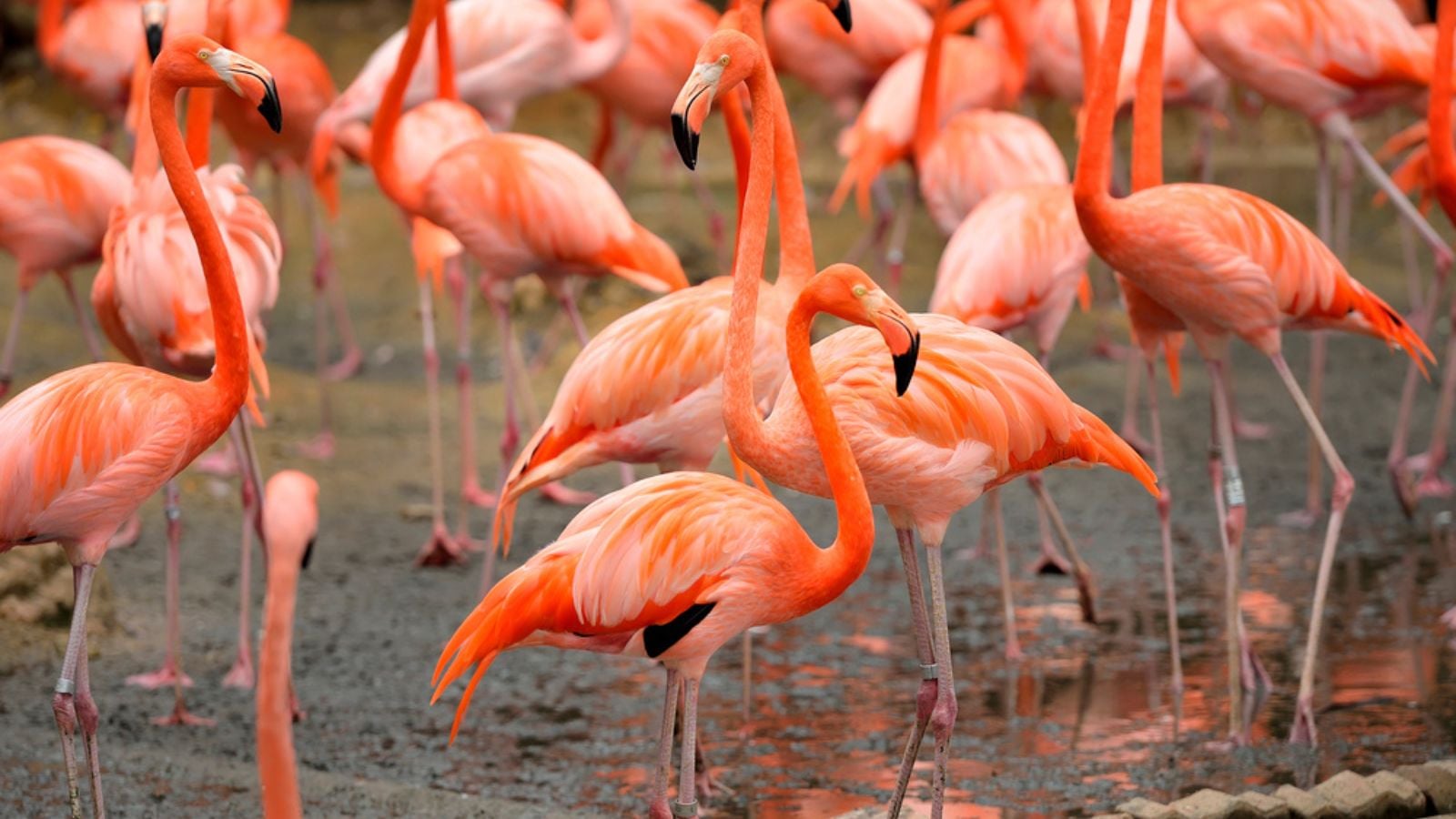
We usually associate these pink giants with lawn ornaments or zoos, but wild American Flamingos do appear in parts of Florida. Their absurdity is part of their charm. They stand on one leg, eat with their heads upside down, and wear a shade of pink that fashion designers struggle to replicate.
The distinct color comes from their diet of shrimp and algae rich in carotenoids. Without this specific food source, their feathers would fade to white. Watching a flock of flamingos wade through shallow water offers a chaotic and colorful experience. They are loud, social, and impossible to ignore. If you want a bird that defines “tropical,” this is the one. Spotting one in the wild feels like getting away with something, as if the bird escaped from a resort and decided to hang out in the bay.
4. Scarlet Tanager (Piranga olivacea)
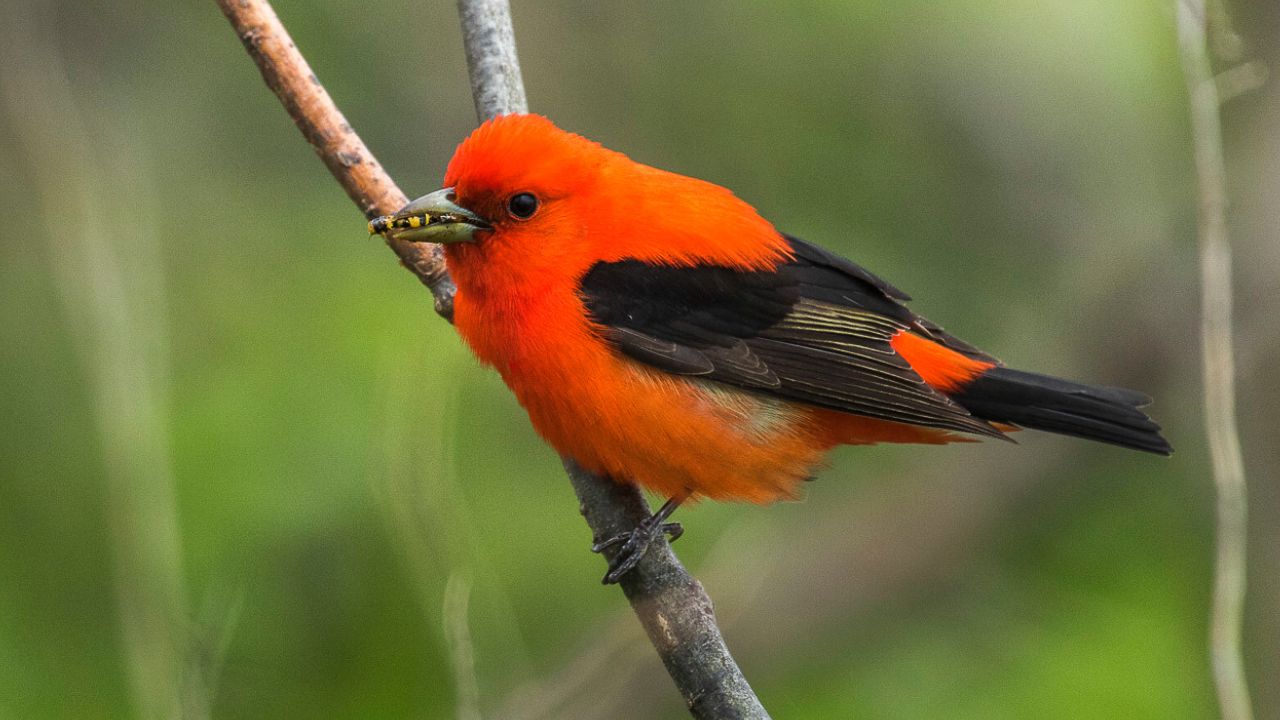
The male Scarlet Tanager is a lesson in high contrast. His body is a blinding, brilliant red, while his wings and tail are jet black. He looks like a burning ember flying through the canopy. During the spring and summer breeding season in the eastern forests, this bird is unmistakable.
Despite the neon coloring, spotting one is surprisingly difficult. They prefer the very tops of deciduous trees, staying hidden among the leaves while hunting for insects. You often hear their raspy, robin-like song before you see them. The challenge of finding a Scarlet Tanager makes the reward sweeter. When you finally locate that flash of red against the green leaves, the visual impact is startling. It serves as a reminder that you do not need to travel to the Amazon rainforest to see exotic-looking wildlife.
5. Green Jay (Cyanocorax luxuosus)

If you find yourself in the Rio Grande Valley of Texas, keep your eyes peeled for the Green Jay. This bird rejects subtlety. It combines a vivid green body with a bright yellow belly and a head marked by blue and black. It looks less like a North American bird and more like a parrot that got lost on its way to Brazil.
Green Jays are noisy and intelligent, sharing the same family traits as Blue Jays and crows. They travel in family groups and are not shy regarding their presence. Their striking appearance and bold personality make them incredibly fun to watch. They hop through the brush with confidence, flashing their yellow tail feathers. For birders, they represent a “specialty” species, a tropical treasure that barely crosses the border into the U.S.
6. Baltimore Oriole (Icterus galbula)
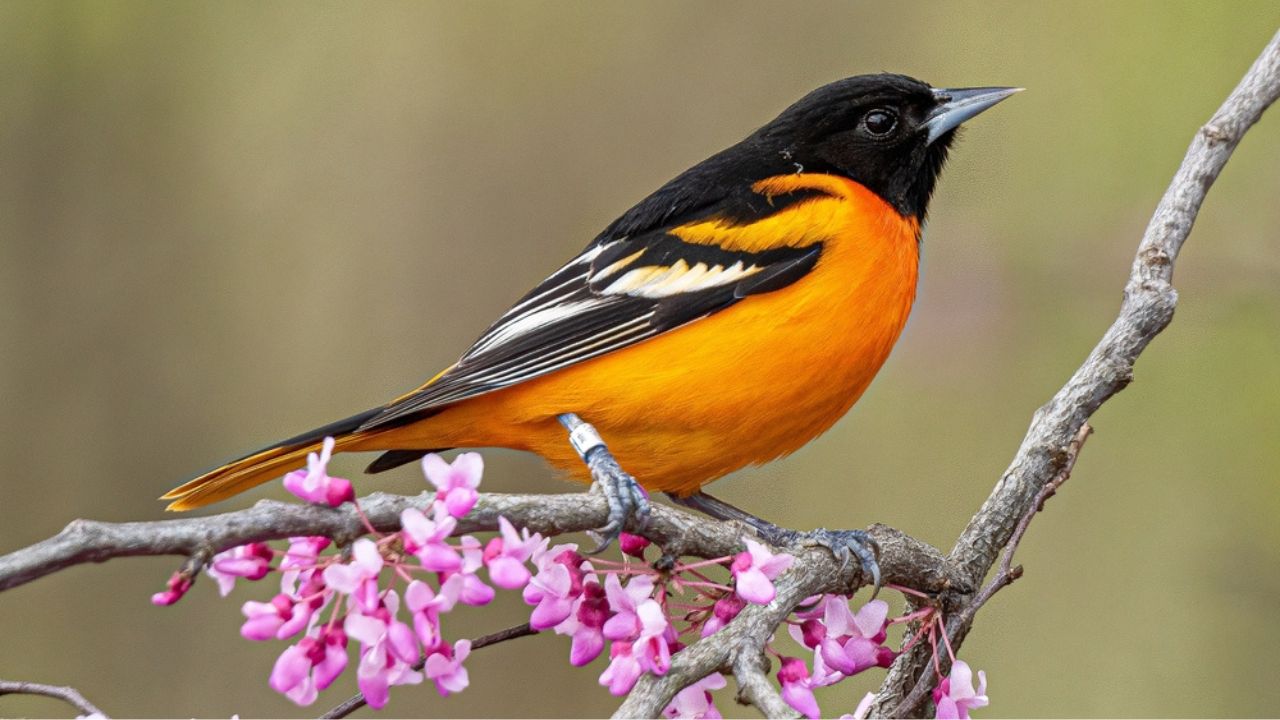
The Baltimore Oriole brings a blaze of orange to the eastern and central United States. The male features a solid black head and back that makes the fiery orange of his breast pop even more. The female is more subdued, but weaves incredible hanging nests that look like socks dangling from tree branches.
These birds love fruit and nectar. You can often attract them to your backyard by offering orange halves or grape jelly. Watching an oriole struggle to balance on a jelly feeder while guarding its sugar stash is highly entertaining. Their whistling song is cheerful and loud, announcing their arrival in spring. They provide an easy entry point for beginner birders because they are distinct, vocal, and willing to visit feeders.
7. Painted Bunting (Passerina ciris)
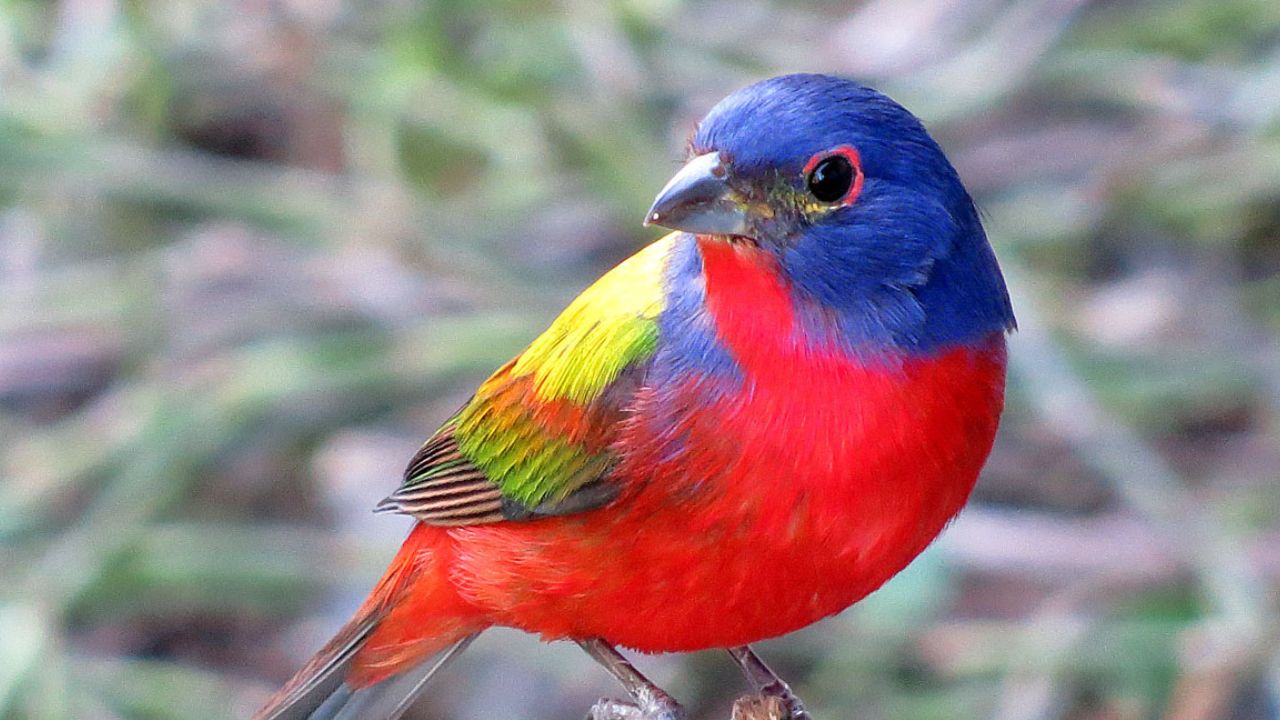
The male Painted Bunting is frequently cited as the most beautiful bird in North America, and it is hard to argue with that assessment. He wears a blue head, a red chest, and a green back. It looks as if he fell into three different buckets of paint. The combination is so vibrant that seeing one for the first time can feel disorienting.
You can find these kaleidoscope birds in the coastal Southeast and parts of the South Central U.S. They are notoriously secretive, often hiding in dense thickets despite their loud colors. However, during migration, they occasionally appear at feeders, especially if you offer white millet. Catching a glimpse of a Painted Bunting is a bucket-list moment for many. The sheer number of colors packed onto such a small bird defies logic.
8. Hooded Oriole (Icterus cucullatus)
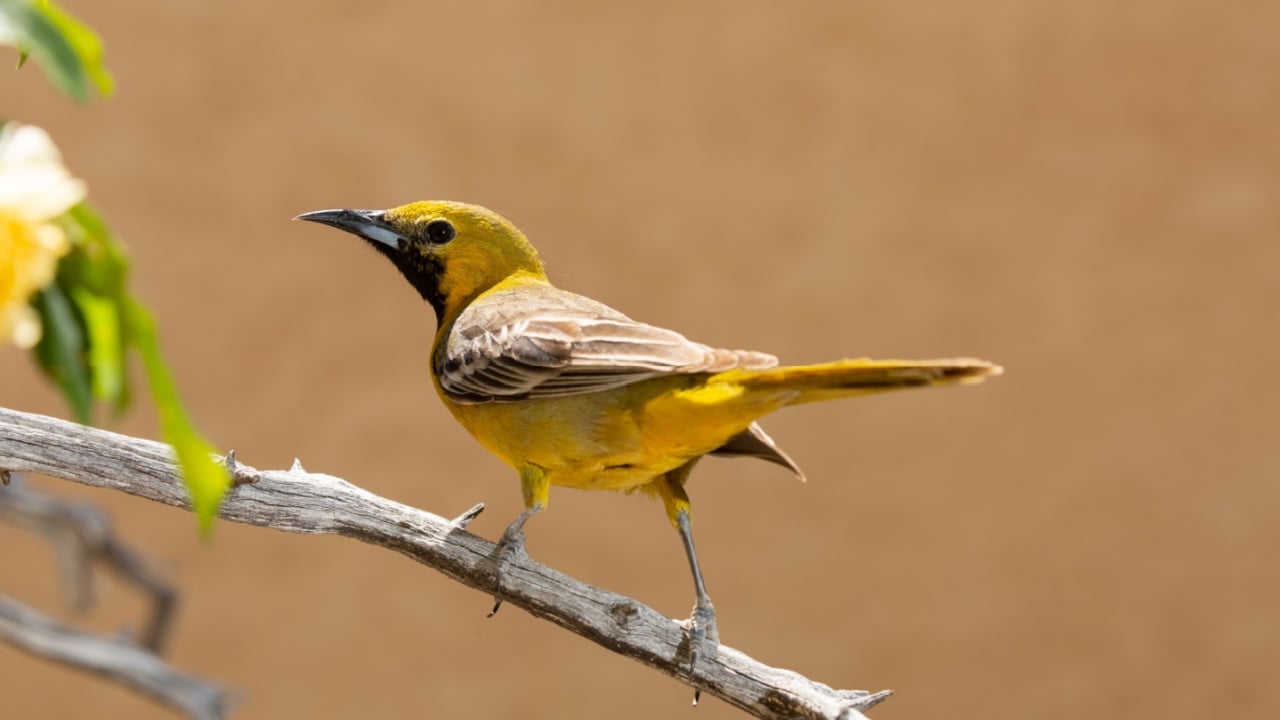
While the Baltimore Oriole dominates the east, the Hooded Oriole claims the Southwest and California. This bird is a brilliant yellow-orange with a black throat and a black mask that extends down the back. The “hood” of orange feathers on the head gives the species its name.
They have a strong affinity for palm trees, often sewing their hanging nests into the underside of large fronds. They are also nectar specialists. If you have hummingbird feeders, you might find a Hooded Oriole trying to tip the feeder to get a drink. Their sleek appearance and long tails give them an elegant silhouette. Watching them navigate the sharp fronds of a fan palm displays their agility and adaptation to their environment.
9. American Kestrel (Falco sparverius)

Raptors are usually fierce and imposing, but the American Kestrel manages to be fierce and adorable simultaneously. It is the smallest falcon in North America, roughly the size of a Mourning Dove. The male has slate-blue wings and a rusty red back, with distinct vertical black stripes on a white face. These “sideburns” are technically called malar stripes.
You will often see them perched on telephone wires scanning for grasshoppers or mice. Their hunting style involves hovering in place against the wind, flapping their wings rapidly while keeping their head perfectly still. It is an impressive acrobatic feat. The Kestrel proves that you do not need to be massive to be majestic. Their intricate coloring and intense behavior make them a joy to observe in open fields and farmlands.
10. Mountain Bluebird (Sialia currucoides)
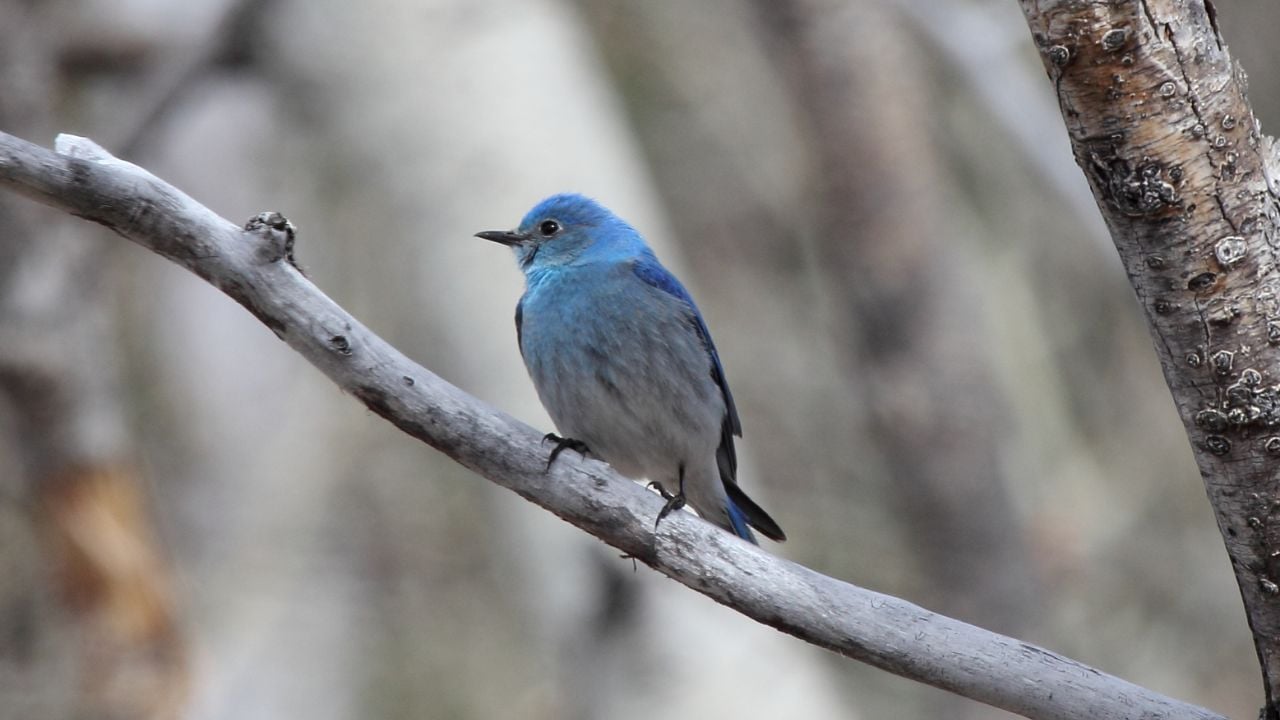
The Mountain Bluebird is the color of the sky at high noon. Unlike its Eastern and Western cousins, the male Mountain Bluebird has no orange on its breast. He is entirely, purely, electric blue. Against the backdrop of a snowy meadow or a dull gray rock face, the color is startlingly bright.
These birds inhabit the open country of the American West. They hunt by perching on fence posts or hovering low over the grass to spot insects. Their beauty lies in their simplicity. There are no complex patterns or stripes, just a single, perfect shade of blue. Spotting a flock of them in late winter is a breathtaking experience, as they bring color to the landscape long before the wildflowers bloom.
Your Turn to Grab the Binoculars

Reading regarding these magnificent creatures is merely the prelude. The real satisfaction arrives when you step outside and witness that burst of color with your own eyes. Start by researching which of these species migrates through your area. Clean your feeders, plant some native berry bushes, or visit a local wildlife refuge. Nature puts on a free show every single day. We just need to look up often enough to catch it. So, grab your field guide, pour some coffee into a travel mug, and go find something beautiful.
Read More: