What Is a Potager Garden? This Old French Secret Can Save You Up To $600 a Year
The modern-day grocery supply chain has you almost certainly spending $5 on a plastic clamshell of basil at the grocery store that your grandmother would have grown for free.
That small frustration points to a much larger one. Most American vegetable gardens are designed to produce for a single season and then sit idle for months, bare soil doing nothing but growing weeds. Meanwhile, French gardeners have been using a centuries-old system that keeps the same small patch of ground producing food from the first thaw through the last frost, year after year, for the cost of a few seed packets. They call it a potager.
The timing matters now more than ever. Grocery prices have climbed steadily over the last few years, and a well-planned potager garden can offset $600 or more in annual produce and herb costs, according to research from Iowa State University Extension. That is not a fantasy figure reserved for people with acres of land; it is what a thoughtful, small kitchen garden can deliver when it is designed to work the way the French have done it since the Middle Ages.
Here is why most American gardens miss this mark entirely, and how a single weekend of planning can change what shows up on your dinner table for the rest of the year.
The French Word Most Gardeners Can’t Pronounce (But Should Know)
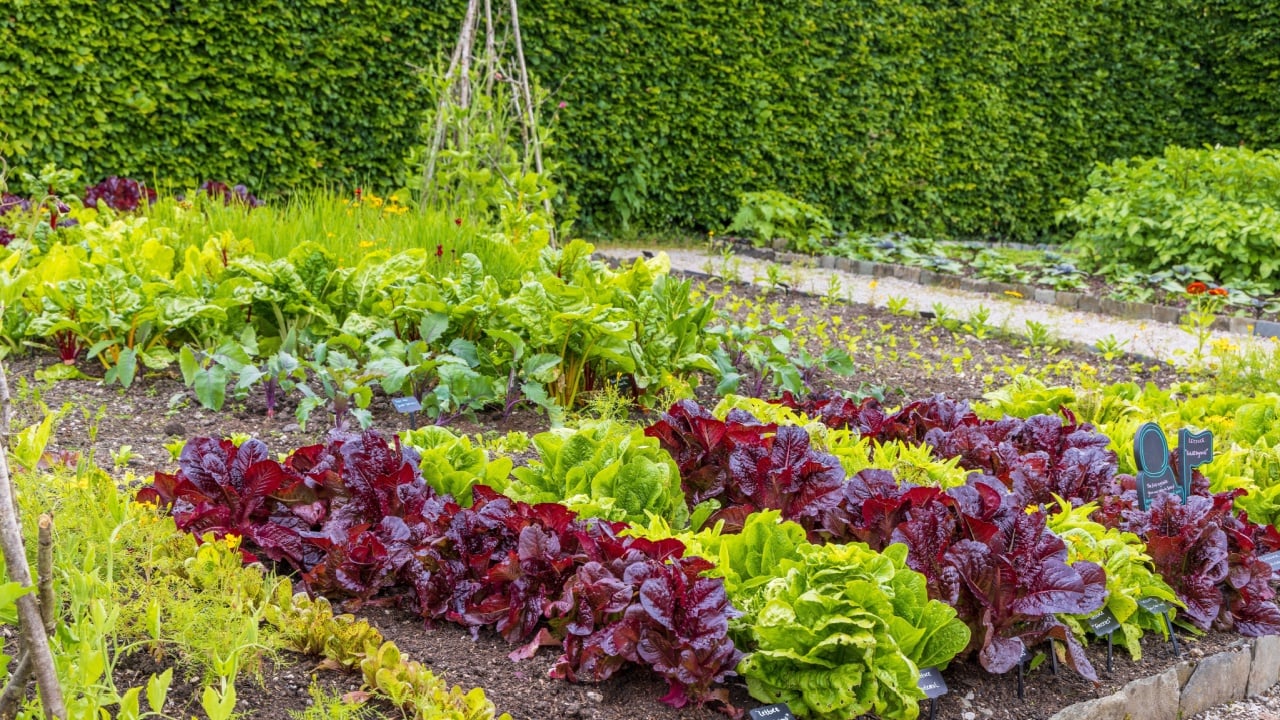
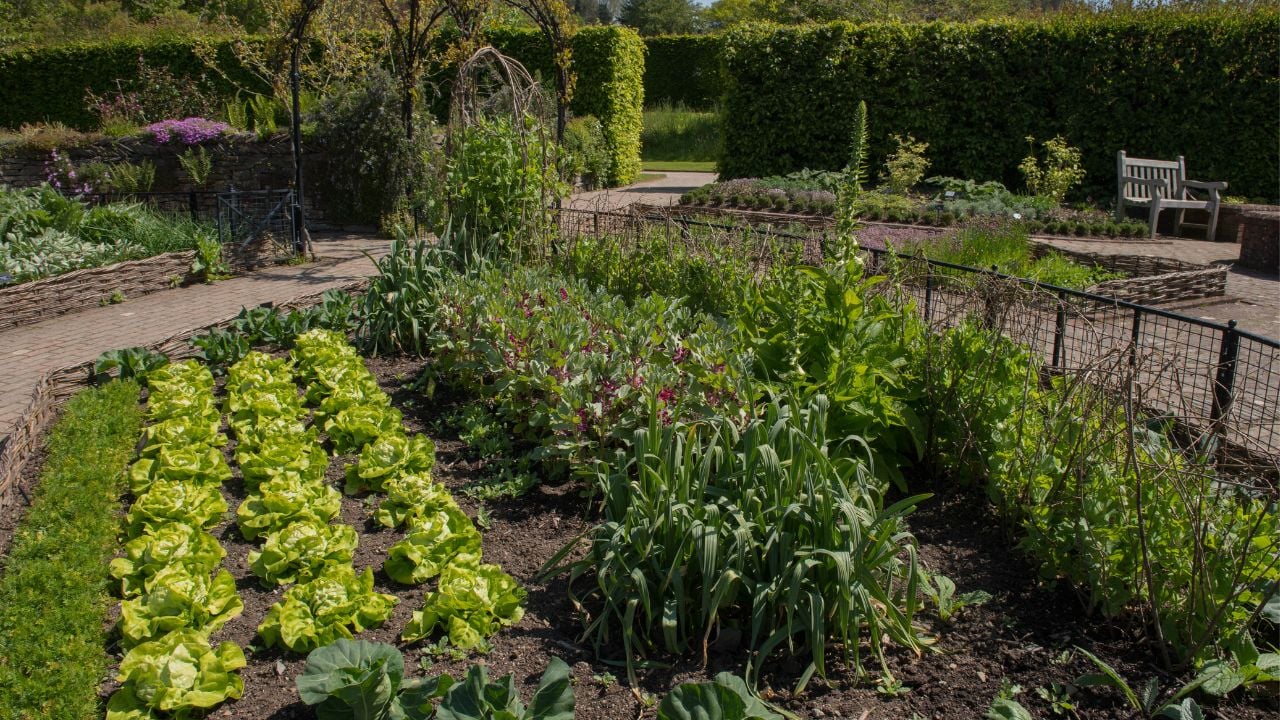
A potager (pronounced poh-tah-ZHAY) is a French kitchen garden that intermingles vegetables, fruits, herbs, and flowers in a designed, beautiful space. The word itself translates literally to “for the soup pot,” reflecting its humble origin: step outside, pick whatever is ripe, and drop it into tonight’s dinner. “The potager is more than a kitchen garden; it is a philosophy of living that is dependent on the seasons and the immediacy of the garden,” writes landscape architect Jennifer Bartley in Designing the New Kitchen Garden on Planters Place.
The tradition dates back to Medieval monastery gardens, where monks arranged vegetable beds in geometric patterns around central water features. By the Renaissance, the concept had reached its grandest expression at Château Villandry in the Loire Valley, which still plants 40 species of vegetables in rotation twice each year. But the heart of the potager was never the grand estate. It was the small, practical garden just outside the farmhouse door, designed to keep a family fed without a trip to market.
What separates a potager from a regular vegetable garden is intentionality. Every plant earns its place through flavor, beauty, or both. Nasturtiums edge the beds because they are edible and because they repel aphids. Swiss chard varieties like Bright Lights are grown as much for their jewel-toned stems as for their taste. The result, according to the Brooklyn Botanic Garden, is a sustainable system that “encourages biodiversity” while producing food with no chemicals and no bare soil.
Why Your Grandmother’s Kitchen Garden Was Already a Potager
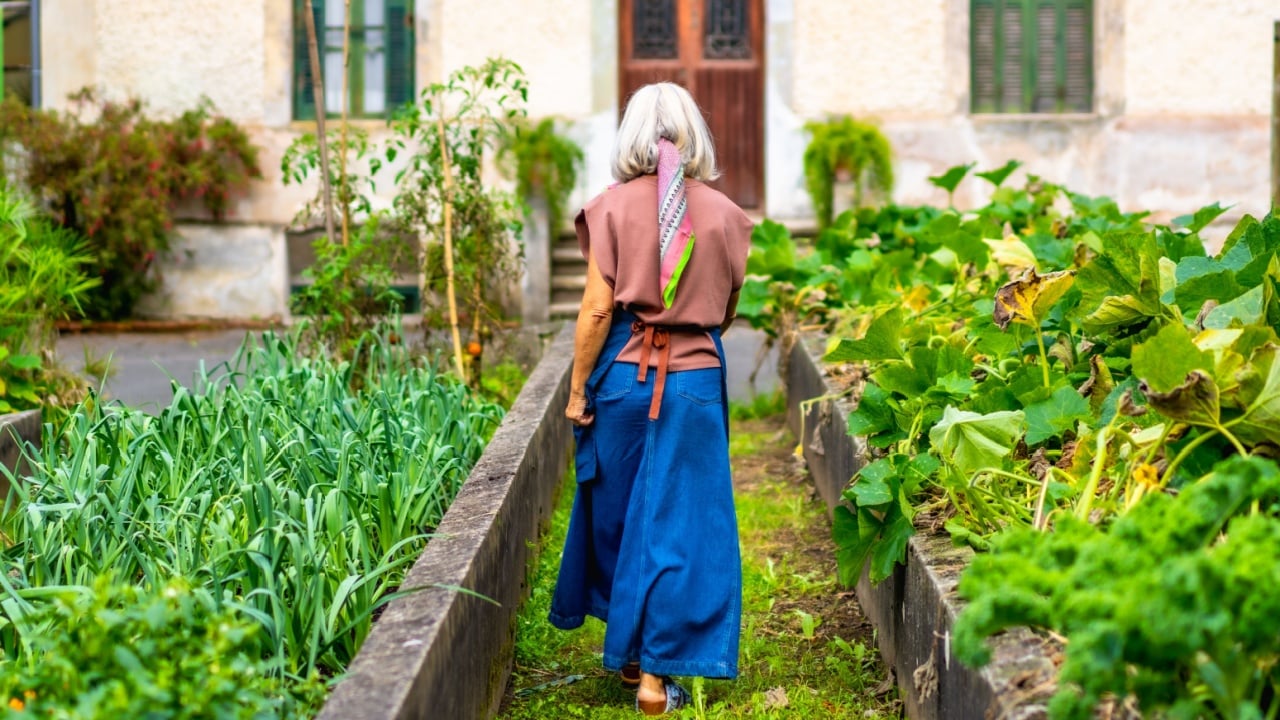
If you grew up watching someone tend a backyard garden where tomatoes grew beside marigolds, herbs bordered the walkway, and a few roses climbed the fence, you already know what a potager looks like. Your grandmother may not have used the French word, but she was following the same principle: grow what you eat, make it beautiful, and waste nothing.
The Old Farmer’s Almanac has championed this approach for over 230 years, noting that “the idea of intermingling vegetables, fruit, herbs, and flowers isn’t a new one.” What is new is that American gardeners somehow forgot it. Industrial-scale agriculture taught us to think in monoculture rows; corn in one section, beans in another, everything separated and sterile. The potager rejects that entirely, and it’s taken us generations to circle back to this wisdom.
A potager’s design philosophy is cyclical, not linear. You do not plant once in spring and harvest once in summer. As Karen Kriebl writes from her own potager in southwest France, “One crop finishes its production, space is cleared, compost is added, and something else is planted in its place for the next season”. That continuous cycle is what turns a small garden into a significant source of household food.
The Grocery Savings Most Gardeners Leave on the Table
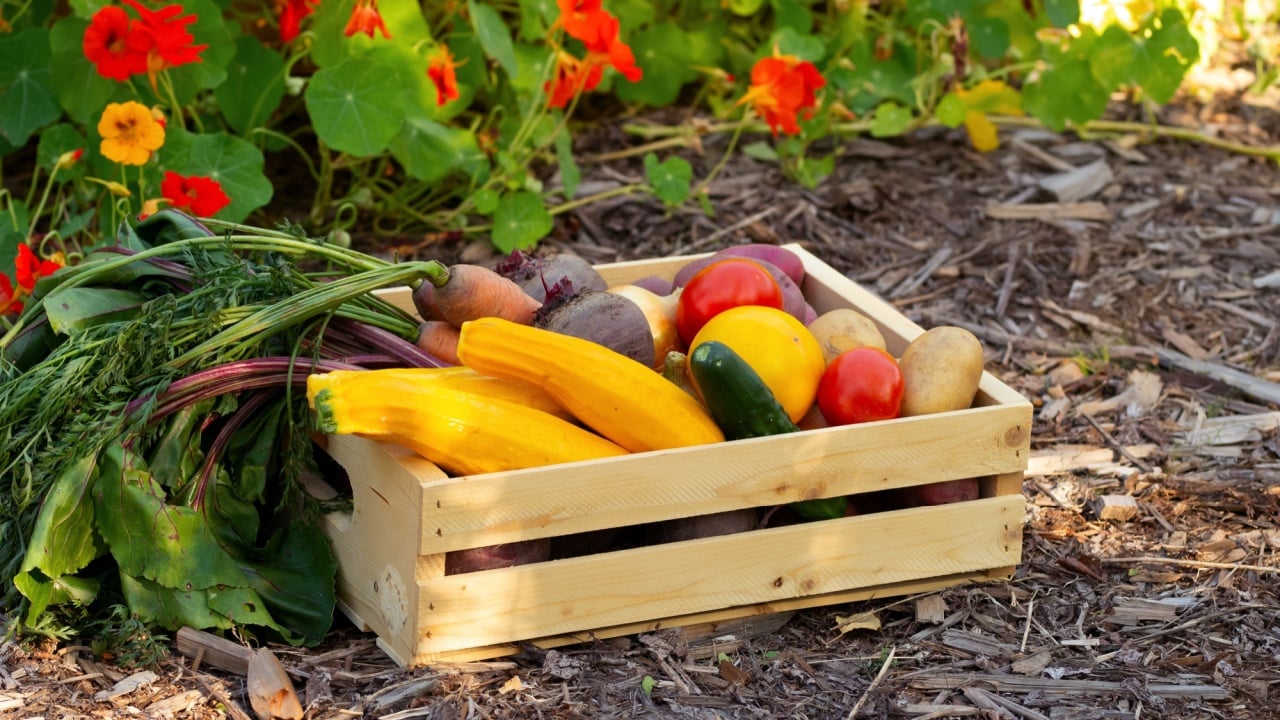
A well-planned kitchen garden can produce $600 or more worth of food in a single growing season, according to Iowa State University Extension. That figure assumes a modest space and common vegetables. Add herbs to the equation, and the savings climb further. A single $3 packet of basil seeds, for example, can replace $150 or more in store-bought fresh basil over the course of a year.
The potager’s secret weapon is successional planting. Where a standard American garden plants tomatoes in May and calls it done, a potager plants spring lettuce in March, replaces it with summer tomatoes in June, and follows those with fall kale in September, all in the same bed. No soil sits empty, and no season goes unplanted. Seeds ’n Such, a family-owned seed company, describes it this way: “Spring crops are grown from the very first of the season, then replaced with summer crops, and eventually rotated to fall-grown plants to maximize production.”
A French government survey found that 23 percent of all fruit and vegetables consumed by the French are homegrown, largely through this kind of intensive, small-space growing. That is nearly a quarter of a nation’s produce supply coming from backyard gardens, not industrial farms.
The Design Mistakes That Ruin a Potager Before It Starts
The single biggest mistake American gardeners make is hiding their vegetable garden in the far corner of the yard. Landscape architect Jennifer Bartley puts it plainly in Food Garden Life: “If you put it in a remote part of your landscape, you don’t go there, you don’t see it, and you don’t maintain it”. A potager belongs steps from your kitchen door, where you will visit it daily with a basket in hand.
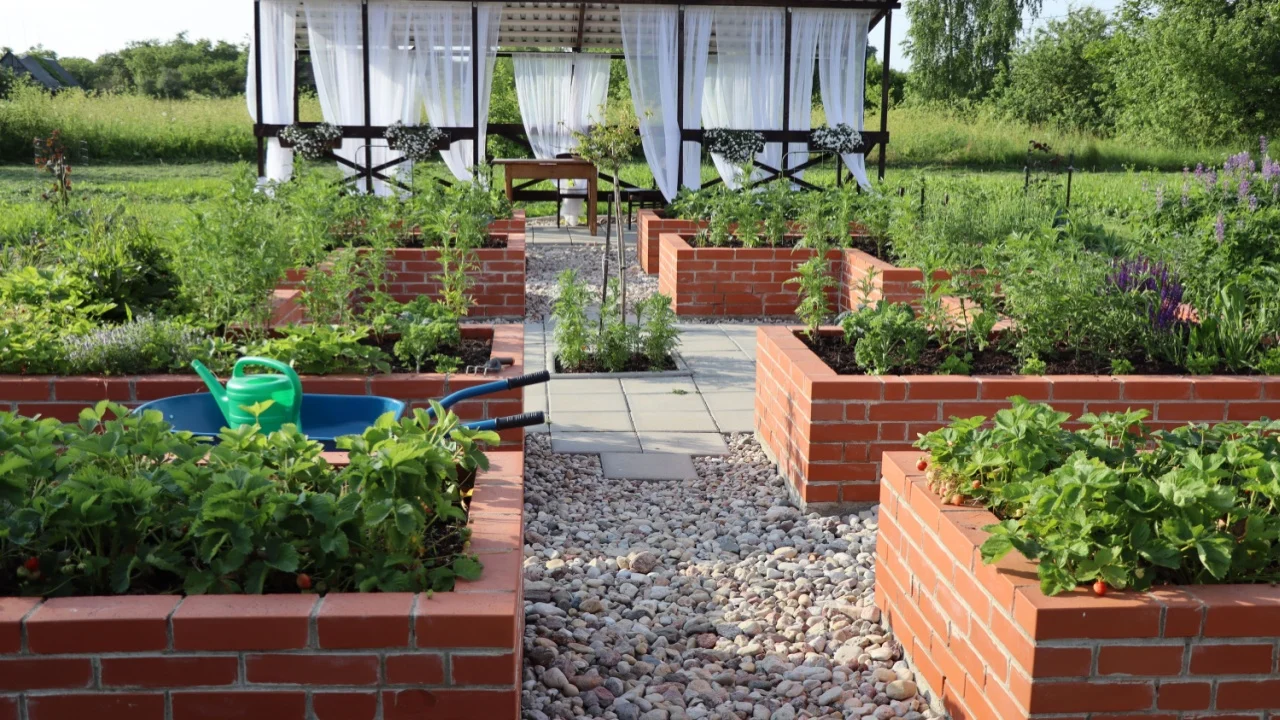
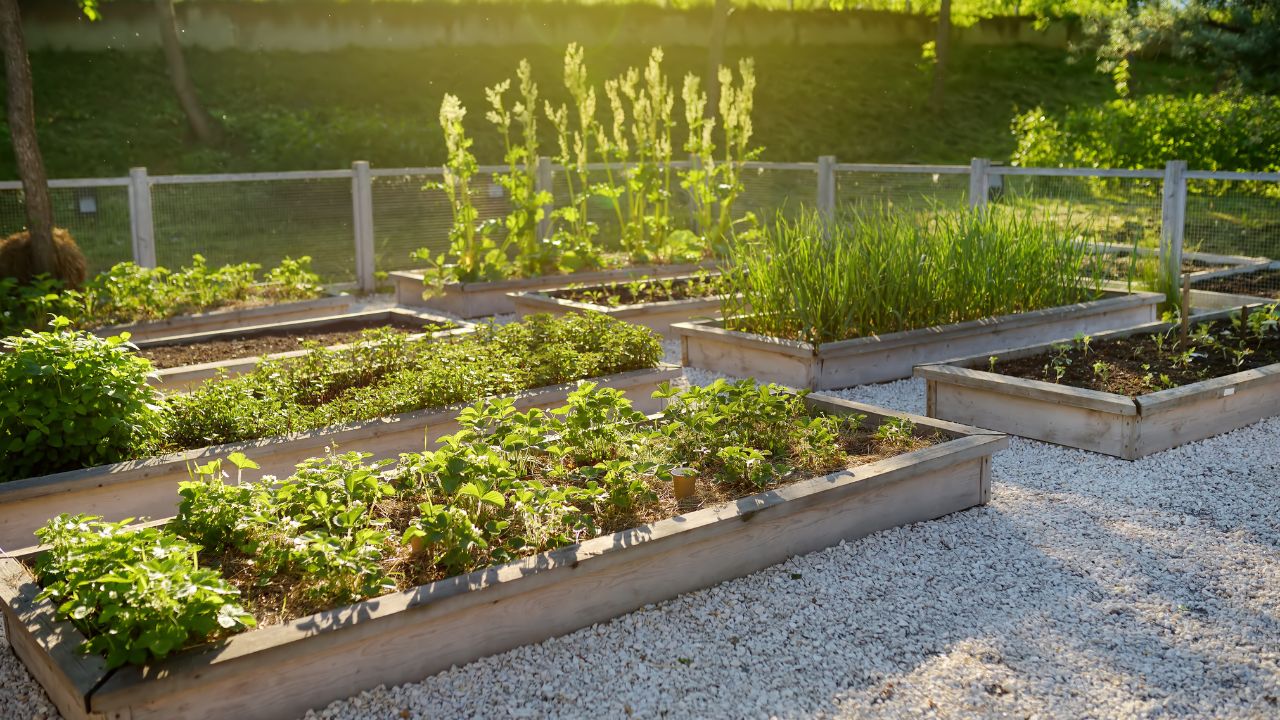
The second mistake is building beds too wide. Any bed wider than four feet forces you to step into the soil to reach the center, compacting the ground and damaging roots. Pathways between beds need to be at least three feet wide to accommodate a wheelbarrow; anything narrower leads to frustration and trampled plants.
Then there is mint. Every potager guide will tell you to include herbs, but mint and tansy will take over an entire garden within a single season if they are not contained in buried pots or separate raised beds. The Brooklyn Botanic Garden warns that “aggressive herbs like mint or tansy must be contained” or the weeds will “eventually smother the vegetables.” This is not a minor nuisance; it is the difference between a productive garden and a mint field.
How to Start Planning Your Potager Garden Before August Ends

August is not too late to begin. In fact, it is ideal. Planning now means you can plant cool-season crops like lettuce, kale, radishes, and spinach by early September and harvest well into November in most regions. Waiting until spring means losing an entire growing season.
Start with just two or three raised beds, no wider than four feet. Place them in the sunniest spot within steps of your kitchen door. If you are in your 50s or beyond, consider waist-height beds; they eliminate bending and kneeling entirely and make gardening a pleasure rather than a chore.
For materials, skip the expensive pea gravel. Free wood chips from a local tree service work beautifully as pathway material. Seeds cost $15 to $30 for an entire season. Begin with what experienced growers call a “soup garden,” just five plants: tomatoes, basil, onions, garlic, and parsley. That modest start provides the base for dozens of meals and costs less than a single restaurant dinner.
What to Do This Weekend
Sketch a simple layout on paper. Identify where the sun hits your yard for six or more hours. Measure a space at least 8 by 10 feet. Choose five plants you already cook with. Visit a local nursery or order seeds online. You do not need a fountain or an arbor or a trip to Versailles. You need soil, sun, and a willingness to try something that has worked for six hundred years.
A potager garden is not about perfection or pretending to be French. It is about growing what you eat, making it look good enough that you want to spend time there, and doing it for so little money that your grocery budget finally starts to feel reasonable again. The garden dictates the menu, and that small shift, from consumer to grower, is the oldest and most satisfying trick in the book.
Read More
Washing Your Lettuce Won’t Remove Cyclosporiasis, But Growing Your Own Will
Your Grandmother Stored These 8 Foods All Winter Without Canning a Single Jar