
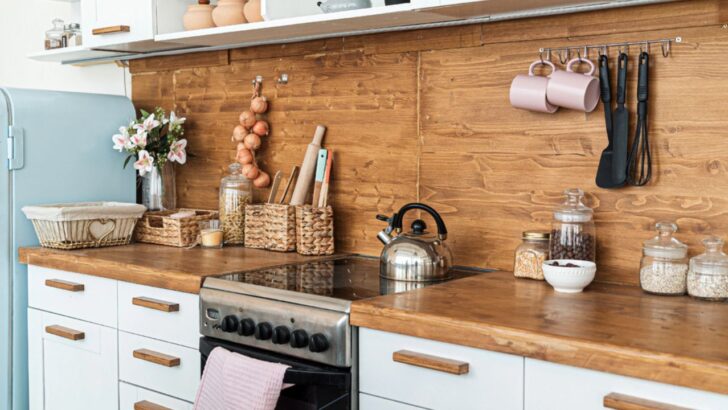
The kitchen island has dominated home design for decades, often seen as the centerpiece of a modern culinary space. It promises extra counter space, storage, and a casual dining spot. But what if it’s not the right fit for your kitchen? For smaller spaces, an island can create a cramped, awkward workflow. For others, it’s a commitment to a fixed layout that doesn’t suit their lifestyle. It’s time to explore the world beyond the built-in block and discover alternatives that offer flexibility, style, and superior function.
Moving away from the conventional island opens up a realm of creative possibilities. From clever seating arrangements to versatile furniture pieces, these options can make your kitchen feel larger, more personal, and better suited to your actual living and cooking habits. Let’s look at twelve inspired alternatives to the traditional kitchen island.
1. Opt for a Kitchen Peninsula

Image Credit: Shutterstock.
A peninsula extends from a wall or existing cabinetry, offering many of the benefits of an island without demanding the same amount of floor space. It defines the kitchen area in an open-concept home while keeping the layout connected and fluid. This is an excellent solution for kitchens where a standalone island would obstruct traffic flow.
It provides a substantial work surface and can easily accommodate seating on one side, creating a perfect spot for morning coffee or supervising homework. It also adds valuable storage underneath. Because it’s connected on one end, it directs foot traffic around the primary work zone, making the cooking process more efficient and less chaotic.
Quick Guide for Peninsula:
- Best For: Open-concept layouts or kitchens that are too narrow for a central island.
- Considerations: Plan your appliance placement carefully to avoid creating a bottleneck in the main work triangle. Allow at least 36 to 42 inches of clearance for walkways.
- Next Steps: Consult with a cabinet maker or kitchen designer to see how a peninsula could integrate with your current layout. Measure your space to determine the ideal length and width that won’t overwhelm the room.
2. Include a Freestanding Table or Worktable
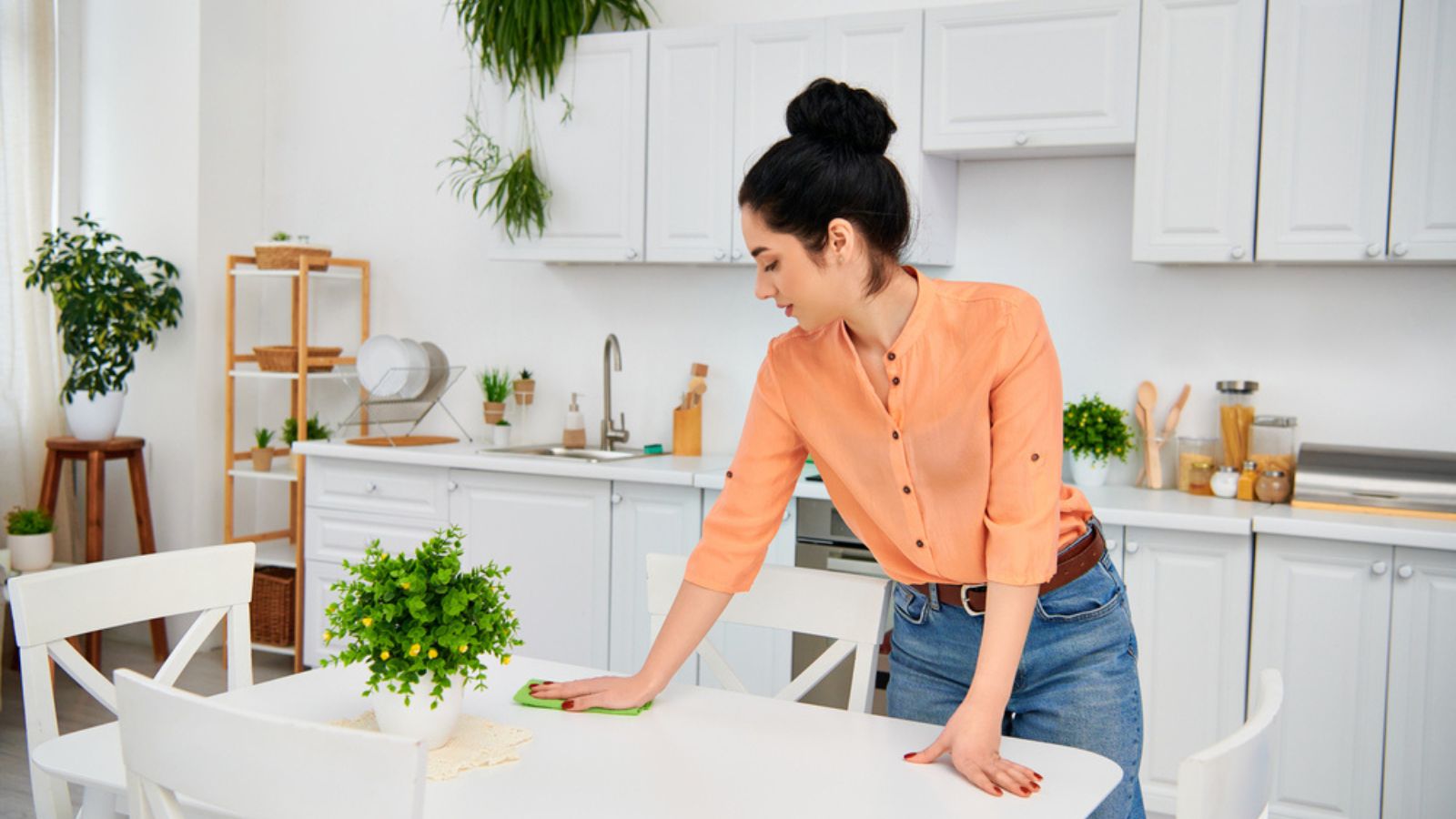
Image Credit: Depositphotos.com.
A simple freestanding table is a classic and highly adaptable alternative. It can serve as a prep station, a dining table, or a place for guests to gather, all without the permanence of a built-in island. A sturdy wooden table brings warmth and character to a kitchen, while a stainless steel worktable offers a professional, industrial look.
The open space underneath a table makes the kitchen feel larger and less cluttered. You can slide stools underneath when they are not in use, or leave them open to maintain an airy feel. This option provides ultimate flexibility; if you decide you need more open floor space for a gathering, you can simply move the table against a wall or out of the room entirely.
Quick Guide to Freestanding Tables:
- Best For: Homeowners who value flexibility and a less “built-in” aesthetic.
- Considerations: Choose a table at counter height (around 36 inches) if you plan to use it for food prep. For a dining-focused table, a standard table height (around 30 inches) is more comfortable for seating.
- Next Steps: Explore furniture stores, antique shops, and even restaurant supply stores for a table that fits your kitchen’s style and size. Don’t forget to measure for comfortable clearance on all sides.
3. Build In Banquette Seating
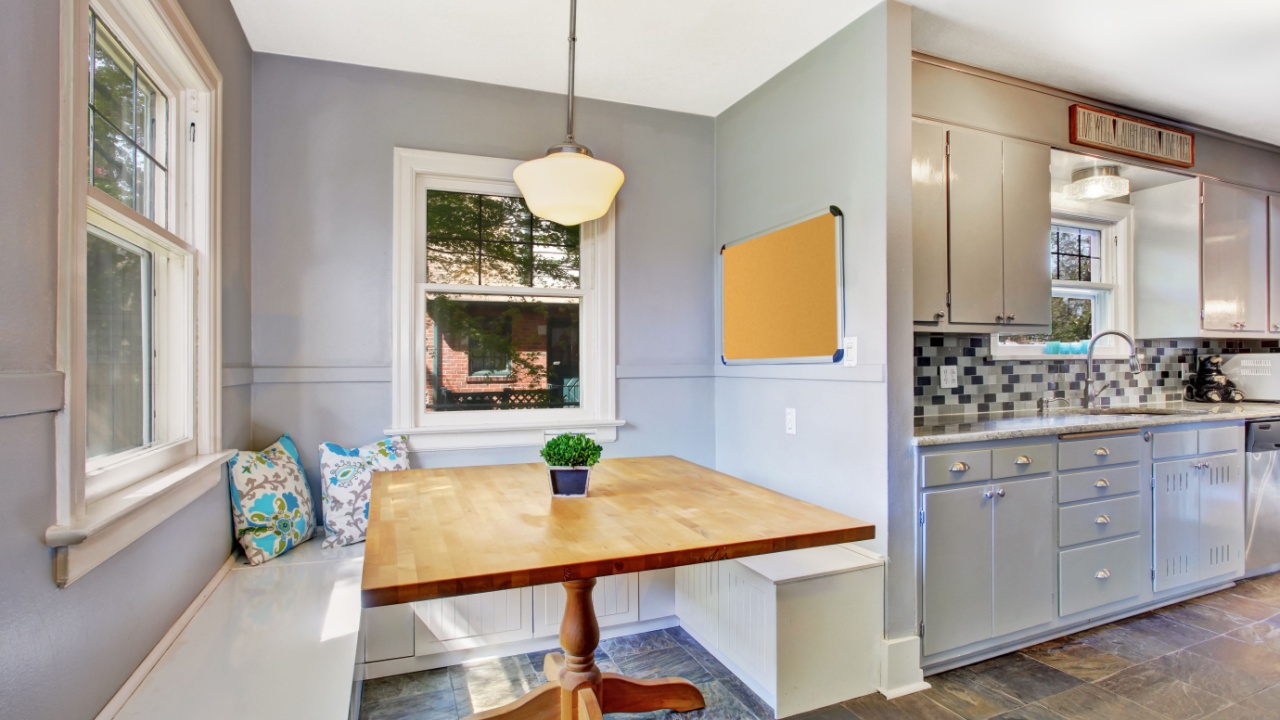
Image Credit: Shutterstock.
Banquette seating, or a built-in bench, is a brilliant space-saving solution that adds a custom, high-end feel to your kitchen. Typically placed against a wall, a banquette paired with a table creates a comfortable dining nook without taking up the space required for a traditional table and chairs.
This setup is perfect for eat-in kitchens where a central island would feel redundant or crowded. The benches can be designed with hidden storage underneath the seats, providing a clever spot to tuck away seasonal linens, small appliances, or other kitchen items. It transforms an underused corner into a functional and inviting feature.
Quick Guide to Banquette Seating:
- Best For: Eat-in kitchens, corner spaces, and families needing efficient, comfortable seating.
- Considerations: Upholstery should be durable and easy to clean. Performance fabrics or vinyl are practical choices for a high-traffic kitchen area.
- Next Steps: Decide on a location, then either hire a carpenter for a custom build or look for modular banquette pieces. Pair it with a pedestal table to make sliding in and out of the bench easier.
4. Plan a Galley or U-Shaped Layout
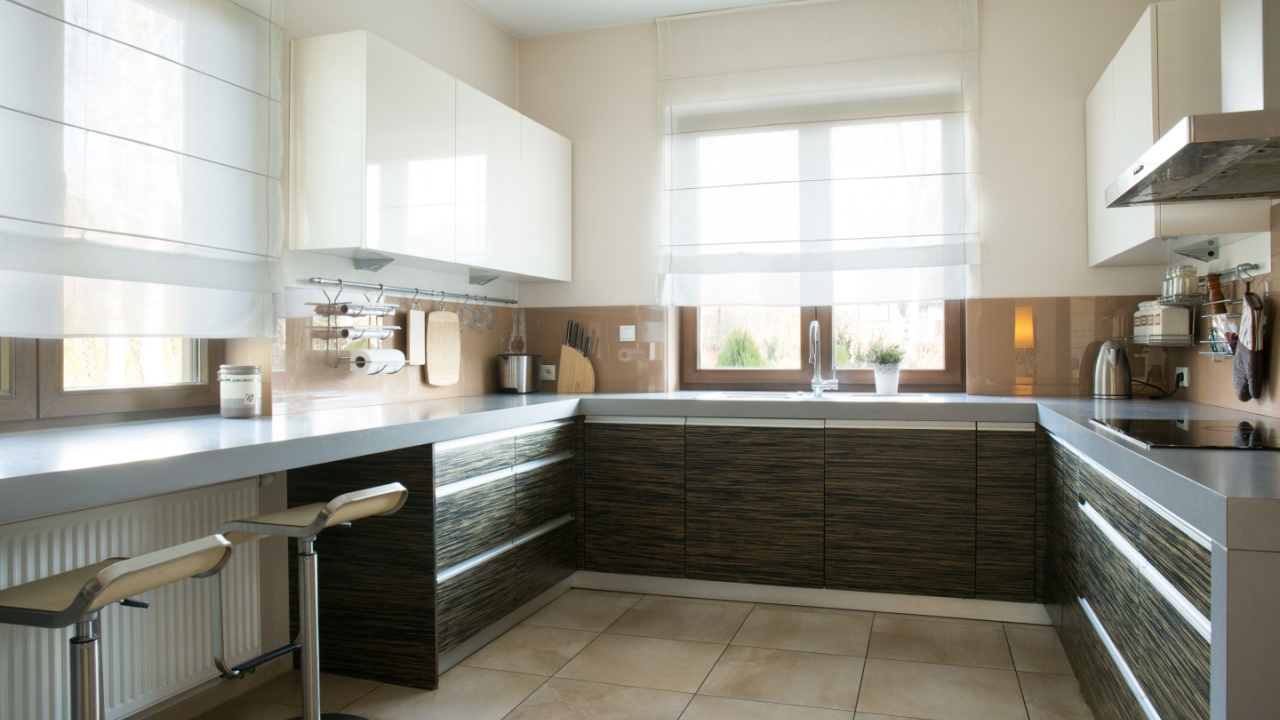
Image Credit: Shutterstock.
Sometimes the best solution is to lean into a classic layout that maximizes efficiency without a central island. A galley kitchen, with two parallel walls of cabinetry, creates a highly effective work corridor. A U-shaped kitchen offers a similar benefit, with three walls of counters and appliances, enclosing the cook in a perfect triangle of activity.
These layouts are masters of space optimization. They provide ample storage and counter space along the perimeter of the room, leaving the central area open for easy movement. Without an island breaking up the space, a smaller kitchen can feel more spacious and function more smoothly, especially for a single cook.
Quick Guide to Classic Layouts:
- Best For: Smaller or narrower kitchens where an island is not practical.
- Considerations: For a galley layout, maintain a corridor of at least 4 feet wide to allow for comfortable movement and appliance door clearance. In a U-shape, the open end should be wide enough to prevent feeling boxed in.
- Next Steps: Sketch your kitchen’s dimensions and map out the work triangle (sink, stove, refrigerator). See if a galley or U-shaped configuration would streamline your workflow better than your current setup.
5. Add a Breakfast Bar
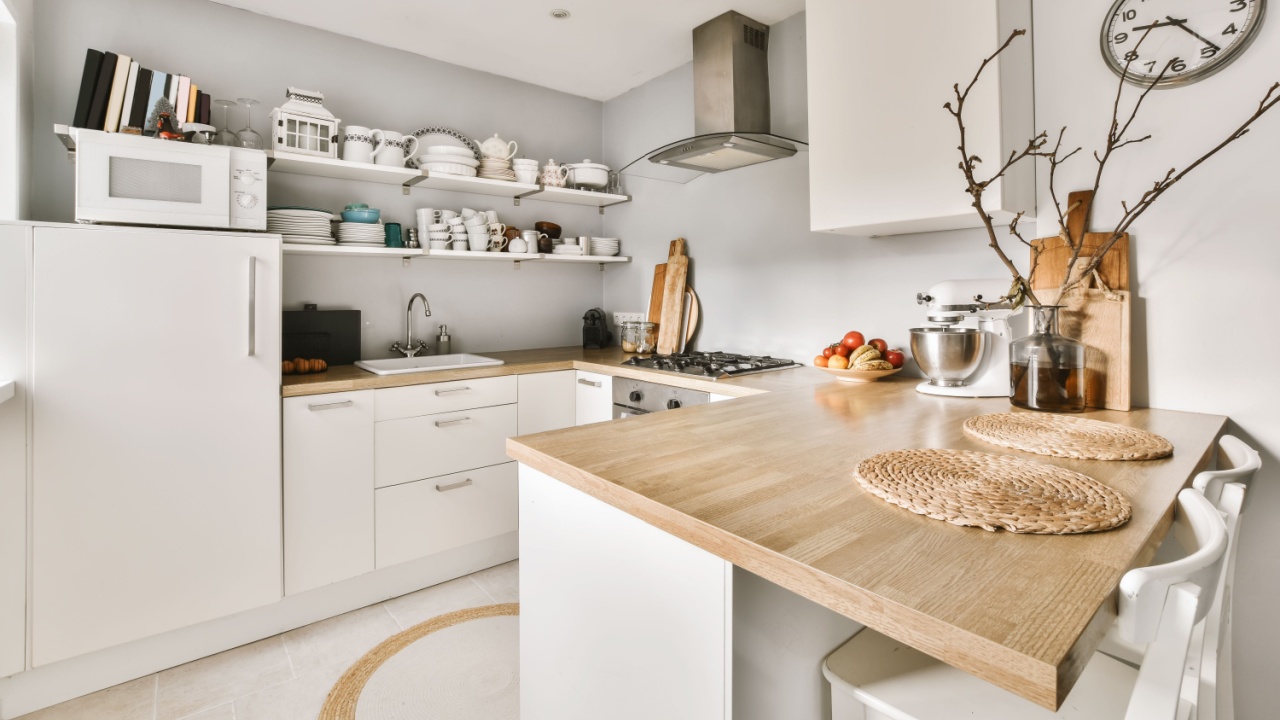
Image Credit: Shutterstock.com.
A breakfast bar offers a dedicated spot for casual meals and socializing without the large footprint of a full island. It can be designed as an extension of your existing countertop, creating a multi-level surface, or as a narrow, standalone bar-height table against a wall.
This option is fantastic for adding seating in a kitchen that lacks space for a formal dining area. It encourages interaction, allowing family or guests to sit and chat with the cook without getting in the way. A breakfast bar maintains an open feel while still defining a specific zone for dining and relaxing.
Quick Guide to Breakfast Bars:
- Best For: Adding casual seating to small or open-concept kitchens.
- Considerations: Bar height is typically 40-42 inches, so you will need corresponding barstools. Ensure there is enough knee space (at least 10-12 inches of overhang) for comfortable seating.
- Next Steps: Determine the best location. Would extending a current counter work, or is there a clear wall space for a narrow, wall-mounted bar? Choose stools that complement your kitchen’s decor.
6. Use a Salvaged or Vintage Freestanding Piece
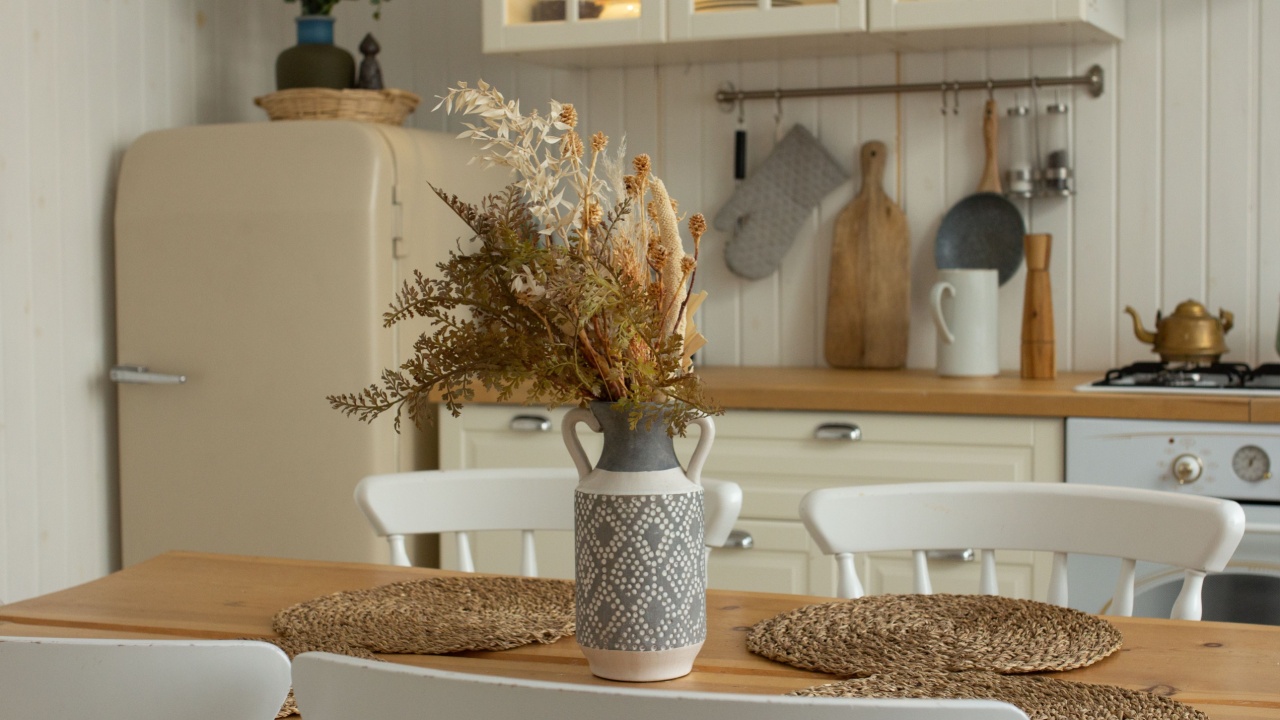
Image Credit: Shutterstock.
Inject personality and history into your kitchen by using a salvaged or vintage piece as a central workstation. A repurposed workbench, or an antique shop counter, can serve as a unique and functional alternative to a standard island. These pieces tell a story and prevent your kitchen from looking like a catalog showroom.
A vintage piece adds texture and a focal point that is entirely your own. Many older items were built to last, offering a durability that is hard to find in modern mass-produced furniture. Look for pieces with drawers or lower shelves for added storage.
Quick Guide to Vintage Pieces:
- Best For: Creating a unique, character-filled kitchen with a one-of-a-kind focal point.
- Considerations: Be prepared to do some refinishing. The surface may need to be sanded, sealed, or topped with a food-safe material like stone or stainless steel if you plan to use it for direct food prep.
- Next Steps: Hunt through flea markets, antique stores, and architectural salvage yards. Keep an open mind; a piece from another room, like a dresser or console table, could be repurposed beautifully.
7. Try a Kitchen Cart on Wheels
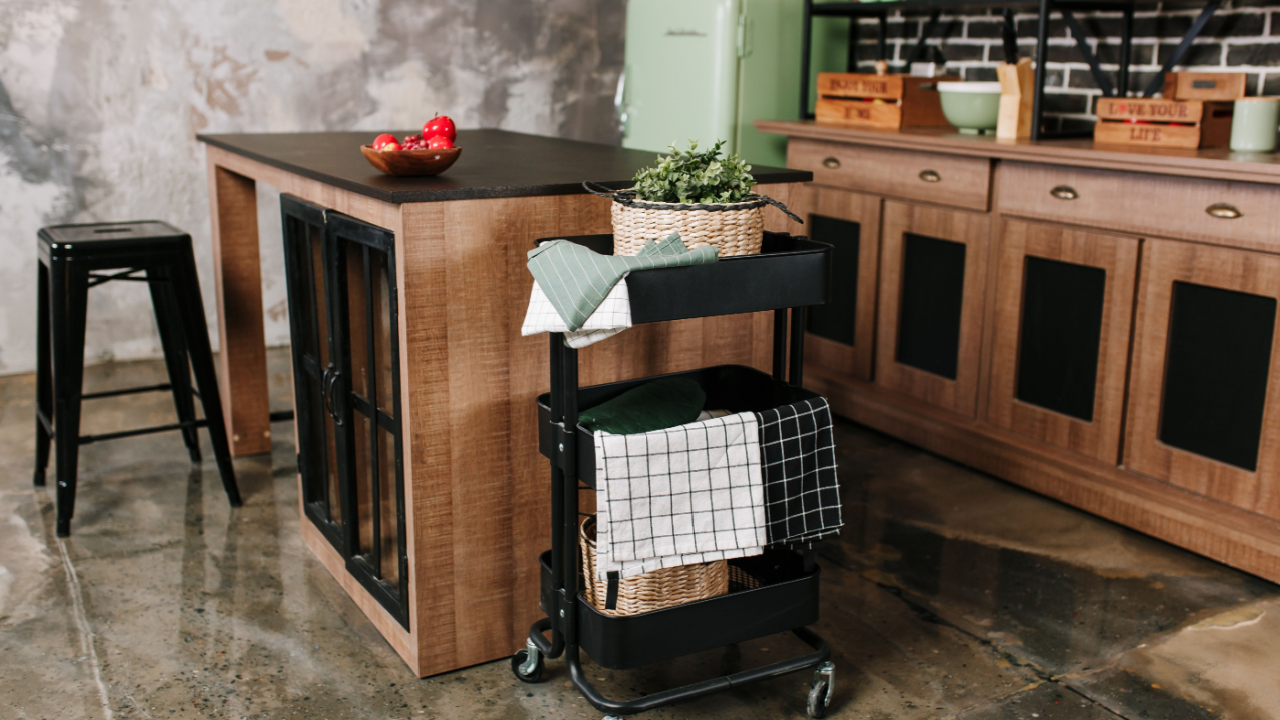
Image Credit: Shutterstock.
For the ultimate in flexibility, a kitchen cart on wheels is an unbeatable option. It can be rolled wherever you need it most, serving as an extra prep surface next to the stove, a bar cart for entertaining, or a serving station near the dining table. When you need more floor space to make cooking easier, simply roll it away into a corner or another room.
Carts come in a variety of sizes, styles, and materials, from sleek stainless steel to rustic wood. Many include shelves, drawers, and hooks for additional storage. This is an excellent solution for renters or anyone who is not ready to commit to a permanent kitchen fixture.
Quick Guide to Kitchen Carts:
- Best For: Small kitchens, renters, and anyone who desires maximum flexibility.
- Considerations: Look for a cart with locking casters to keep it securely in place while you are working. Check the height to make sure it is comfortable for you to use as a workspace.
- Next Steps: Measure the area where you plan to store the cart to ensure it will fit. Browse online retailers and home goods stores to find a style that matches your kitchen’s aesthetic and your storage needs.
8. Consider an L-Shaped Layout with a Wall-Mounted Table
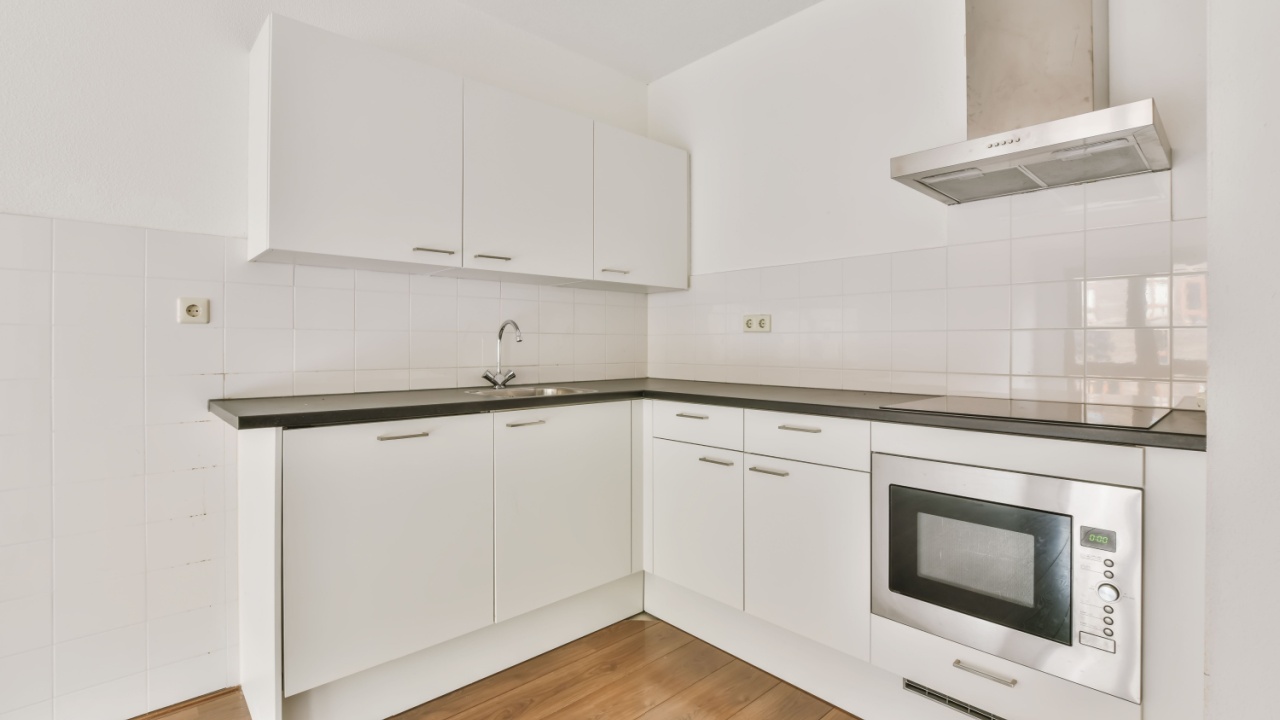
Image Credit: Shutterstock.
An L-shaped kitchen layout is efficient and opens up the room, but it can sometimes leave a large, empty space in the middle. Instead of filling it with an island, pair the layout with a wall-mounted drop-leaf table. This provides a dining or work surface that can be folded down and out of the way when not in use.
This combination is perfect for those who want an eat-in kitchen but need to preserve open floor space for everyday movement. When the table is up, it creates a cozy dining spot. When it’s down, the kitchen feels expansive and uncluttered. It offers the best of both worlds: function on demand and openness as a default.
Quick Guide to L-Shapes with Wall Tables:
- Best For: Medium-sized kitchens where you want the option of an eating area without a permanent fixture.
- Considerations: Ensure the wall you plan to mount the table on is strong enough to support it. A professional installation might be necessary.
- Next Steps: Find a wall-mounted drop-leaf table that suits your style. Consider pairing it with folding chairs that can be stored away easily when the table is down.
9. Install a Butcher Block Counter Section

Image Credit: Shutterstock.
If your main need for an island is a dedicated chopping and prep area, consider integrating a butcher block section directly into your main countertops. Replacing a portion of your laminate, stone, or quartz countertop with a thick, end-grain butcher block creates a beautiful and highly functional food prep station.
This approach keeps your kitchen layout open and seamless while adding the warmth and utility of wood. It becomes a designated work zone that is always ready for action. The contrast in materials can also add visual interest to your overall kitchen design.
Quick Guide to Butcher Block Counters
- Best For: Cooks who want a dedicated, durable chopping surface without adding a separate piece of furniture.
- Considerations: Butcher block requires regular maintenance, including oiling, to prevent it from drying out and cracking. It should be cleaned properly to maintain food safety.
- Next Steps: Decide which section of your counter would be the most logical prep area, typically between the sink and the stove. Contact a countertop professional to discuss cutting your existing counter and installing a butcher block insert.
10. Use a Narrow Console Table
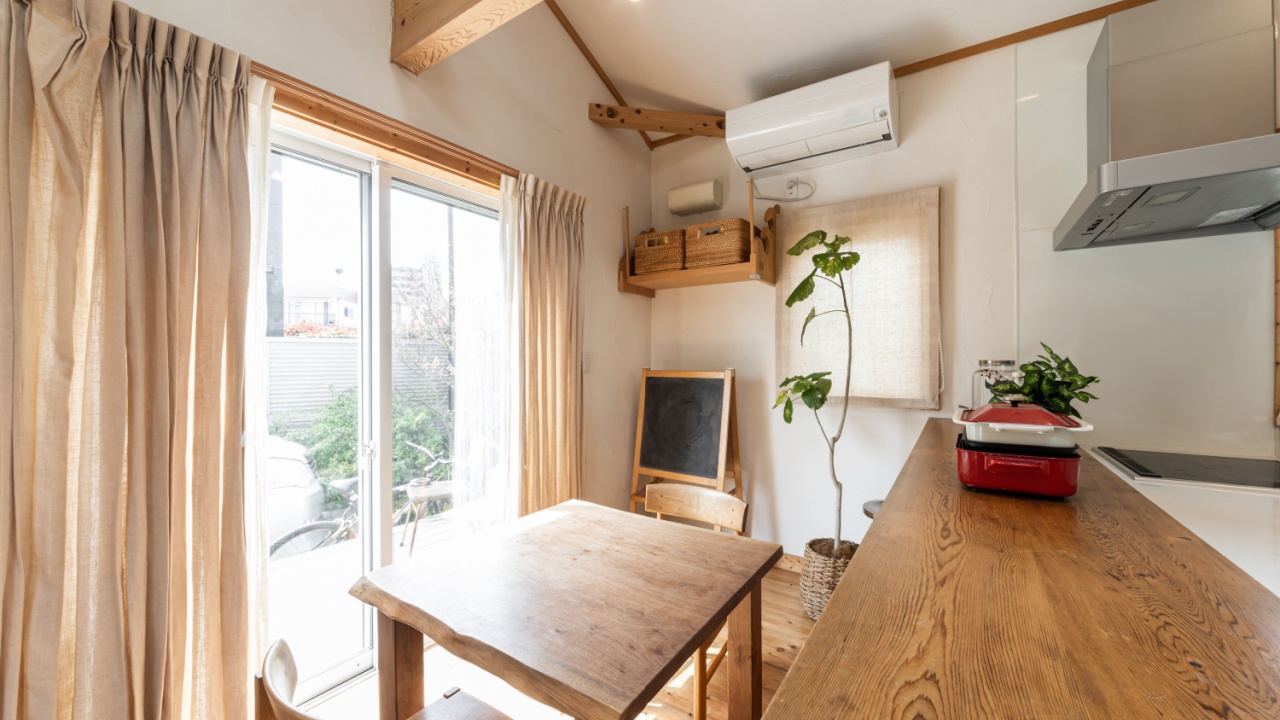
Image Credit: Shutterstock.
A slim console table is a clever solution for kitchens where floor space is scarce, but extra surface area is high on the wish list. Tuck one against a wall, at the edge of your kitchen, or even behind a sofa in an open-plan layout. The lean shape won’t intrude on walkways, but still offers plenty of room for meal prep, serving dishes, or setting up a small coffee station.
A console table is also easy to reimagine. Top it with baskets for fresh produce or linens, or use the lower shelf to store small appliances or cookbooks. The light footprint helps the room feel open, avoiding any sense of clutter or crowding. Many come with drawers or extra shelves to boost your storage game even further. You can also pair it with stools to create a miniature dining ledge perfect for a quick bite.
Quick Guide to Console Tables:
- Best For: Narrow or galley kitchens, open-concept spaces, or adding flexible counter space.
- Considerations: Keep traffic paths clear by choosing a table that’s no deeper than 12–16 inches. Stability is important, so avoid top-heavy models.
- Next Steps: Measure your available wall space before shopping. Look for a design that fits your style; wood for rustic warmth, metal for an industrial feel. Add trays, bowls, or baskets to lend extra function and personality.
Your Kitchen, Your Rules
Image Credit: Shutterstock.
Breaking away from the traditional kitchen island opens up a world of possibilities tailored to your space and lifestyle. From embracing a vintage centerpiece to a flexible cart or a sleek peninsula, the point is to prioritize functionality and flow.
Take the time to assess your kitchen’s unique needs, and don’t be afraid to mix and match ideas. Size shouldn’t be an issue; many designers disapprove of oversized kitchen islands anyway. With a little creativity, you can transform your kitchen into a space that’s not just practical but also a joy to use every day.