Volunteers Build Wheelchair Ramp That Lets Illinois Man Return Home After 2 Months
Aaron Brown had been away from his Cleveland, Illinois, home for nearly two months. One major obstacle stood between him and finally returning: he needed a safe way to get inside.
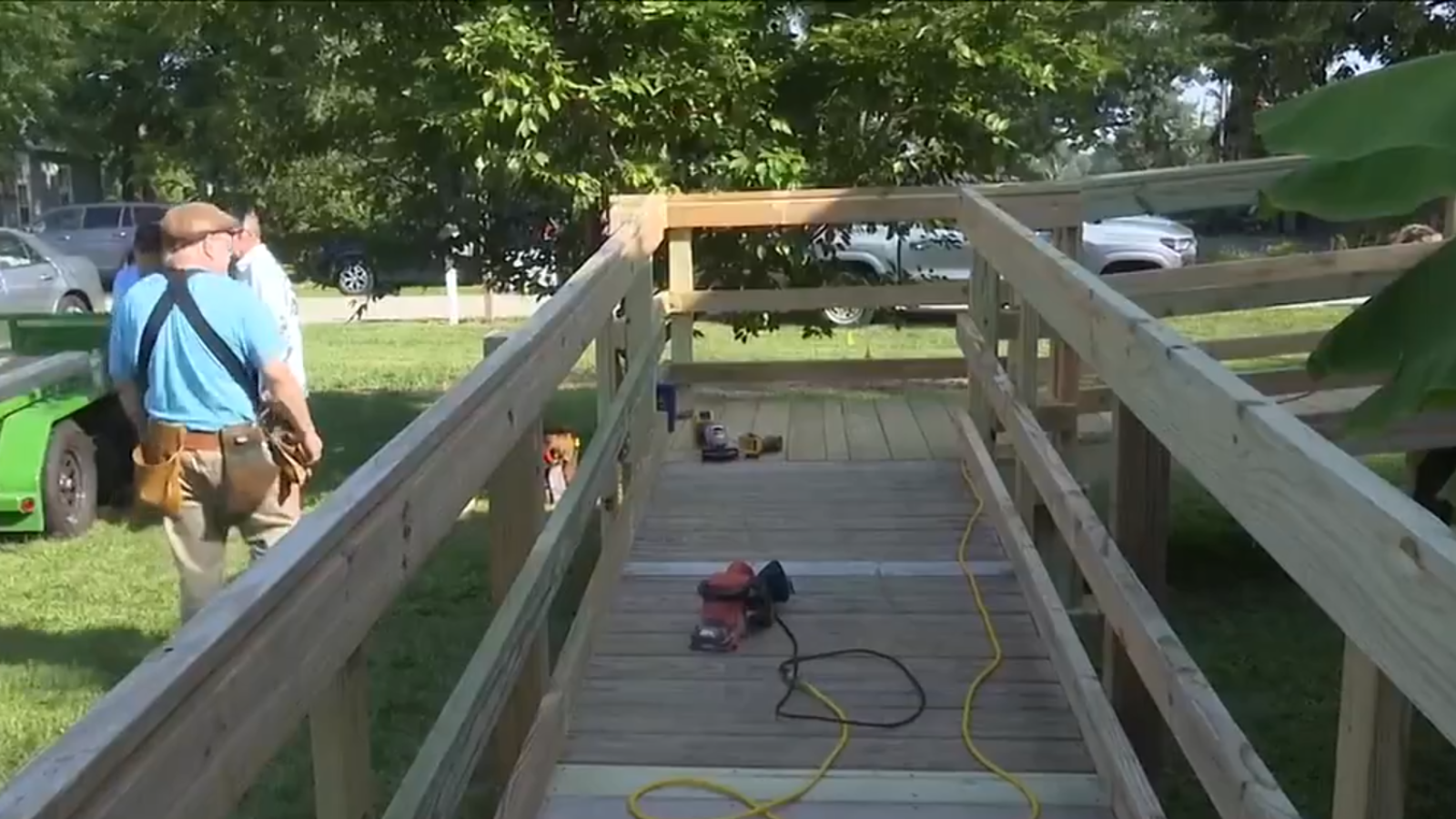
On Sept. 2, a group of volunteers showed up to build it.
The new wheelchair ramp was installed by Rebuilding Together Henry County, a nonprofit that helps older adults and people with disabilities make their homes safer and more accessible. The project also marked a milestone for the organization: its 500th wheelchair ramp.
“We are so grateful for everything they are doing,” Brown said, as reported by KWQC. “I wouldn’t be able to come home. I can finally come home.”
Nearly Two Months Away From Home Was Long Enough
Embedded media follows. Please allow a moment for it to load.
Brown had spent the previous two months in a recovery facility and said he especially missed his own bed and his dog, according to KWQC.
He also believes being back in familiar surroundings will help with his recovery. “Being at home is one of the biggest parts of, I think, this healing process,” Brown said in the report.
It is not specified what led to Brown’s stay in the recovery facility.
The 500th Ramp Was Particularly Special
Rebuilding Together Henry County built its first wheelchair ramp in 1996. On Sept. 1, Geneseo Current reported that the organization has since expanded the program to serve homeowners throughout Henry and Stark counties.
According to Executive Director Sarah Snyder, when she first joined the nonprofit back in 2011, it had just completed 42 ramps. By Sept. 2, volunteers were working on No. 500.
After hundreds of builds, some of those volunteers have since become specialists. According to KWQC, Snyder said that one longtime volunteer has effectively become “the handrail guy,” regularly taking responsibility for that part of the job.
Brown’s situation also illustrates why accessibility advocates champion universal design. NC State’s Center for Universal Design defines the concept as designing products and environments to be usable by as many people as possible without the need for adaptation or specialized design.