Utah’s 1,600-Year-Old Rock Art Damaged by Vandals Who Scratched Names Into Stone
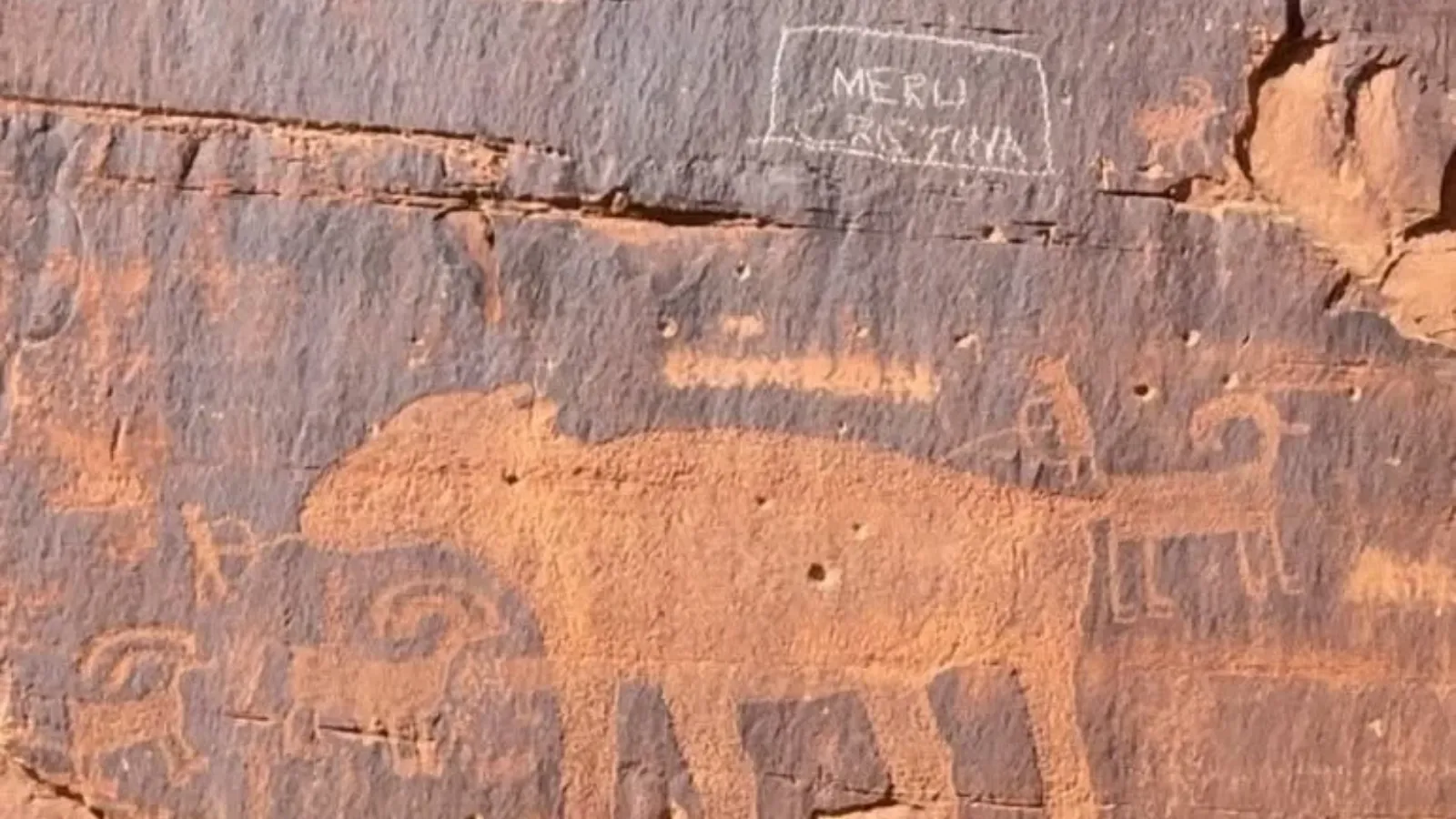
For centuries upon centuries, ancient carvings have endured in Utah’s red rock country. Now, they have been defaced by vandals—and some of the damage may be permanent. At two archaeological sites near Moab, someone scratched names into sandstone bearing images created by people who lived in the region long before European settlement.
The damage was discovered at the Bear Panel along Highway 279 and at another site near Hell’s Revenge, a popular off-roading area in southeastern Utah. Both locations contain prehistoric petroglyphs, images that ancient inhabitants made by carving directly into stone.
The Bureau of Land Management learned of the vandalism in late October and has since launched an investigation to find those responsible for this possibly permanent damage. Archaeologists have also begun examining the carvings to determine how much of the vandalism can be repaired without causing further harm to the ancient artwork.
In a Nov. 6 Facebook announcement, BLM Utah released photographs of the damage and requested help from the public.
Names Scratched Across Ancient Images
Embedded media follows. Please allow a moment for it to load.
The vandalism at the Bear Panel was reported Oct. 29, followed by the second discovery near Hell’s Revenge on Oct. 31. According to Moab Sun News, members of the public were responsible for bringing both cases to the agency’s attention.
At the Bear Panel along Highway 279, vandals scratched graffiti near an ancient bear carving and beside an image of a bighorn sheep, according to written statements from the Bureau of Land Management to The Times-Independent. At the Hell’s Revenge site, additional markings were carved across several prehistoric figures.
The artwork that was affected is believed to date from around A.D. 400 to around 1300. The carvings include representations of animals and humanlike figures. These depictions grant archaeologists clues about the people who once lived throughout the Moab region—and how they saw their world.
Even outside of their age, these carvings still bear deep significance in the modern day. Archaeologist Chris Shaw told KUTV that descendant Native American tribes and pueblos maintain deep cultural connections to these sites. For some communities, the carvings preserve ancestral histories and traditions that remain meaningful today.
Restoration Work Begins as Investigators Follow Leads
Repairing the vandalized petroglyphs presents a difficult challenge. At the Highway 279 site, archaeologist Chris Shaw has already begun treating the damaged sandstone. He managed to remove some of the residue left behind by the vandals, although the marks carved directly into the stone are proving far more stubborn.
As reported by KUTV, Shaw explained that several scratches cut through the dark outer layer that has developed naturally on the rock over centuries. Those grooves cannot be cleaned away by any simple, speedy means, and attempting to remove them could cause further damage to the ancient images.
The investigation is also moving forward. Bureau of Land Management ranger Cody Marsh told KUTV on Nov. 10 that several tips had already come in, and investigators were following up on the information. The agency continues to encourage anyone who knows something about the vandalism to come forward.
The damaged petroglyphs fall under the protection of the federal Archaeological Resources Protection Act. This piece of litigation can dispense substantial fines and possible prison sentences for violations, depending on the circumstances.
Anyone who recognizes the markings or has information about the damage can contact BLM law enforcement in Moab at 435-259-2131. As for the artwork itself, Shaw’s restoration efforts have already established a troubling reality: some of the newer markings may remain permanently etched into stone that has preserved the original carvings for centuries.